Artwork
Description of the Building
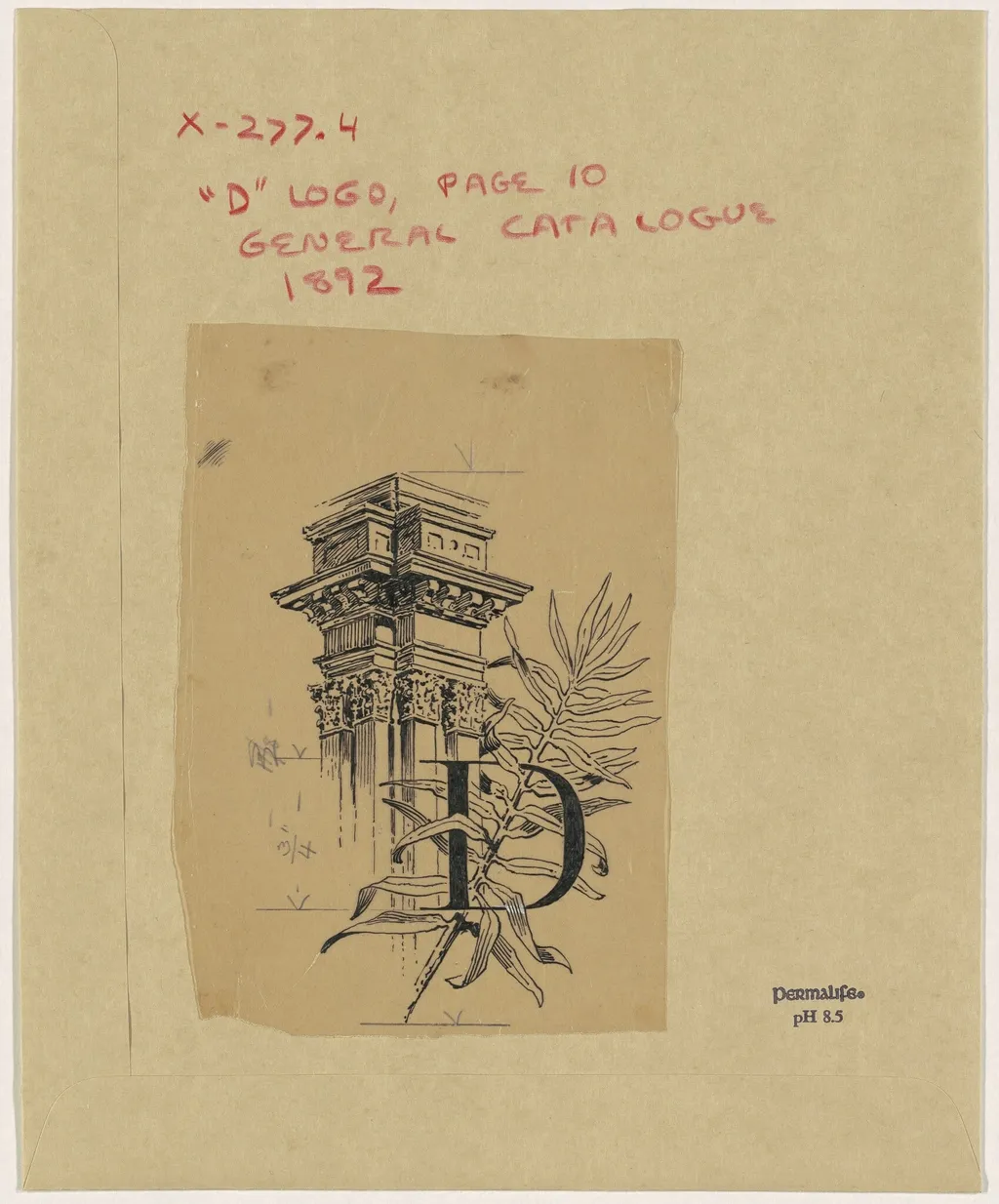
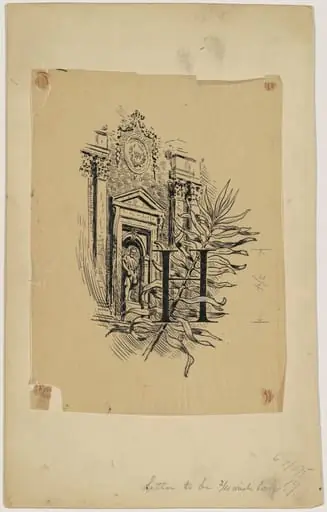
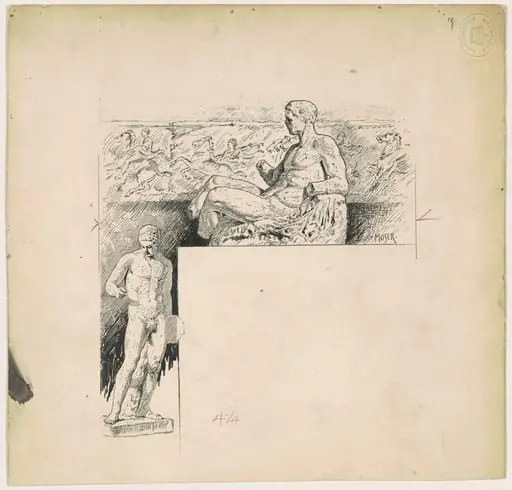
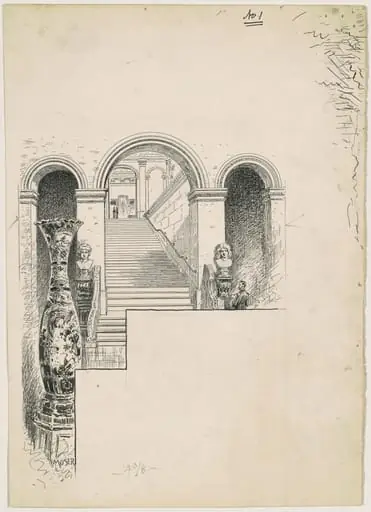
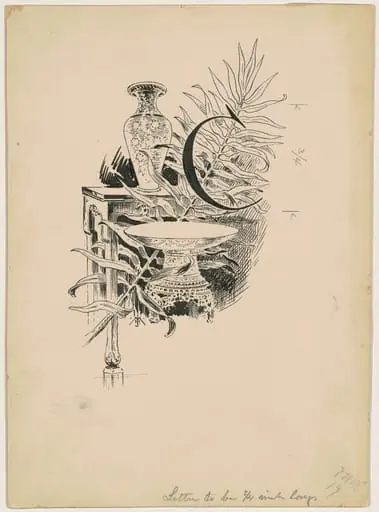
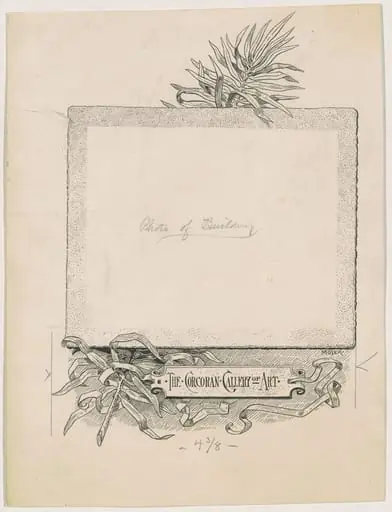
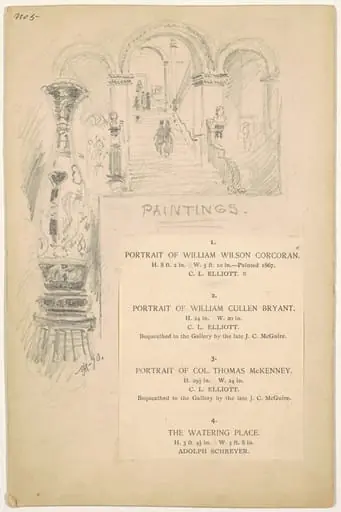
Description of the Building is an ink drawing by the Impressionist artist James Henry Moser. It dates from 1890 and is held in the collection of the National Gallery of Art.
- Inscription
- Inscribed:center left in graphite by unknown hand: 1 7/8 [strikethrough] / 3/4"
About this work
Overview
James Henry Moser’s 1890 drawing titled Description of the Building is executed on wove tracing paper using pen and black ink complemented by graphite accents. The work records the façade of an urban structure, emphasizing a column adorned with foliage and a balcony featuring a patterned railing. Its modest size and delicate support suggest a preparatory study rather than a finished composition.
Subject & Meaning
The composition concentrates on architectural details, capturing the interplay of light and shadow across the column’s decorative leaves and the balcony’s ornamental balustrade. By isolating these elements, Moser highlights the ornamental language of the period’s architecture, inviting viewers to consider the aesthetic value of everyday urban surfaces.
Technique & Style
Moser employs swift, gestural ink lines that convey the building’s mass while allowing the graphite to suggest tonal variation. The combination of crisp pen work with softer graphite shading creates a sense of immediacy, characteristic of on‑site sketches. The drawing’s roughness and unfinished edges indicate a focus on observation over polished finish.
History & Provenance
Created in 1890, the piece reflects Moser’s practice of documenting architectural subjects during a time of rapid urban development. While specific ownership records are limited, the work remains part of the artist’s documented output, illustrating his interest in architectural studies alongside his broader oeuvre.
Own this work as a print
Artist & collection
Artist
American (born Canada), Whitby, Ontario 1854–1913 West Cornwall, Connecticut

- History of the Corcoran Gallery of Art
![The Erectheum, West Elevation [left half], by John Russell Pope](https://artifactworldgallery.com/img/john-russell-pope--the-erectheum-west-elevation-left-half--10b9b48e87f30a0f-w320.webp) The Erectheum, West Elevation [left half]
The Erectheum, West Elevation [left half]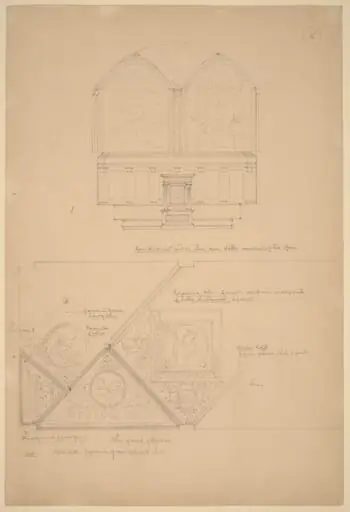 Study of an Altarpiece and Ceiling Panels
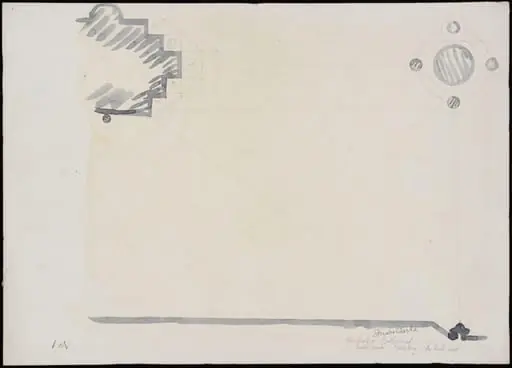 Untitled
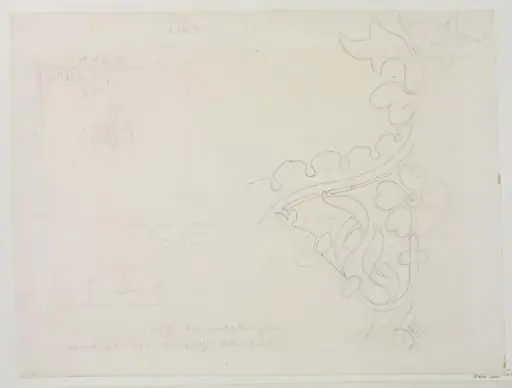 'Passage next to Drawing Room'
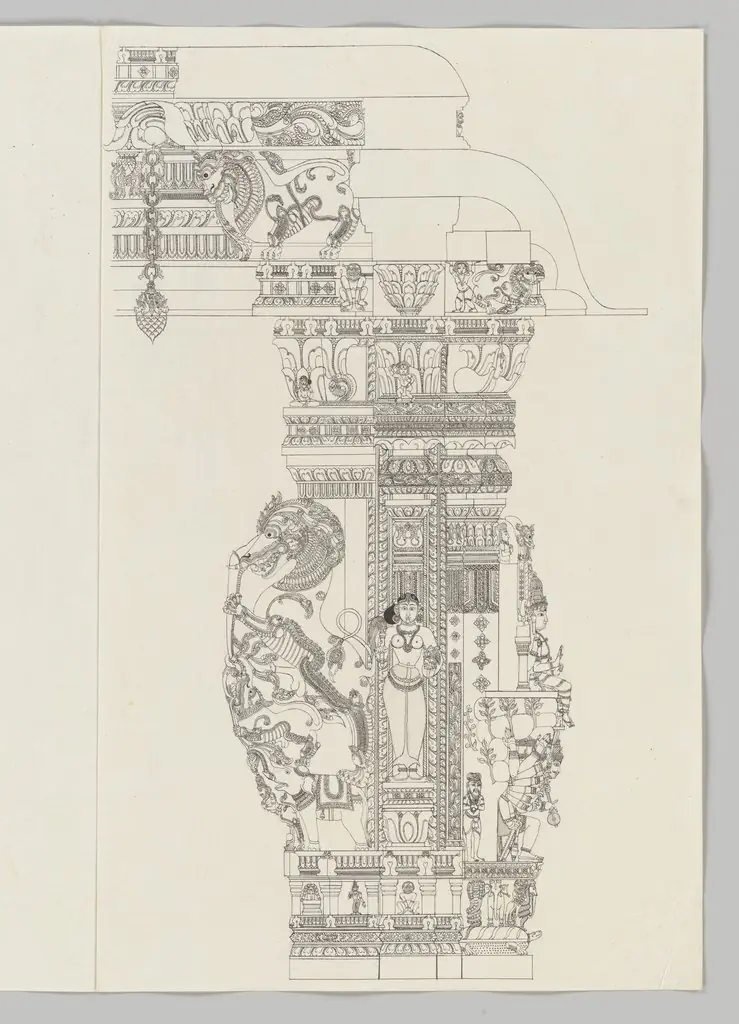 Shiva Ravananugrahamurti; woman holding a flywhisk; rearing yali
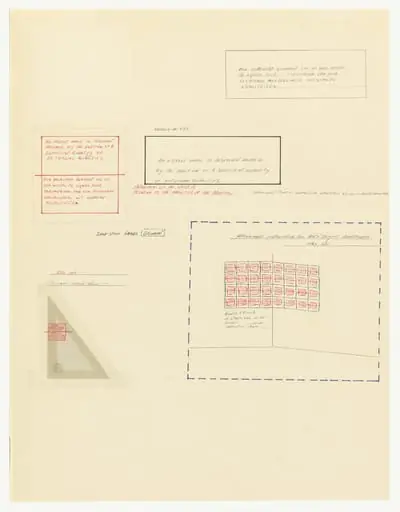 Untitled
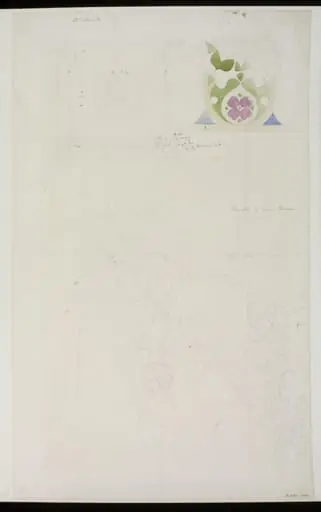 'Panells of Drawing room'
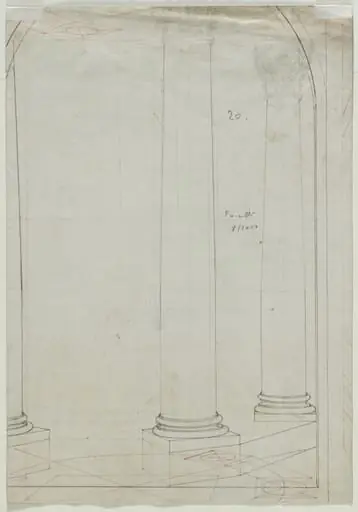 Architectural Drawing of Columns (verso)
![Study of an Interior [verso], by Walter Shirlaw](https://artifactworldgallery.com/img/walter-shirlaw--study-of-an-interior-verso--ae90136ae4907dbf-w320.webp) Study of an Interior [verso]
Study of an Interior [verso]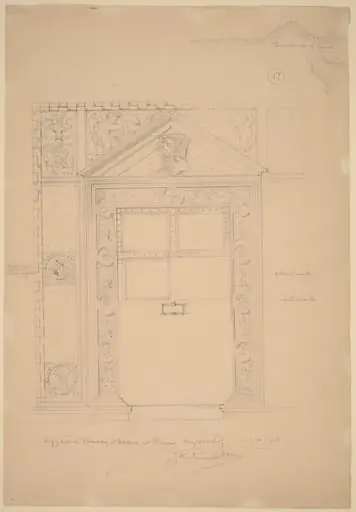 Byzantine Doorway with Duomo, Rimini
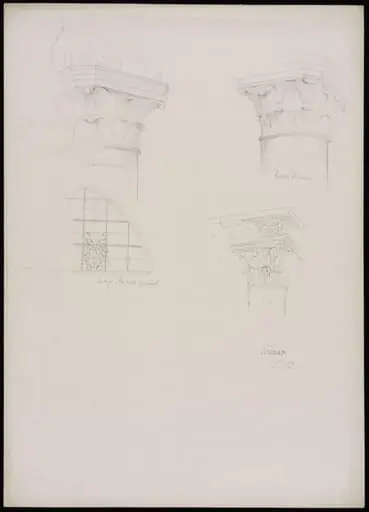 Untitled