Artwork
Virgin and Child
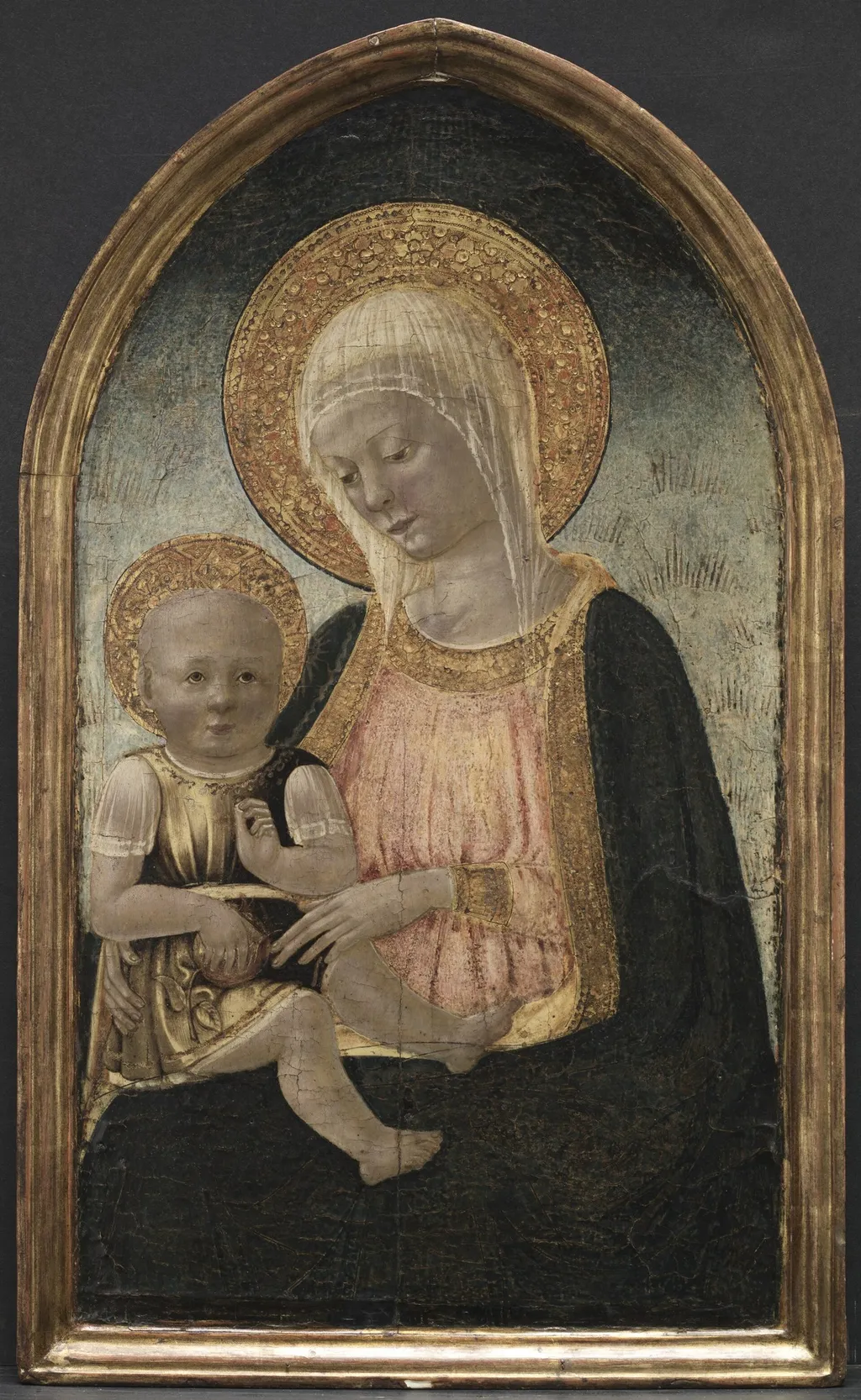
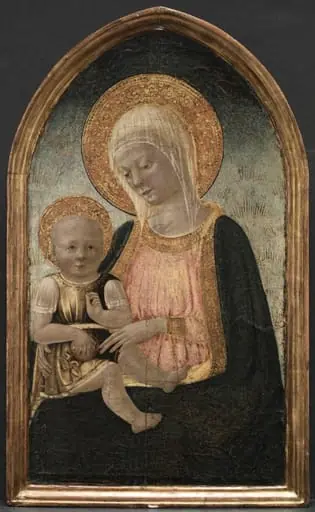
Virgin and Child is an unspecified painting by the Italian Renaissance artist Neri di Bicci. It dates from 1460 and is held in the collection of the Cleveland Museum of Art.
About this work
Subject & Meaning
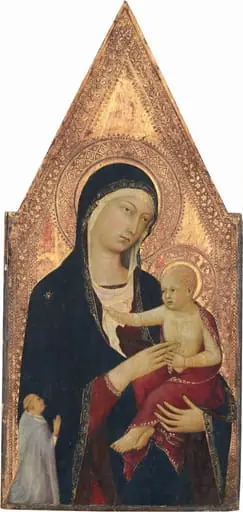
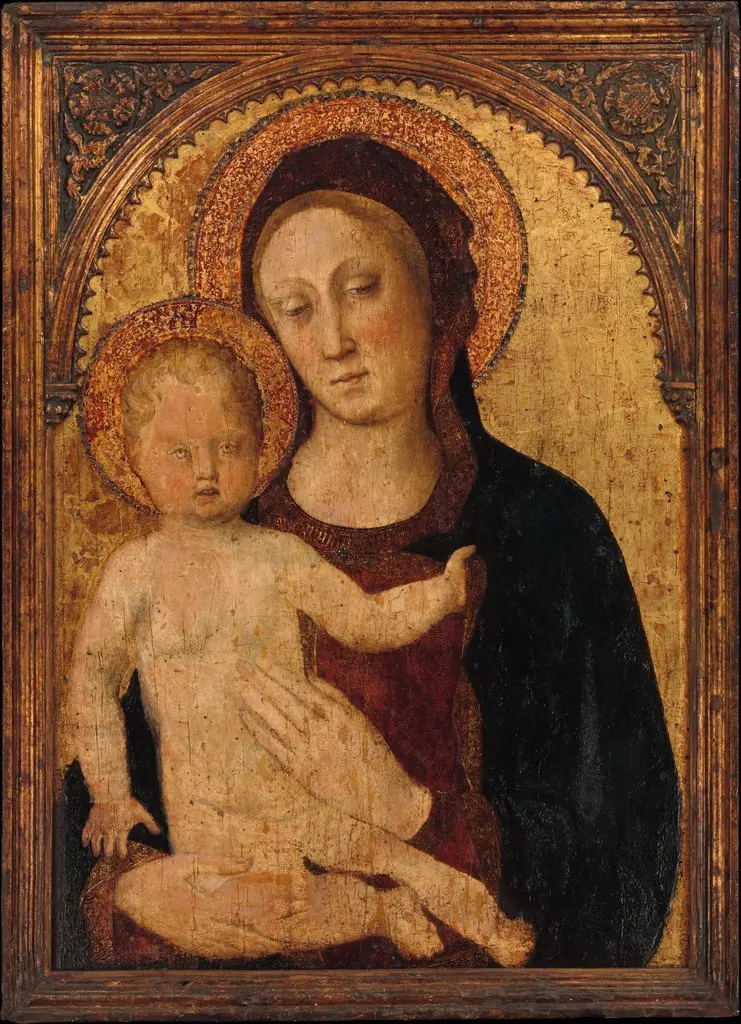
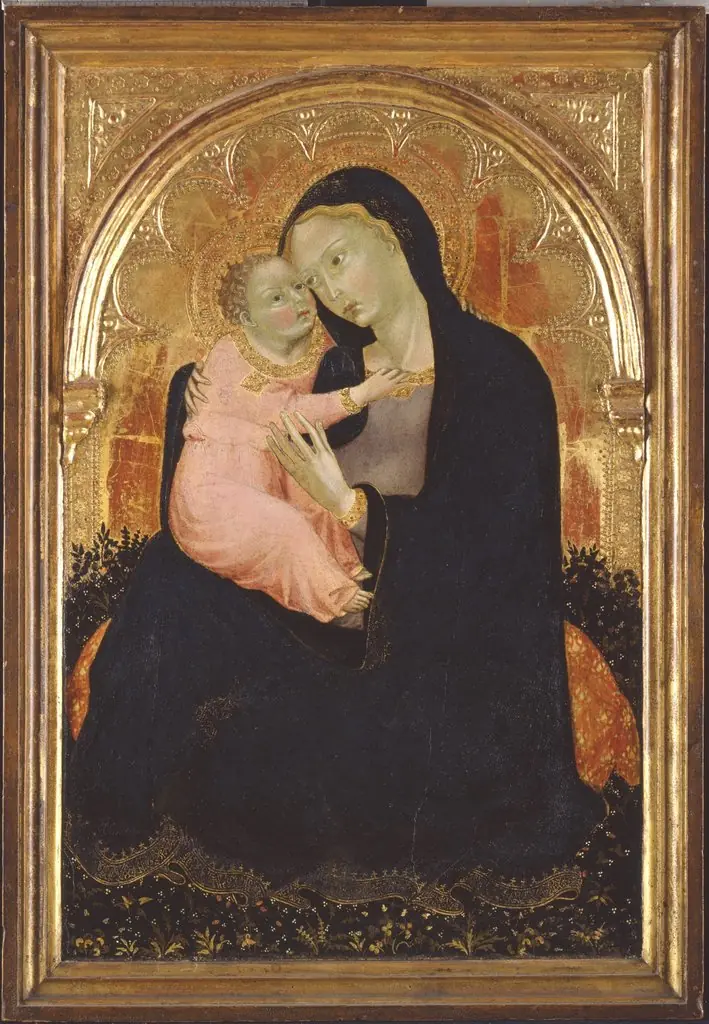
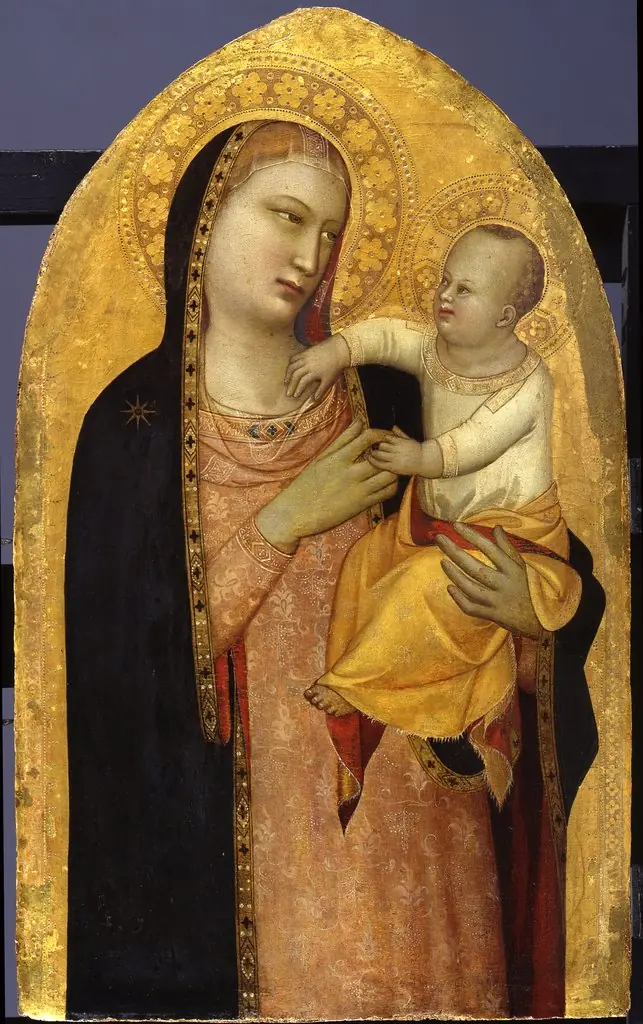
The painting depicts the Virgin Mary holding the Christ Child, a conventional subject in Christian iconography known as the Madonna and Child.
The painting depicts the Virgin Mary holding the Christ Child, a conventional subject in Christian iconography known as the Madonna and Child. Mary is shown in a frontal pose, her hands clasped in prayer, while the Christ Child is seated on her lap, blessing the viewer. The composition is framed by a golden aureola, a common device in quattrocento religious art to signify sanctity and divine light.
The work's restrained palette and symmetrical arrangement reflect the devotional function typical of mid-fifteenth-century Florentine religious paintings, emphasizing reverence and contemplation rather than narrative detail.
History & Provenance
The painting titled Virgin and Child was created by the Italian artist Neri di Bicci in 1460. Produced in Italy, this religious work depicts the Madonna and Child, featuring Mary, the Christ Child, and an aureola. The piece is currently held in the collection of the Cleveland Museum of Art, where it is cataloged under the accession number 1946.242.
The work measures 54.0 cm in height and 30.8 cm in width. While the specific commission details and original ownership chain prior to the museum's acquisition are not detailed in the provided records, the creation date is firmly established as 1460, marking it as a mid-15th-century Italian religious painting.
Context
The Virgin and Child painted by Neri di Bicci in 1460 exemplifies early Renaissance devotional imagery, combining a gold-aureoled Madonna with the infant Christ in a composition typical of 15th-century Italian religious art. Listed in the Cleveland Museum of Art's collection, the work is catalogued in scholarly references and underscores its relevance to studies of Neri di Bicci's oeuvre and the broader trajectory of Florentine workshop production. Its formal qualities and iconography situate the painting within the evolution of Marian devotion and the stylistic conventions of the period.
Overview
The painting 'Virgin and Child' presents a traditional religious scene. The Virgin Mary, adorned with a halo, wears a pink dress and a black cloak, cradling the Christ Child. The Child, also haloed, is dressed in a gold tunic, set against a simple light blue background. This composition focuses on the intimate connection between the two central figures, characteristic of devotional art.
Technique & Style
Stylistically, the painting exhibits characteristics reminiscent of the Renaissance period. The clear delineation of forms, the balanced composition, and the idealized portrayal of the figures align with artistic trends prevalent during this era. The consistent use of halos and the specific depiction of the Virgin and Child further situate the work within the established tradition of religious painting from this historical epoch.
Own this work as a print
Artist & collection
Artist
Neri di Bicci (1419–1491) was an Italian painter active in his native Florence. A prolific painter of mainly religious themes, he studied under his father, Bicci di Lorenzo, who had in turn studied under his father,…

![Madonna and Child, with the Blessing Christ [middle panel], by Pietro Lorenzetti](https://artifactworldgallery.com/img/pietro-lorenzetti--madonna-and-child-with-the-blessing-christ-middle-panel--02357aa6ff04175b-w320.webp)