Artwork
Apollo charging the Parcae to visit Ceres, who has fled from the Earth
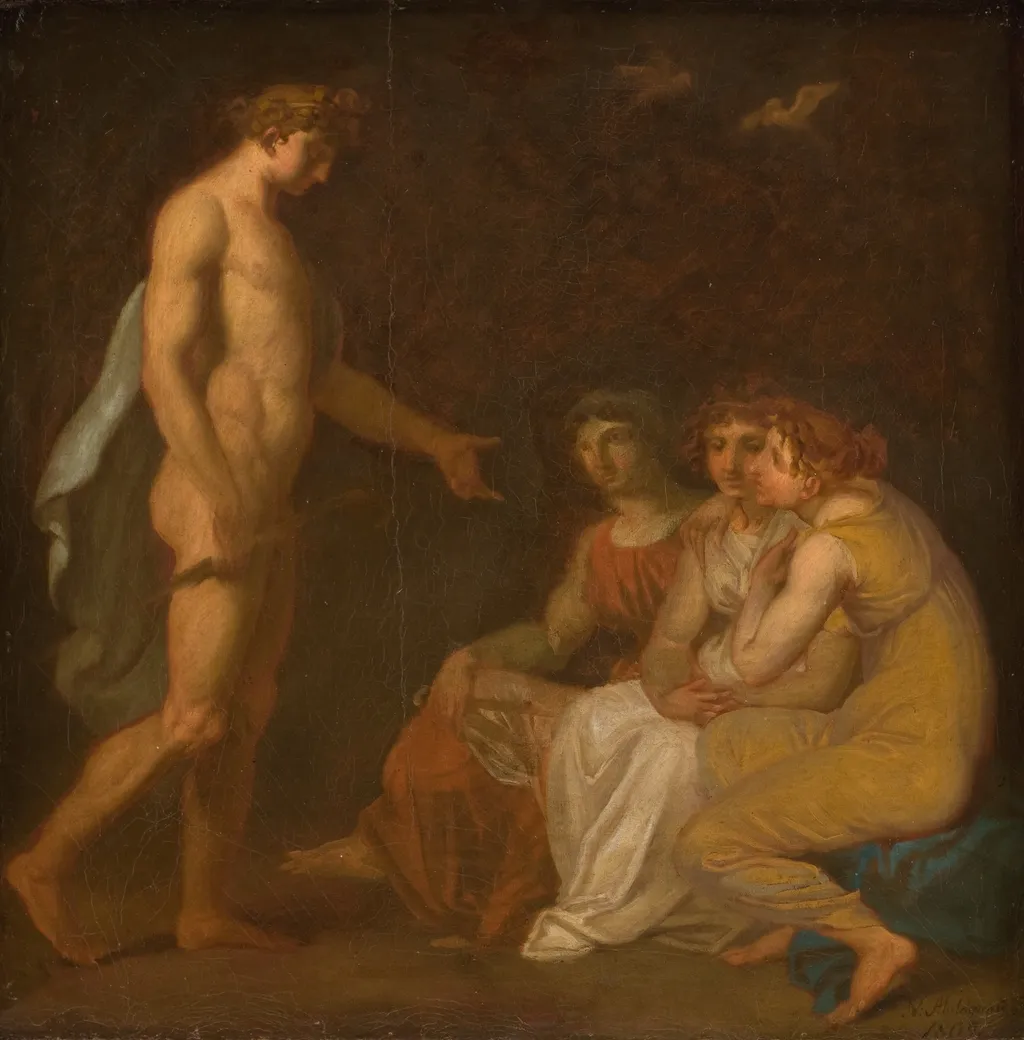
Apollo charging the Parcae to visit Ceres, who has fled from the Earth is an oil painting by Nicolai Abildgaard. It dates from 1809 and is held in the collection of the Statens Museum for Kunst.
About this work
Subject & Meaning
The subject highlights the interplay between fate and the agricultural cycle, presenting Apollo’s command as a symbolic effort to renew the world’s abundance.
The painting depicts the mythological moment when Apollo orders the three Parcae (Fates) to seek out Ceres, the goddess of agriculture, who has fled from the earth. As a mythological work, it brings together Apollo, the Parcae, and Ceres to illustrate the divine attempt to restore earthly fertility after her withdrawal. The subject highlights the interplay between fate and the agricultural cycle, presenting Apollo’s command as a symbolic effort to renew the world’s abundance.
Technique & Style
Executed in 1809, this mythological painting by Nicolai Abildgaard utilizes oil paint applied to a canvas support. The work is characterized by its monumental scale, measuring 475 cm in height and 480 cm in width. As a large-format piece housed in the Statens Museum for Kunst, the composition depicts the classical figures of Apollo and Ceres within a narrative framework typical of the artist's late career.
The specific handling of the medium and the current physical condition of the surface are not detailed in the available records, though the material construction remains consistent with standard oil painting techniques of the period.
Context
Nicolai Abildgaard's 1809 oil painting Apollo charging the Parcae to visit Ceres, who has fled from the Earth, exemplifies the neoclassical approach to mythological narrative through dramatic composition and classical subject matter. The work, housed in the Statens Museum for Kunst, reflects the era's scholarly engagement with antiquity while demonstrating Abildgaard's synthesis of Enlightenment ideals and academic tradition. Its depiction of Apollo's authoritative gesture toward the Parcae amidst Ceres' departure conveys both narrative urgency and allegorical depth characteristic of late 18th-century mythological painting.
Scholarly analysis emphasizes the painting's technical precision and compositional balance, situating it within Abildgaard's broader oeuvre as a bridge between strict academic formalism and emerging Romantic sensibilities. The work's enduring presence in museum collections underscores its significance as a representative example of German-Danish artistic exchange during the period.
Overview
Apollo charging the Parcae to visit Ceres, who has fled from the Earth is a 1809 oil painting by Nicolai Abildgaard, a Danish neoclassical artist. It depicts a mythological scene where Apollo instructs the Parcae to locate Ceres, who has withdrawn from the earth.
History & Provenance
Created while Abildgaard was a professor at the New Royal Danish Academy of Art, the painting is now part of the collection at Statens Museum for Kunst, reflecting the artist's prominence in Danish royal circles.
Legacy
While specific lasting impacts of this work are not broadly documented, it contributes to the broader legacy of neoclassical art exploring classical mythology, alongside works by other contemporary artists of the time.
Own this work as a print
Artist & collection
Artist
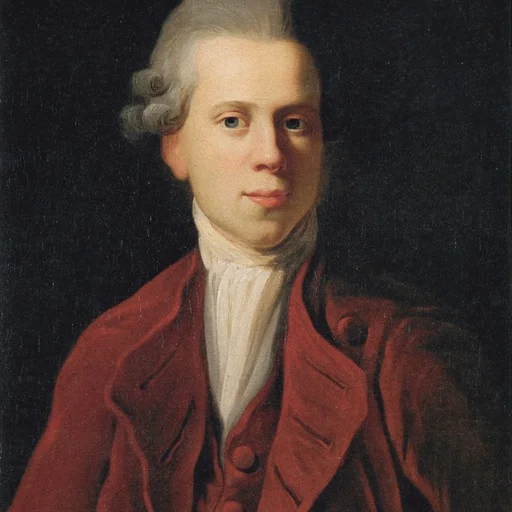
Nicolai Abraham Abildgaard (11 September 1743 – 4 June 1809) was a Danish neoclassical and royal history painter, sculptor, architect, and professor of painting, mythology, and anatomy at the New Royal Danish Academy of Art in Copenhagen…

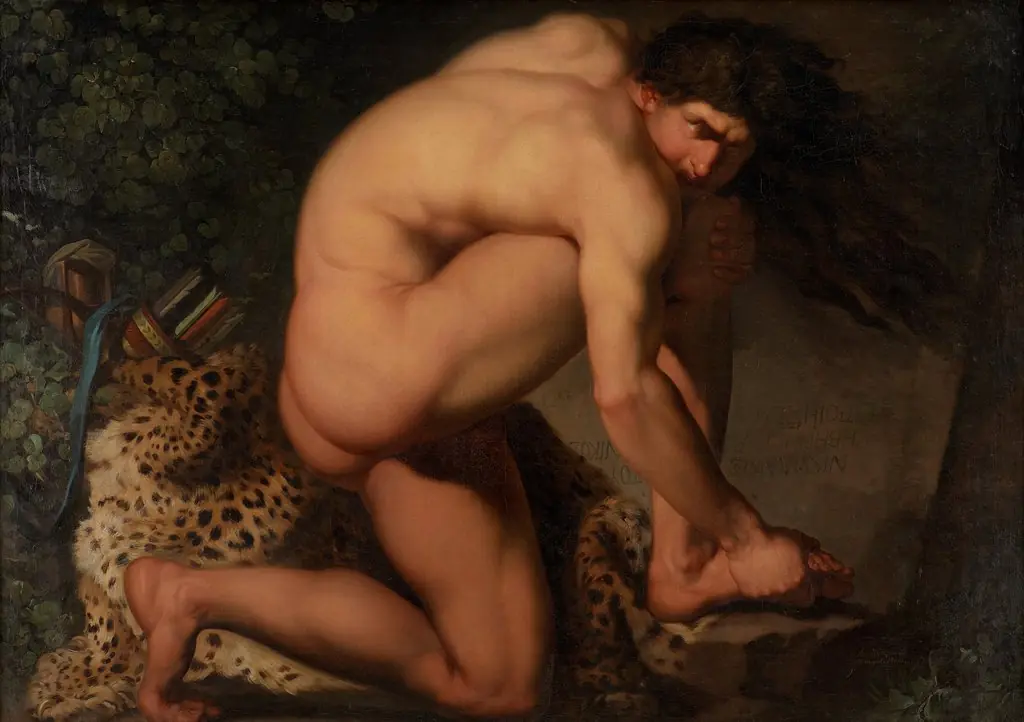 The Wounded Philoctetes
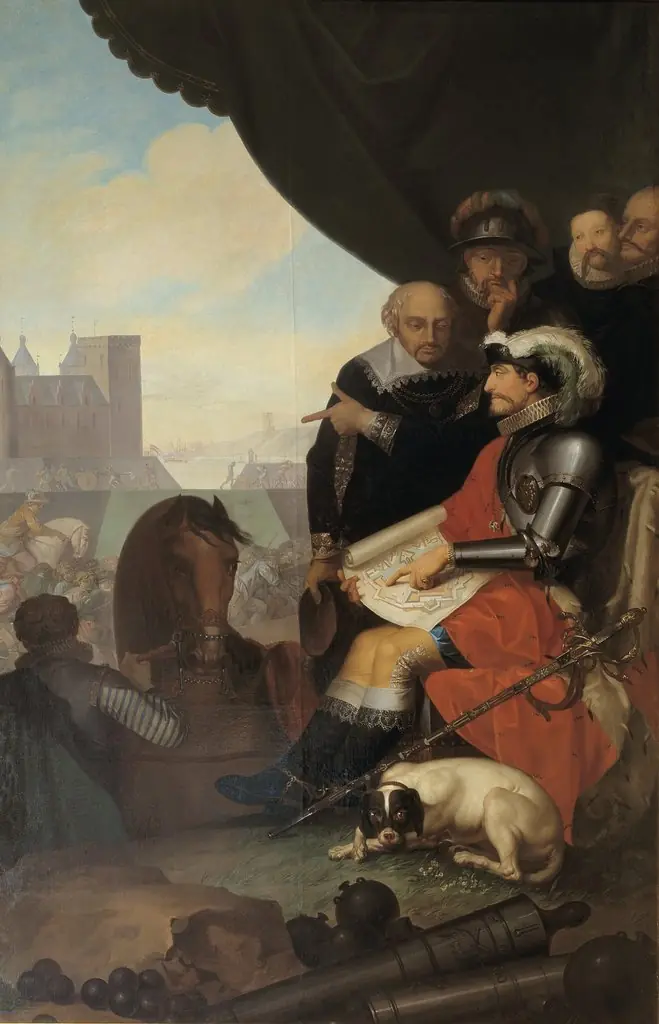 Frederik II Builds Kronborg Castle at Elsinore
 Frederik II Builds Kronborg Castle at Elsinore
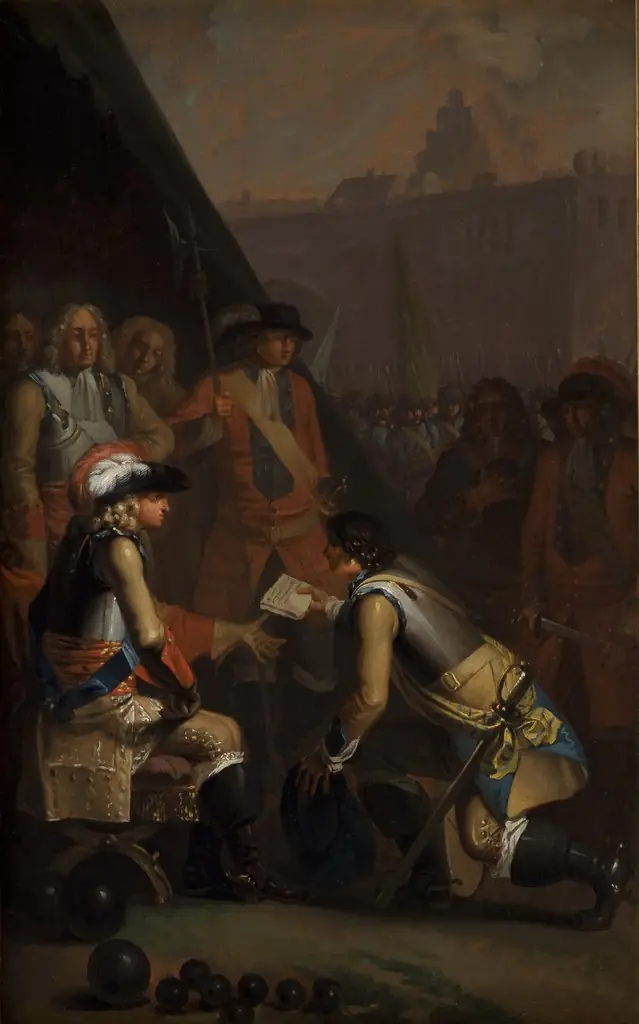 Magnus Stenbock Surrenders the Fortress of Tønningen to Frederik IV in 1714
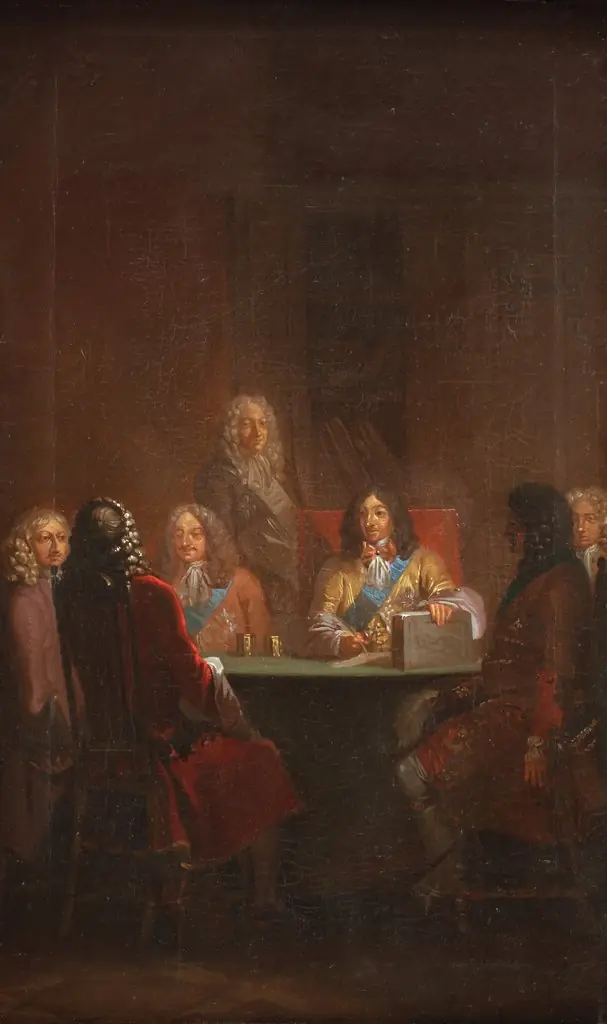 Christian V Presents Danish Law 1683
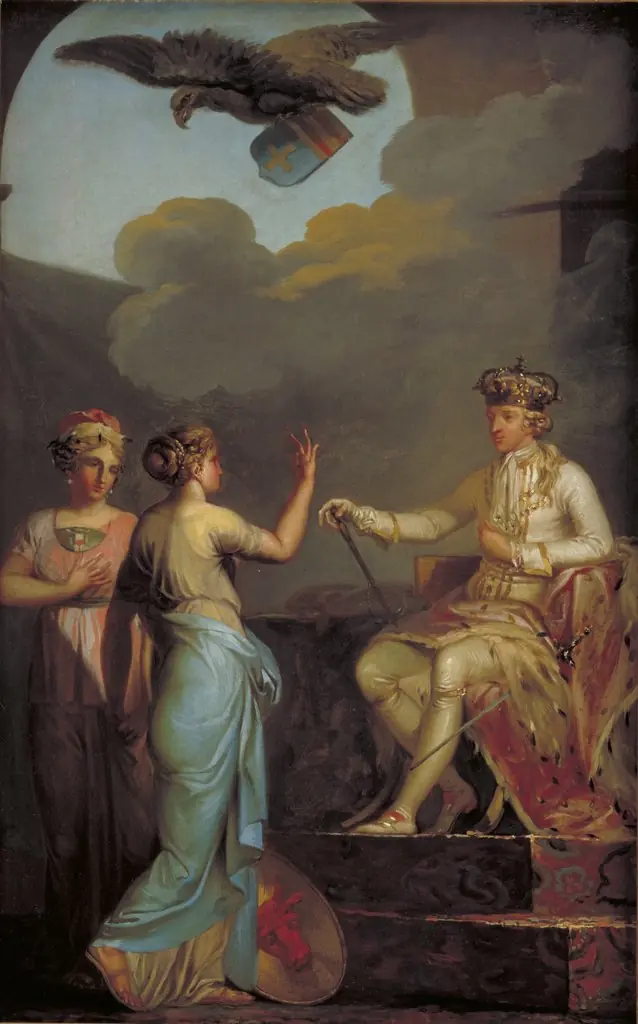 Christian VII Uniting the Ducal with the Royal Part of Holstein in 1767
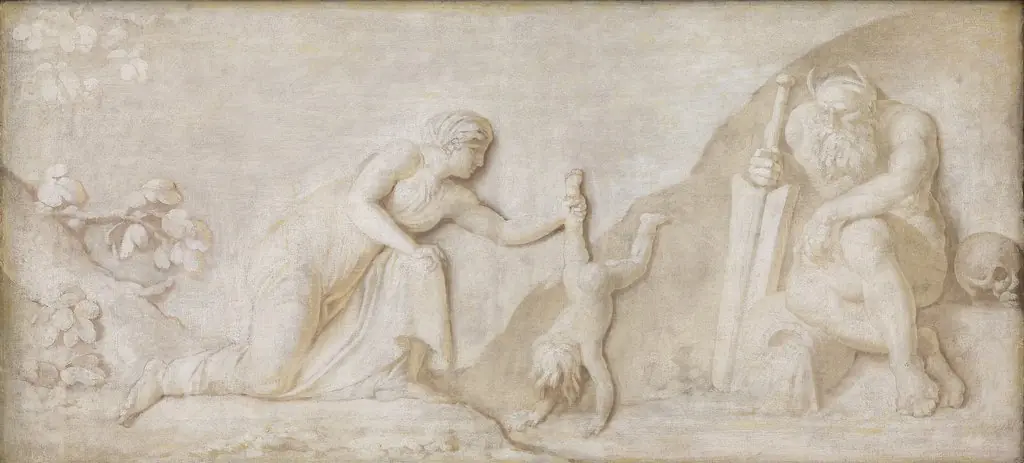 Thetis Immersing her Infant Son Achilles in the River Styx to Make him Invulnerable
 Christian IV Aboard his Flagship "The Trinity"