Artwork
Brother Philippe's Geese
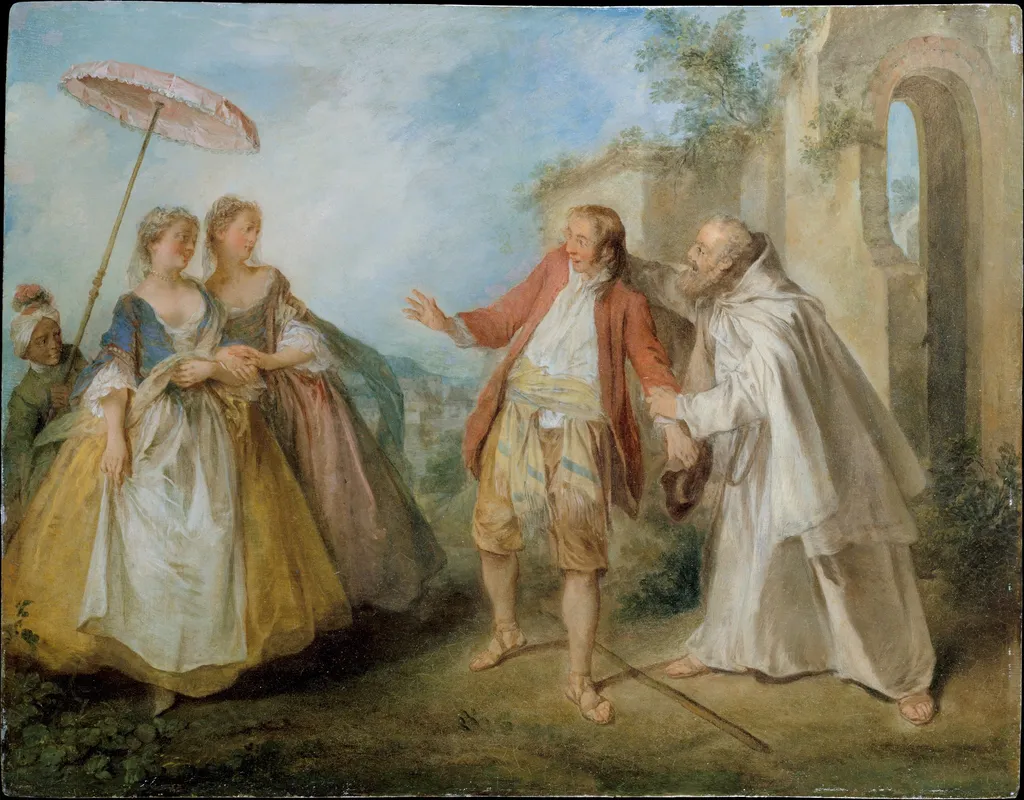
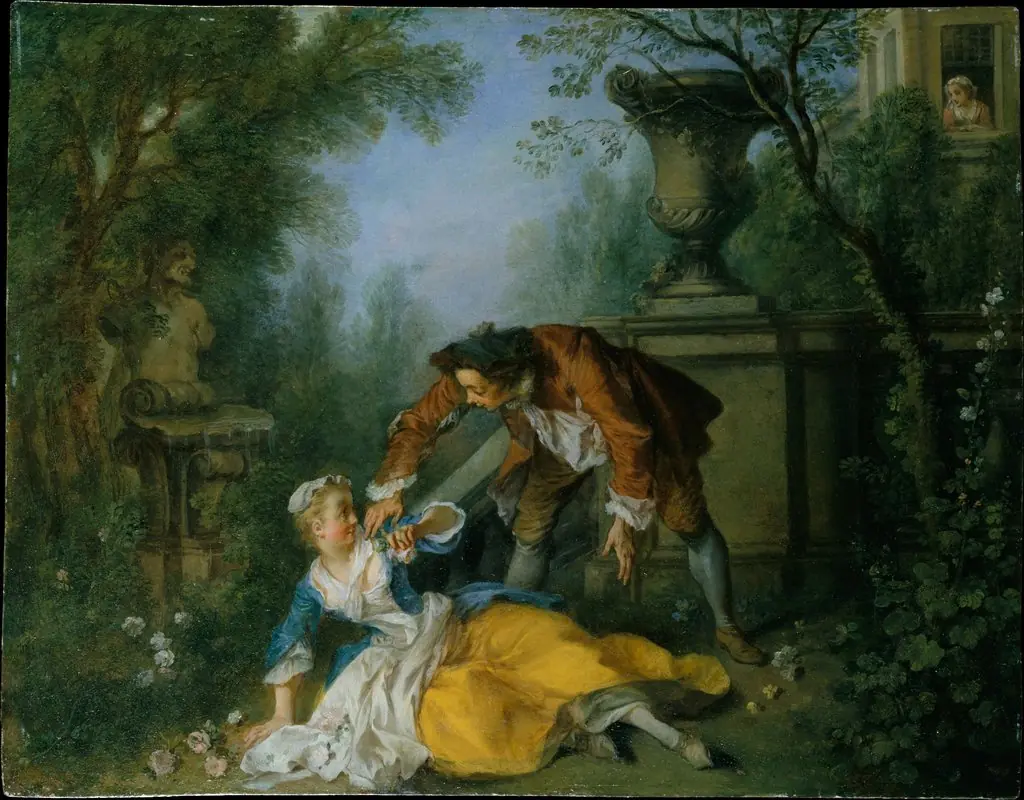
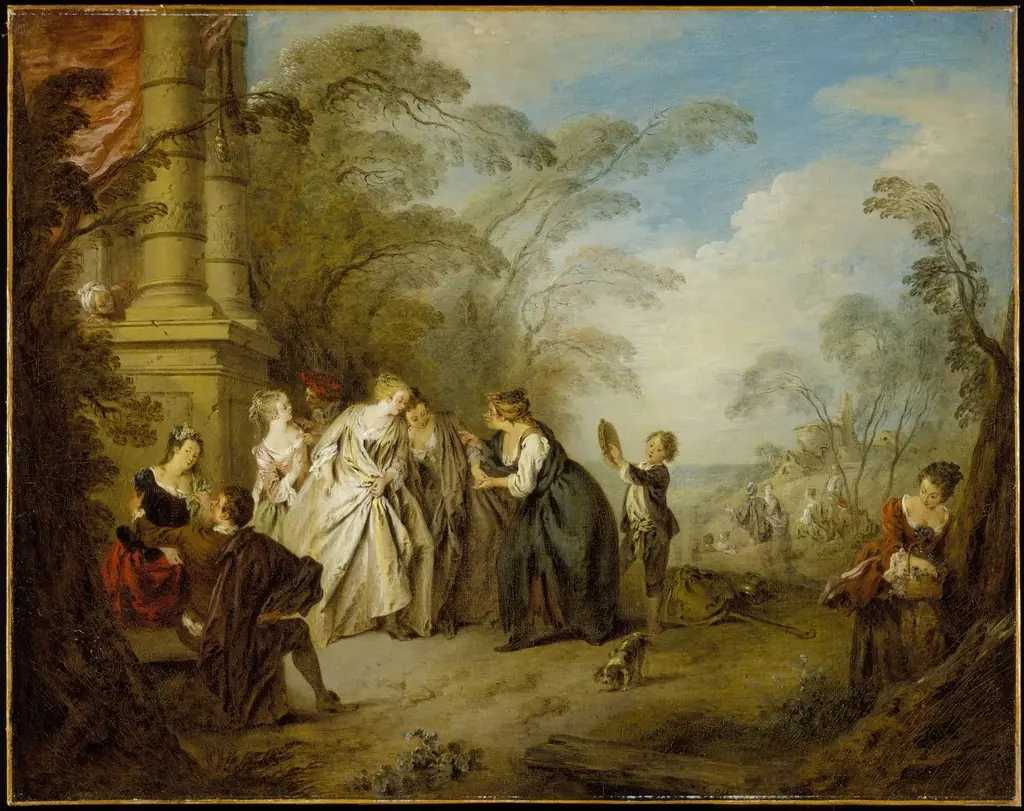
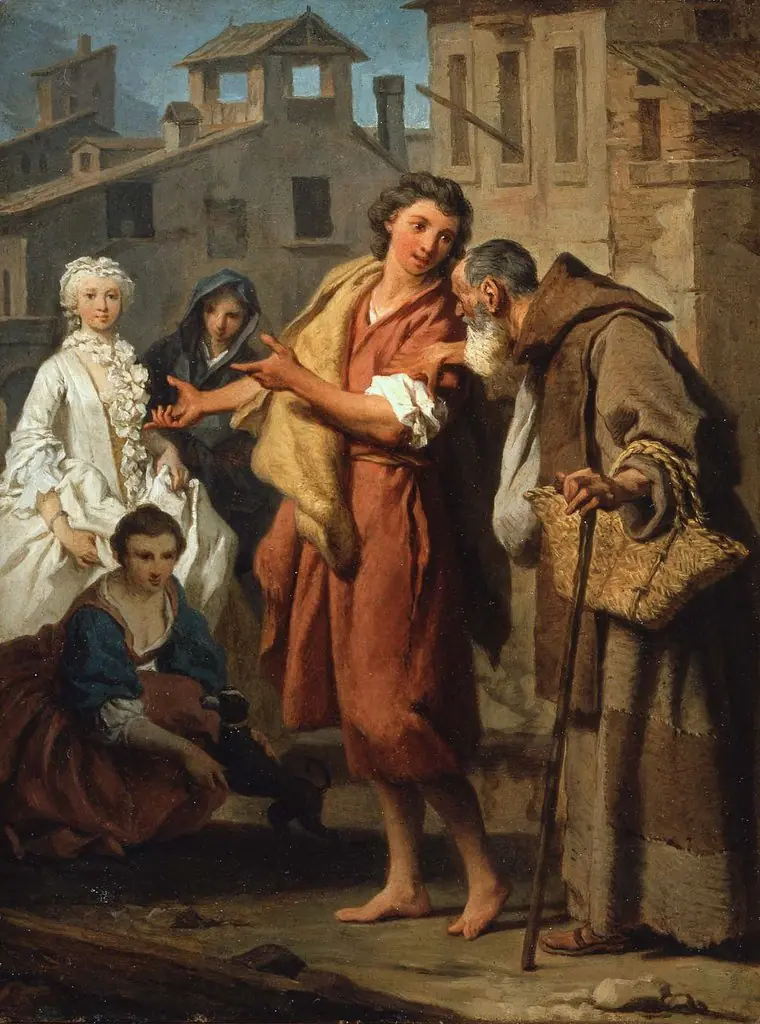
Brother Philippe's Geese is an oil painting by the Rococo painting artist Nicolas Lancret. It dates from 1736 and is held in the collection of the Metropolitan Museum of Art.
About this work
Technique & Style
Specific details regarding the work's current physical condition or conservation history are not provided in the available records.
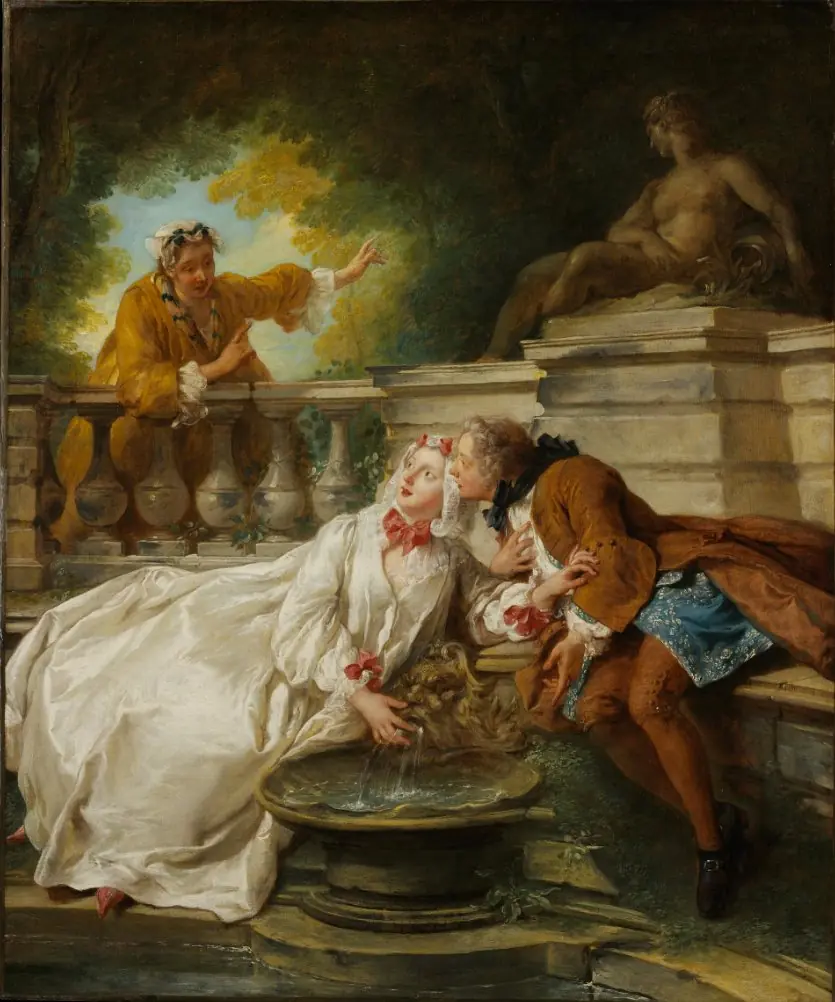
Executed in 1736 by Nicolas Lancret, this work is an oil painting applied to a copper support. The choice of copper as a ground typically yields a smooth, hard surface that allows for fine detail and a luminous finish, characteristics associated with Lancret's refined Rococo style. The composition depicts a genre scene featuring a man, a woman, and a domestic servant, rendered with the delicate handling typical of the artist's narrative subjects.
Measuring approximately 27.3 by 35.2 centimetres, the small-scale format suggests an intimate viewing experience. Specific details regarding the work's current physical condition or conservation history are not provided in the available records.
History & Provenance
Brother Philippe's Geese was painted by Nicolas Lancret in 1736 as an oil on copper. While no specific commission is recorded in the sources, the painting's provenance begins with the collector Rodolphe Kann, passing to Herbert Stern, 1st Baron Michelham, then to Alfred Lowenstein, followed by the Matthiesen Gallery. It subsequently entered the collections of Jorge Ortiz Linares, Graziella Patiño, and George Ortiz before being acquired by the Metropolitan Museum of Art, where it remains today.
The sources do not provide a specific accession number for the painting, nor do they document a formal exhibition history.
Legacy
Brother Philippe's Geese has endured as a notable work in Lancret's oeuvre, evidenced by its entry into the Metropolitan Museum of Art and its passage through several prominent private collections, from Rodolphe Kann through the Matthiesen Gallery to the Ortiz collections. This provenance highlights the painting's sustained esteem among collectors and institutions, securing its legacy as a valued example of early-18th-century French genre painting.
Overview
Nicolas Lancret's 1736 painting, Brother Philippe's Geese, is rendered in the Rococo style on a copper support. It depicts a scene involving a domestic worker, a man, and a woman in an outdoor setting. The work is characteristic of Lancret's focus on lighthearted social narratives and is part of The Metropolitan Museum of Art's collection, reflecting 18th-century French genre painting.
Subject & Meaning
The composition features a woman, clad in a dark dress and white apron, holding a goose by its neck. Beside her stands a man in a brown coat and hat, observing the bird. This interaction unfolds outdoors, against a backdrop of a stone wall, a doorway, and distant trees, conveying an atmosphere of simplicity and domestic life.
Context
Nicolas Lancret was a prominent French painter of the 18th century, recognized for his depictions of social customs and comedic narratives. His works frequently captured the refined leisure and everyday interactions of French society during the Regency and early reign of Louis XV, offering a glimpse into the era's cultural milieu with a characteristic lightness of touch.
Own this work as a print
Artist & collection
Artist
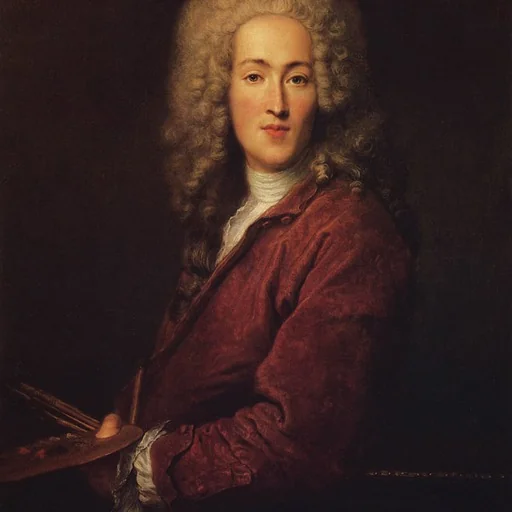
Nicolas Lancret (French pronunciation:; 22 January 1690 – 14 September 1743) was a French painter.