Artwork
Amor, der vækkes af Psyche
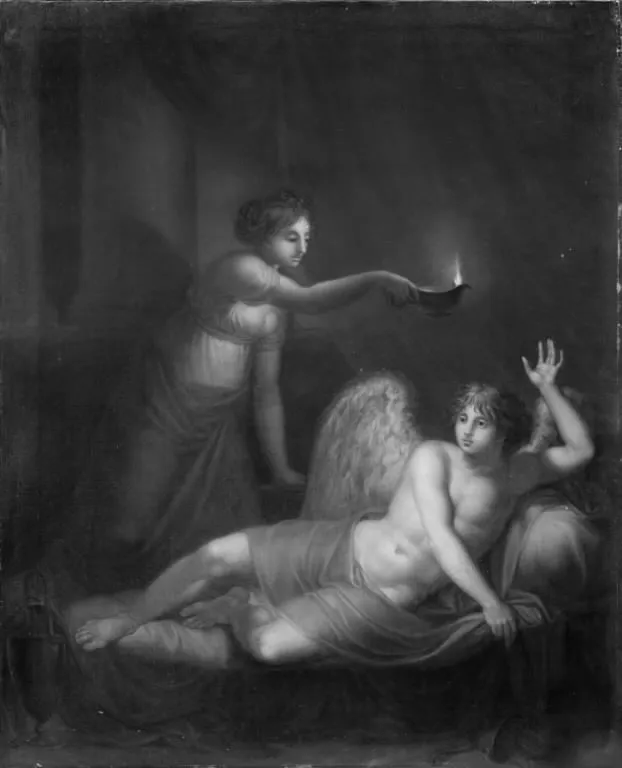
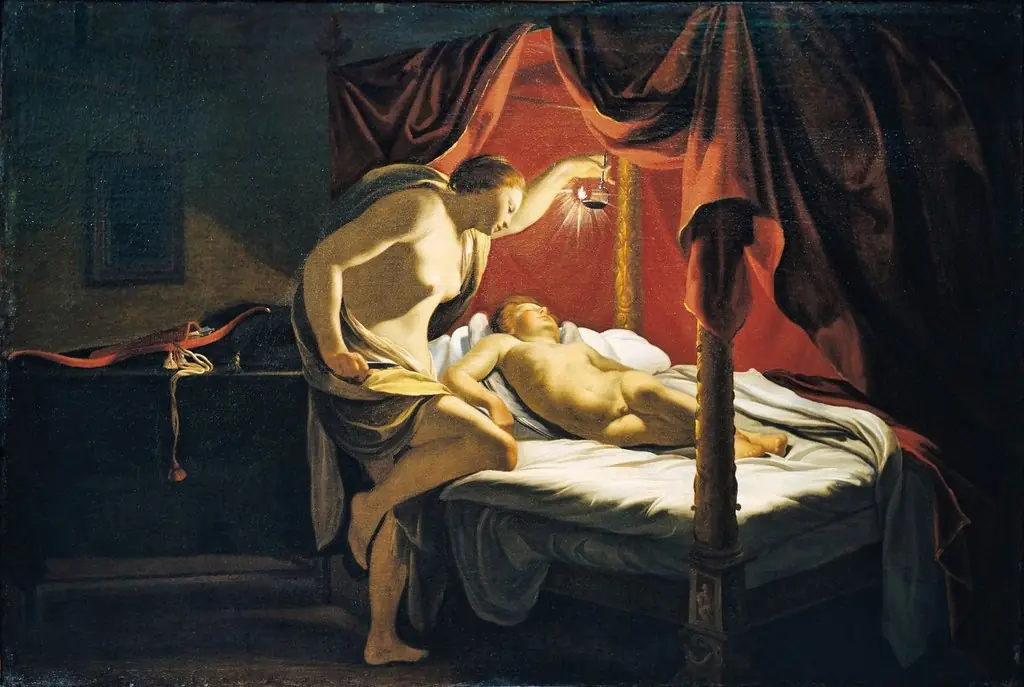
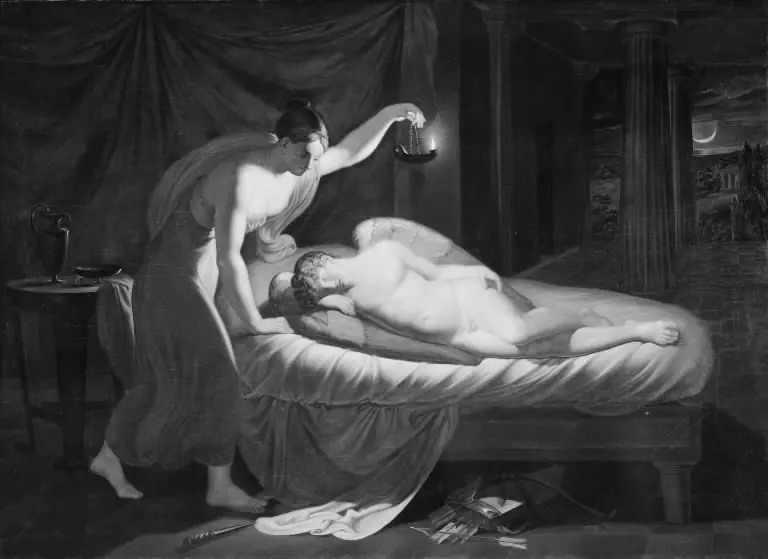
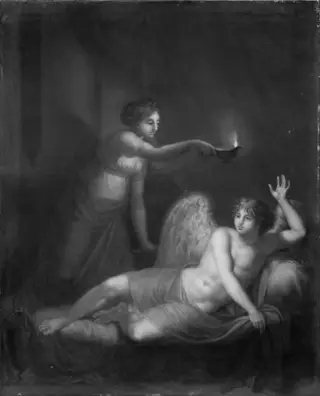
Amor, der vækkes af Psyche is an oil painting by the Neoclassicist artist Nicolaus Wolff. It dates from 1798 and is held in the collection of the Statens Museum for Kunst.
About this work
Subject & Meaning
As a work of mythology, the piece represents the romantic and dramatic themes central to the ancient story of these two lovers.
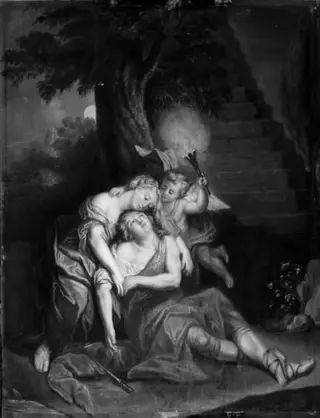
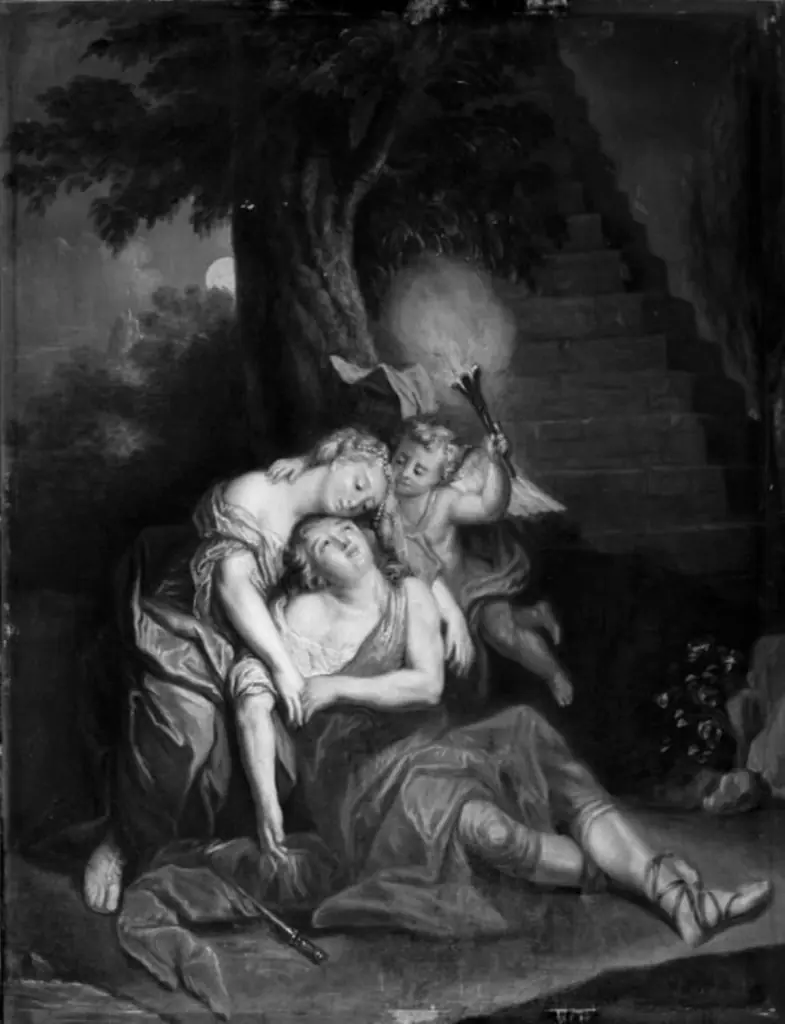
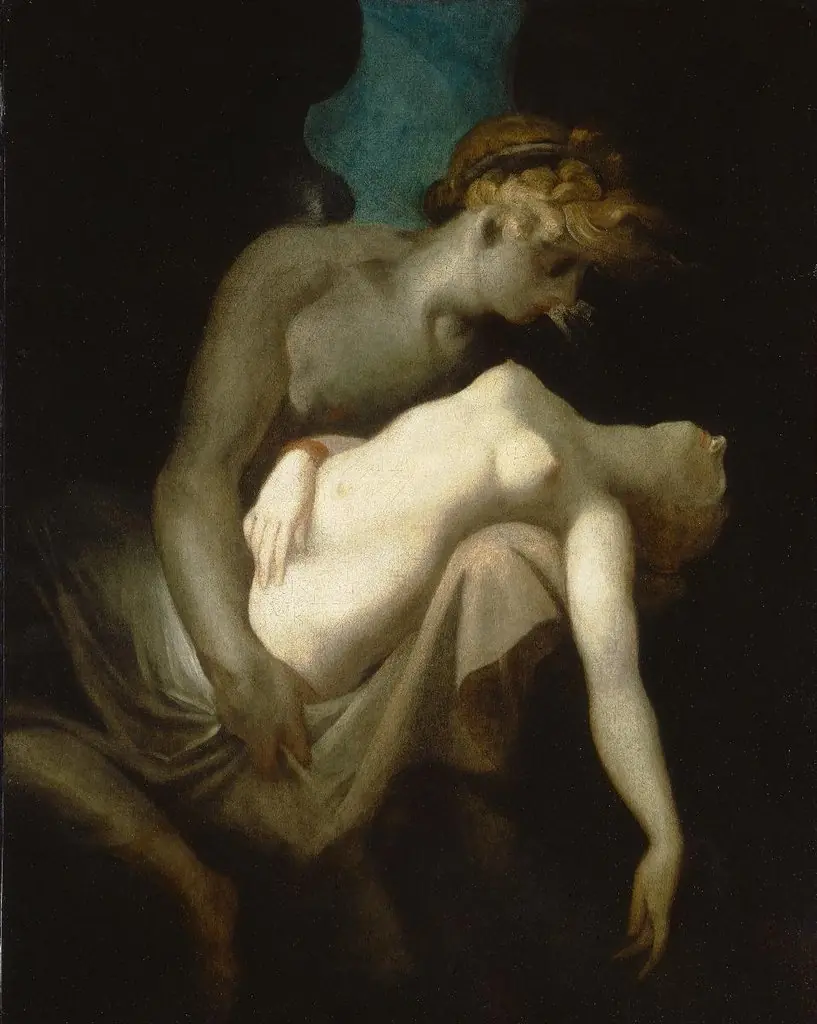
Nicolaus Wolff's 1796 mythological painting depicts the classical figures Cupid and Psyche. The composition specifically illustrates the moment Psyche wakes Cupid, a scene identified by the presence of an oil lamp, which serves as a key iconographic element in this narrative. As a work of mythology, the piece represents the romantic and dramatic themes central to the ancient story of these two lovers.
Technique & Style
Nicolaus Wolff created Amor, der vækkes af Psyche in 1796 as an oil painting on canvas, measuring 1240 cm in height and 1020 cm in width. The work depicts Cupid, Psyche, and an oil lamp, rendered in a mythological style characteristic of the period. Its execution and composition reflect the formal qualities of neoclassical mythological painting, with attention to symbolic elements such as the lamp and the awakening figure of Amor.
History & Provenance
The painting Amor, der vækkes af Psyche was created in 1796 by Nicolaus Wolff. It is an oil on canvas work measuring 124 by 102 centimeters, depicting Cupid, Psyche, and an oil lamp in a mythological scene. The artwork entered the collection of the Statens Museum for Kunst, where it remains on display.
The painting is in the collection of the Statens Museum for Kunst (the National Gallery of Denmark), as recorded in the Wikidata entry that lists it under the museum's holdings and locates it there. The work is catalogued as an oil painting on canvas measuring 124.0 cm in height by 102.0 cm in width, with an inception date of 1796.
No exhibition history is documented in the available sources.
Legacy
The painting has been part of the Statens Museum for Kunst collection since its acquisition, where it remains on public view in the museum's European painting galleries. Its status as a mythological work from the late 18th century has contributed to scholarly discussions of Nordic neoclassicism, though it is less frequently cited in broader art historical narratives than other contemporary pieces. The work's composition, depicting Cupid and Psyche with an oil lamp, reflects the era's fascination with classical mythology rendered in oil on canvas.
Overview
Nicolaus Wolff's 'Amor, der vækkes af Psyche' (1798) illustrates the pivotal moment from Apuleius's 'The Golden Ass' where Psyche, driven by curiosity and doubt, illuminates the sleeping form of Cupid with a lamp. The composition centers on the reclining figure of Amor, whose muscular form is partially draped in fabric, contrasting with the upright, flowing gown of Psyche. She leans forward, holding a lit oil lamp that casts a dramatic chiaroscuro effect, highlighting the god's features as a drop of hot oil falls upon his shoulder, awakening him.
Created in 1798 during the late Danish Golden Age, the work reflects the Neoclassical interest in mythological narratives and the emotional intensity of human-divine interactions. Wolff, a prominent Danish painter trained in the tradition of Nicolai Abildgaard, utilizes this subject to explore themes of forbidden knowledge and the fragility of trust. The painting stands as a significant example of Danish mythological art from the turn of the 19th century, demonstrating Wolff's skill in rendering classical anatomy and atmospheric lighting within a narrative context.
Artist & collection