Artwork
Cartouche Moderne with Emblems of Death
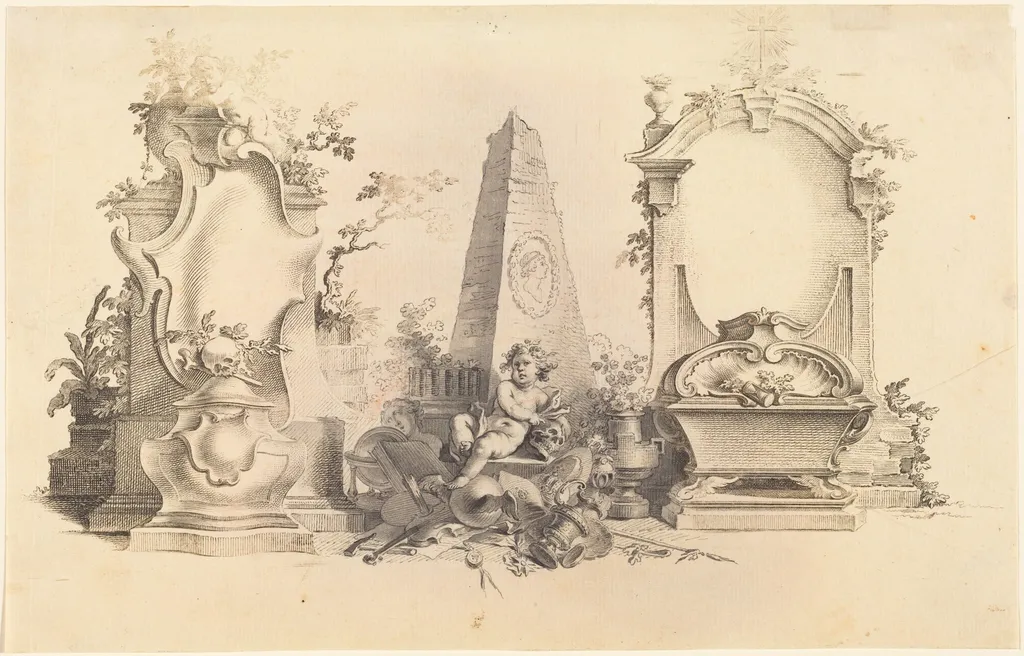
Cartouche Moderne with Emblems of Death is a chalk print by the Baroque artist Johann Esaias Nilson. It dates from 1754 and is held in the collection of the National Gallery of Art.
About this work
Overview
The composition functions as a decorative cartouche designed for transfer, evidenced by the red chalk grounding incised on the verso.
Created in 1754, Johann Esaias Nilson's Cartouche Moderne with Emblems of Death is a mixed-media work combining etching, pen and black ink, and gray wash on laid paper. The composition functions as a decorative cartouche designed for transfer, evidenced by the red chalk grounding incised on the verso. Visually, the piece frames a central vignette between two monumental architectural elements symbolizing mortality.
The left side features a broken column surmounted by a skull, while the opposing side displays a curved pediment topped with a cross. Within the central space, a putto rests on a ledge holding a wreath, positioned above a melancholic figure leaning against a tomb. This work exemplifies the mid-18th-century German tradition of allegorical printmaking, where Nilson utilized the contrast between the etched foundation and the expressive hand-drawn additions to emphasize the vanitas theme.
The integration of drawing and print techniques reflects the artist's role in producing designs for further reproduction or direct artistic expression during the Baroque-to-Rococo transition.
Subject & Meaning
The composition presents a stylised funerary cartouche framed by two monumental stone forms. On the left, a broken column supports a skull, while the right side features a curved arch topped by a cross. At the centre, a plump infant angel holds a wreath, and below a mournful figure leans against a tomb amid scattered bones and a dog, evoking themes of mortality and remembrance.
Technique & Style
Nilson employs a combination of precise etching lines and softer pen‑drawn strokes, enhanced by a gray wash that gives depth to the shadows. The red‑chalk grounding on the reverse side aids in transferring the design, while the counterproof method yields a reversed image with delicate tonal variation, characteristic of mid‑18th‑century printmaking.
History & Provenance
Created in 1754, the print reflects the period’s fascination with memento mori motifs in decorative arts. Though specific ownership records are scarce, the work is documented within Nilson’s oeuvre of funerary and allegorical prints, illustrating his engagement with contemporary tastes for elaborate tomb ornamentation.
Context
During the mid‑1700s, European art frequently incorporated emblematic symbols of death within ornamental designs for churches and aristocratic estates. Nilson’s cartouche aligns with this tradition, merging architectural elements with allegorical figures to convey the transience of life, a common preoccupation of the Enlightenment era’s visual culture.
Own this work as a print
Artist & collection

 Portrait of a Man
 Rococo Fountain with Lovers and the Four Elements
 Two Actors Peeking through a Theater Curtain while Others Prepare the Footlights
 Ladies and Gentlemen Playing Billiards
 An Elegant Company Playing Board Games
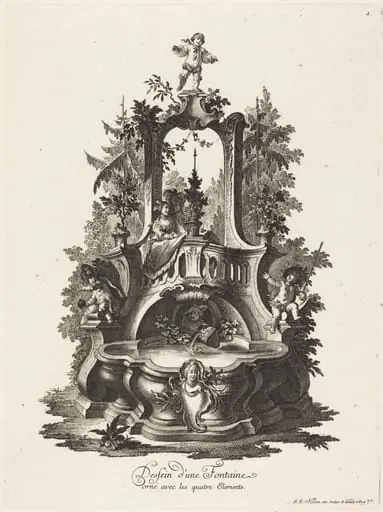 Dessein d'une Fontaine orné avec les quatre Elements (Design for a Fountain Decorated with the Four Elements)
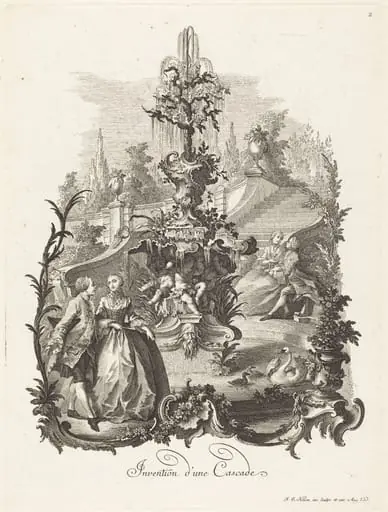 Invention d'une Cascade (Design for a Cascade)
![Cartouches Modernes orné avec des [diferentes Figures] (Plate VI-1 from the set), by Johann Esaias Nilson](https://artifactworldgallery.com/img/johann-esaias-nilson--cartouches-modernes-orne-avec-des-diferentes-figures-plate-v--37083fb67ce929ab-w320.webp) Cartouches Modernes orné avec des [diferentes Figures] (Plate VI-1 from the set)
Cartouches Modernes orné avec des [diferentes Figures] (Plate VI-1 from the set)
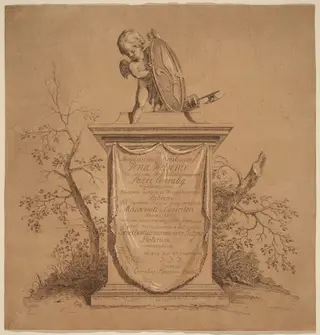 Title Page
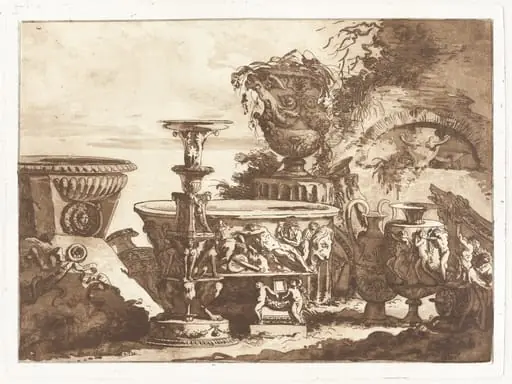 Composition with Antique Vases
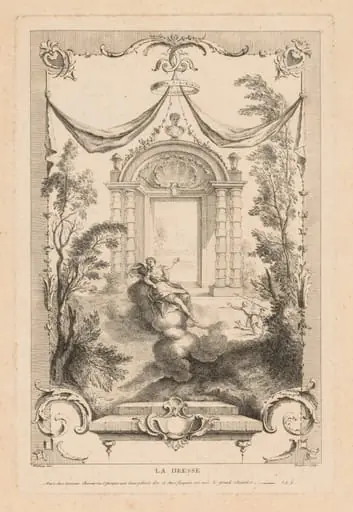 The Goddess, Diana on the Clouds
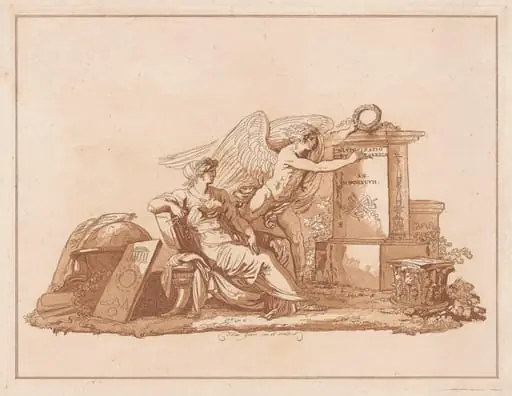 Personification of Architecture with the Genius of the Fine Arts
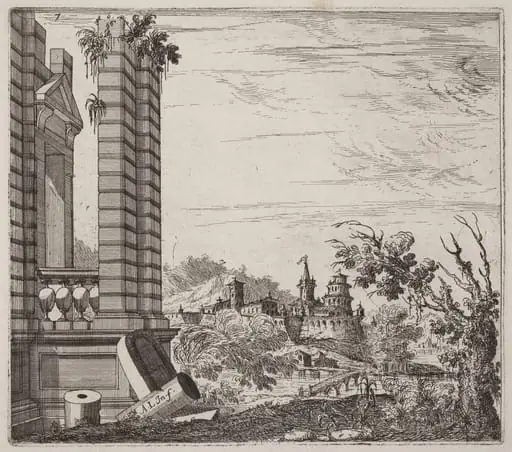 Fantastic River Landscape with Ruins and a Castle
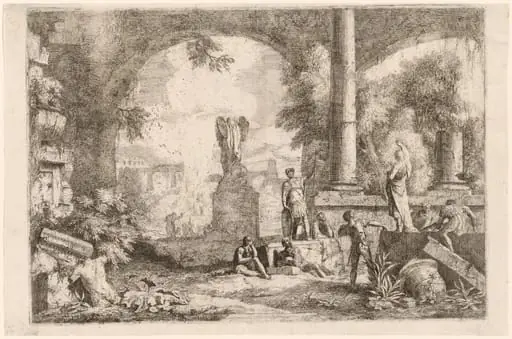 Capriccio of Antique Ruins with Men Gazing at a Classical Orator
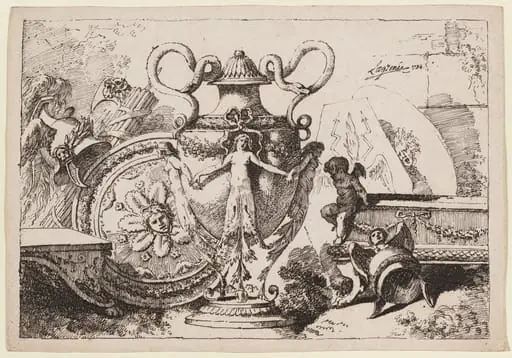 Composition with Antiquities
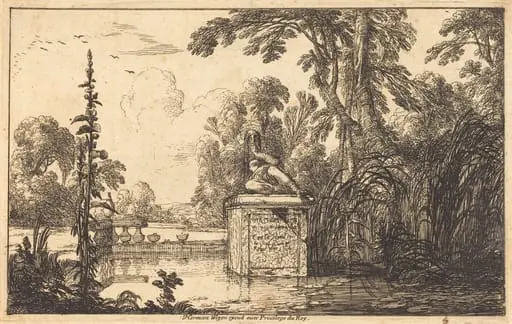 Pool in a Formal Garden
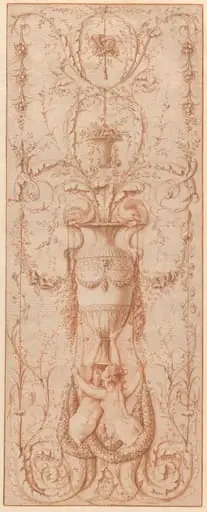 Design for a Decorative Panel with Two Sirens Holding a Vase Embellished with Dolphins and other Decorative Motifs