Artwork
Fragmentary Scene of Foreigners, Tomb of Senenmut
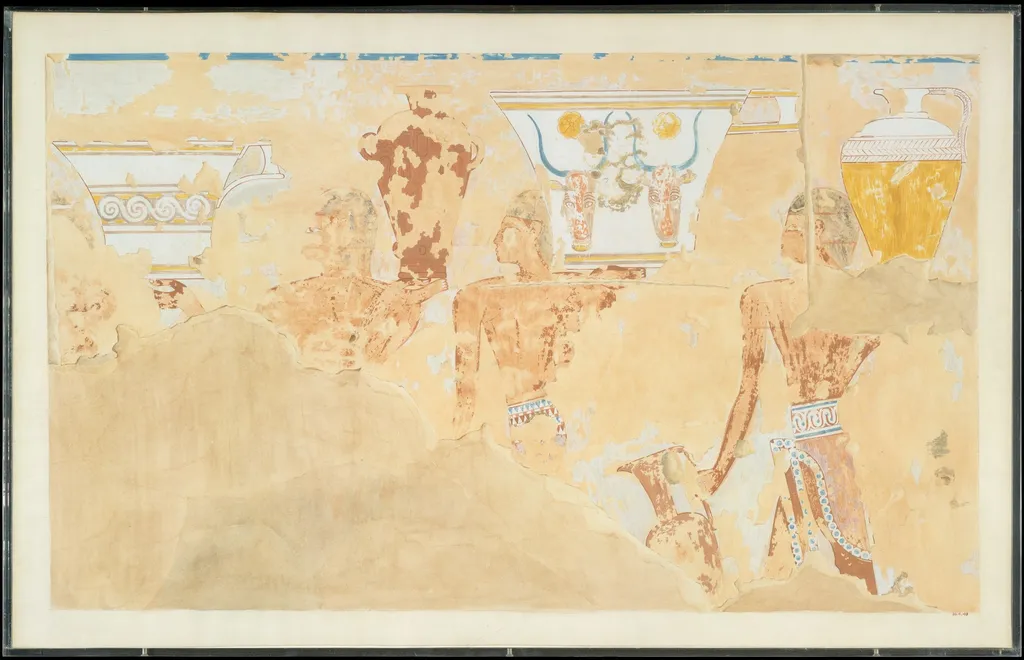
Fragmentary Scene of Foreigners, Tomb of Senenmut is an unspecified painting by the Aestheticist artist Nina M. Davies. It dates from 1490 and is held in the collection of the Metropolitan Museum of Art.
About this work
Subject & Meaning
Created as a facsimile of the original wall paintings in the Tomb of Senenmut (TT 71), the work illustrates a man among these foreign figures.
The artwork depicts a fragmentary scene featuring foreigners, specifically identified as individuals from Keftiu. Created as a facsimile of the original wall paintings in the Tomb of Senenmut (TT 71), the work illustrates a man among these foreign figures. The presence of Keftiu, a term historically associated with Crete, signifies the representation of international contacts and foreign peoples within the Egyptian tomb context.
This imagery serves to document the diversity of nations known to the ancient Egyptians during the period of the tomb's creation.
History & Provenance
The facsimile Fragmentary Scene of Foreigners in the Tomb of Senenmut (TT 71) was created in 1479 BCE, the same year attributed to the original painted decoration of the tomb’s interior.
The work is a modern reconstruction by Nina M. Davies, who specialized in copying New Kingdom wall paintings. It is held in the collection of the Metropolitan Museum of Art, where it entered as accession number 30.4.49. The facsimile reproduces scenes of foreign tribute bearers (Keftiu) originally painted on the tomb walls, documenting a moment in the tomb’s decoration history.
Overview
The fragment originates from the wall decoration of Senenmut’s tomb, a 15th‑century BCE burial place of the famed court official of Hatshepsut. The surviving portion shows two standing figures with arms raised, framed by a faded blue border and a suggestion of a roofline. Earthy pigments dominate, with muted browns, yellows, blues and traces of red, while three large storage jars are positioned behind the figures.
Technique & Style
Executed in true‑color pigment on limestone plaster, the scene employs the conventional Egyptian palette of ochre, yellow, blue and limited red. Linear outlines define the figures, while the background is rendered with a flat, stylized approach typical of New Kingdom funerary decoration. The composition is partially lost, leaving only a fragment of the original narrative.
Context
Senenmut, a close advisor to Hatshepsut, commissioned an elaborate tomb (TT 71) that includes scenes of daily life, foreign delegations, and agricultural activities. This fragment reflects the broader New Kingdom interest in documenting Egypt’s international contacts and the wealth brought by foreign tribute, underscoring the political and economic reach of the royal court.
Artist & collection
Artist
The Egyptologists Nina M. Davies (6 January 1881 – 21 April 1965) and Norman de Garis Davies (1865–5 November 1941) were a married couple of illustrators and copyists who worked in the early and mid-twentieth century…

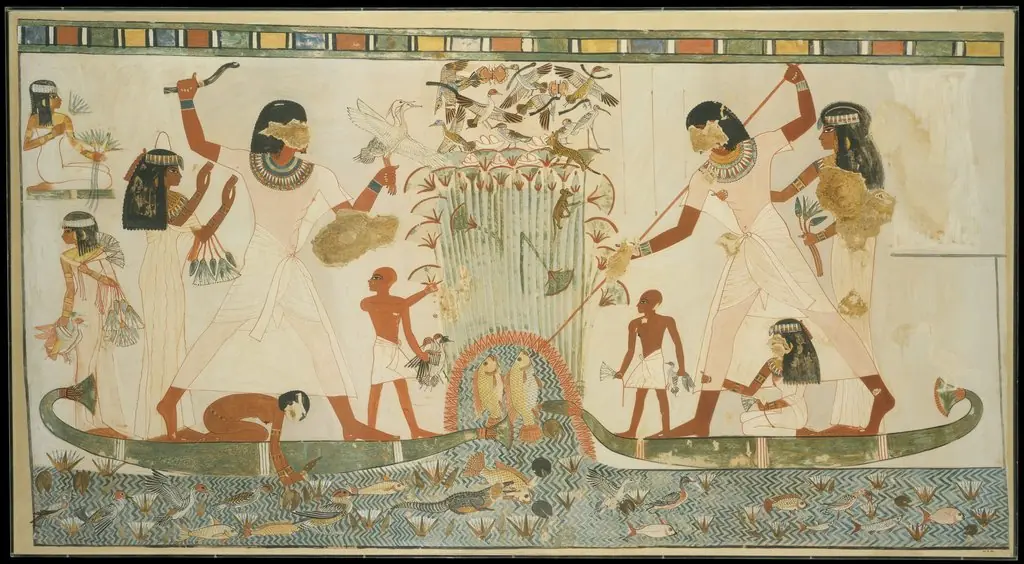 Menna and Family Hunting in the Marshes, Tomb of Menna
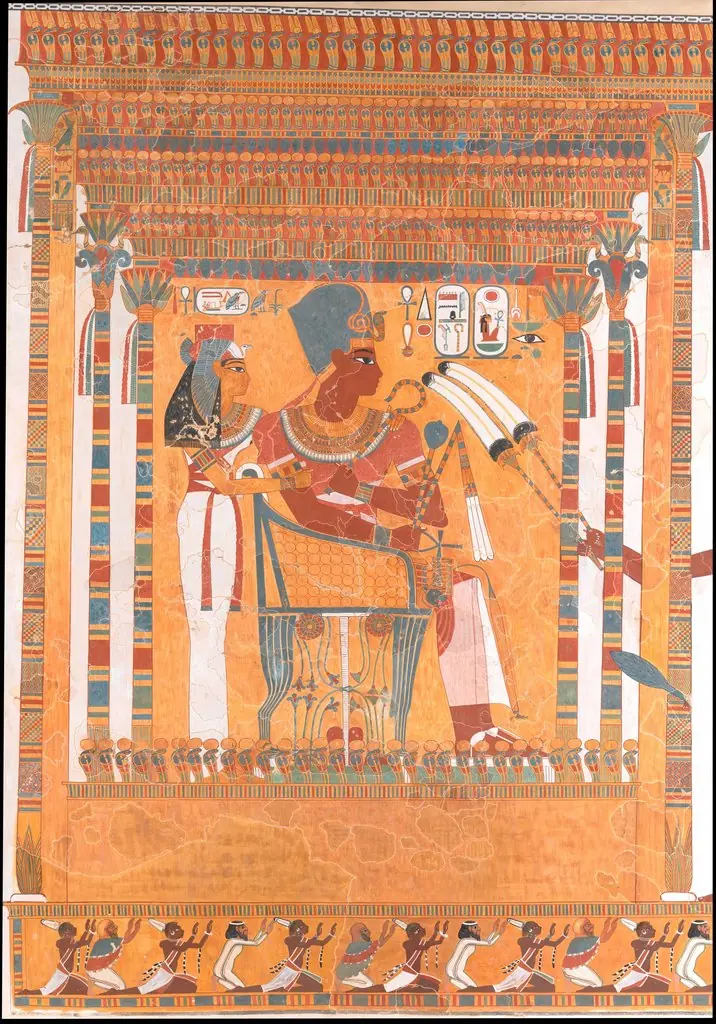 Amenhotep III and his Mother, Mutemwia, in a Kiosk
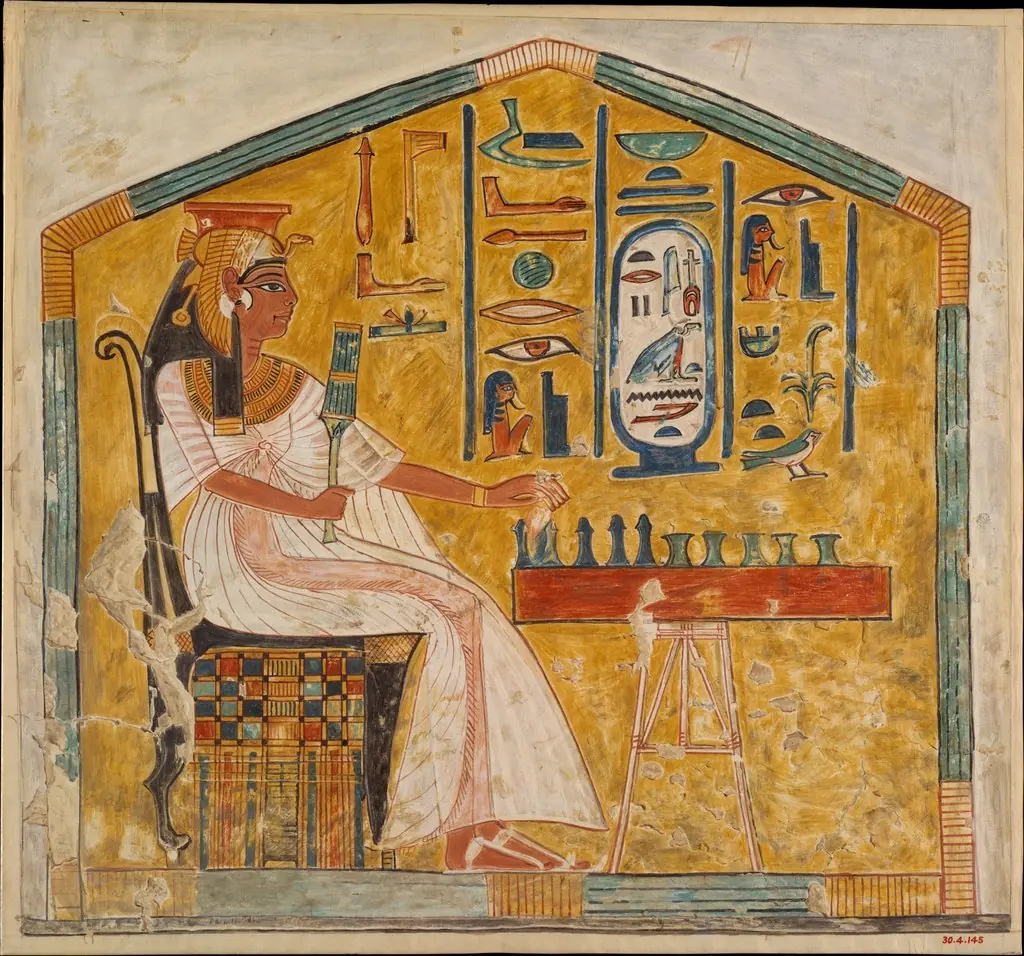 Queen Nefertari Playing Senet
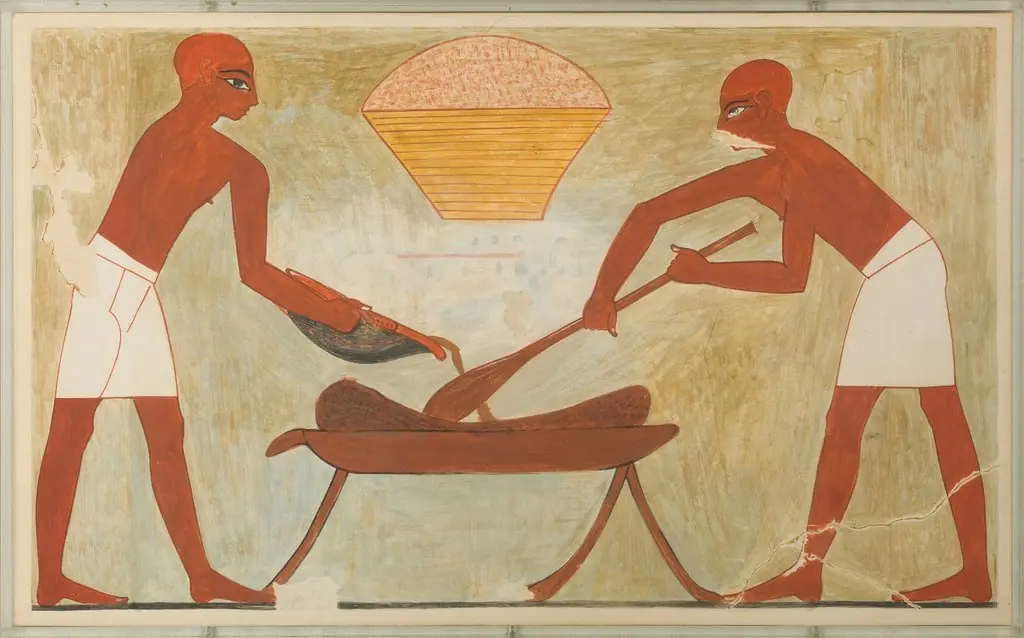 Preparing Dough, Tomb of Rekhmire
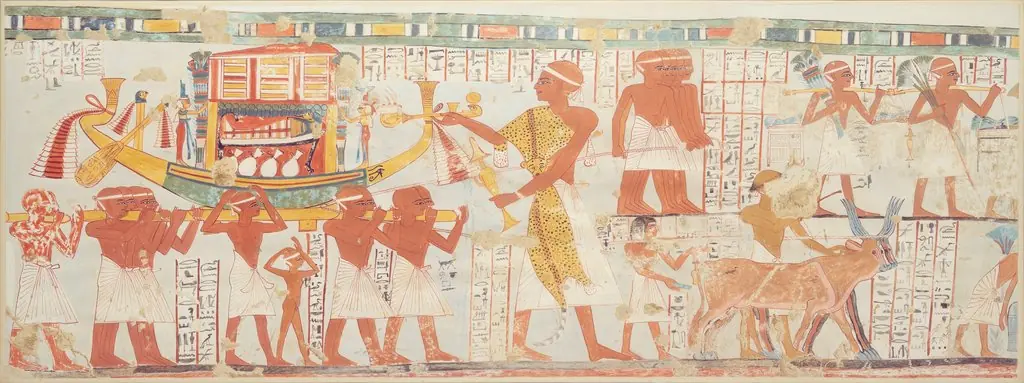 Nakhtamun's Funeral Procession, Tomb of Nakhtamun
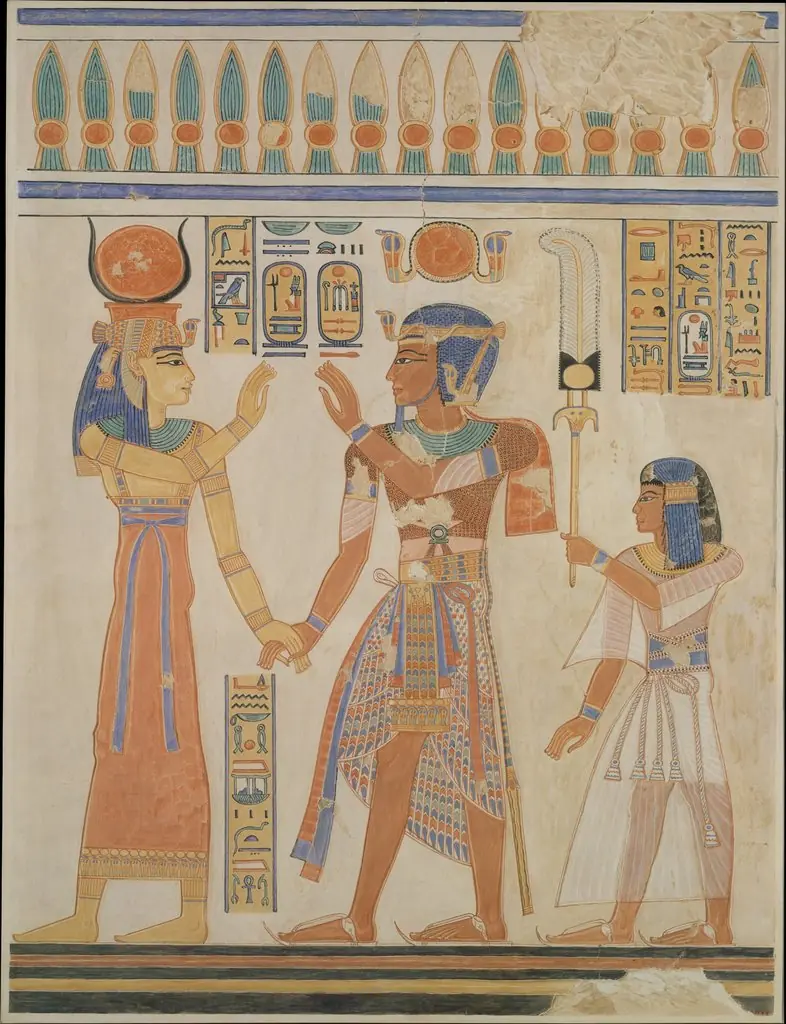 Ramesses III and Prince Amenherkhepeshef before Hathor
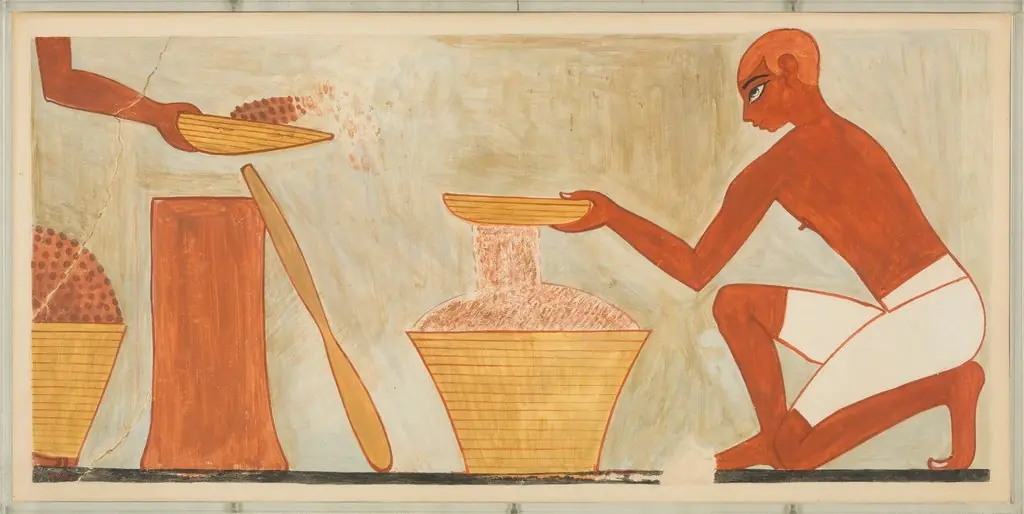 Sifting Meal, Tomb of Rekhmire
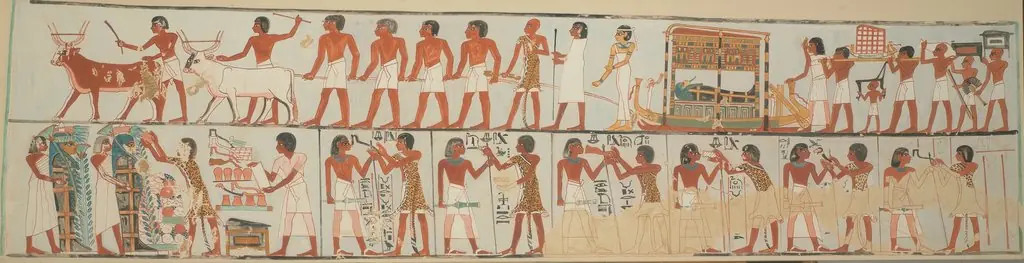 Funeral Procession, Tomb of Pairy
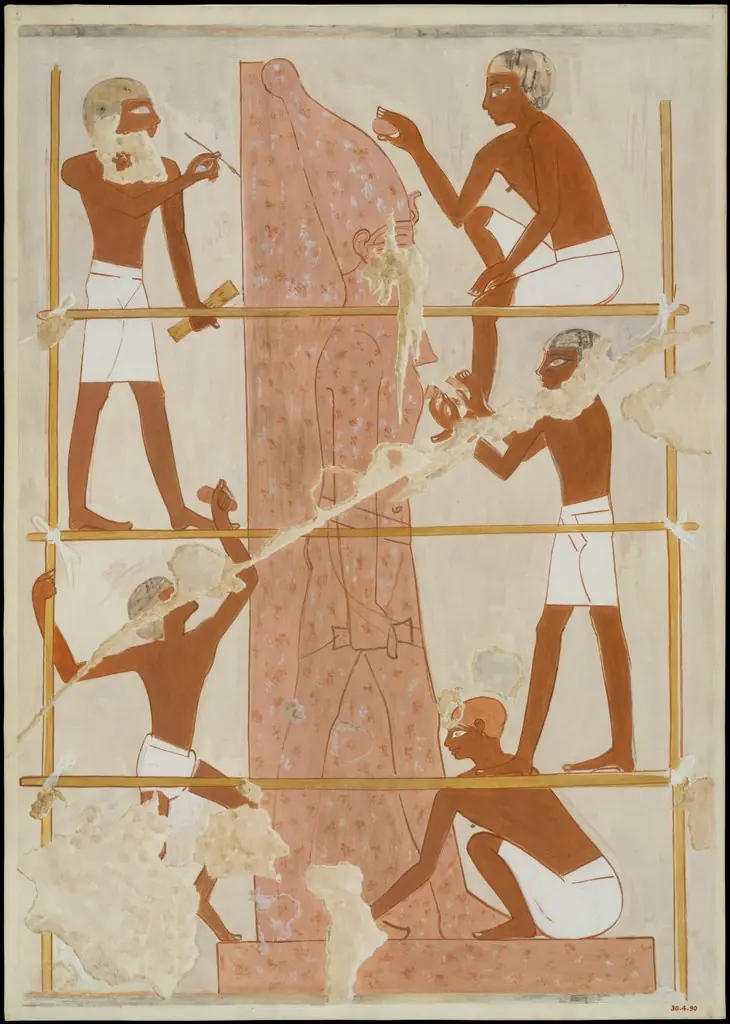 Sculptors at Work, Tomb of Rekhmire
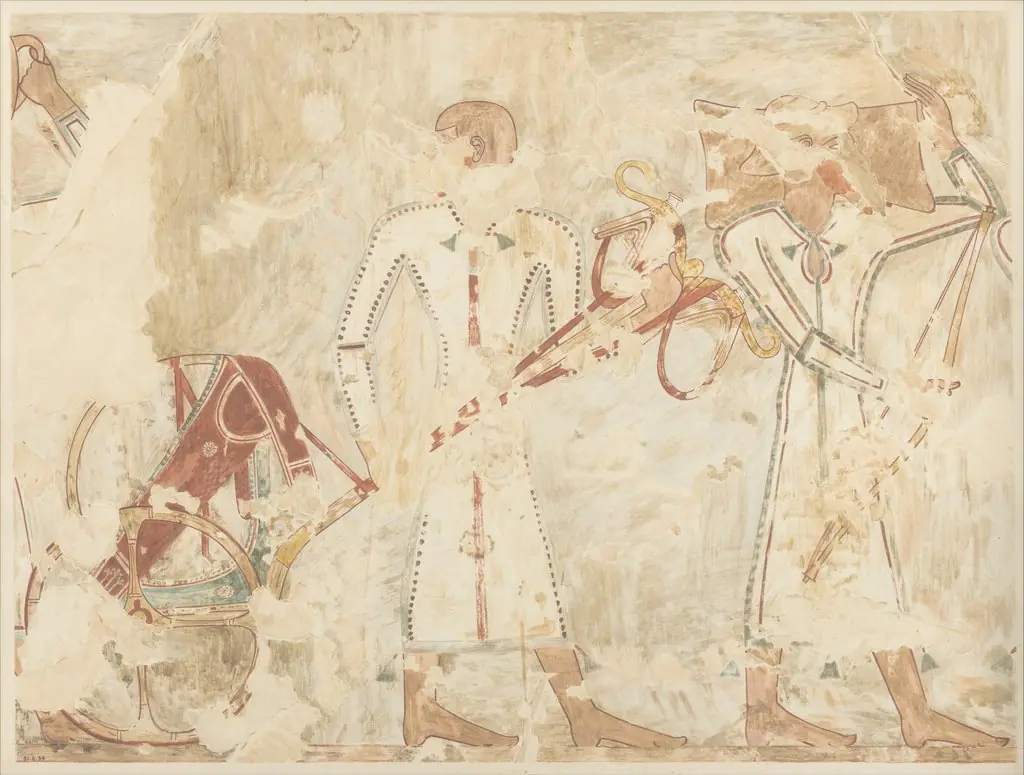 Syrians Bringing an Ingot and a Chariot, tomb of Rekhmire
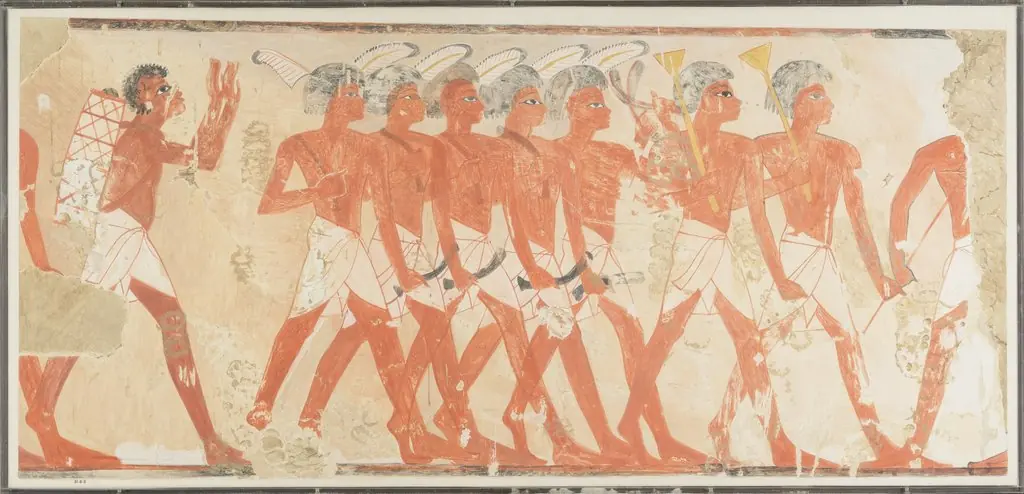 Military Musicians Showing Nubian and Egyptian Styles
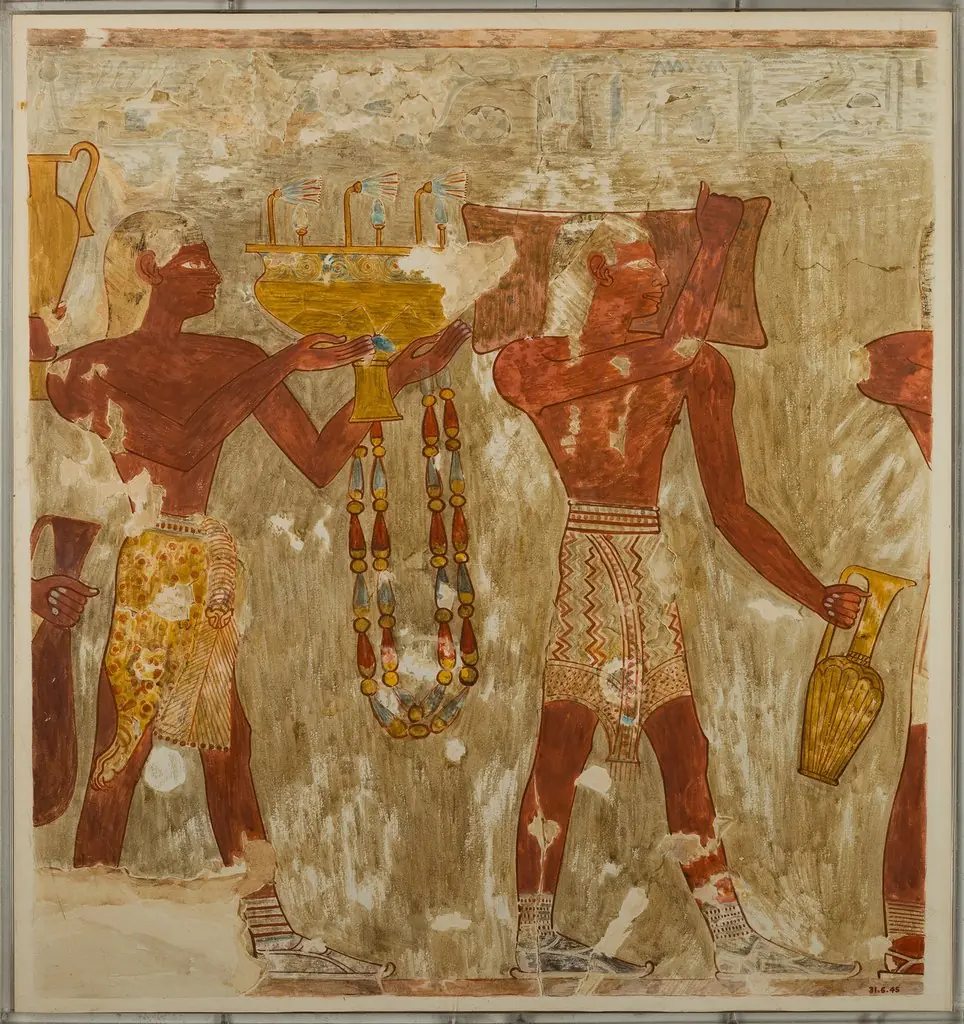 Cretans Bringing Gifts of Metal and Jewelry, Tomb of Rekhmire
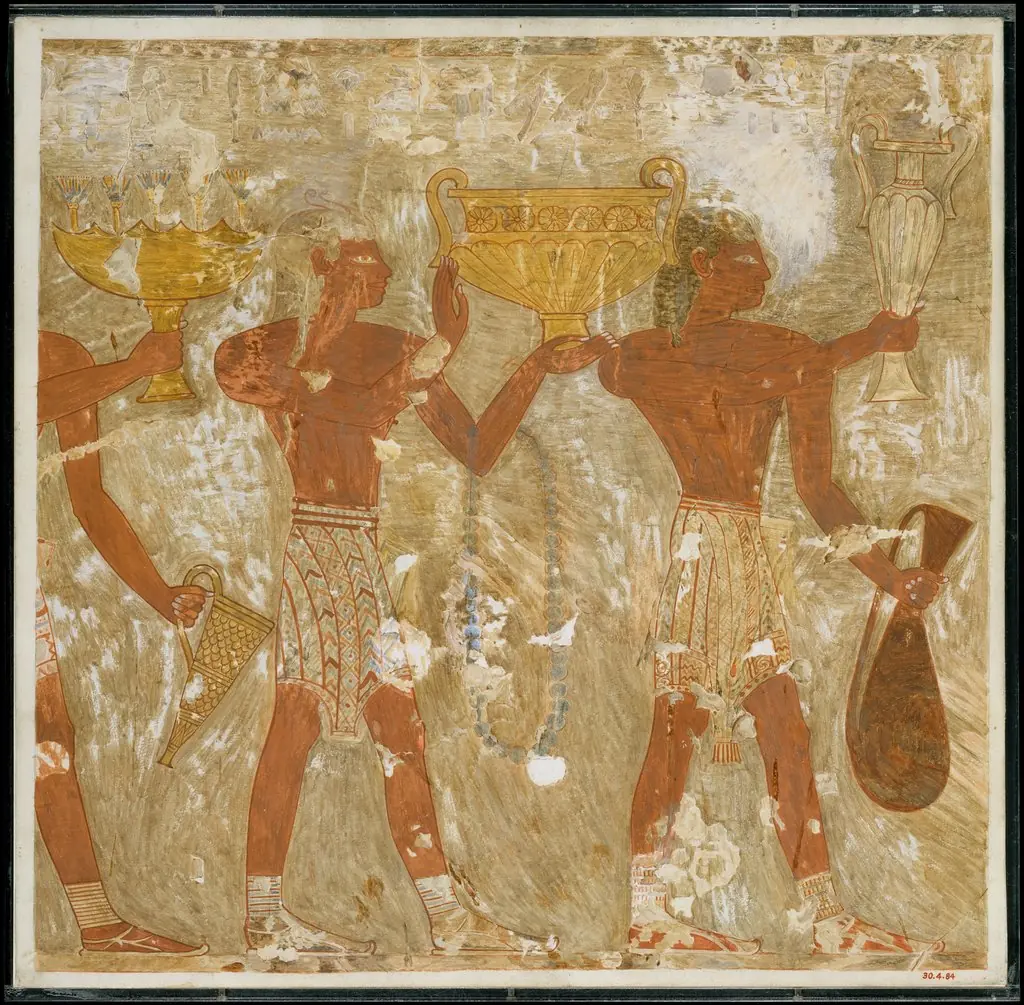 Cretans Bringing Gifts, Tomb of Rekhmire
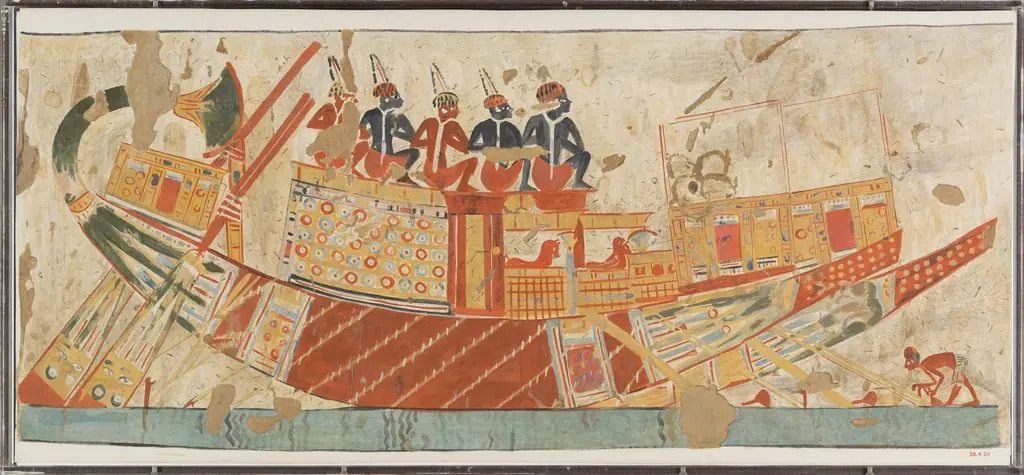 Boat Carrying Captives from Nubia, Tomb of Huy
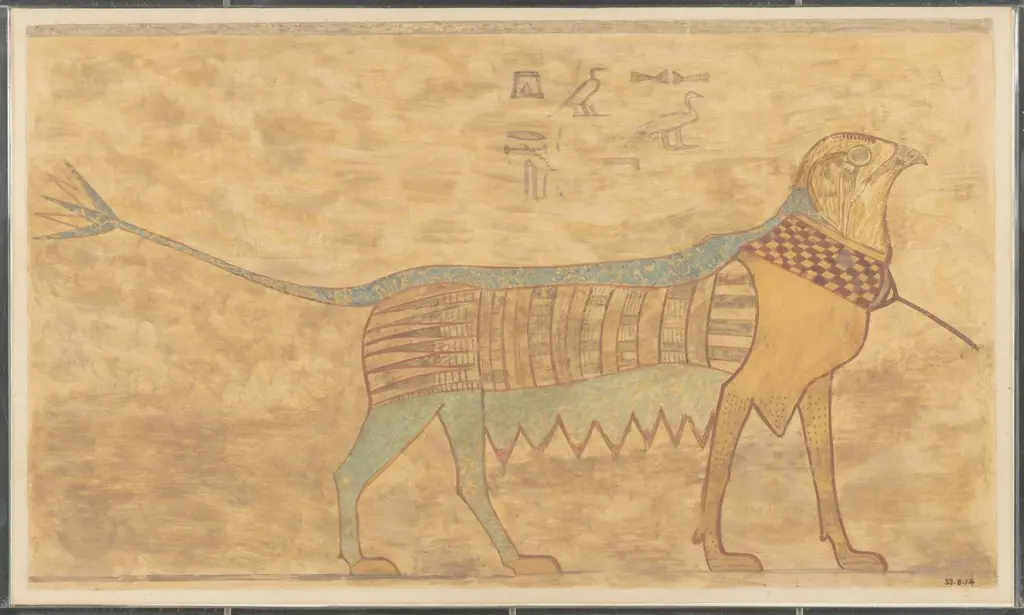 Detail of a Griffin, Tomb of Khety
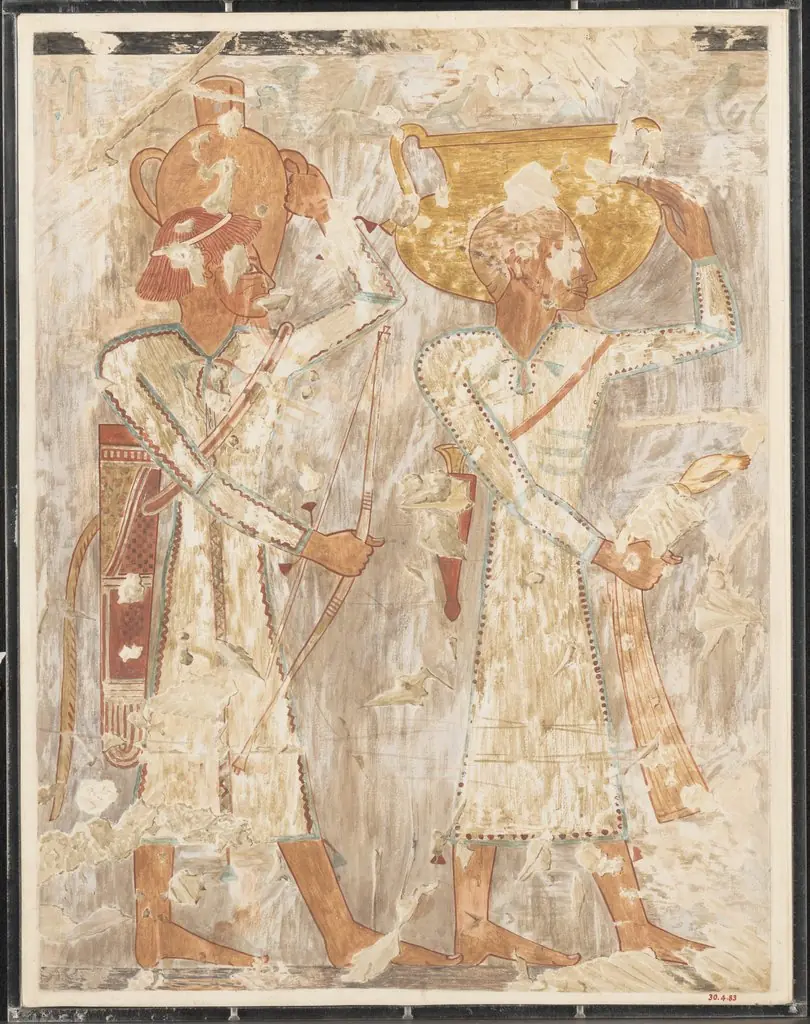 Syrians Bringing Vessels and Weapons, Tomb of Rekhmire
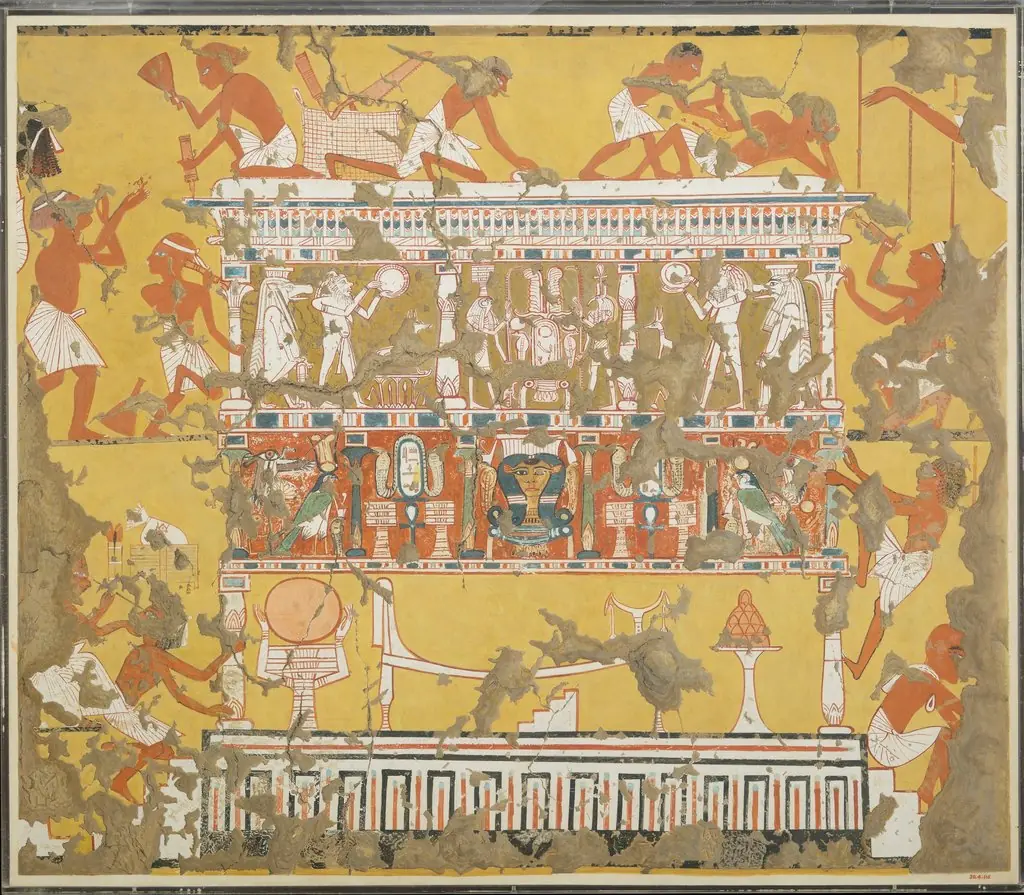 Building a Catafalque, Tomb of Ipuy
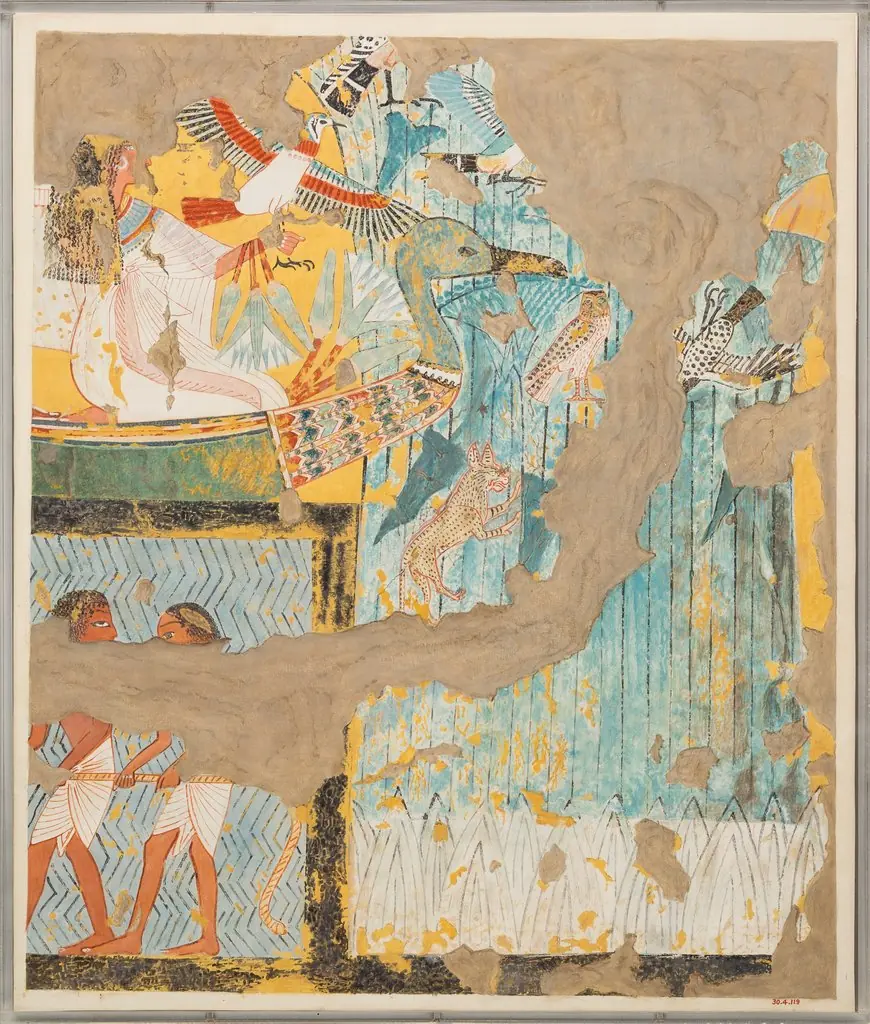 Fishing and Fowling, Tomb of Ipuy