Artwork
The Cyclops
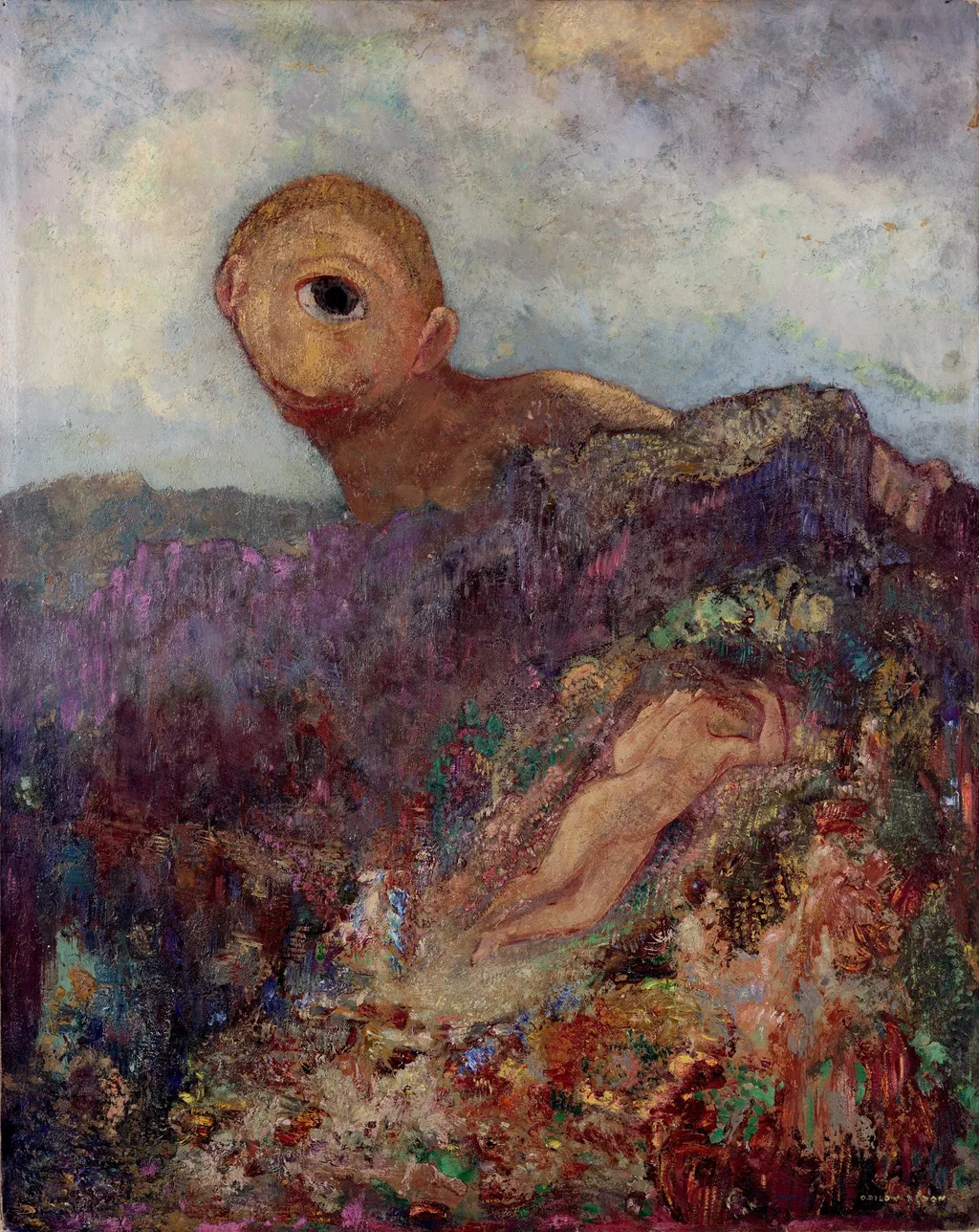
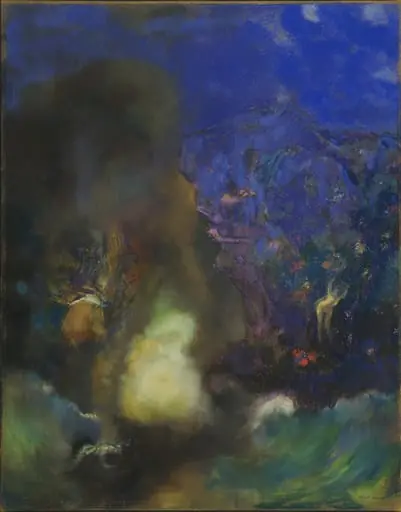
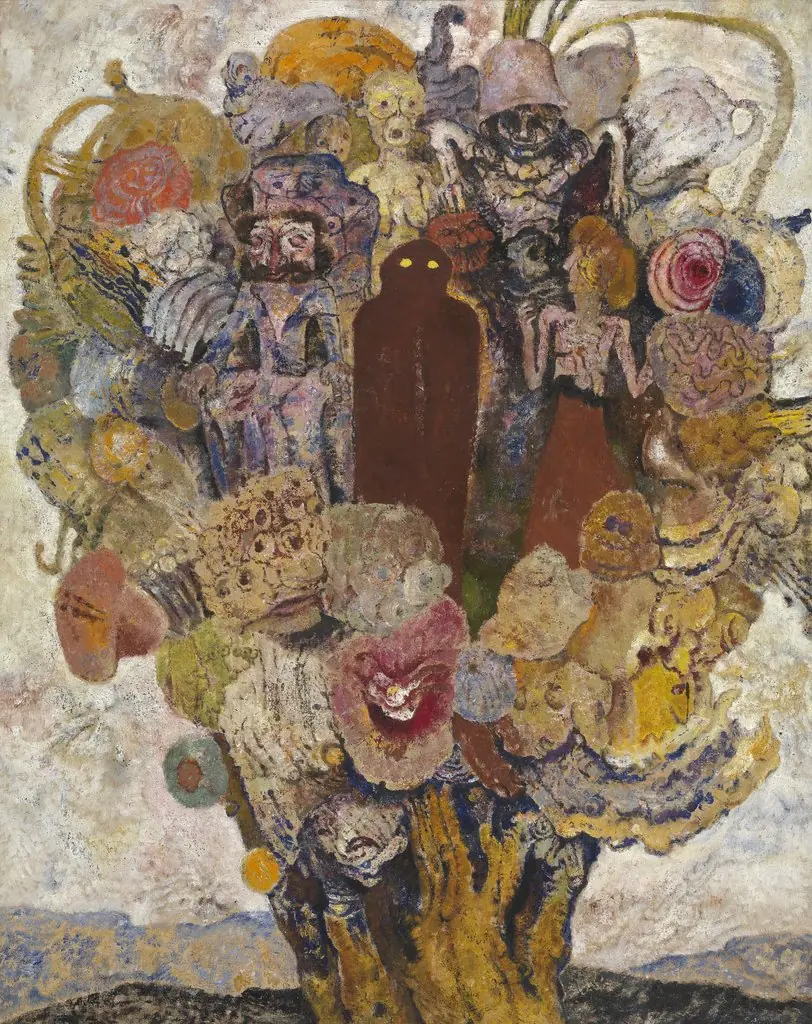
The Cyclops is an oil painting by the Post-Impressionist artist Odilon Redon. It dates from 1914 and is held in the collection of the Kröller-Müller Museum.
About this work
Overview
The background blends atmospheric hues of purple, blue, and brown, creating a dreamlike spatial ambiguity that distances the scene from literal representation.
The Cyclops, an oil painting on cardboard mounted on wood, was created by Odilon Redon between 1898 and 1914. It resides in the Kröller-Müller Museum in the Netherlands. The work presents a mythological figure with a single central eye, rendered in muted earth tones and layered with abstract, vibrant patterning.
The background blends atmospheric hues of purple, blue, and brown, creating a dreamlike spatial ambiguity that distances the scene from literal representation.
Subject & Meaning
The painting illustrates the myth of Polyphemus, the one-eyed giant of Greek legend, and his unrequited love for the sea nymph Galatea. Redon avoids narrative clarity, instead evoking the emotional weight of longing through the figure’s stillness and inward gaze. The Cyclops is not portrayed as monstrous but as a solitary, contemplative being, suggesting themes of isolation, desire, and the ineffable nature of love.
Technique & Style
Redon employed oil paint to build a textured surface on cardboard, later adhered to wood for stability. The figure’s body is covered in intricate, non-representational patterns, swirls and flecks of color that defy anatomical realism. The single eye, dark and intense, anchors the composition, while the background’s fluid washes of color dissolve boundaries between figure and space, reflecting Symbolist interests in inner experience over external form.
History & Provenance
The painting entered the collection of Helene Kröller-Müller in the early 20th century, who amassed one of Europe’s most significant holdings of modern art. Its precise date remains uncertain, with scholars placing it between 1898 and 1914, a period when Redon increasingly moved from charcoal drawings to color-based works. It has remained in the Kröller-Müller Museum since its founding in 1938.
Context
Created during Redon’s mature phase, the work aligns with his shift from dark, fantastical lithographs to luminous, color-rich paintings influenced by Impressionism and Symbolist poetry. Unlike earlier depictions of mythological subjects, Redon’s Cyclops avoids drama, favoring psychological resonance. This reflects broader fin-de-siècle interests in myth as a vessel for emotional and spiritual inquiry rather than moral instruction.
Legacy
The Cyclops exemplifies Redon’s unique contribution to Symbolism: the transformation of myth into meditative imagery. Its abstract treatment of form and emotional ambiguity influenced later Surrealists and Expressionists who sought to externalize inner states. Though not widely exhibited in his lifetime, the painting now stands as a key example of how Symbolist artists reimagined classical narratives through personal, non-literal vision.
Own this work as a print
Artist & collection

Artist
Odilon Redon (born Bertrand Redon; French: ; 20 April 1840 – 6 July 1916) was a French Symbolist draftsman, printmaker, and painter.