Artwork
The Four Latin Fathers of the Church
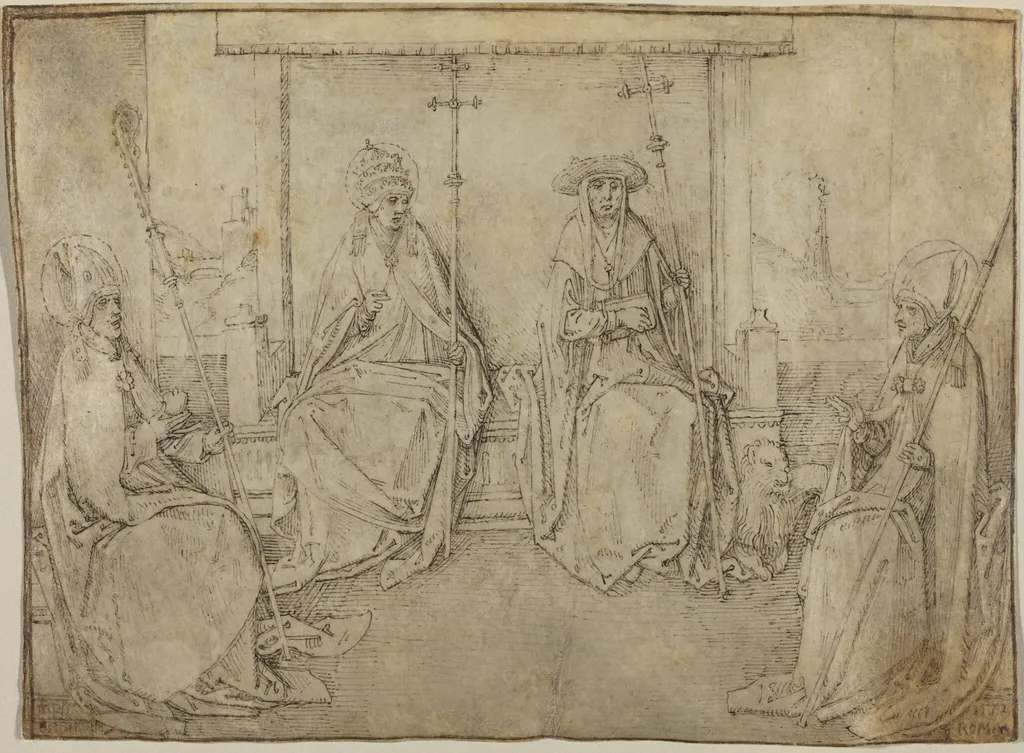
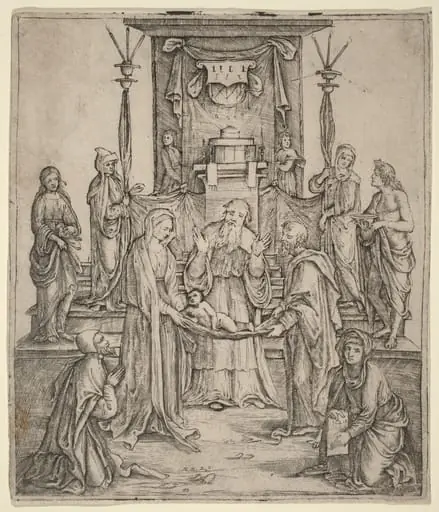
The Four Latin Fathers of the Church is a chalk drawing by the Renaissance artist Valentijn van Orley. It dates from 1512 and is held in the collection of the National Gallery of Art.
- Inscription
- Inscribed:by later hand, lower left in pen and brown ink: raph / URBINA (?) by later hand, lower right in pen and brown ink: 1512 / ROMA
About this work
The artist used pen and brown ink over black chalk on vellum, which was a common technique during the Renaissance.
The painting is titled The Four Latin Fathers of the Church. It was created by Orley, Valentijn van between 1510 and 1515. The artist used pen and brown ink over black chalk on vellum, which was a common technique during the Renaissance.
This technique allowed for detailed and intricate designs. The use of vellum as a medium also indicates the artist's attention to detail and choice of materials. To learn more about similar artworks, look up the movement: Renaissance.
Overview
The drawing entitled The Four Latin Fathers of the Church is a pen and brown‑ink composition executed on black chalked vellum. Attributed to the Flemish artist Valentijn van Orley, it dates from the early 1510s, with most scholars placing its creation around 1512. The work presents a scholarly grouping of the four principal Latin Church Fathers, rendered with the precision characteristic of Renaissance manuscript illustration.
Technique & Style
Van Orley employed a combination of brown ink and fine pen work atop a preparatory layer of black chalk on vellum, a material favored for its smooth surface and durability. This method allowed the artist to achieve delicate line work and subtle tonal variation, emphasizing the intricate facial features and drapery of the figures. The drawing reflects the Northern Renaissance’s interest in meticulous detail and controlled drawing techniques.
History & Provenance
The piece emerged in the early sixteenth century, a period when devotional and scholarly images were often produced for private study or elite patronage. While its original patron remains unidentified, the work has been documented in several early inventories of Flemish collections, eventually entering a museum holding of Renaissance drawings in the twentieth century. Its survival on vellum attests to careful preservation over five centuries.
Context
The depiction of the four Latin Fathers, traditionally Augustine, Jerome, Gregory the Great, and Ambrose, mirrors the humanist revival of patristic scholarship during the Renaissance. By presenting these theological authorities together, van Orley aligns with contemporary intellectual currents that sought to reconcile classical learning with Christian doctrine. The drawing thus serves both as an artistic study and as a visual affirmation of the era’s reverence for ecclesiastical scholarship.
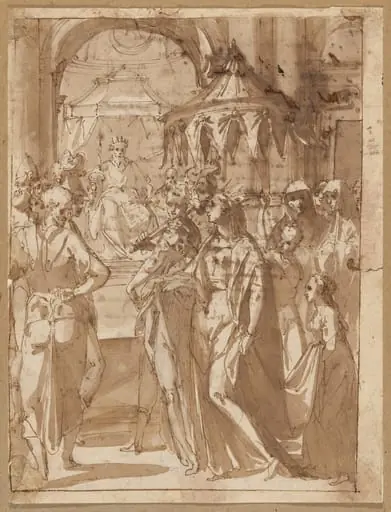
Own this work as a print
Artist & collection


- Esther before Ahasuerus
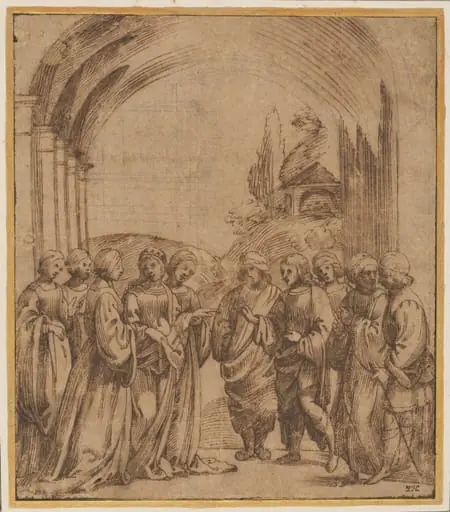 A Betrothal
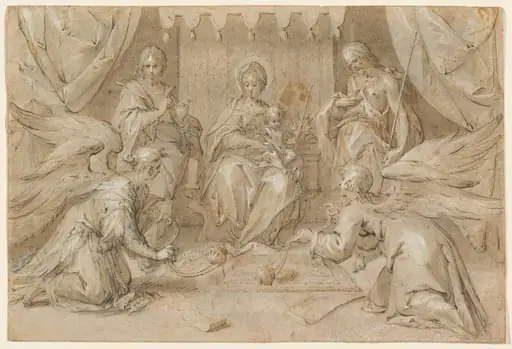 The Madonna Enthroned with Saint John the Baptist and Saint John the Evangelist
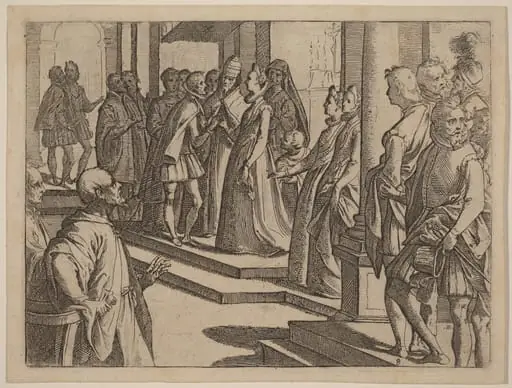 The Betrothal of Margaret of Austria to Philip III, King of Spain
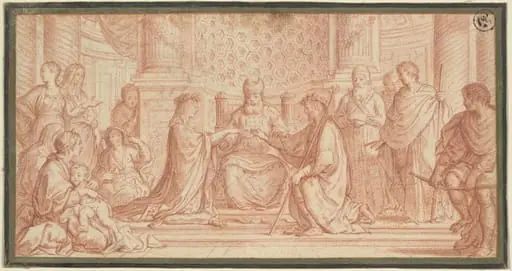 A Marriage Ceremony
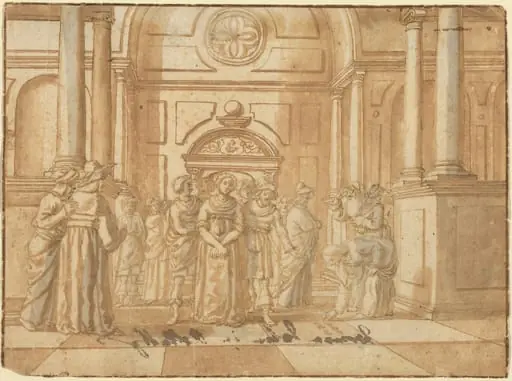 Christ and the Woman Taken in Adultery
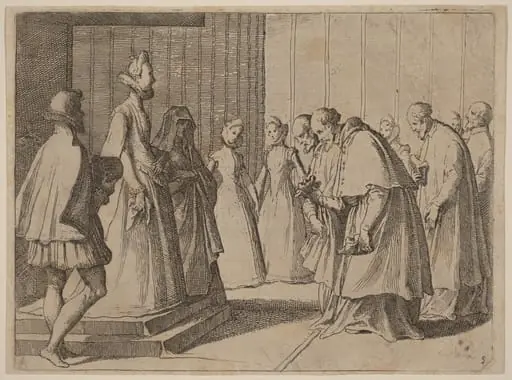 Margaret of Austria Receiving the Homage of Cardinals and Prelates
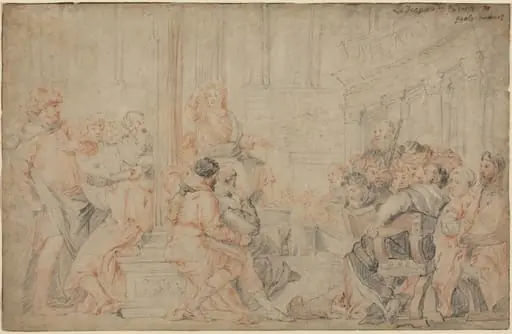 Christ among the Doctors
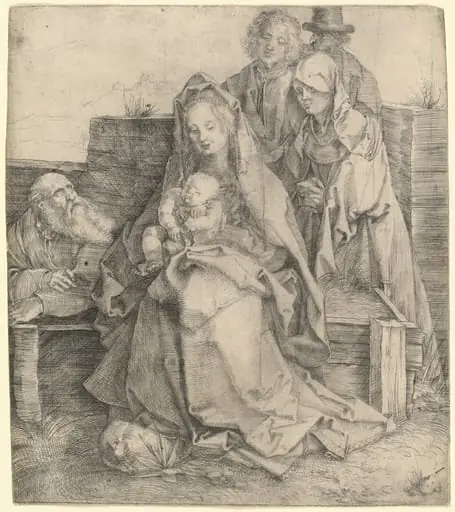 The Holy Family
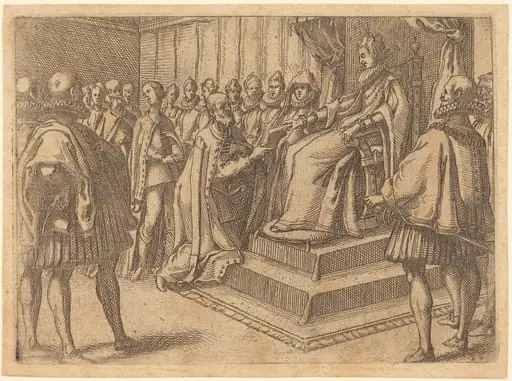 Reception of the Envoy of Poland
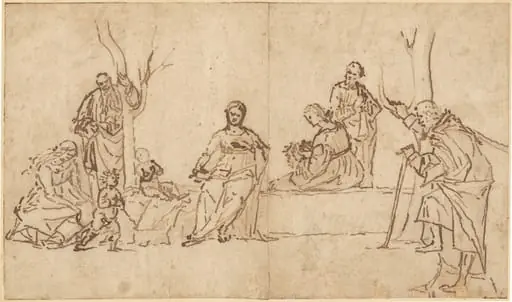 The Madonna and Child with Saints in a Landscape (Sacra Conversazione)
 Presentation of Christ