Artwork
The Holy Family
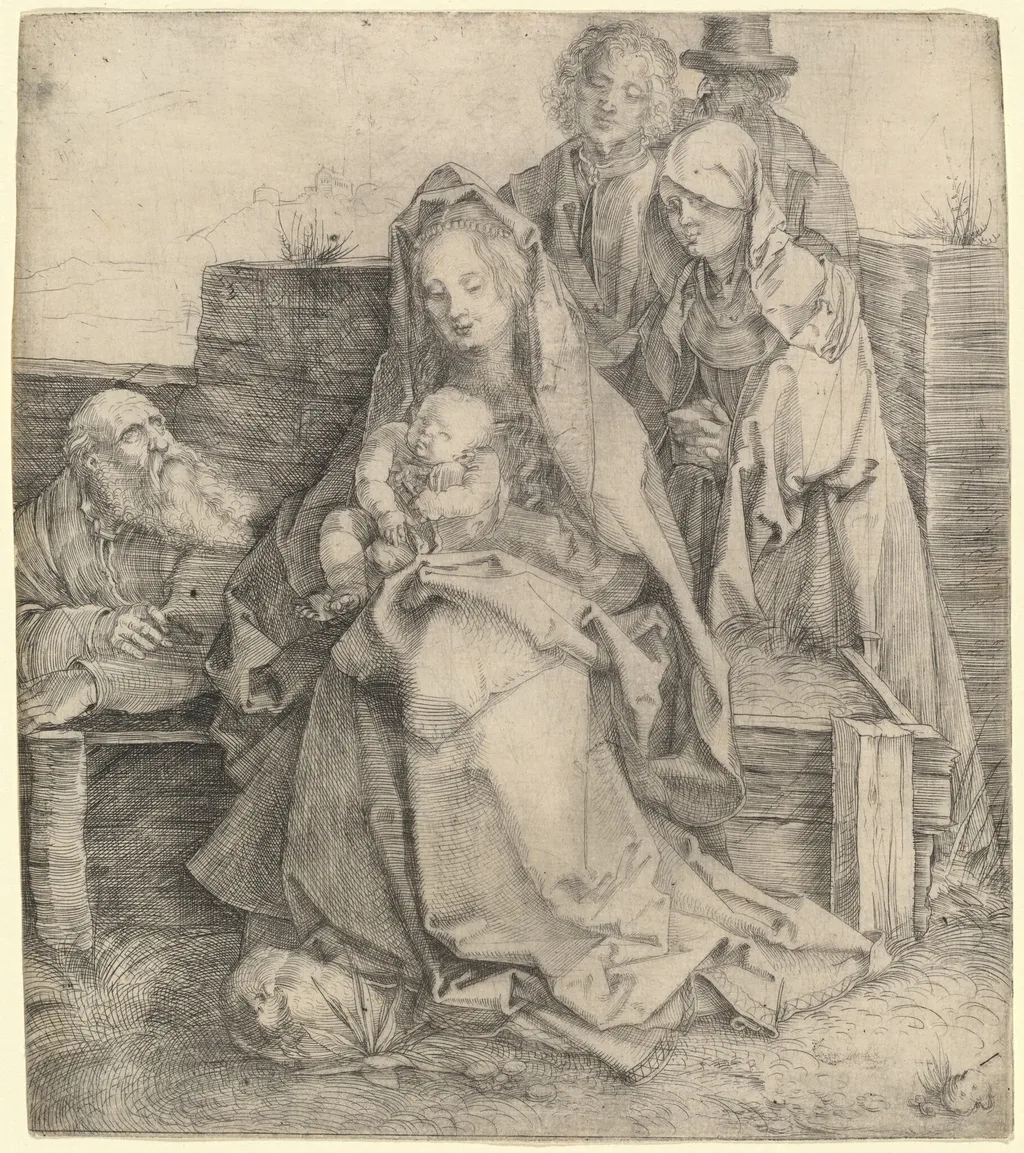
The Holy Family is an ink print by the Northern Renaissance artist Albrecht Dürer. It dates from 1512 and is held in the collection of the Metropolitan Museum of Art.
- Inscription
- Inscribed:verso, lower center, in graphite by a later hand: Theo Hrocker [or Strocker?]; verso, lower left, in graphite by a later hand: C.14737; verso, lower center, in graphite by a later hand: Rogers sale 1855; verso, lower center, in graphite by a later hand: B.43; verso, lower left, in graphite by a later hand: bf mns [?]; verso, lower right, in graphite by a later hand: [illegible ] [erased]; verso, lower left, in graphite by a later hand: K 5635 / J 2276 C 6127; verso, lower left, in ink by a later hand: K: N78 [+?]; verso, lower left, in graphite by a later hand: 43
About this work
Subject & Meaning
Albrecht Dürer's 1512 drypoint print depicts the Holy Family, a traditional religious subject rooted in the New Testament.
Albrecht Dürer's 1512 drypoint print depicts the Holy Family, a traditional religious subject rooted in the New Testament. The composition incorporates the standard figures of the Christ Child, Mary, and Joseph, but uniquely expands the iconography to include John the Baptist alongside Mary Magdalene and Nicodemus. By integrating these additional biblical figures into the intimate Holy Family scene, the work layers conventional representations of the Madonna and Child with broader symbolic meaning, connecting the narrative of Christ's infancy to his later ministry, passion, and resurrection.
Technique & Style
Albrecht Dürer created this religious print in Nuremberg in 1512 on laid paper, rendering a formal composition of the Holy Family with Christ Child, John the Baptist, Mary, Joseph, Mary Magdalene, and Nicodemus through precise drypoint lines on paper support. The work measures 21 by 18.3 centimeters and exemplifies German Renaissance stylistic qualities in its handling of line and spatial arrangement.
The National Gallery of Art holds the piece as part of its Prints collection within the Rosenwald Collection, maintaining its condition through careful archival framing and controlled environmental storage.
Formal analysis highlights the delicate cross-hatching and intricate detail characteristic of Dürer’s printmaking technique, demonstrating mastery of line work to convey texture and volume within the sacred narrative.
History & Provenance
The work was created in 1512 in Nuremberg as a drypoint on laid paper. Its early ownership passed from Richard Fisher in the United Kingdom to Henry Studdy Theobald in London before being acquired by Lessing J. Rosenwald in Jenkintown, Pennsylvania in 1937. The National Gallery of Art later received the piece as a gift in 1943.
The Holy Family is held by the National Gallery of Art in Washington, D.C. Its inventory number is Lugt 1760b and Lugt 1932d. The work entered the collection through the purchase of Richard Fisher and later passed to Lessing J. Rosenwald in 1937 before being gifted to the museum in 1943. It has been exhibited as part of the Rosenwald Collection and is listed in the National Gallery of Art’s Prints holdings.
Overview
Albrecht Dürer’s 1512 drypoint print titled The Holy Family presents a compact group portrait of the Virgin Mary holding the infant Christ, accompanied by Joseph and two additional figures. Rendered on laid paper, the composition is illuminated by a gentle, diffused light that unifies the scene.
Own this work as a print
Artist & collection
Artist
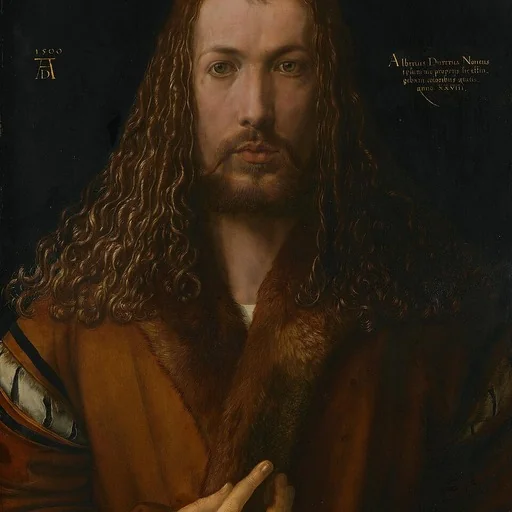
Albrecht Dürer spent his life in Nuremberg, a busy German city where artists traded prints like currency.

![Madonna and Child [obverse], by Albrecht Dürer](https://artifactworldgallery.com/img/albrecht-durer--madonna-and-child-obverse--d7b8ebf05d22ebe5-w320.webp)
![Lot and His Daughters [reverse], by Albrecht Dürer](https://artifactworldgallery.com/img/albrecht-durer--lot-and-his-daughters-reverse--b4ebf9b282faa17a-w320.webp)
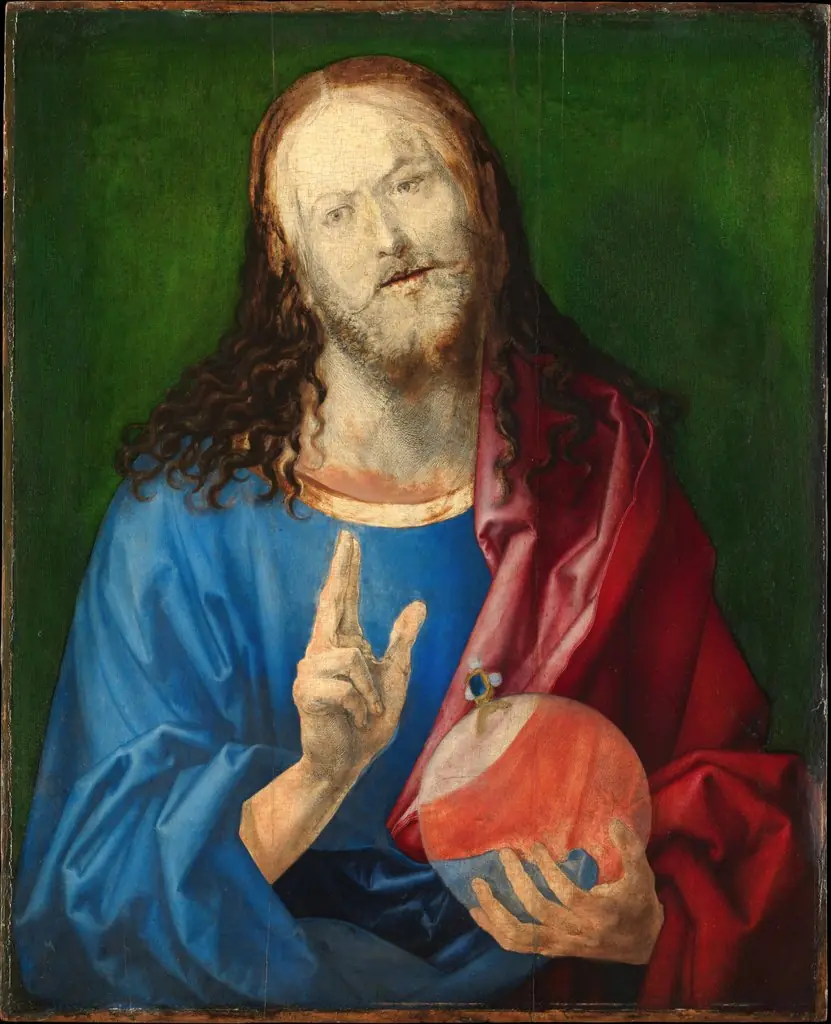
- The Holy Family
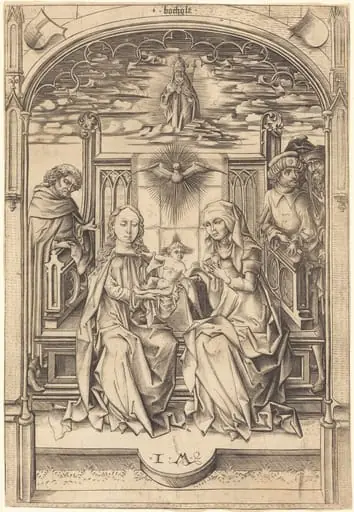 The Holy Family
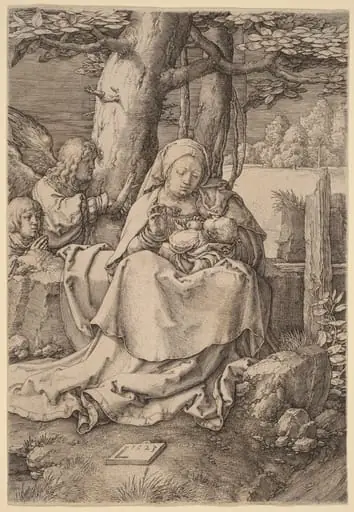 The Virgin and Child with Two Angels
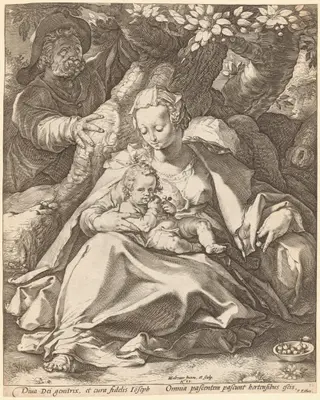 The Holy Family under a Cherry Tree
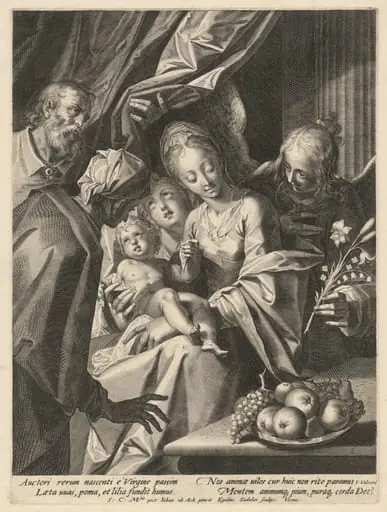 The Holy Family with Saint Anne and Two Angels
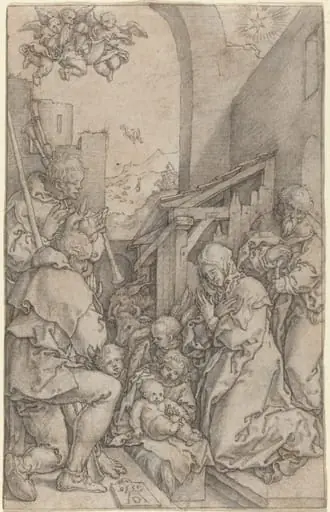 The Nativity
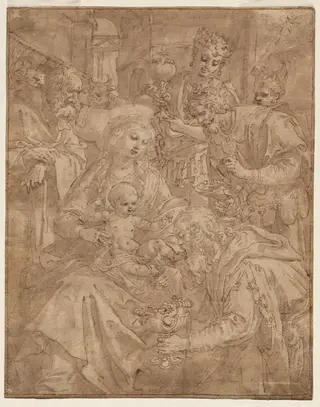 Adoration of the Magi
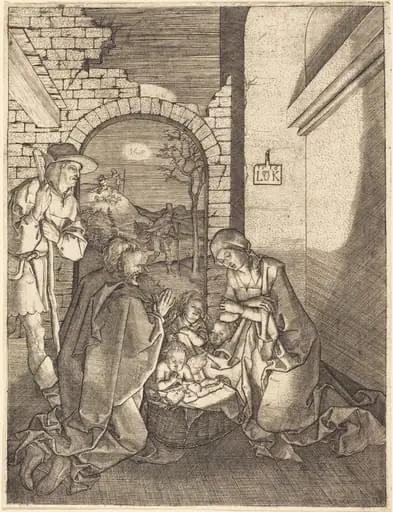 The Nativity
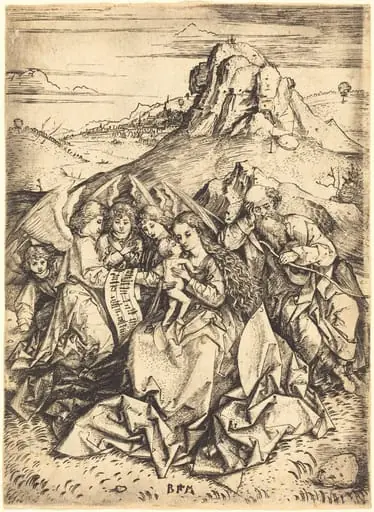 The Rest on the Flight into Egypt
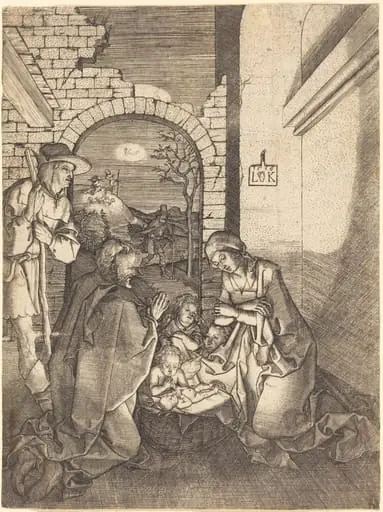 The Nativity
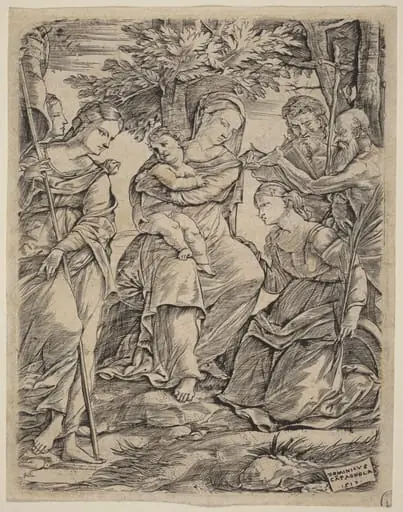 The Virgin and Child with Saints
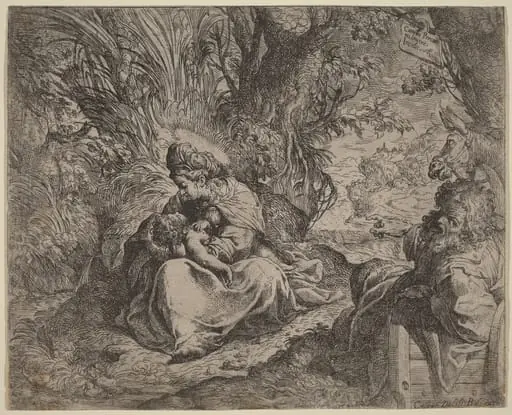 The Rest on the Flight into Egypt