Artwork
Still Life with Artichoke, Fruit in Kraak Porcelain Ware, a Salt Cellar/Pepper Castor
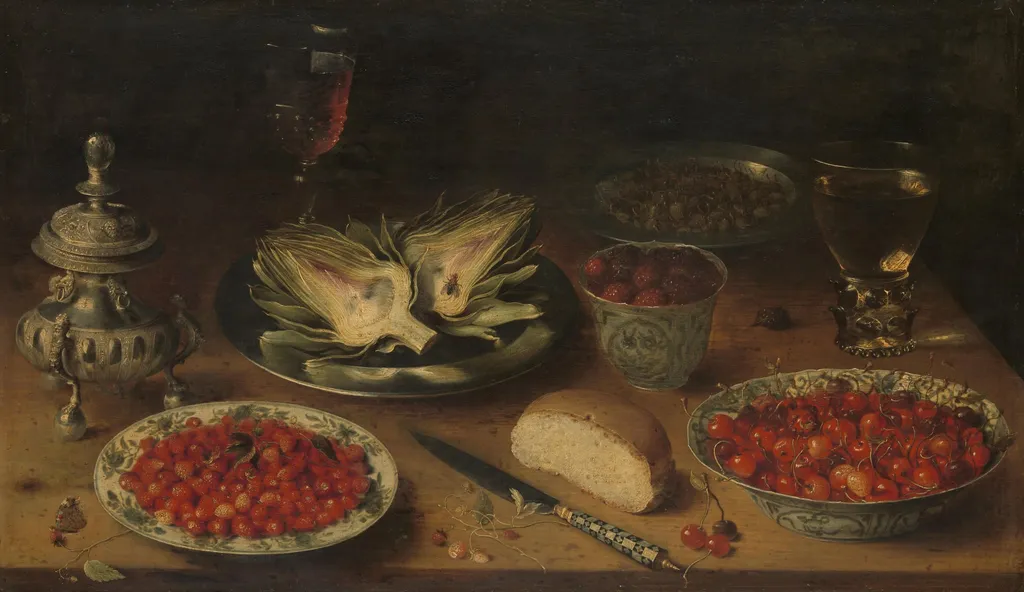
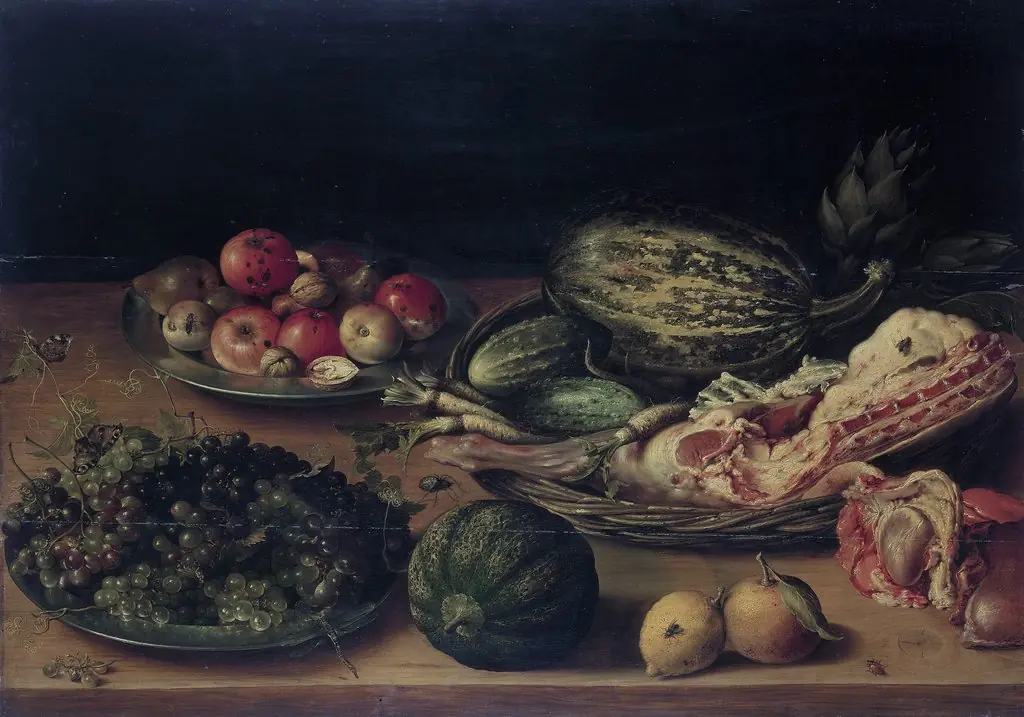
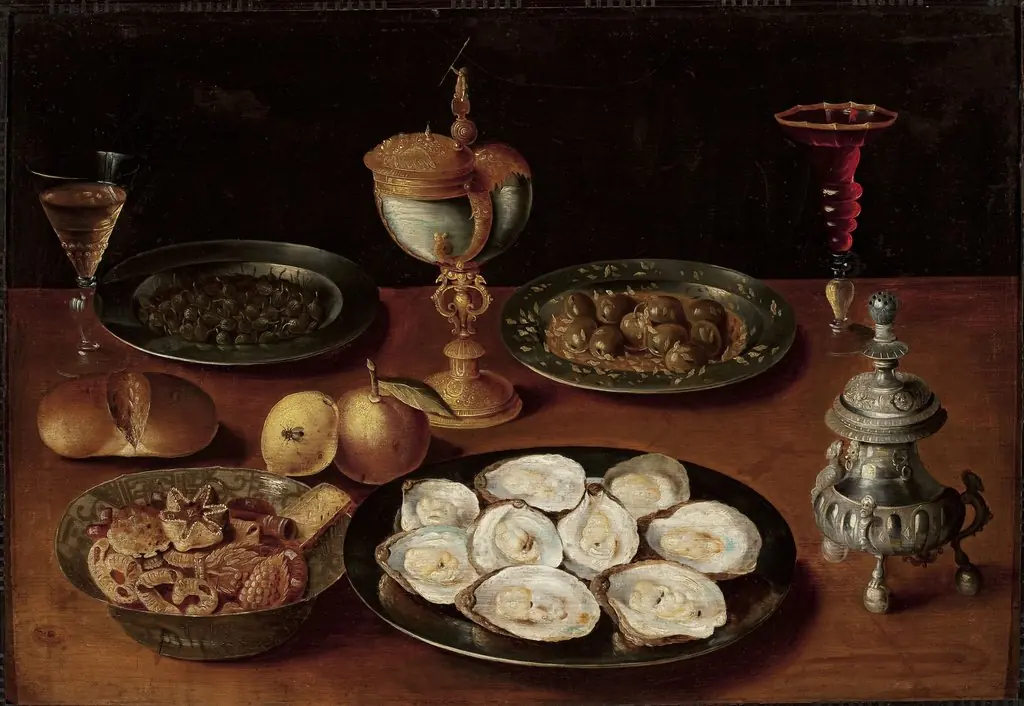
Still Life with Artichoke, Fruit in Kraak Porcelain Ware, a Salt Cellar/Pepper Castor is an unspecified painting by the Flemish Baroque painting artist Osias Beert. It dates from 1605 and is held in the collection of the Rijksmuseum. The work depicts a tabletop arrangement of assorted fruit and objects, centered on a sliced artichoke placed on a tin plate.
About this work
Subject & Meaning
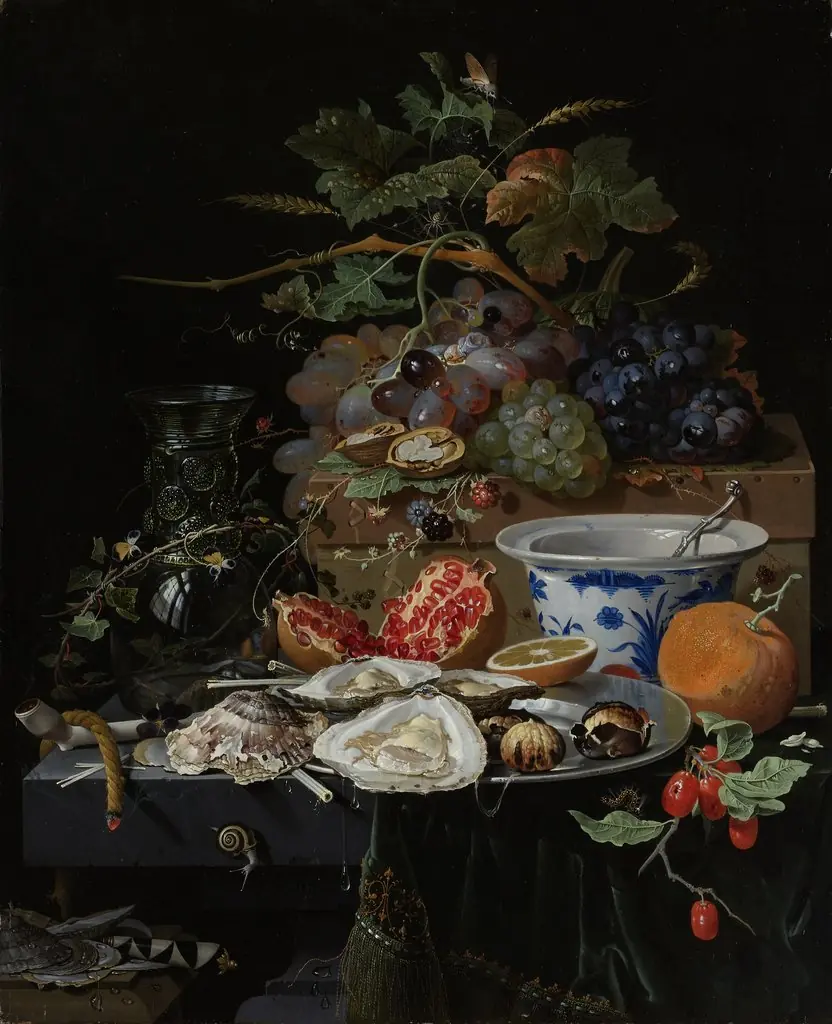
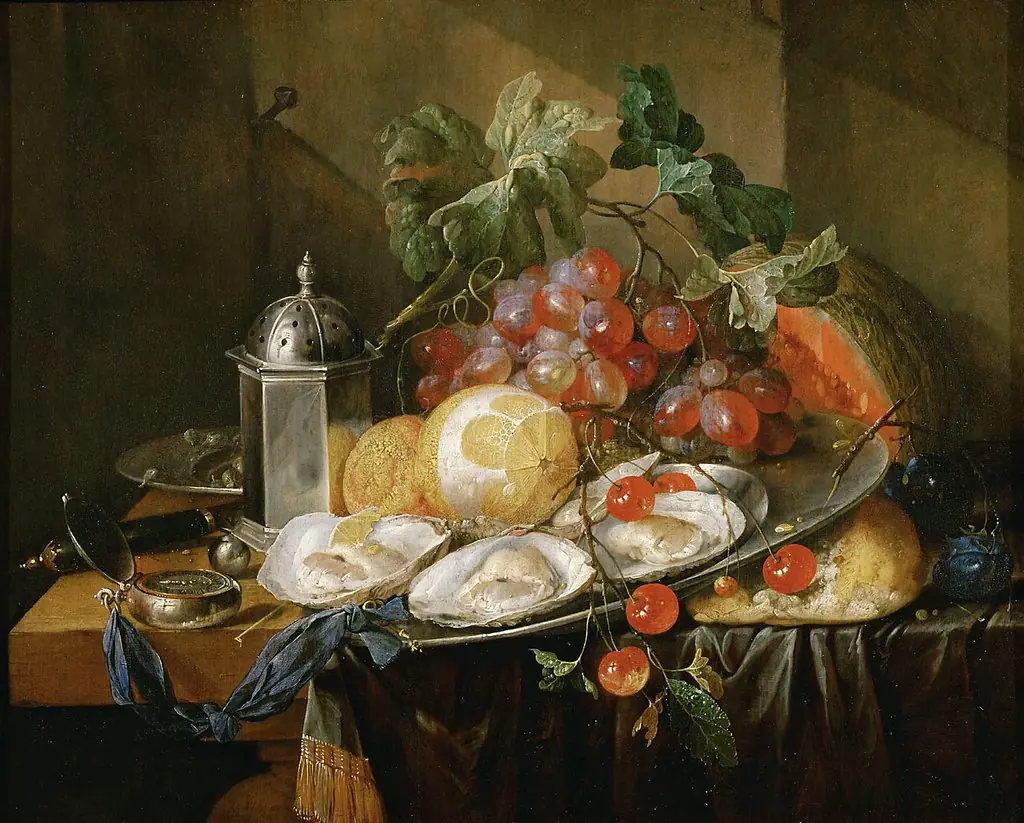
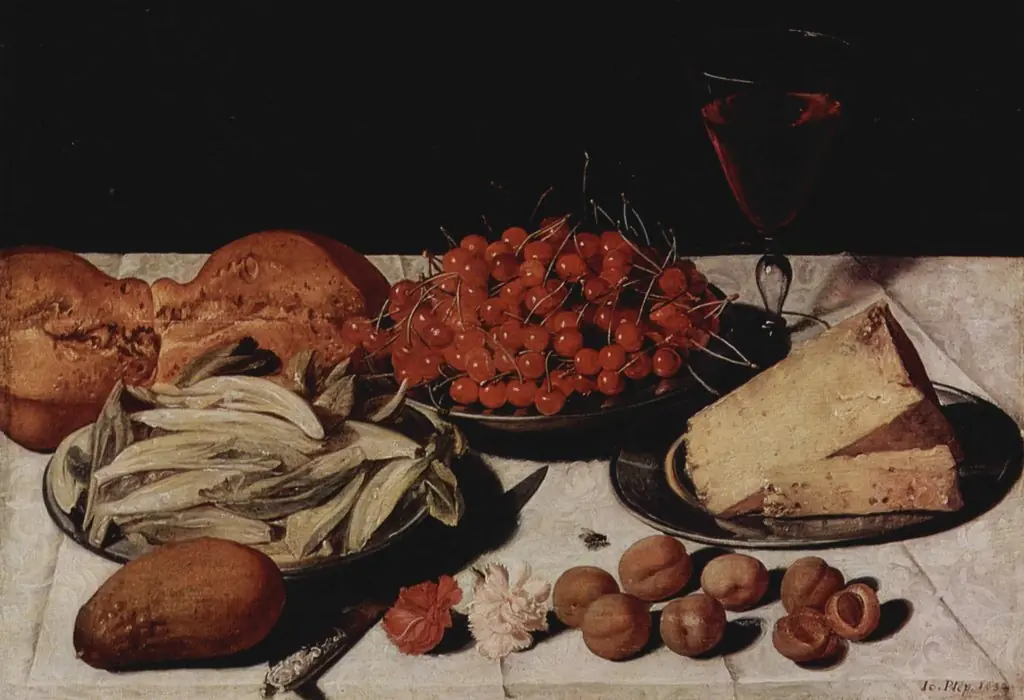
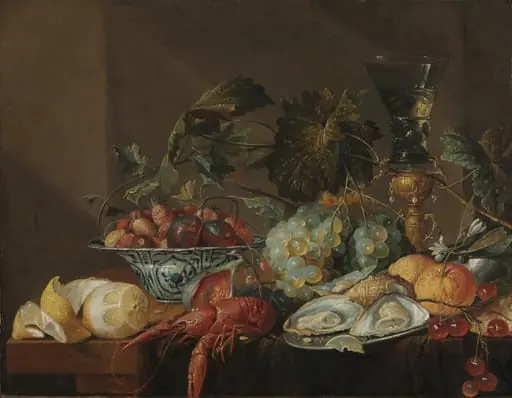
The painting depicts a banquet still life featuring fruit arranged in Kraak porcelain vessels alongside a salt cellar filled with pepper, symbolizing the material culture and opulence of early 17th-century Antwerp. The subject incorporates objects rich in symbolic meaning: the high viewpoint and forced perspective emphasize clarity and order, while the inclusion of porcelain, oysters, and confectionery reflects the era's global trade networks and fascination with exotic luxury. The fruit and porcelain, often associated with transience and wealth, underscore themes of abundance and the fleeting nature of earthly pleasures, consistent with early Flemish still life conventions. The work exemplifies Beert's pioneering role in elevating breakfast and banquet scenes as independent genres, blending meticulous detail with a quasi-geometric composition to convey both material richness and philosophical undertones of impermanence.
Technique & Style
The work is executed on a wooden support using oil paint applied in multiple glazing layers to achieve transparency and color depth.
The work is executed on a wooden support using oil paint applied in multiple glazing layers to achieve transparency and color depth. The artist employed a high viewpoint and careful spatial arrangement, characteristic of early Flemish still life, with dense yet balanced compositions emphasizing objectivity and plasticity under even lighting. Formal qualities include a quasi-geometric structure, detailed rendering of textures such as oyster flesh and porcelain surfaces, and symbolic use of motifs like butterflies representing transience. The painting features Chinese Wan Li porcelain, oysters, and confectionery arranged on tabletops with precious glassware, reflecting the genre's focus on culinary and material richness.
The technique highlights mastery of layered oil application for luminous effects, particularly on copper supports, while the compositional approach integrates still life elements into a cohesive whole without overt narrative symbolism.
The work belongs to the early Baroque Flemish tradition, combining precise detail with a restrained palette of earth tones accented by vivid colors in flowers and porcelain, aligning with contemporaries like Ambrosius Bosschaert in its celebration of natural abundance and material culture.
History & Provenance
Still Life with Artichoke, Fruit in Kraak Porcelain Ware, a Salt Cellar/Pepper Castor is attributed to Osias Beert the Elder, a Flemish painter active in Antwerp around 1605-1615. The work is classified as a still life painting from the early Flemish Baroque period. It was created during Beert's mature period, likely on oak panel using oil glazing techniques, consistent with his known practice of painting breakfast and floral still lifes with intricate arrangements of food, porcelain, and decorative objects. The painting reflects his pioneering role in elevating breakfast ('ontbijtje') and floral still lifes as independent genres in Northern European art. Provenance details are not specified in the sources, but the work is part of the broader corpus of Beert's authenticated output, with only four signed works known and several attributed to him based on stylistic analysis and panel markings. The attribution draws on stylistic features such as high viewpoint, minimal overlapping, and spatial coherence, which help establish a tentative chronology among his works. The use of Kraak porcelain and specific food items aligns with Beert's documented fascination with Chinese porcelain, oysters, and confectionery arranged on tabletops. His technique of layering transparent oil glazes to achieve color variation and plasticity is noted across his works, including those on copper and oak. The painting’s composition and symbolism, though not explicitly detailed in the sources for this specific work, are consistent with his broader artistic themes of transience and material abundance.
Context
Osias Beert’s Still Life with Artichoke occupies a pivotal place in the emergence of the autonomous still-life genre in Flanders during the early seventeenth century. As one of the earliest specialists in breakfast pieces and flower still lifes, Beert helped establish these subjects as independent genres rather than subsidiary motifs within larger compositions. His meticulous glazing technique and high viewpoint, which isolates each object against a dark ground, became hallmarks of Antwerp still-life practice and influenced a generation of painters including his nephew Frans Ykens, Jacob van Es, and Jacob van Hulsdonck. Scholars note that Beert’s works, though rarely signed or dated, can be tentatively sequenced by stylistic shifts: earlier compositions feature looser arrangements and higher vantage points, while later works display tighter spatial coherence and lower viewpoints. The painting’s inclusion of Kraak porcelain underscores Beert’s engagement with global trade goods circulating in Antwerp, reflecting the city’s role as a hub for luxury commodities during the period.
Legacy
Osias Beert is recognized as one of the most influential artists of the earliest generation of Flemish still life painters, playing a pivotal role in establishing flower and breakfast-type still lifes as independent genres. His compositions, characterized by high viewpoints and balanced arrangements, directly influenced his nephew Frans Ykens and other Antwerp painters such as Jacob Foppens van Es and Jacob van Hulsdonck. Beyond local impact, his work shaped the careers of international artists including Hendrik van Steenwijk II, François Garnier, Louise Moillon, and Miguel de Pret. The artist's legacy is further perpetuated by the numerous replicas and variant versions of his compositions that survive today, largely produced by his son Osias Beert the Younger and his former pupils. Although Beert remained relatively obscure for centuries, his reputation was revitalized in 1938 when collectors renewed their interest in the genre of still life.
Artist & collection
Artist
Osias Beert or Osias Beert the Elder (c. 1580 – 1623) was a Flemish painter active in Antwerp who played an important role in the early development of flower and "breakfast"-type still lifes as independent genres in…

 Dishes with Oysters, Fruit, and Wine
- Still life with chinese porcelain, berries, and artichokes
 Still Life with Various Vessels on a Table
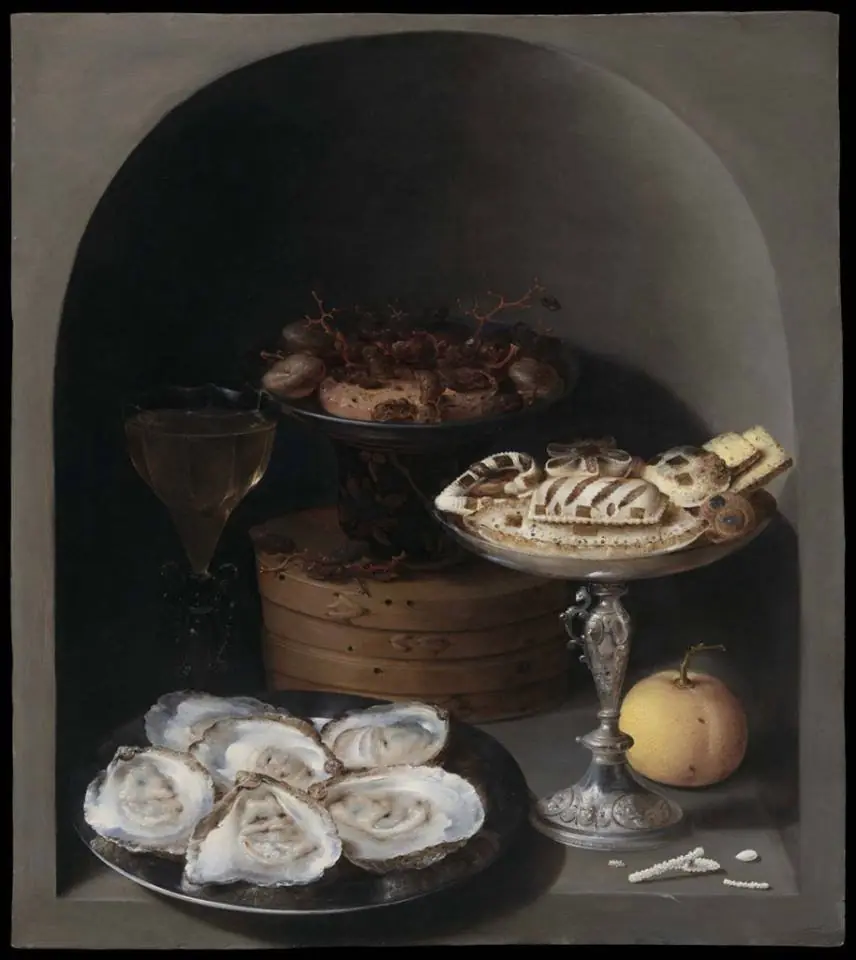 Still Life with Oysters, Sweetmeats and Dried Fruit in a Stone Niche
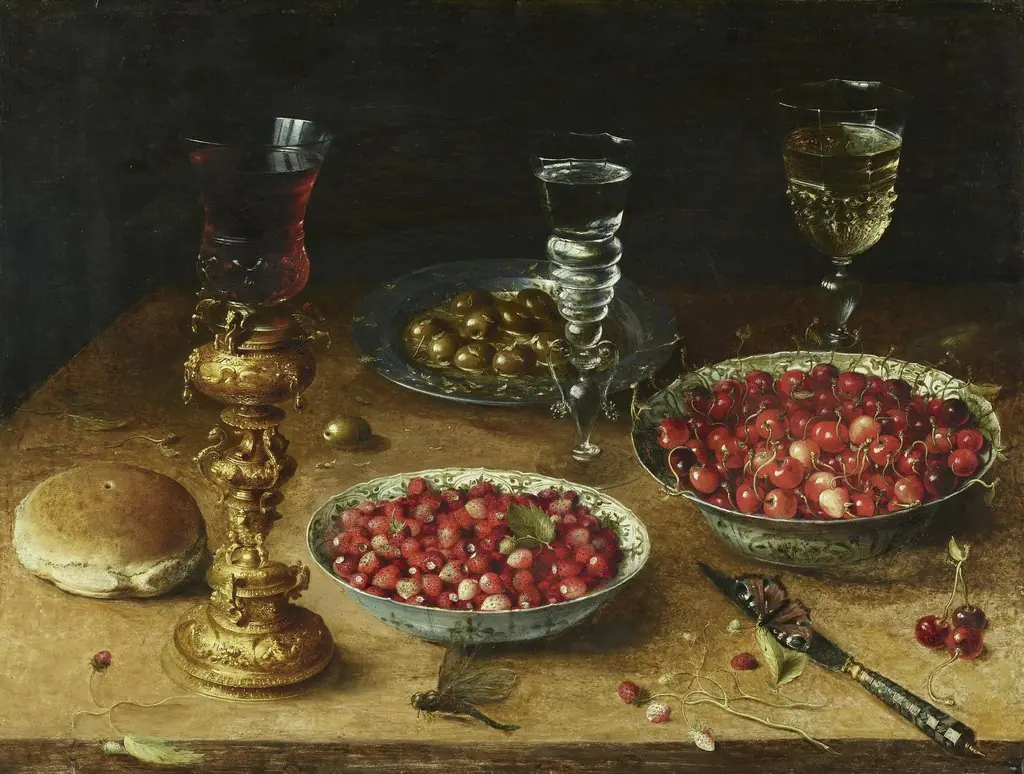 Still-Life with Cherries and Strawberries in China Bowls
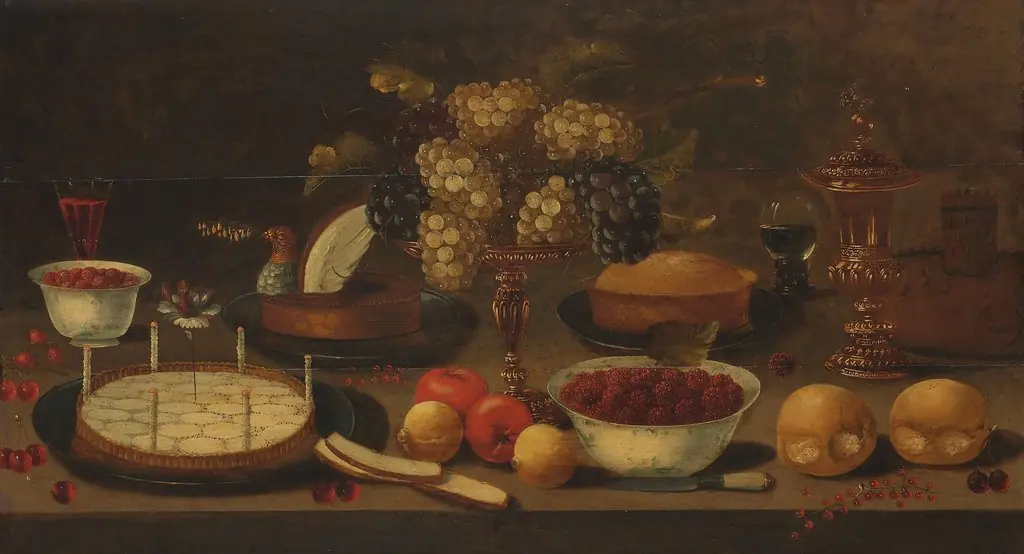 Still life
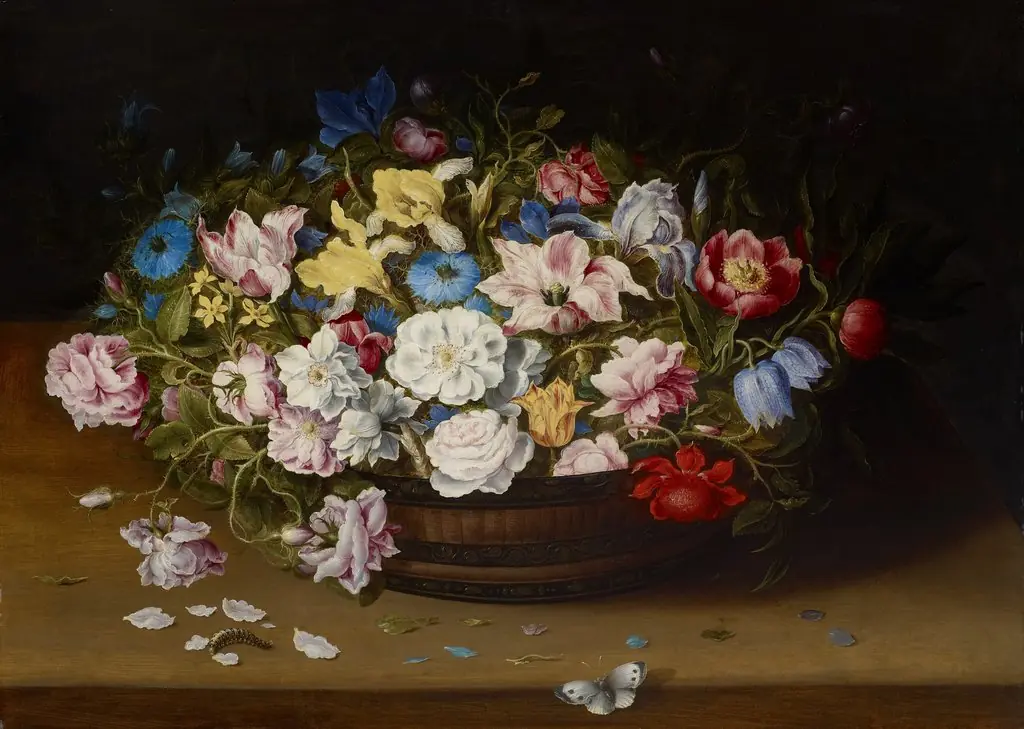 Still Life of Flowers in a Basket
 Tableware