Artwork
Beheading of Julius Paulus and Imprisonment of Claudius Civilis
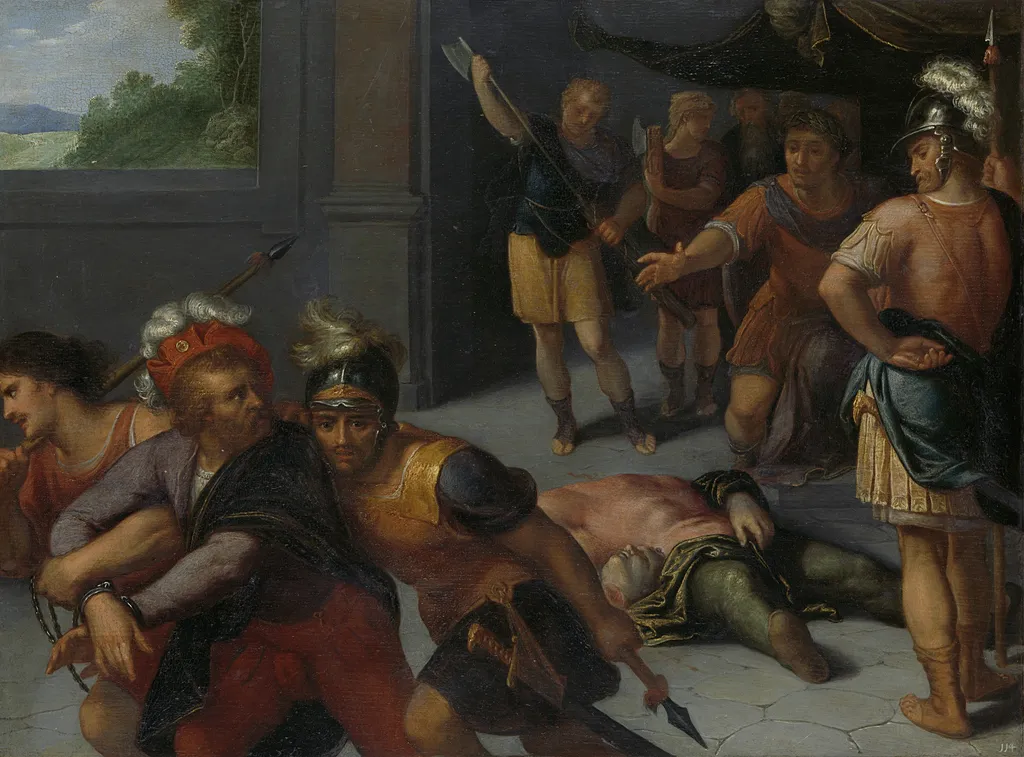
Beheading of Julius Paulus and Imprisonment of Claudius Civilis is an oil painting by the Dutch Golden Age artist Otto van Veen. It dates from 1606 and is held in the collection of the Rijksmuseum.
About this work
Subject & Meaning
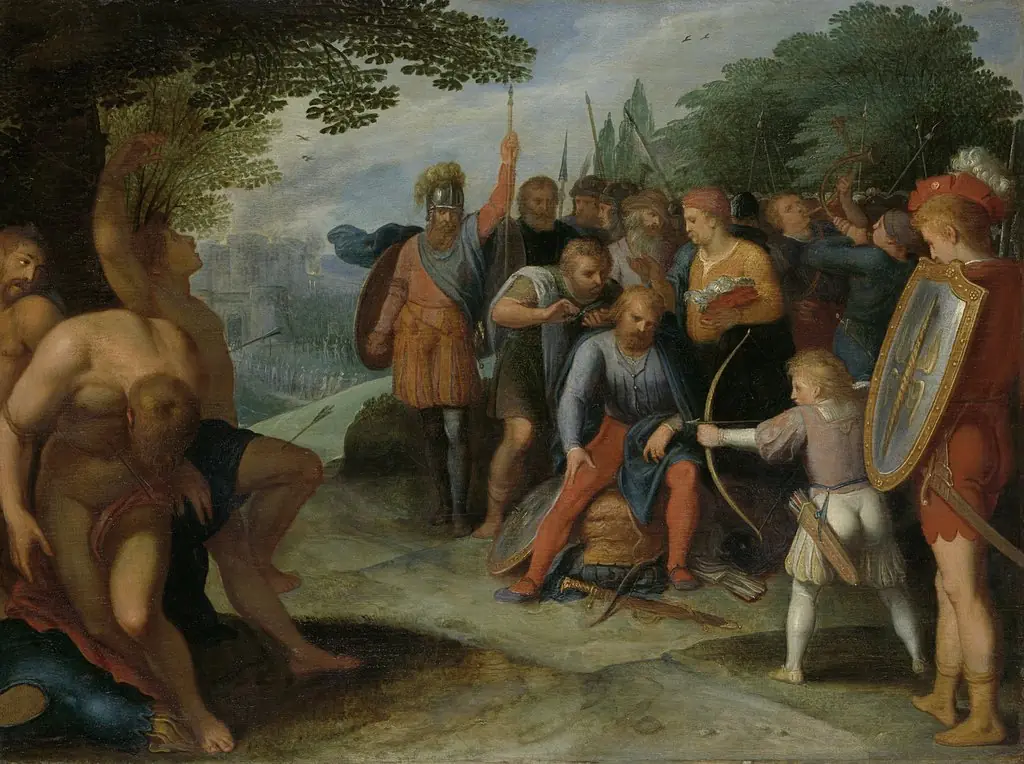
On one side, Julius Paulus is shown being beheaded, while on the other the Batavian chieftain Claudius Civilis is captured and imprisoned by the Romans.
The painting depicts two episodes drawn from the Batavian revolt against Roman rule, as recounted by the Roman historian Tacitus. On one side, Julius Paulus is shown being beheaded, while on the other the Batavian chieftain Claudius Civilis is captured and imprisoned by the Romans. The dual episode pairs violent execution with unjust arrest, presenting both men as victims of Roman tyranny.
Commissioned by the gecommitteerde Raad van State, the work uses these classical subjects as political allegory, evoking parallels with the Dutch Revolt against Spanish Habsburg authority. By invoking Tacitus's account of resistance against a foreign oppressor, the imagery lends historical legitimacy to the contemporary struggle for independence, framing the Batavian leaders as proto-martyrs of liberty against imperial overreach.
Technique & Style
Otto van Veen's Beheading of Julius Paulus and Imprisonment of Claudius Civilis is an oil painting executed on a wooden panel support. Created in 1606, the work measures 38 cm in height and 52 cm in width. The medium of oil paint on panel was a standard and durable choice for serious historical subjects of the early seventeenth-century Dutch and Flemish schools, allowing for the detailed rendering required to depict the complex narrative of decapitation and arrest.
The painting's formal qualities are defined by its rectangular format and the artist's handling of the oil medium to convey the dramatic tension of the main subjects, Gaius Julius Civilis and Julius Paulus.
History & Provenance
The work was commissioned by the gecommitteerde Raad van State and completed in 1606. Otto van Veen painted it as an oil on panel, measuring 38 cm in height and 52 cm in width. It is part of the Rijksmuseum collection and remains on display there.
The painting is held by the Rijksmuseum in Amsterdam, which is listed as both its collection and its location. It was commissioned by the gecommitteerde Raad van State, the governing body of the Dutch Republic, and entered the museum's holdings as part of that institutional provenance. No specific inventory or accession number is recorded in the available sources, and no exhibition history is documented beyond its current placement at the Rijksmuseum.
Overview
Otto van Veen’s 1606 oil on canvas, titled Beheading of Julius Paulus and Imprisonment of Claudius Civilis, presents a violent tableau of Roman‑style execution. The work is part of the Rijksmuseum’s collection and measures the dramatic contrast between life and death through a tightly arranged group of figures in a dimly lit setting.
Context
Otto van Veen, a teacher of Peter Paul Rubens, often produced history paintings that combined classical subject matter with contemporary moralizing. This piece aligns with early‑17th‑century interest in Roman republican virtues and the didactic use of violent episodes to convey messages about law, order, and the consequences of dissent.
Own this work as a print
Artist & collection

Artist
Otto van Veen, was a painter, draughtsman, and humanist active primarily in Antwerp and Brussels in the late 16th and early 17th centuries.

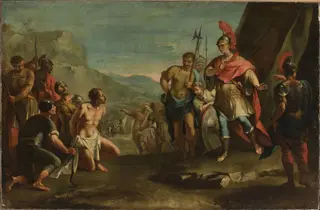 Killer of Darius before Alexander (King Porus and Alexander the Great)
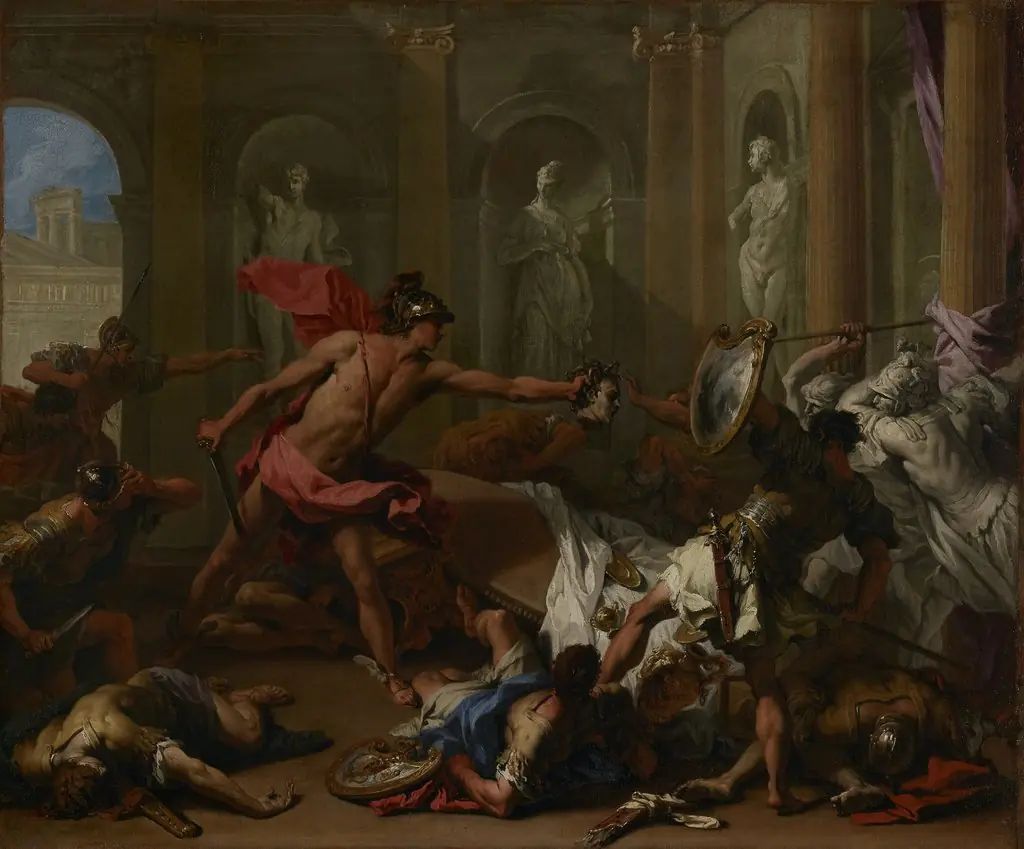 Perseus Confronting Phineus with the Head of Medusa
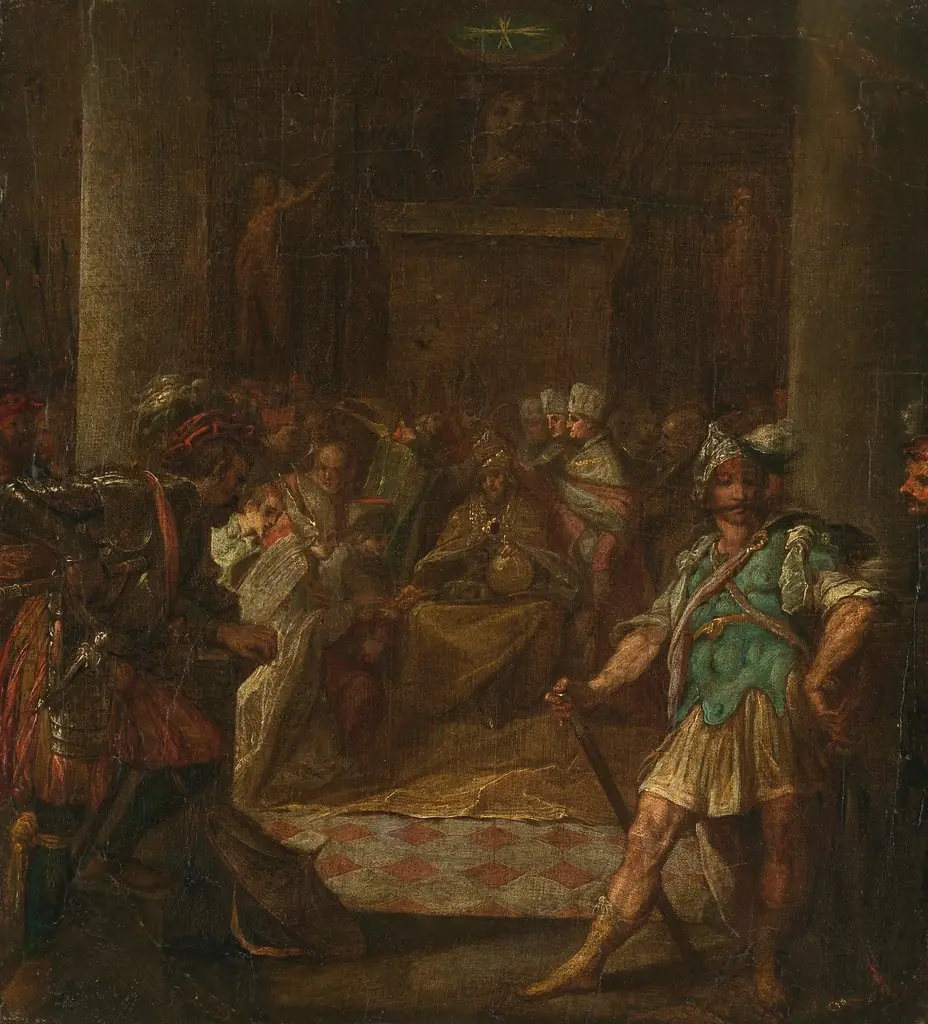 Imperial Coronation
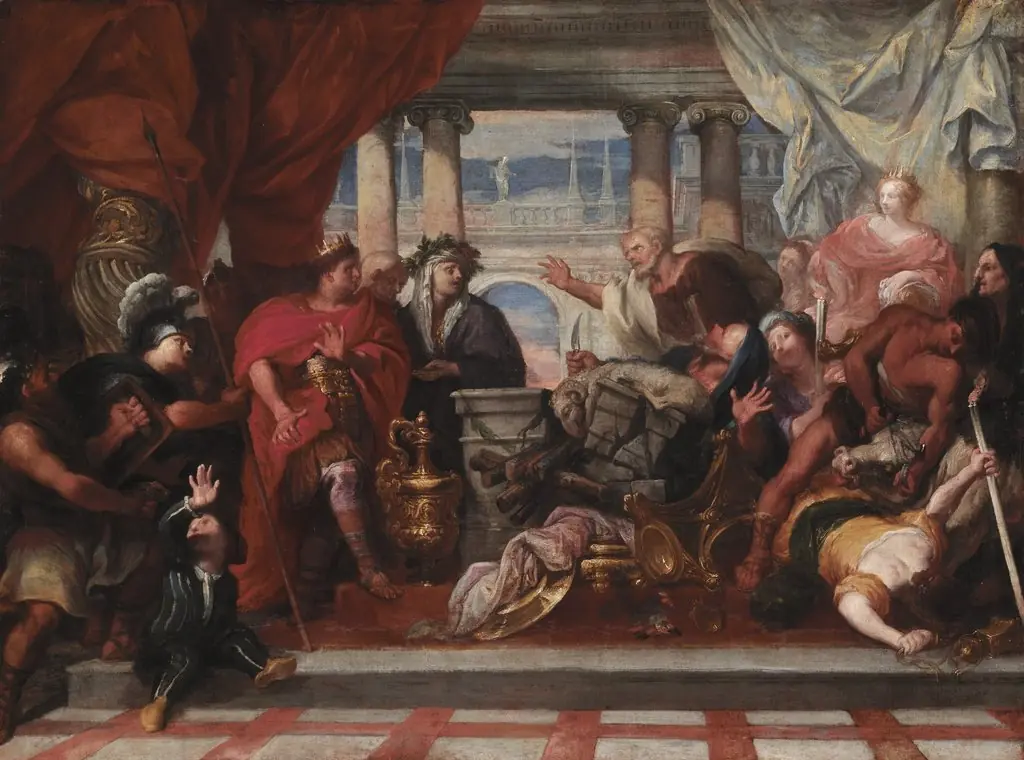 Scene of Sacrifice
 Rape of the Sabines
 Roman Gladiators with Wooden Swords
 Perseo affronta Fineo con la testa di Medusa
 Absalom propitiating friends (2 Samuel 15:2-5)
 David med Goliats sværd på skulderen. Andre med hans hoved på en stage
 Combate de centauros y lapitas. (Tit. Ant.: Centauros e ilotas)