Artwork
Pümpin, Fritz - Malerei, Gallorömische Kremation
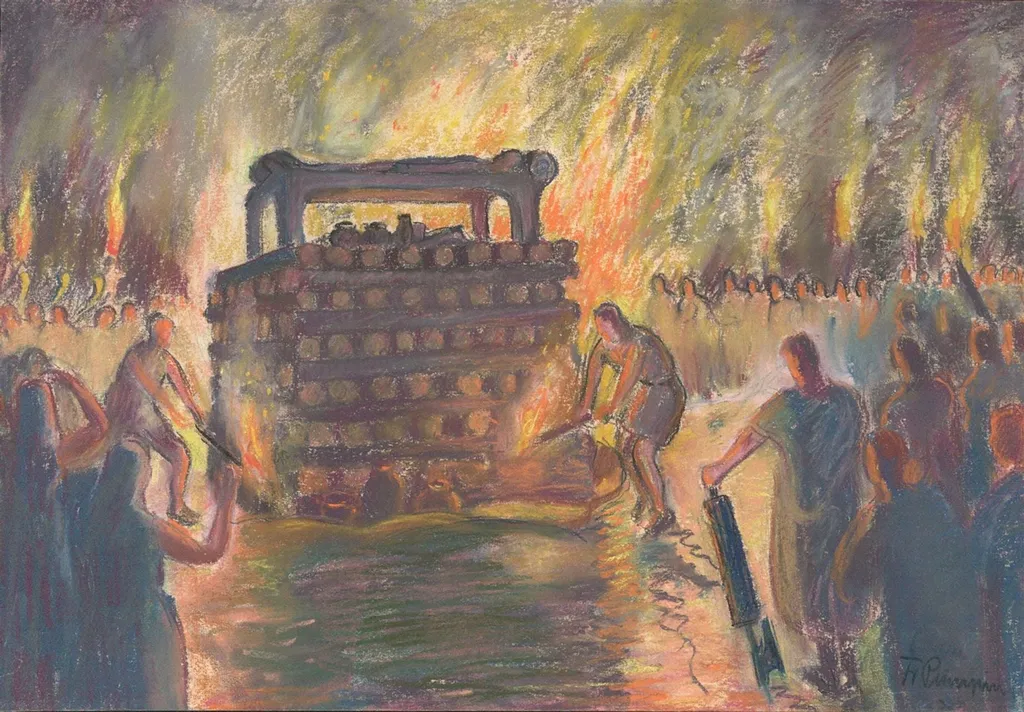
Pümpin, Fritz - Malerei, Gallorömische Kremation is a drawing by Fritz Pümpin. It dates from 1938 and is held in the collection of the Archaeology and Museum Baselland.
About this work
Overview
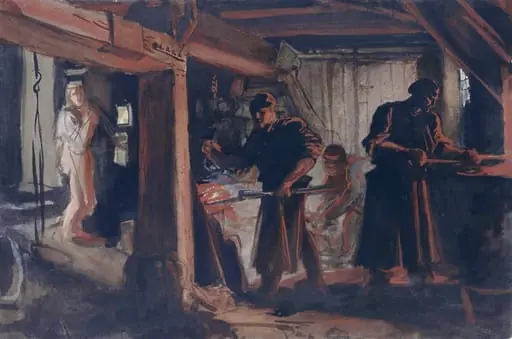
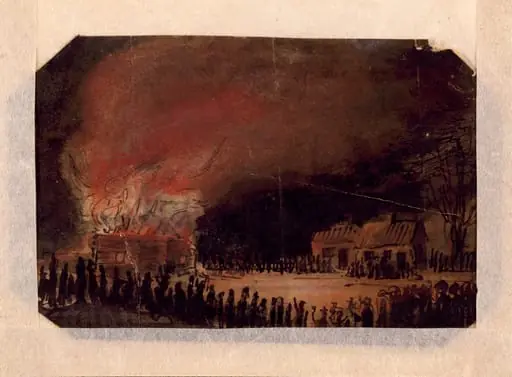
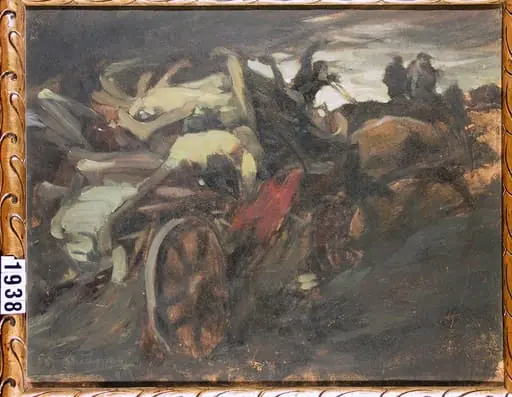
Executed in oil, the work captures a nocturnal gathering around a towering wooden structure, rendered with dynamic brushwork and heightened color.
Fritz Pümpin's 1938 painting depicts a ceremonial scene inspired by Gallo-Roman cremation rituals. Executed in oil, the work captures a nocturnal gathering around a towering wooden structure, rendered with dynamic brushwork and heightened color. Held in the collection of the Museum of Ethnography, the piece reflects Pümpin’s interest in ancient rites as subjects for modern expression, blending historical reference with expressive abstraction.
Subject & Meaning
The painting portrays a group of figures surrounding a large, carved pyre, suggesting a funerary rite from the Gallo-Roman period. The figures are arranged in loose, active postures, implying ritual motion rather than static reverence. The warm glow emanating from the structure evokes fire’s role in transformation, while the absence of clear narrative details invites contemplation of death, memory, and communal ceremony.
Technique & Style
Pümpin employed thick, gestural brushstrokes and saturated hues of amber, crimson, and ochre to convey movement and emotional intensity. The background is largely shadowed, focusing attention on the illuminated pyre and the silhouetted figures. The loose handling of form and lack of precise detail align with expressive modernism, prioritizing atmosphere over archaeological accuracy.
History & Provenance
Created in 1938, the painting entered the collection of the Museum of Ethnography shortly after its completion. Pümpin, a Swiss artist with a focus on cultural rituals, produced several works during this period exploring ancient traditions through a contemporary lens. The work has remained in institutional hands since its acquisition, with no documented private ownership.
Context
In the late 1930s, European artists increasingly turned to pre-Christian and non-Western rituals as sources of symbolic depth amid rising political tensions. Pümpin’s engagement with Gallo-Roman funerary practices reflects this broader trend, positioning ancient rites as timeless expressions of human experience rather than mere historical curiosities.
Legacy
Though not widely exhibited beyond institutional circles, the painting remains a representative example of Pümpin’s thematic focus on ritual and memory. It contributes to a lesser-known strand of 20th-century Swiss art that sought to reconnect modern identity with ancestral practices, influencing later artists interested in myth and material culture.
Artist & collection