Artwork
The Borghese Cybele
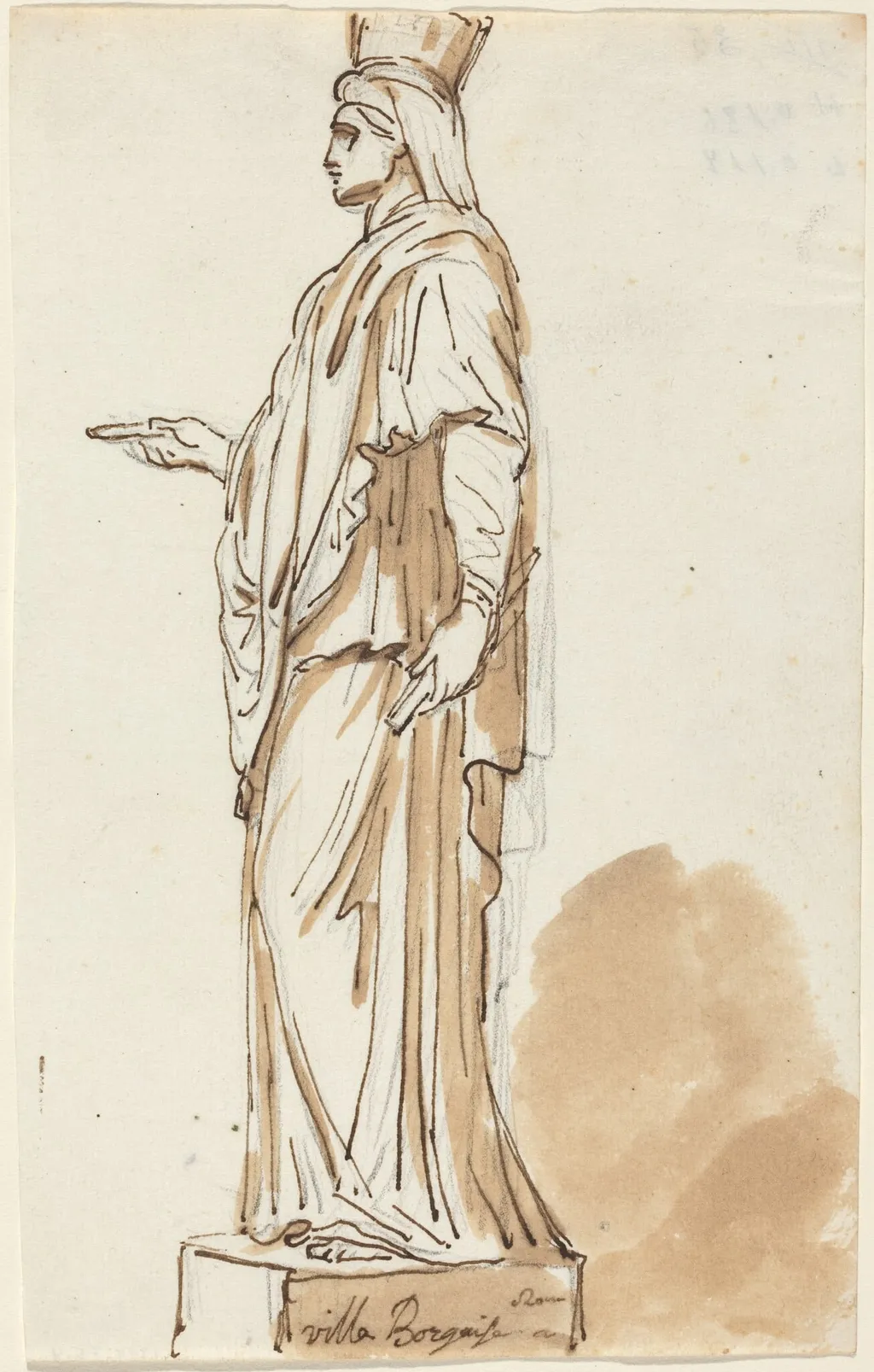
The Borghese Cybele is a chalk drawing by the Romanticist artist Augustin Pajou. It dates from 1754 and is held in the collection of the National Gallery of Art.
- Inscription
- Inscribed:lower center in brown ink: Villa Borghese, Rome; in later hand, upper left verso in pencil: III 35 / H 6.186 / L0.114
About this work
Overview
The Borghese Cybele is a drawing by Augustin Pajou, created in 1754, executed in pen and brown ink with brown wash over black chalk on laid paper.
Subject & Meaning
The drawing depicts a robed figure on a pedestal, wearing a tall crown and a flowing cloak, and pointing forward with one hand. The figure is likely a representation of an ancient goddess, possibly Cybele, as suggested by the artist's inscription 'Villa Borghese', referencing the likely original location of the statue.
Technique & Style
The drawing is characterized by loose and quick lines, with light shading and some smudged areas, showcasing Pajou's spontaneous and expressive style.
Own this work as a print
Artist & collection
Artist
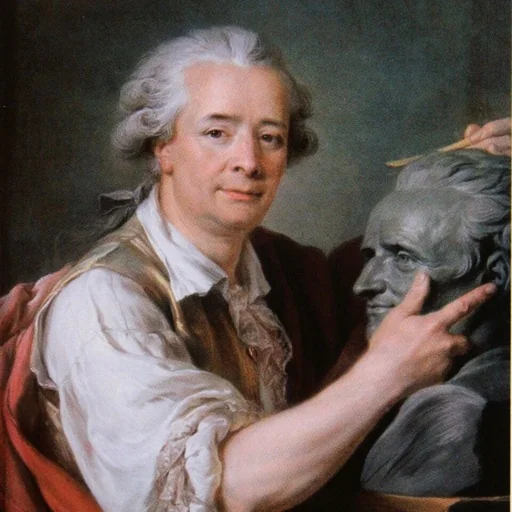
Augustin Pajou (French pronunciation:; 19 September 1730 – 8 May 1809) was a French sculptor, born in Paris. At eighteen he won the Prix de Rome, and at thirty exhibited his Pluton tenant Cerbère enchaîné (now in the Louvre).

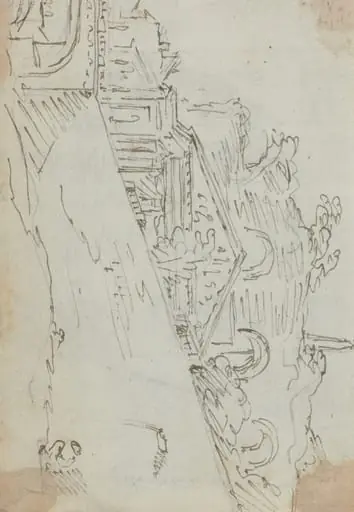
![The Ripetta in Rome [verso], by Augustin Pajou](https://artifactworldgallery.com/img/augustin-pajou--the-ripetta-in-rome-verso--4bc04e9c9476a91b-w320.webp)
![Angel from the Assumption [recto], by Augustin Pajou](https://artifactworldgallery.com/img/augustin-pajou--angel-from-the-assumption-recto--59871eebf02790c8-w320.webp)
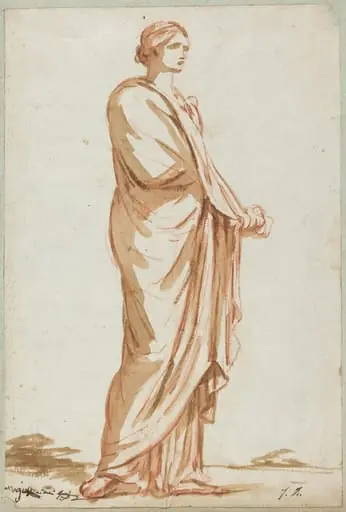 Roman Statue of a Standing Woman
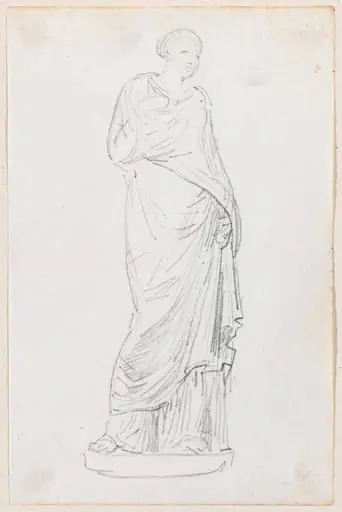 Statue of a Female in a Toga
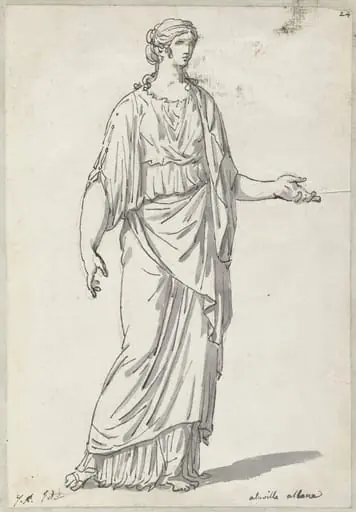 Classical Sculpture of a Woman with an Outstretched Arm
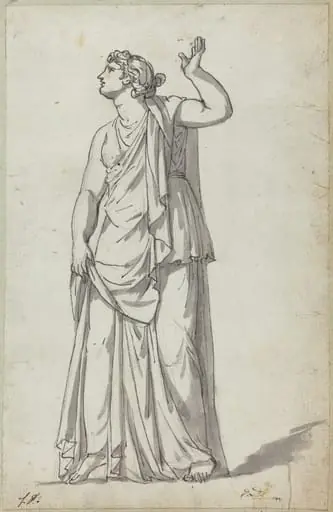 Roman Statue of a Muse (Anchyrrhoe)
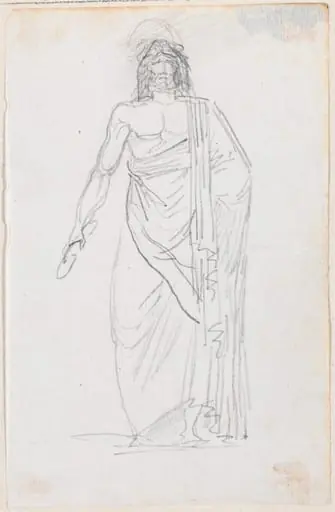 Statue of Zeus Holding a Thunderbolt
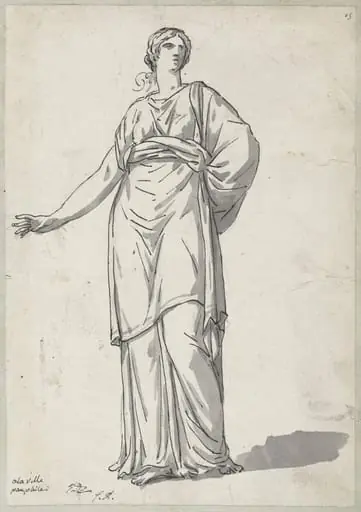 Woman from the Villa Pamphili
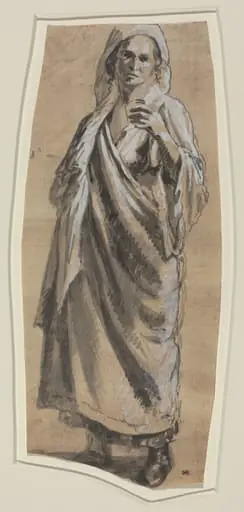 Study of a Standing Woman
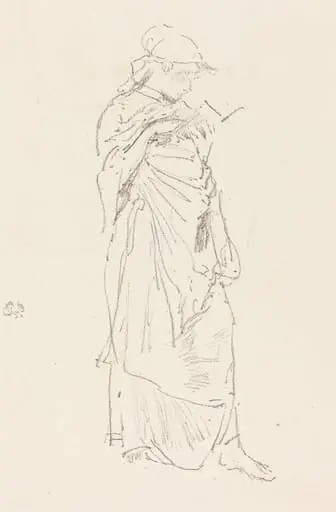 The Novel: Girl Reading
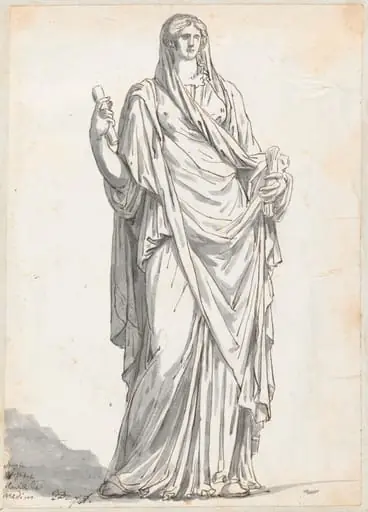 Orante from the Villa Medici
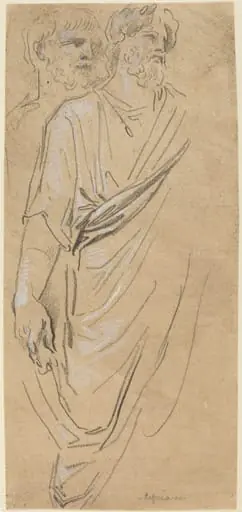 Studies of a Classical Figure
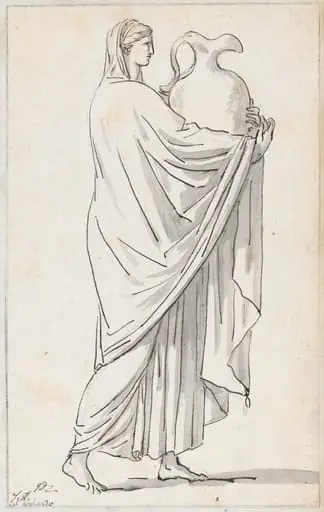 Woman with a Pitcher, from the Palazzo Mattei
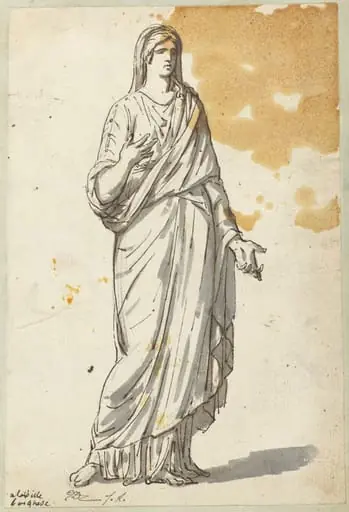 Woman from the Villa Borghese