Artwork
Mystical Marriage of St Catharine
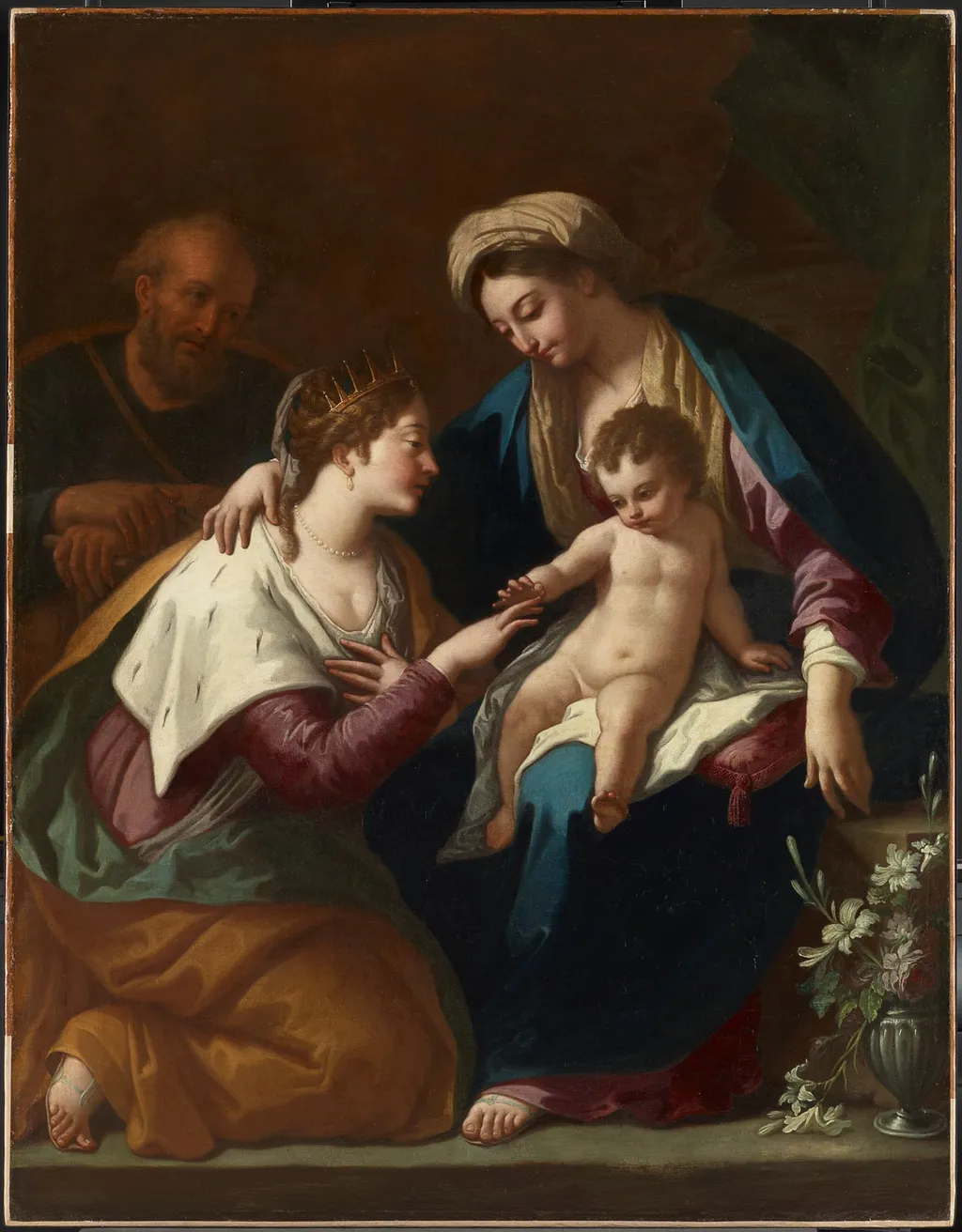
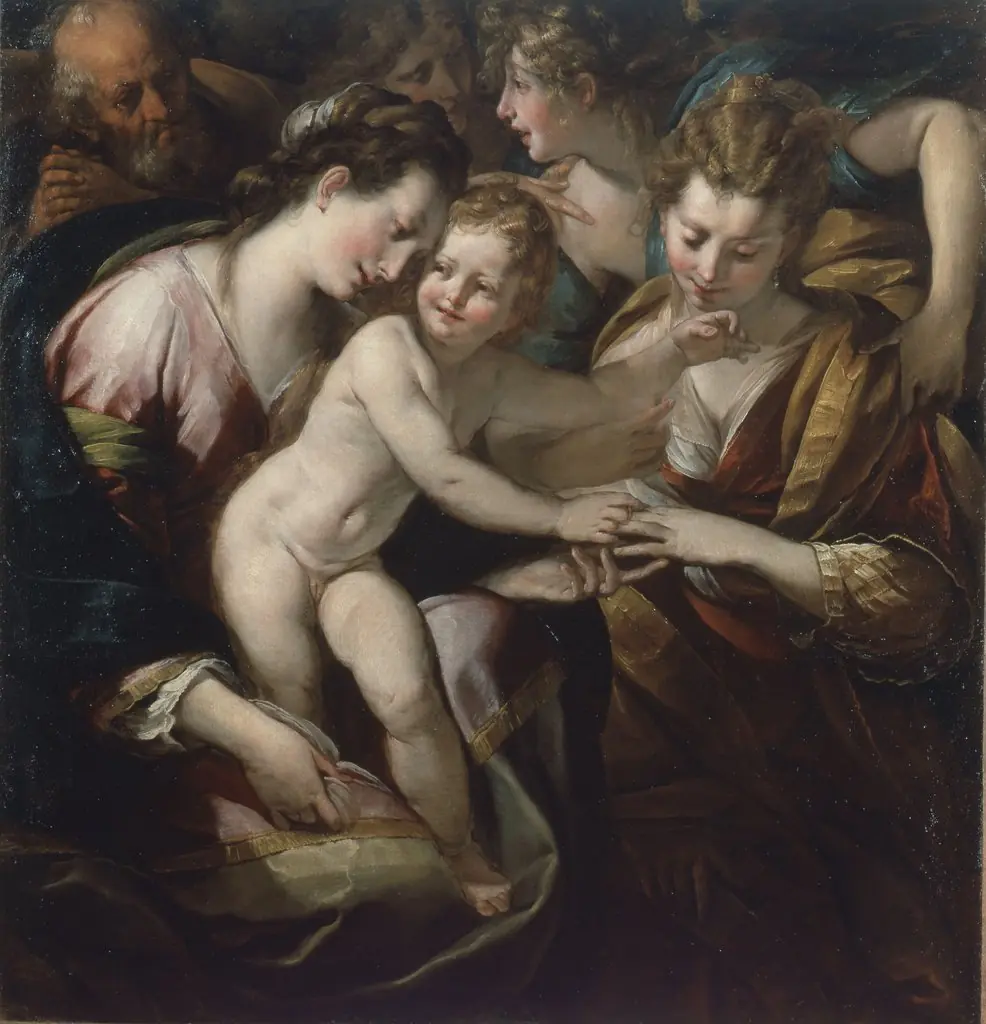
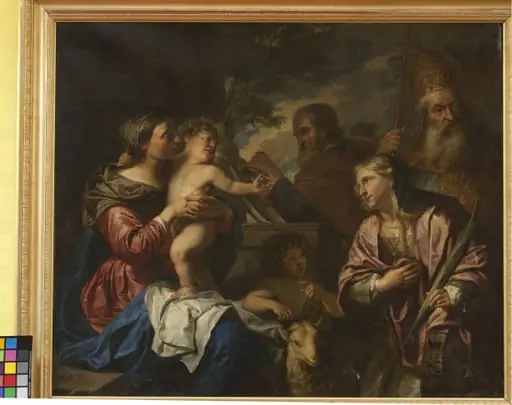
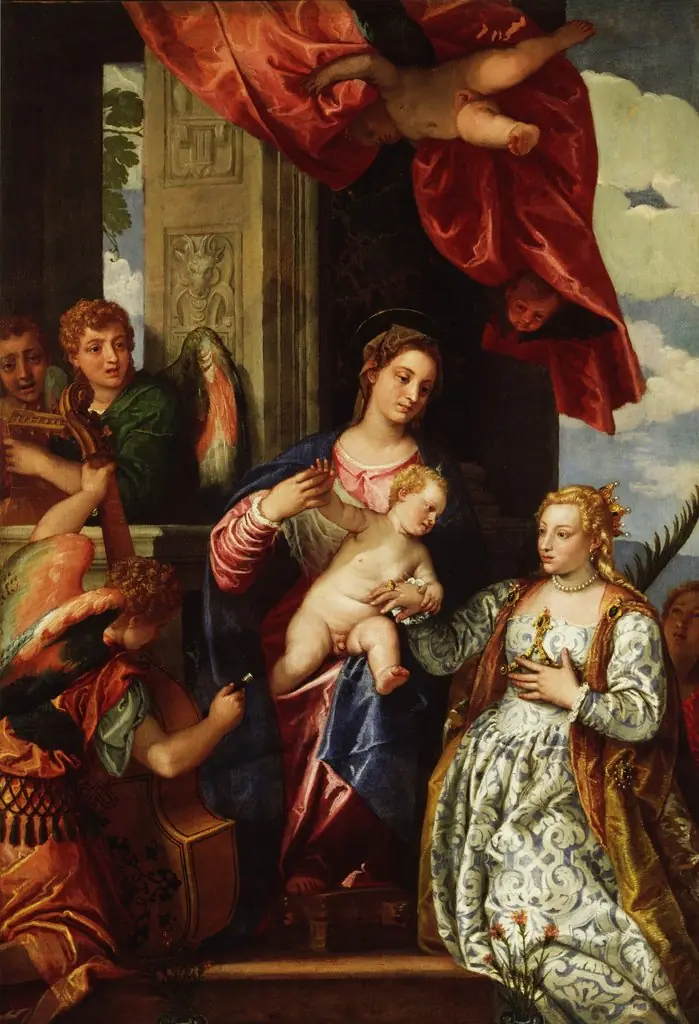
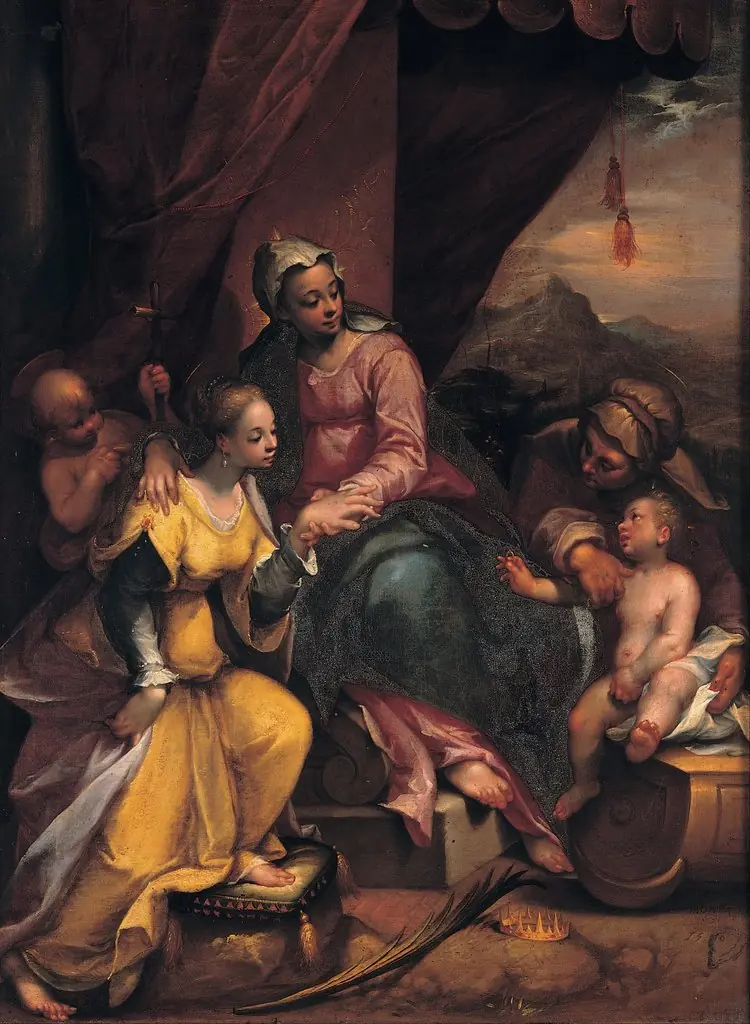
Mystical Marriage of St Catharine is an unspecified painting by the Early Baroque Italian artist Paolo de Matteis. It dates from 1712 and is held in the collection of the Kunsthistorisches Museum.
About this work
Subject & Meaning
The subject represents the contemplative ideal of mystical union with the divine, a theme central to Catherine of Siena's hagiography.
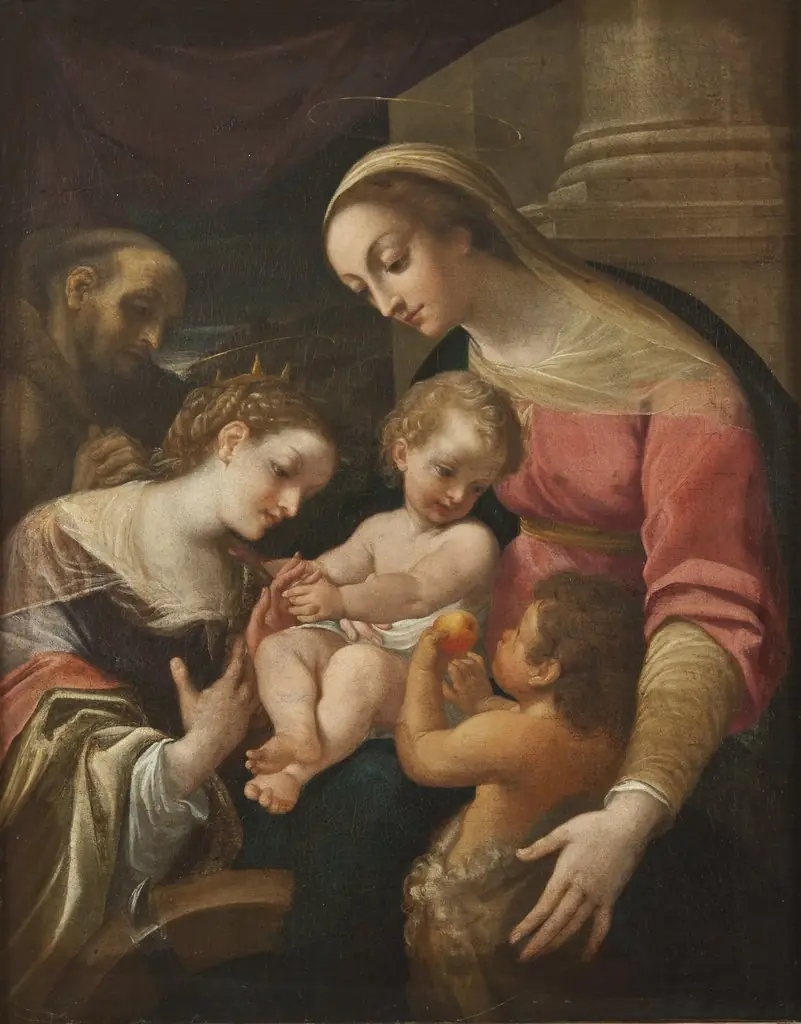
The painting depicts the Mystical Marriage of Saint Catherine, a popular devotional subject in Catholic religious art. According to the source catalogue, the work portrays Catherine of Siena, identifying her as the central figure of the mystical union. The genre is recorded as religious, situating the image within the iconographic tradition of saintly marriage imagery in which the mystic bridegroom, understood as the Christ Child, places a ring on the saint's finger, signifying her spiritual espousal to the divine.
Painted in 1712 by Paolo de Matteis, the canvas belongs to the collection of the Kunsthistorisches Museum, where its religious character is preserved within the museum's holdings of devotional works. The subject represents the contemplative ideal of mystical union with the divine, a theme central to Catherine of Siena's hagiography.
Technique & Style
Executed in 1712, this religious painting by Paolo de Matteis is rendered in oil on canvas. The work measures 149 cm in height and 116 cm in width. As a piece of religious art, it depicts Catherine of Siena, illustrating the artist's engagement with sacred subject matter typical of the period.
The composition utilizes the flexible support of canvas, a standard medium for large-scale devotional works of the early eighteenth century.
History & Provenance
The Mystical Marriage of St Catherine was painted by Paolo de Matteis in 1712, as recorded in its entry. The work is an oil on canvas religious painting depicting Catherine of Siena, created for the Kunsthistorisches Museum in Vienna where it remains in the collection today. Its dimensions are 149 cm by 116 cm, and it was completed on January 1, 1712, according to the documented inception date.
The painting is classified within the genre of religious art and is part of the museum's permanent holdings, reflecting its established provenance and institutional ownership.
The work's creation history is tied to its function as a devotional piece, commissioned to reflect mystical themes associated with Saint Catherine. Its production date and physical characteristics are precisely recorded, confirming its place in early 18th-century European religious art. The attribution to Paolo de Matteis is consistent across archival and museum records, establishing a clear authorship and artistic context.
Mystical Marriage of St Catharine by Paolo de Matteis, painted in 1712, is held in the collection of the Kunsthistorisches Museum, where it remains part of the institution's holdings. The work is catalogued as a canvas painting within the museum's religious art holdings, with recorded dimensions of 149 cm in height and 116 cm in width.
No specific exhibition history or accession number is documented in the available sources.
Overview
Paolo de Matteis's 'Mystical Marriage of St. Catherine,' painted in 1712 on canvas, depicts the moment the Virgin Mary presents the Christ Child to Saint Catherine of Alexandria. The composition centers on the Virgin seated in a blue robe with a white head covering, holding the nude Christ Child, who wears a white cloth around his waist. Kneeling before them is Saint Catherine, dressed in white and red, extending her hand to receive the ring from the infant.
Behind the group, an older man, likely Saint Joseph or a donor figure, observes the sacred union. The work exemplifies the late Baroque style prevalent in early 18th-century Italy, characterized by its dynamic arrangement, soft modeling of figures, and rich color palette. Created during the height of de Matteis's career, this painting reflects his ability to synthesize the dramatic intensity of the Roman Baroque with the refined elegance favored by Neapolitan patrons.
The scene illustrates the mystical marriage, a popular subject in Counter-Reformation art, symbolizing the soul's union with the divine. De Matteis, a student of Luca Giordano, brings a theatrical clarity to the religious narrative, ensuring the spiritual significance of the event is immediately accessible to the viewer through the expressive gestures and intimate grouping of the figures.
Context
Created during the late Baroque era, the work reflects contemporary interest in mystic visions and the veneration of saints. De Matteis, a prolific Neapolitan painter, often combined dramatic narrative with refined coloration, aligning this piece with the broader religious artistic currents that emphasized emotional engagement and spiritual contemplation.
Own this work as a print
Artist & collection