Artwork
The Crucifixion
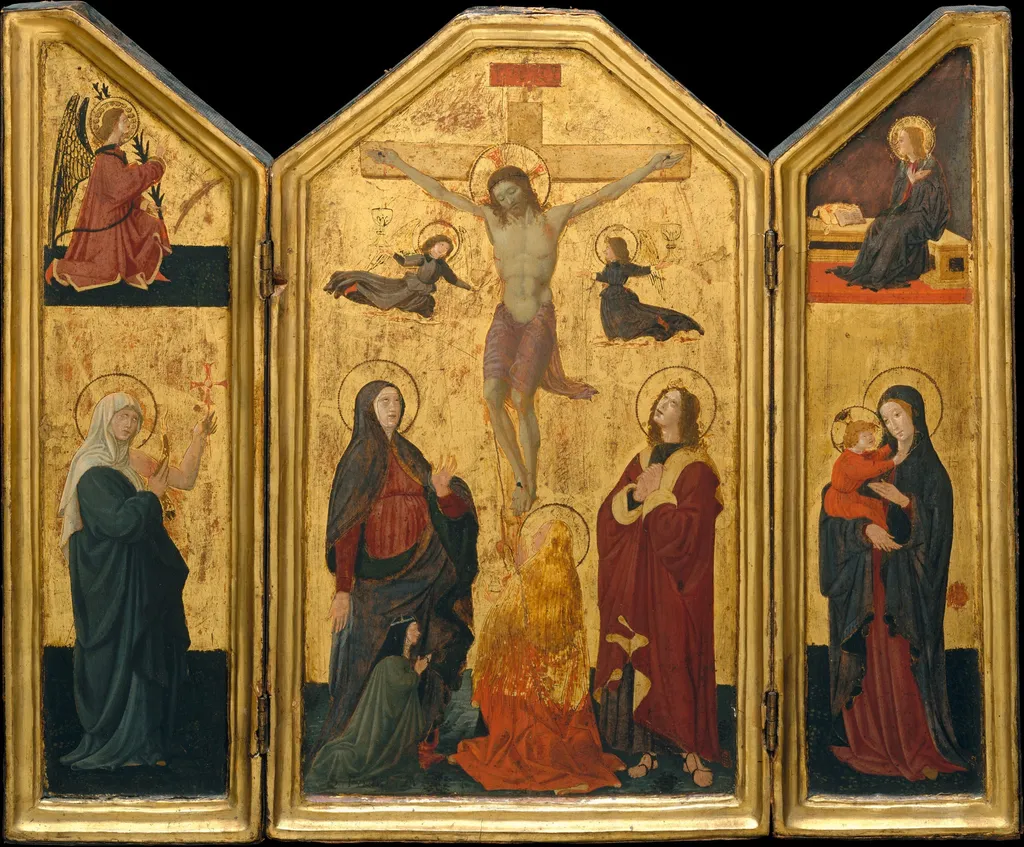
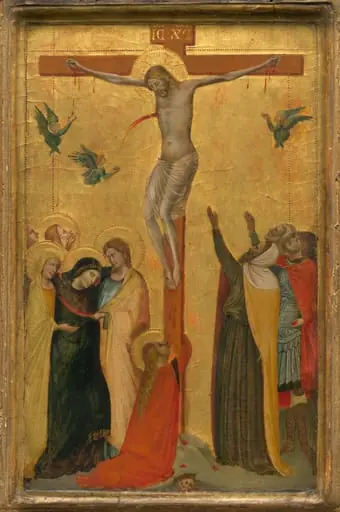
The Crucifixion is a tempera painting by the Early Renaissance artist Paolo Uccello. It dates from 1455 and is held in the collection of the Metropolitan Museum of Art.
About this work
Subject & Meaning
The stark vertical format concentrates attention on the solitary figure of Jesus, underscoring the solemnity and sacrifice central to the narrative.
The work depicts the Crucifixion of Jesus, a central subject in Christian art illustrating Christ’s death on the cross. The scene follows traditional iconography: Christ is shown nailed to a tau-shaped cross, his body draped in a loincloth, blood streaming from wounds on his hands, feet, and side. Above the cross, the titulus bearing the inscription INRI identifies the cause of his execution.
The stark vertical format concentrates attention on the solitary figure of Jesus, underscoring the solemnity and sacrifice central to the narrative. As a religious painting, the work functions devotionally, inviting contemplation of Christ’s redemptive death within the context of fifteenth-century Florentine devotion and late medieval iconographic conventions.
Technique & Style
Executed in 1455, this religious work by Paolo Uccello utilizes tempera paint applied to a wooden panel. The composition depicts the Crucifixion of Jesus Christ. Physically, the painting is characterized by its exceptionally narrow proportions, measuring 41.9 cm in height and only 9.5 cm in width.
These dimensions suggest a format designed for specific devotional handling or integration into a larger structural ensemble rather than independent display. The medium and support are consistent with mid-fifteenth-century Italian panel painting practices.
History & Provenance
Paolo Uccello's Crucifixion was created in 1455, executed in tempera on panel. The work passed through several private owners before entering a public collection. Its documented ownership chain begins with Edoardo Moratilla and proceeds through Pinakos Inc., M. Knoedler & Co., Rudolf J. Heinemann, and Lore Heinemann.
From the Heinemann holdings it was acquired by the Metropolitan Museum of Art, where it is now held in the museum's collection.
The Crucifixion by Paolo Uccello is held by the Metropolitan Museum of Art, which is listed as both its collection and location.
Before entering the museum, the panel passed through several ownerships, including Edoardo Moratilla, Pinakos Inc., M. Knoedler & Co., Rudolf J. Heinemann, and Lore Heinemann, before being acquired by the Metropolitan Museum of Art. The sources do not provide a specific accession number or any exhibition history for the work.
Overview
Paolo Uccello's The Crucifixion, painted in tempera in 1455, is an Early Renaissance work depicting the central Christian narrative. This Florentine artist, recognized for his mathematical approach to visual perspective, created this piece which now resides in The Metropolitan Museum of Art. It exemplifies his broader interest in rendering spatial depth within religious subjects.
Context
Created during the Early Renaissance, this painting reflects the intellectual currents of 15th-century Florence. Uccello, a painter deeply engaged with mathematics, applied his rigorous studies of visual perspective to his art. This commitment to spatial rendering was a defining feature of the period and a particular focus for Uccello, influencing how he structured his religious compositions.
Own this work as a print
Artist & collection
Artist
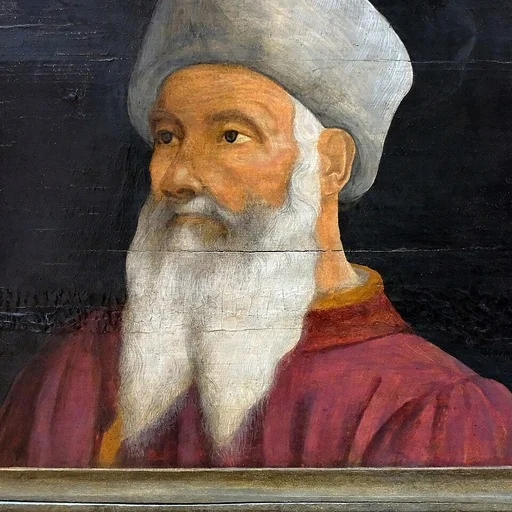
Paolo Uccello ( oo-CHEL-oh, Italian:; 1397 – 10 December 1475), born Paolo di Dono, was an Italian Renaissance painter and mathematician from Florence who was notable for his pioneering work on visual perspective in art.

- The Crucifixion
 The Crucifixion
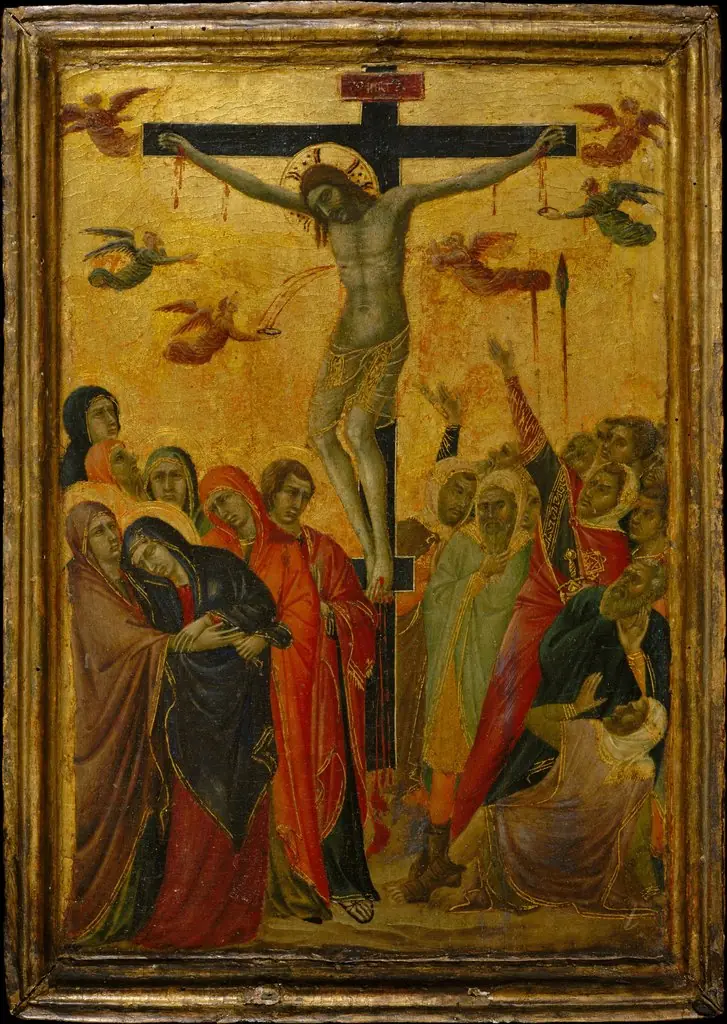 The Crucifixion
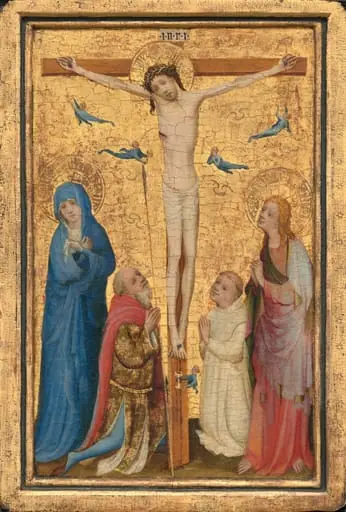 The Crucifixion
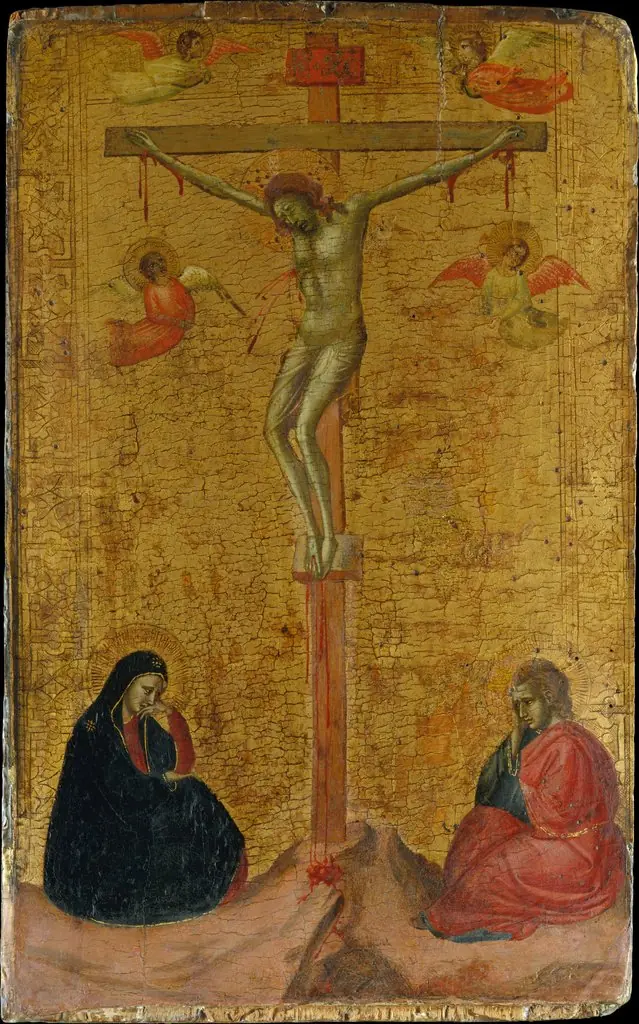 The Crucifixion
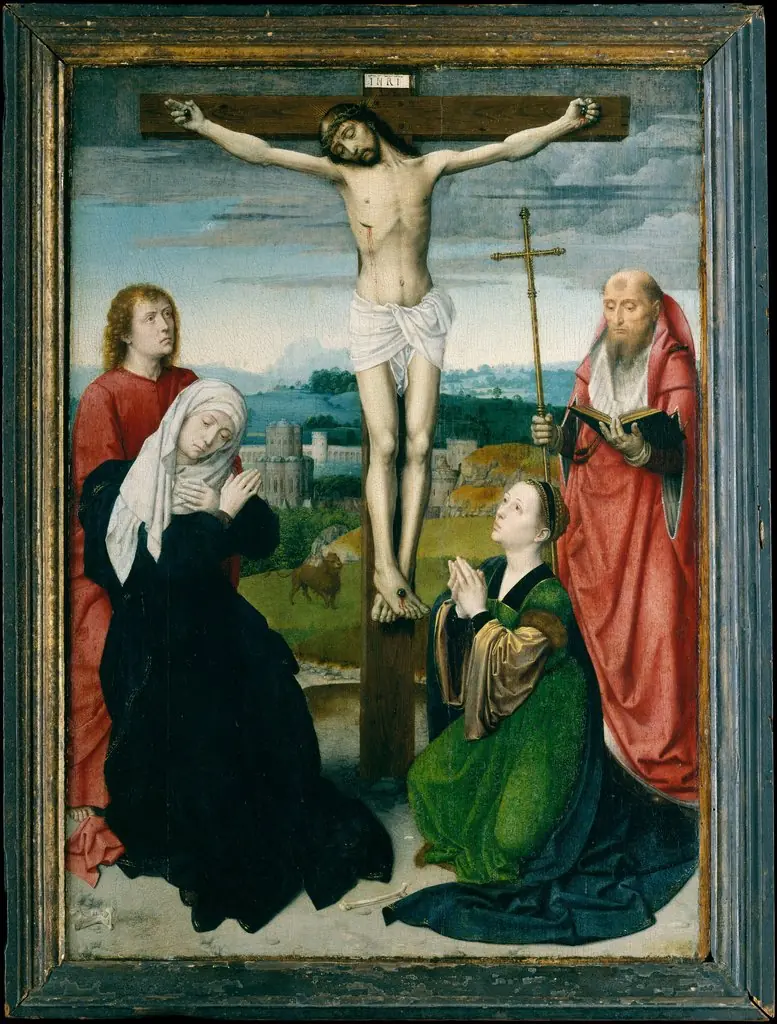 The Crucifixion
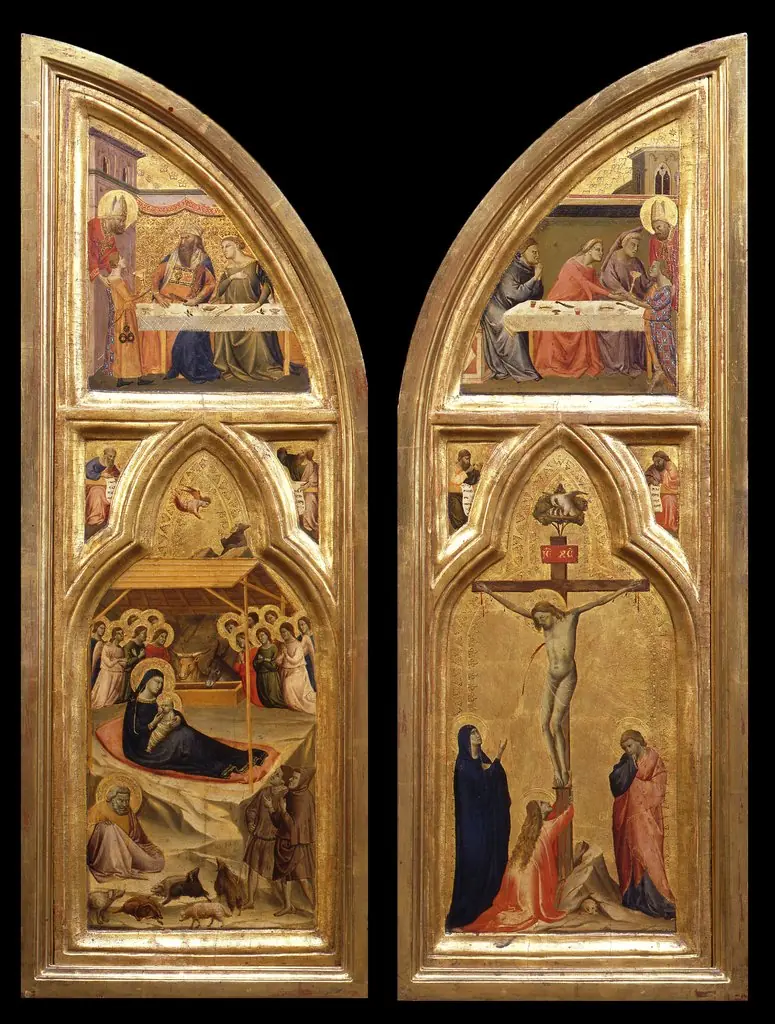 Interior view of wings of the triptych
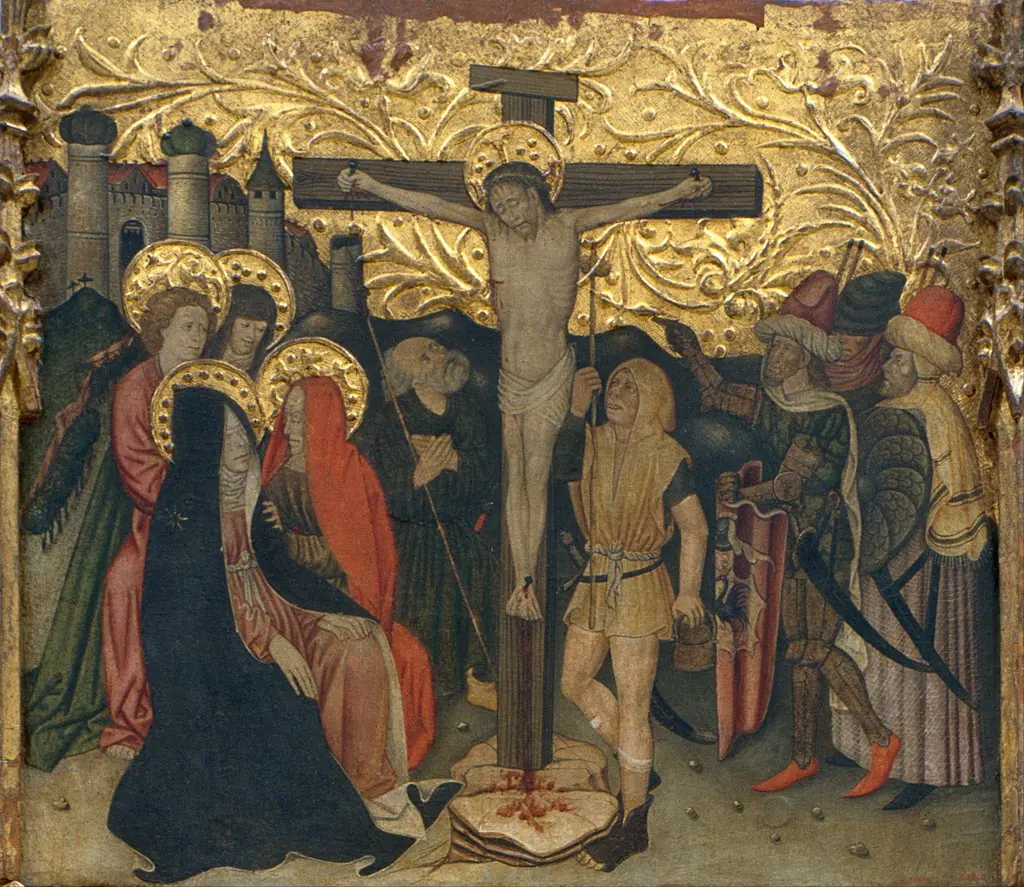 Calvary
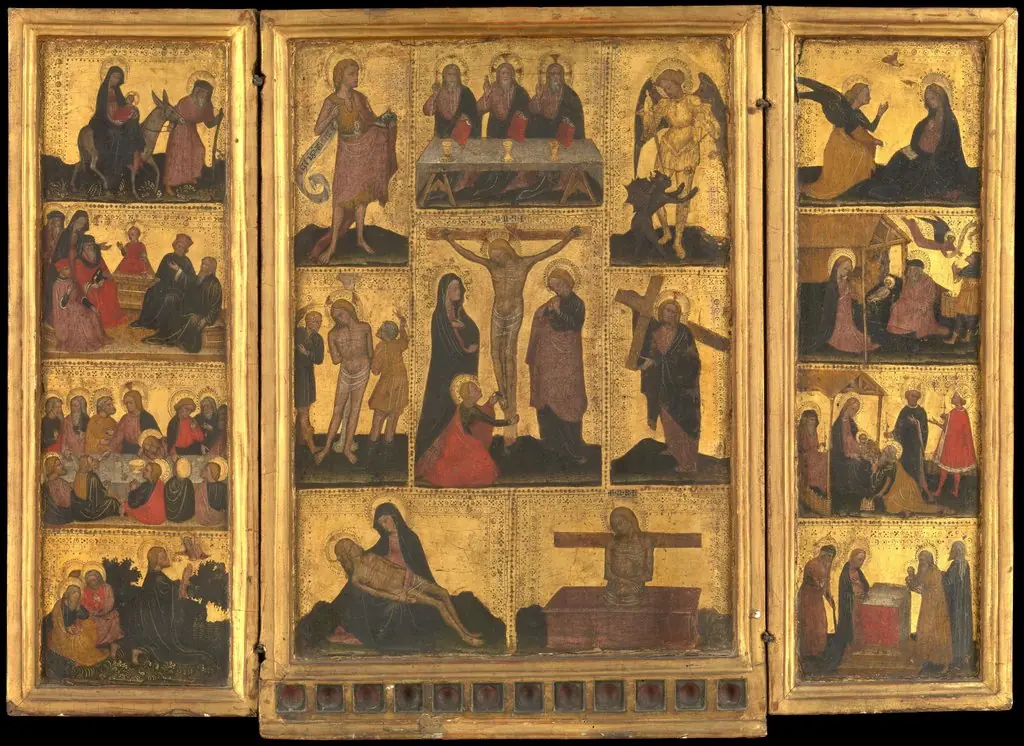 The Life of Christ
 The Crucifixion
 Triptych of the Crucifixion with Saints Anthony, Christopher, James and George
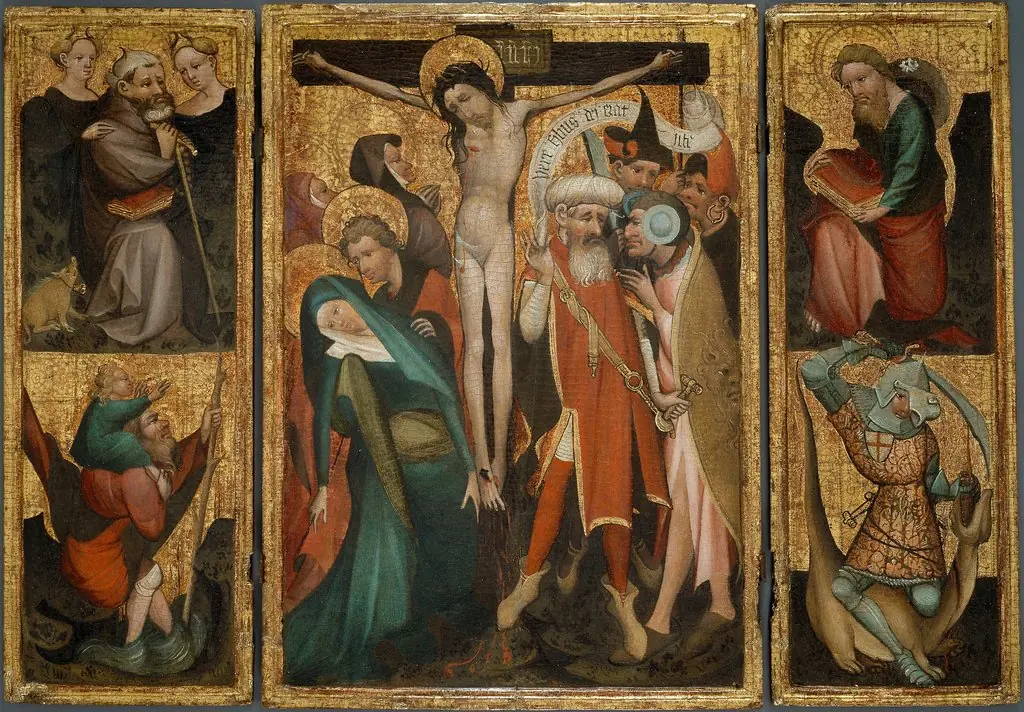 Triptych of the Crucifixion with Saints Anthony, Christopher, James and George