Artwork
The Crucifixion
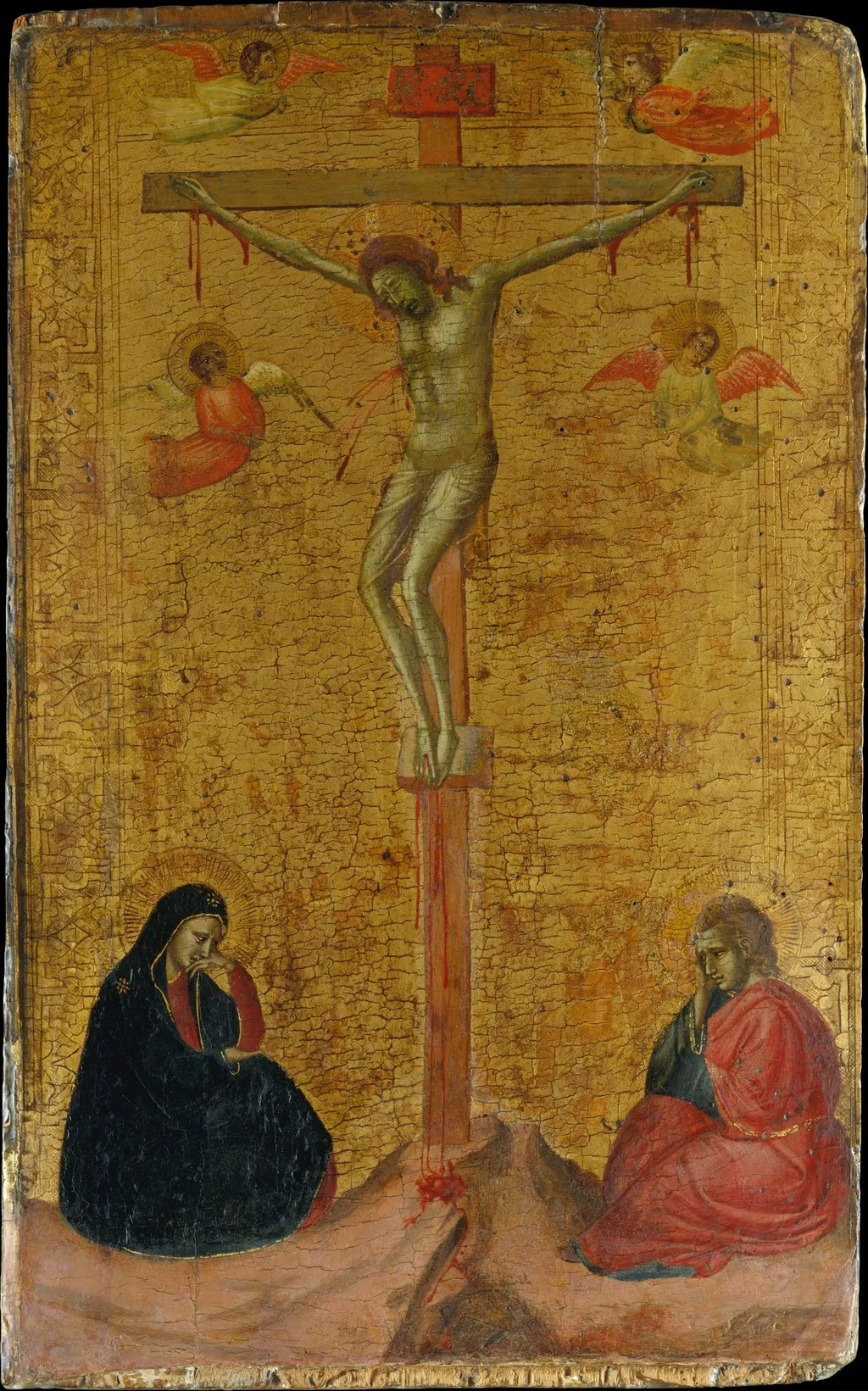
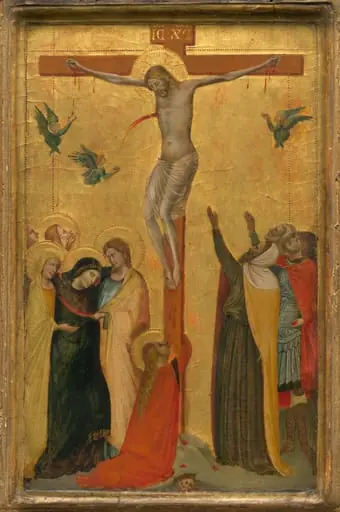
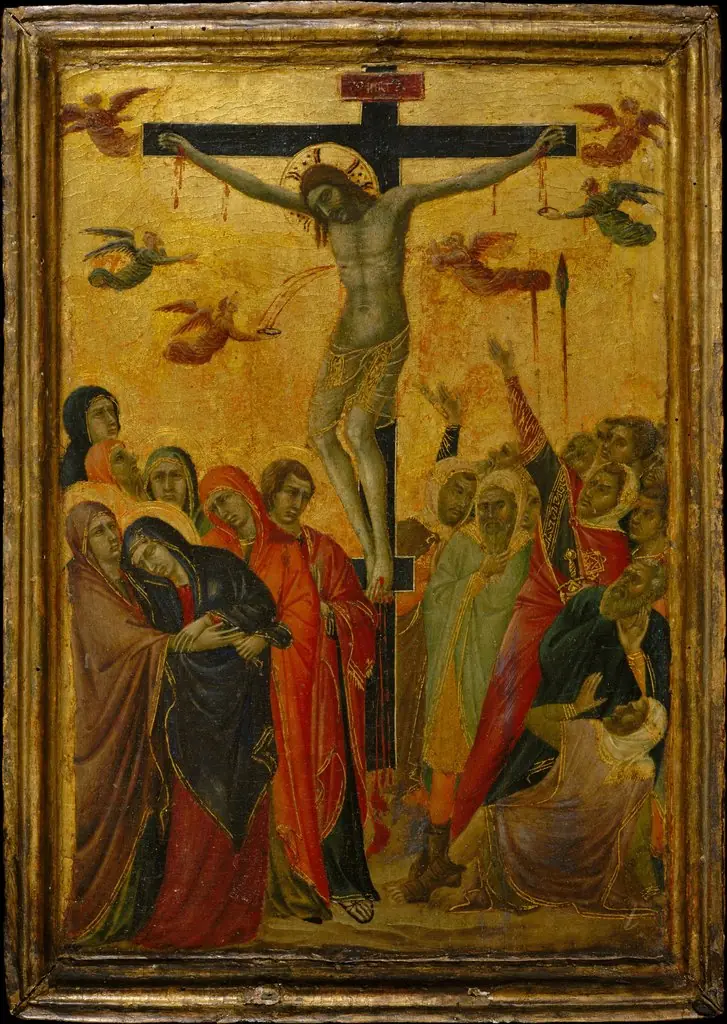
The Crucifixion is a tempera painting by the Italo Byzantine artist Bernardo Daddi. It dates from 1325 and is held in the collection of the Metropolitan Museum of Art.
About this work
Subject & Meaning
The inclusion of these specific witnesses underscores the emotional gravity of the scene, focusing the viewer on the sacrifice of Christ.
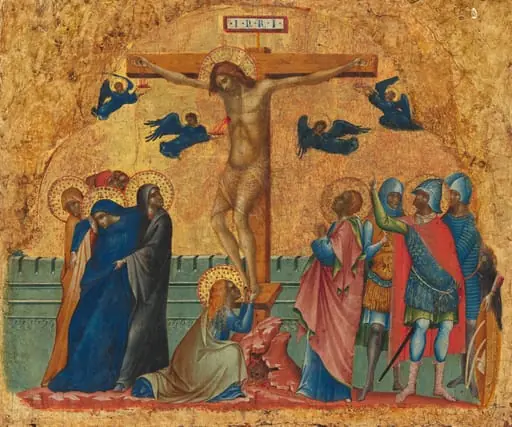
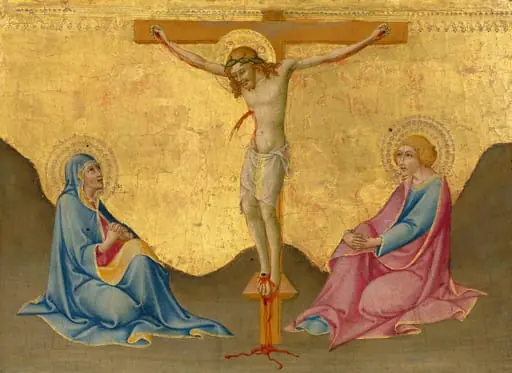
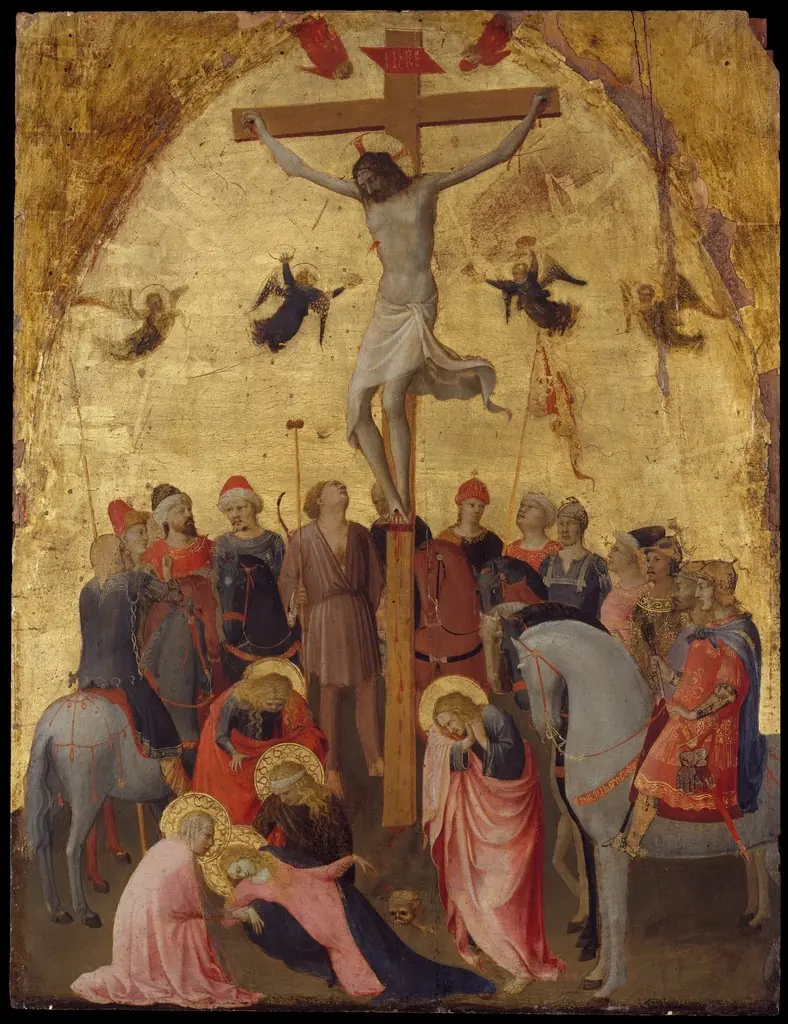
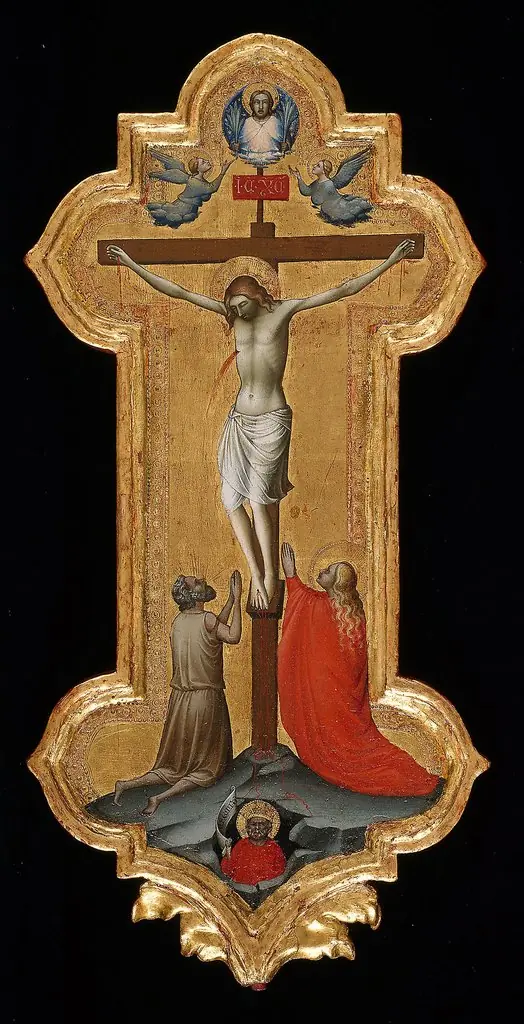
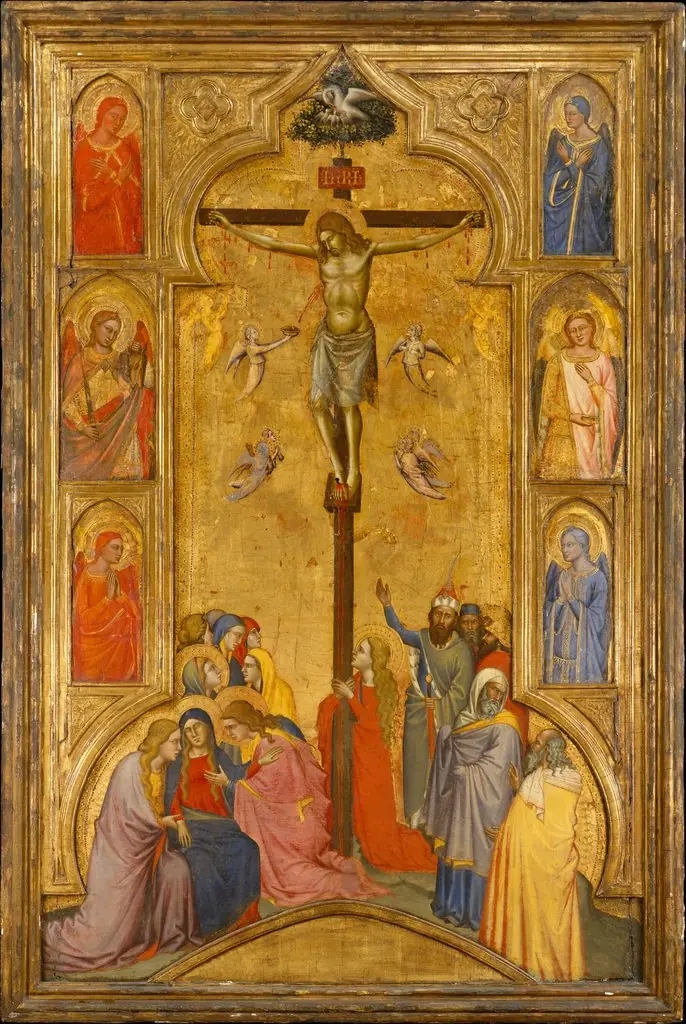
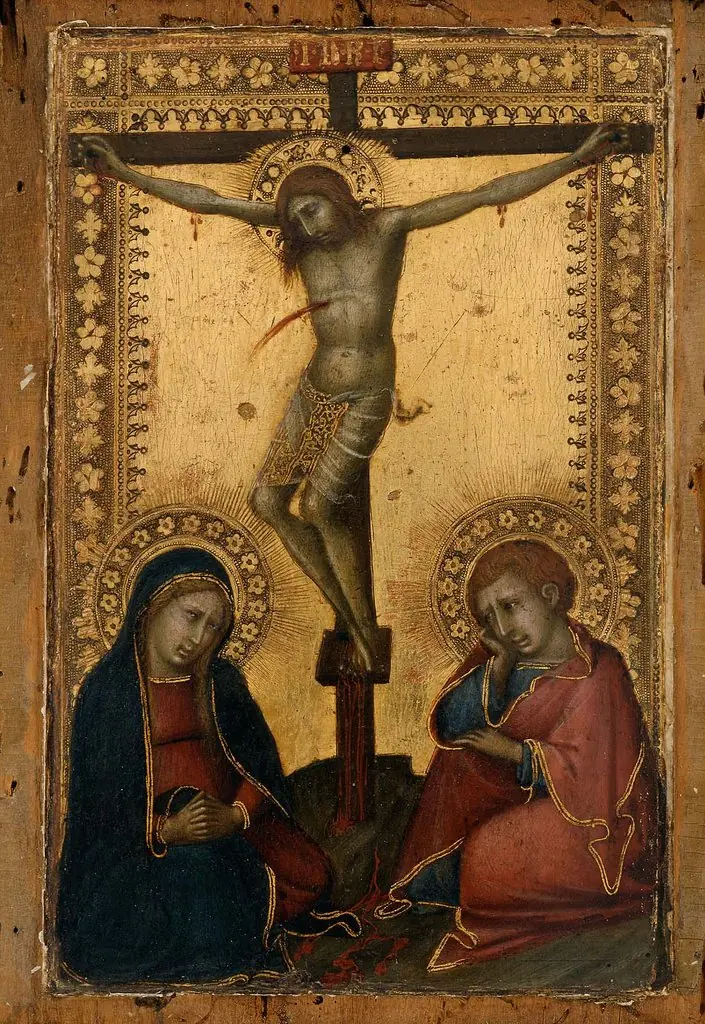
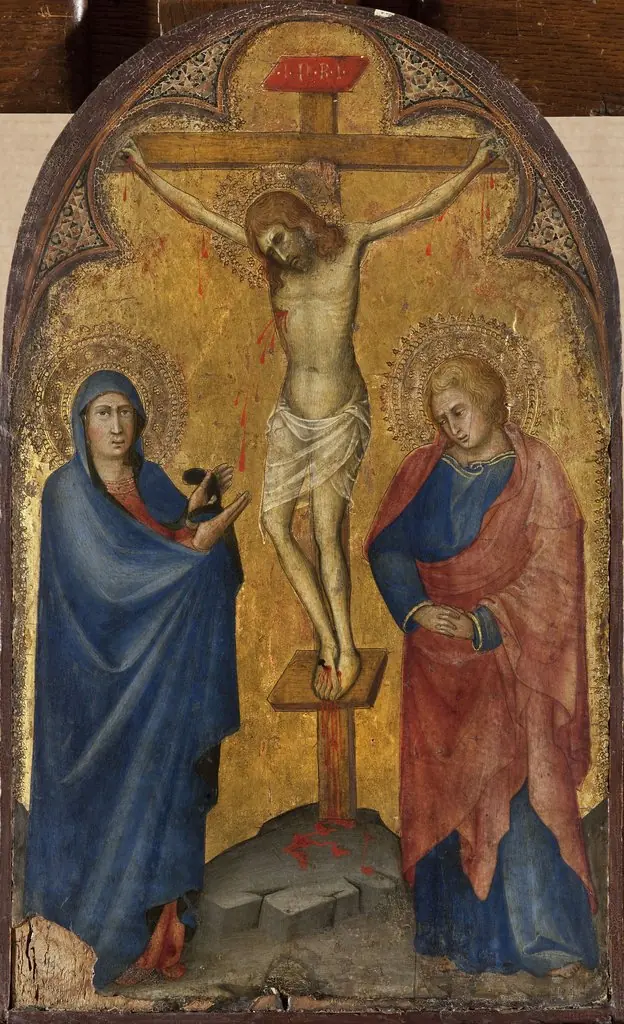
The work depicts the crucifixion of Jesus Christ, a central event in Christian theology. The composition features Christ on the cross as the main subject, accompanied by the figures of the Virgin Mary and John the Evangelist. As a piece of religious art created in 1325, the painting serves as a devotional object illustrating the Passion narrative.
The inclusion of these specific witnesses underscores the emotional gravity of the scene, focusing the viewer on the sacrifice of Christ. Executed in tempera on panel, the image functions within the tradition of altarpiece imagery intended to inspire piety and reflection on the redemption of humanity through the death of Jesus.
Technique & Style
The Crucifixion by Bernardo Daddi is executed in tempera on panel, a standard technique for Italian devotional paintings of the early Trecento. The work is modest in scale, measuring 44.5 cm in height and 28.9 cm in width, indicating an intimate format suited to private devotion rather than large-scale altarpiece display. The painting employs the religious iconographic program typical of Florentine trecento crucifixes, depicting Jesus Christ on the cross alongside John the Evangelist and Mary.
The narrow vertical format and the tempera-on-panel support are consistent with the small devotional crucifixes produced by Daddi and his workshop during the 1320s, a period when such works circulated widely among Florentine patrons.
History & Provenance
The Crucifixion is a tempera on panel painting attributed to Bernardo Daddi and dated to 1325. According to the sources, the work was created by Daddi in that year and is executed in tempera on a wooden panel. Its provenance, as recorded in the sources, indicates that the painting is now part of the collection of the Metropolitan Museum of Art in New York; earlier ownership history and any original commission are not detailed in the provided references. The dating is based on the inception year of 1325 given for the work.
The Crucifixion, a 1325 tempera on panel painting by Bernardo Daddi, is housed in the Metropolitan Museum of Art in New York. The work belongs to the museum’s collection, though its specific accession or inventory number is not listed in the consulted records. It is catalogued under the museum’s religious art holdings and has been included in the institution’s permanent displays of early Italian painting.
No separate exhibition history is documented in the available sources, indicating that the painting’s public presentation has been limited to its ongoing placement within the museum’s galleries.
Overview
Painted in 1325 by Bernardo Daddi, The Crucifixion is a tempera panel depicting the death of Christ with the characteristic Gothic sensibility of the Florentine school. The composition centers on the figure of Jesus, whose body is rendered with a distinct, elongated grace against a gold background, his head bowed in death. Flanking the cross are the Virgin Mary and John the Evangelist, who are shown in postures of intense grief, their gestures and expressions conveying deep sorrow.
Above the scene, two angels hover in the air, often interpreted as collecting Christ's blood or mourning the event. Daddi's work reflects the influence of Giotto in its attempt to imbue sacred figures with a sense of human emotion and spatial presence, though it retains the decorative flatness and linear elegance typical of the Trecento. This piece exemplifies Daddi's role as a leading follower of Giotto, bridging the gap between the monumental realism of his master and the more lyrical, courtly style that would dominate later Sienese and Florentine painting.
The work serves as a devotional object intended to elicit empathy from the viewer through its intimate scale and emotional focus.
Own this work as a print
Artist & collection
Artist
Bernardo Daddi (c. 1280 – 1348) was an early Italian Renaissance painter and the leading painter of Florence of his generation. He was one of the artists who contributed to the revolutionary art of the Renaissance,…