Artwork
The Crucifixion
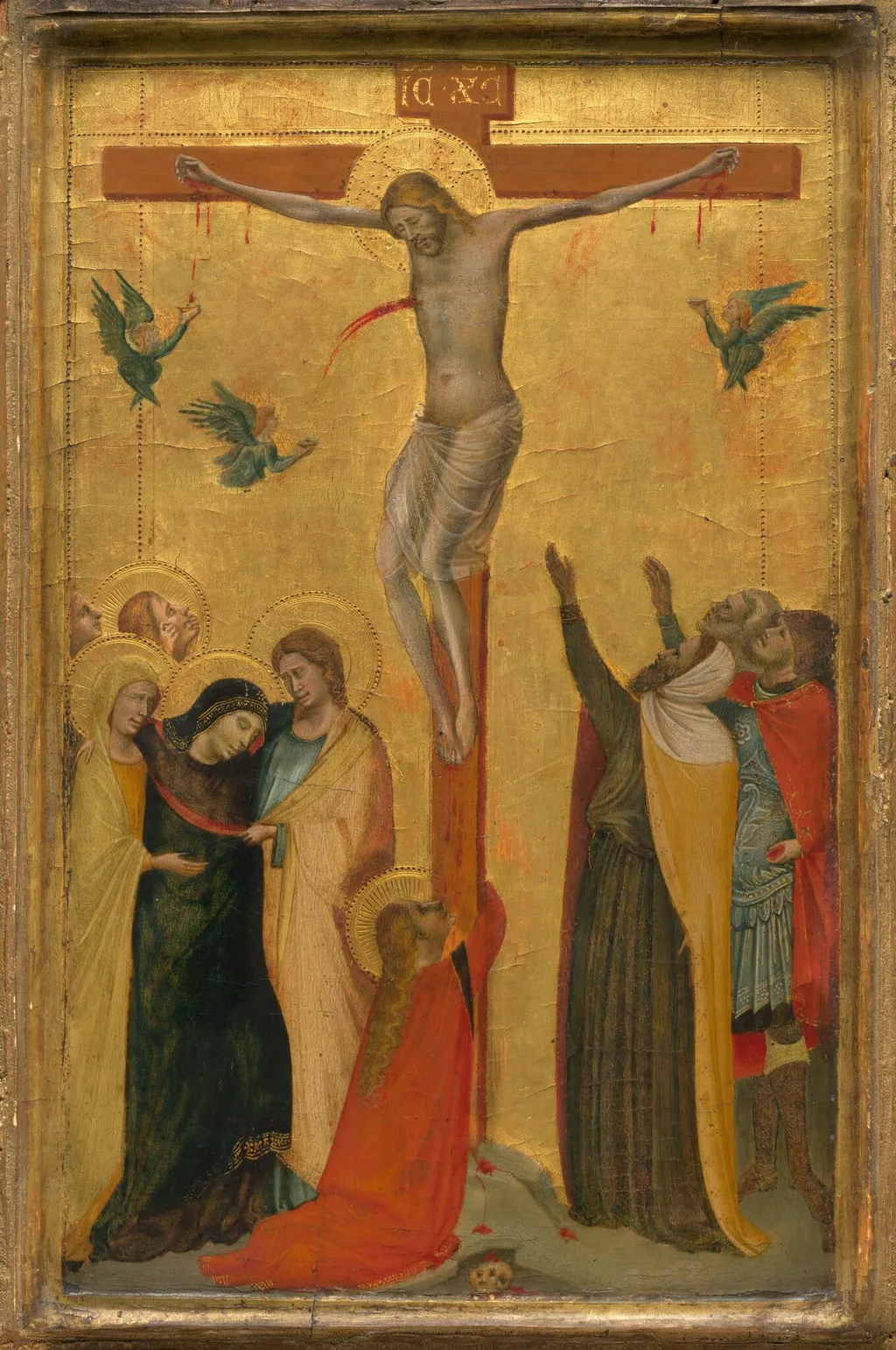
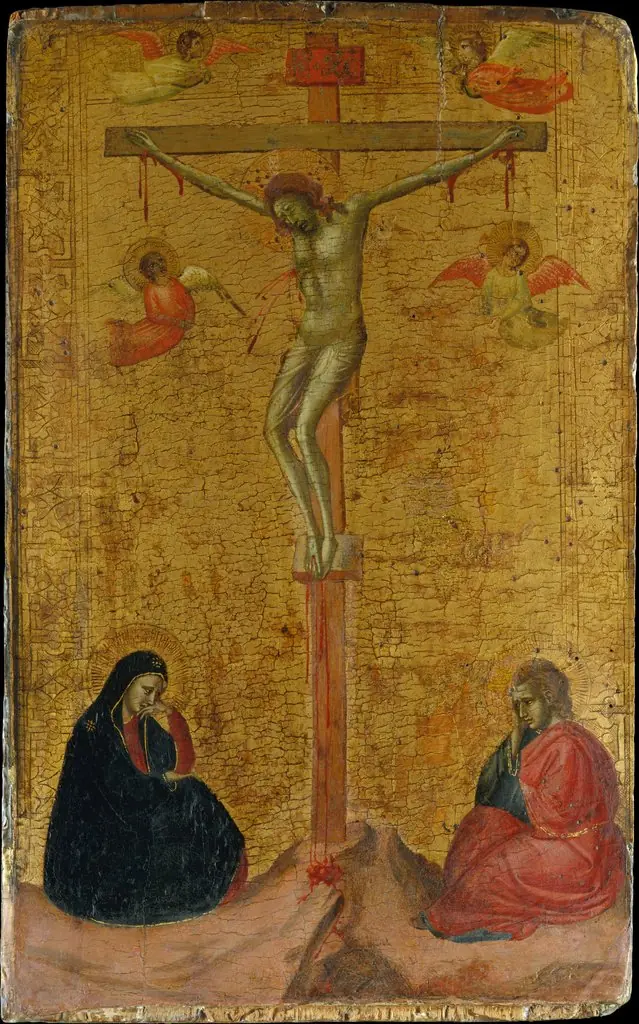
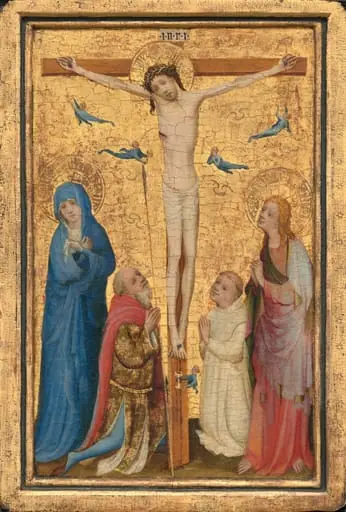
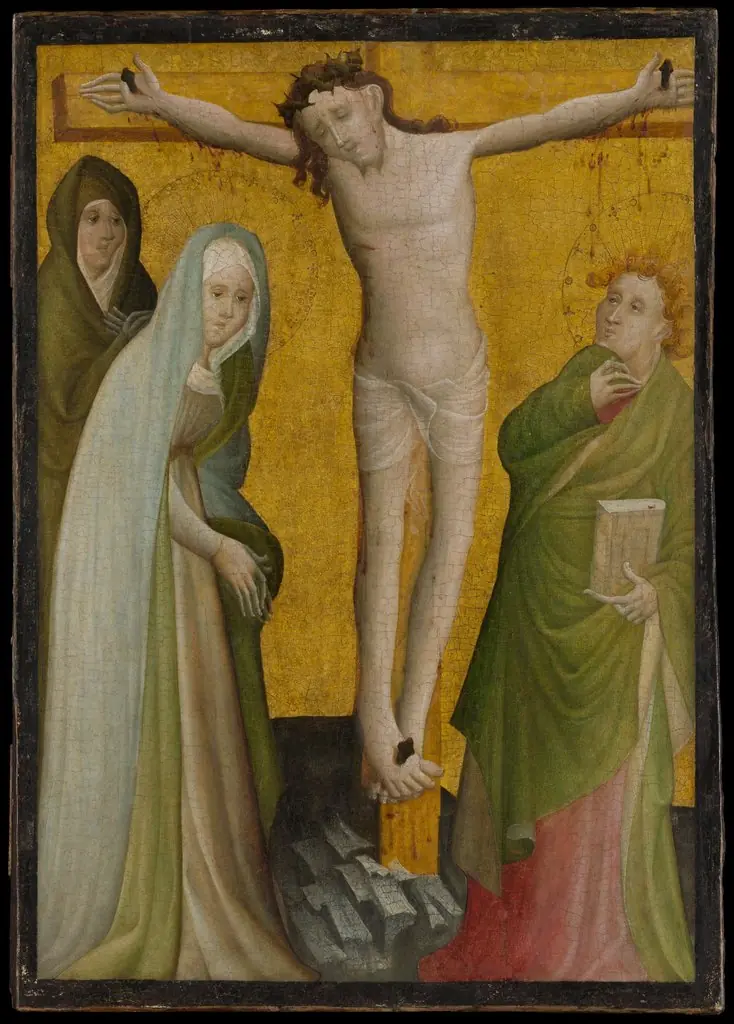
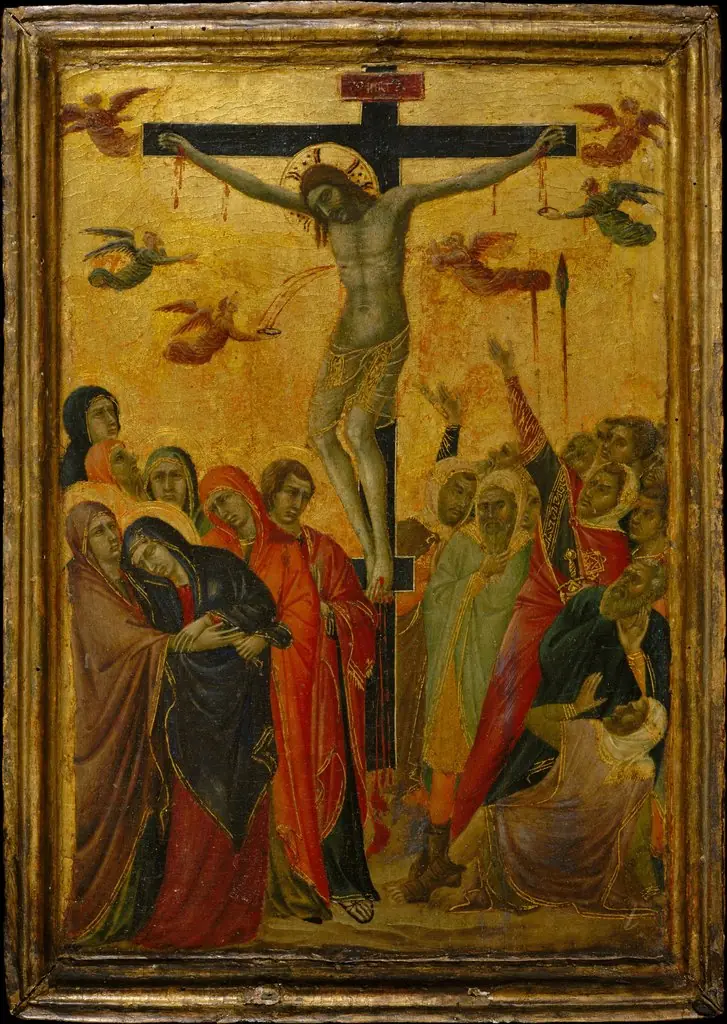
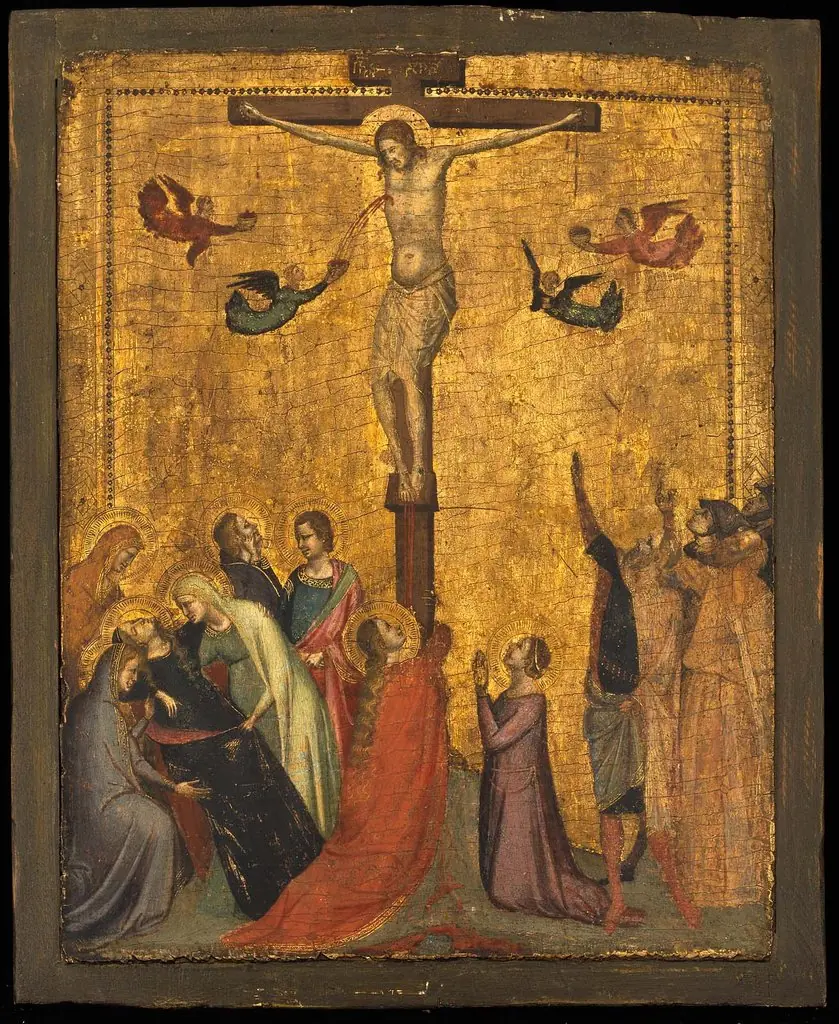
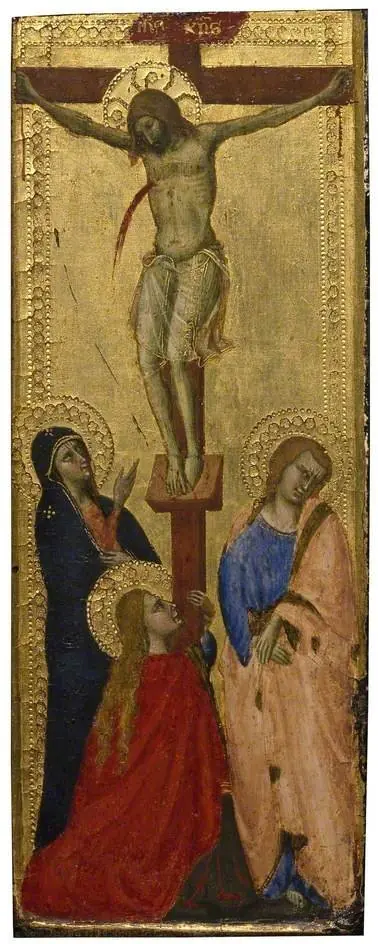
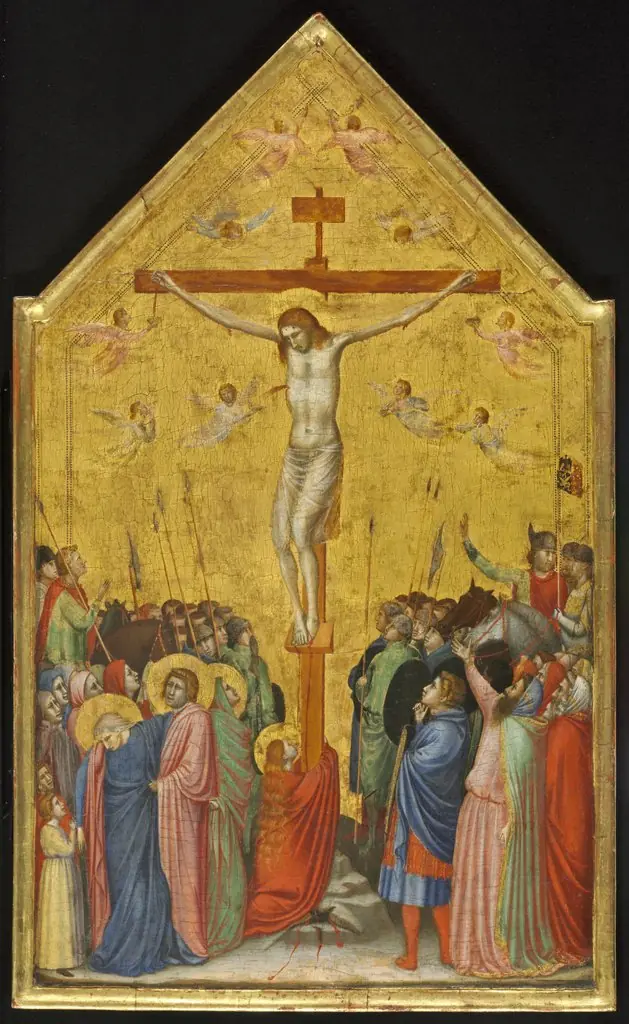
The Crucifixion is an oil painting by the Byzantine icon painting artist Bernardo Daddi. It dates from 1322 and is held in the collection of the National Gallery of Art.
- Inscription
- Inscribed:upper center on the tablet topping the cross: IC . XC (Jesus Christ) [1]
About this work
Subject & Meaning
The work's provenance through private collectors and the Kress Foundation underscores its recognized significance within the canon of Italian primitives.
The Crucifixion by Bernardo Daddi presents the crucifixion of Jesus Christ as its central figure, situating the narrative within the religious art tradition of early fourteenth-century Italy. The composition emphasizes the sacrificial aspect of the Passion, a key theological theme that conveys redemption and divine suffering. As a panel painting in tempera on poplar, it follows the iconographic conventions of Florentine devotional works, where the cross serves as a visual focal point for contemplation.
The work's provenance through private collectors and the Kress Foundation underscores its recognized significance within the canon of Italian primitives.
Technique & Style
This work is a tempera painting on a poplar panel, dated 1322. The medium is tempera applied to a wood support. The composition depicts the Crucifixion of Jesus Christ within a religious genre framework.
Physically, the artwork measures approximately 31 cm in height and 20 cm in width. As a panel painting attributed to Bernardo Daddi, the piece represents a specific classification of Florentine religious art.
History & Provenance
The Crucifixion, a tempera painting on poplar panel attributed to Bernardo Daddi and dated 1322, portrays the crucifixion of Jesus and was intended as a devotional image within the religious art tradition of early Florentine painting. Its early history is documented from a New York dealer, N. van Slochem, by 1908, after which the work entered the collection of Dan Fellows Platt, who retained it until 1943 when the Platt Estate trustees sold it to the Samuel H. Kress Foundation. The foundation later gifted the panel to the National Gallery of Art in 1961.
The Crucifixion is housed in the National Gallery of Art, Washington, D.C., accessioned as 1961.9.2 within the Samuel H. Kress Collection. Its provenance traces from N. van Slochem in New York (by 1908) to Dan Fellows Platt, who sold the work in November 1943 to the Kress Foundation. The painting was previously lent to the Loan Exhibition of Italian Primitives at F. Kleinberger Galleries, New York, in November 1917.
Context
The Crucifixion is a religious panel painting attributed to Bernardo Daddi, dated 1322, and entered the National Gallery of Art in 1961 through the Kress Collection, illustrating early twentieth-century interest in Italian primitives. Scholars such as Offner have placed the work within Daddi's oeuvre, using stylistic comparison to other Florentine paintings to situate it within an early fourteenth-century devotional context. The depiction of the crucifixion of Jesus reflects contemporary liturgical practices, while the tempera on poplar panel, measuring approximately 31 × 20 cm, conforms to typical materials of the period.
Overview
Bernardo Daddi's painting, The Crucifixion, dating from approximately 1322, presents a foundational scene in Christian art. Executed in tempera on a poplar panel, this work is notable as one of the earliest Italian depictions of Christ's crucifixion. It portrays Jesus on the cross, flanked by the grieving figures of Mary and John, set against a radiant golden background. The painting offers a significant glimpse into early 14th-century Italian religious art.
Own this work as a print
Artist & collection
Artist
Bernardo Daddi (c. 1280 – 1348) was an early Italian Renaissance painter and the leading painter of Florence of his generation. He was one of the artists who contributed to the revolutionary art of the Renaissance,…