Artwork
Landscape at Saint-André, Near Marseilles
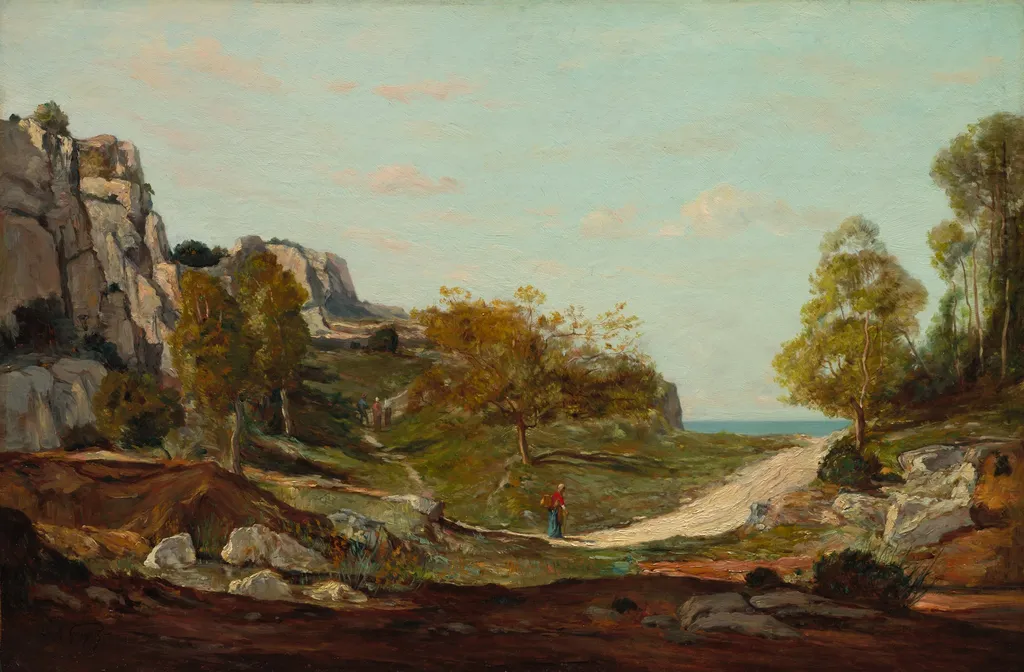
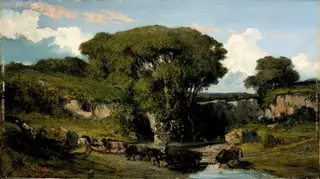
Landscape at Saint-André, Near Marseilles is an unspecified painting by the Barbizon school artist Paul Guigou. It dates from 1865 and is held in the collection of the Cleveland Museum of Art.
About this work
Technique & Style
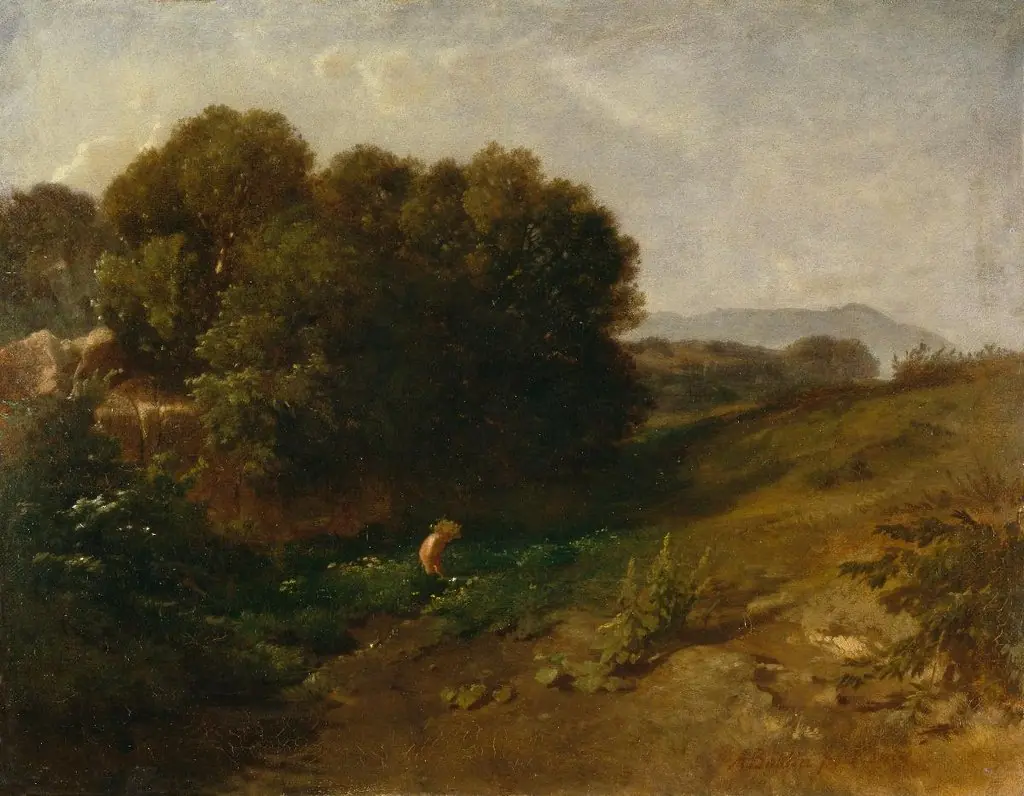
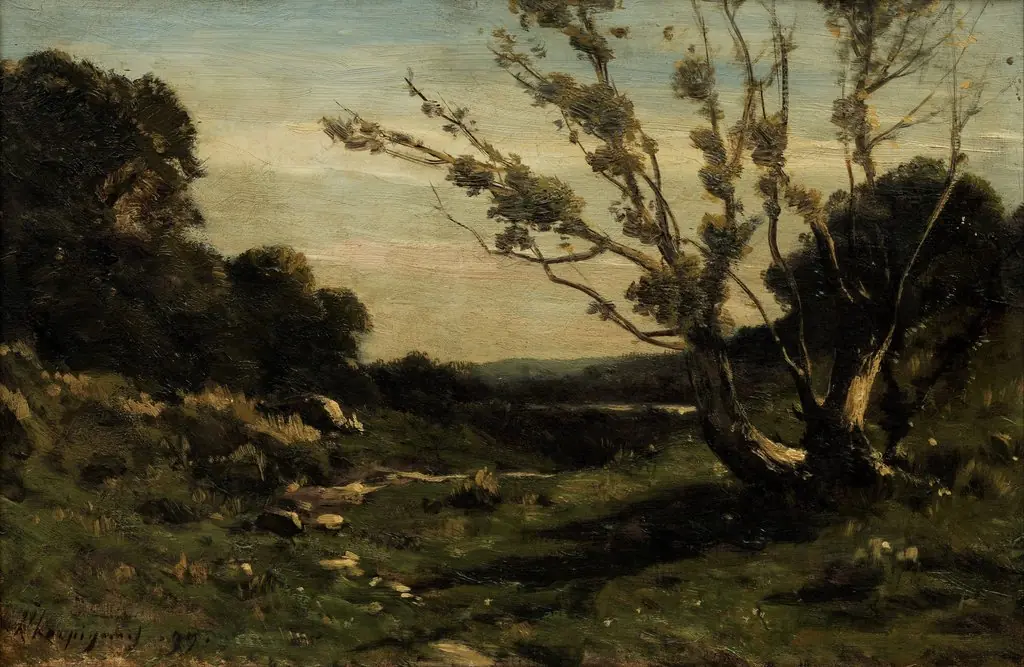
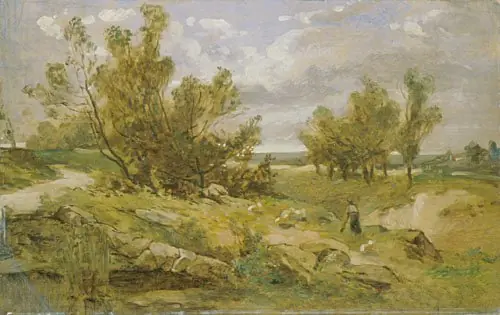
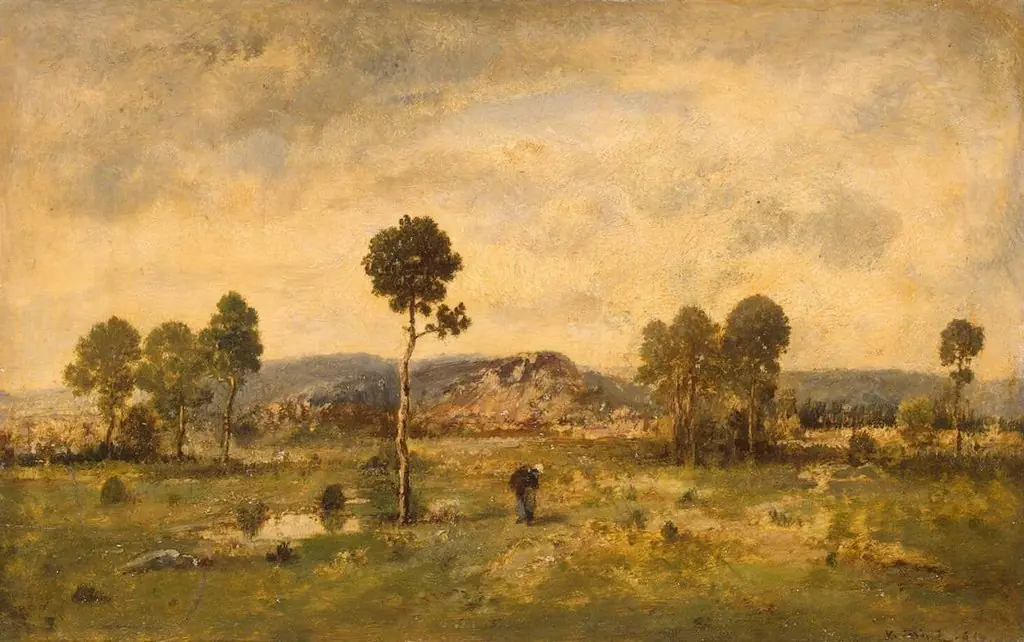
Executed in 1865, the work is an oil on canvas depicting a Provençal riverside scene near Marseilles.
Executed in 1865, the work is an oil on canvas depicting a Provençal riverside scene near Marseilles.
The handling combines fluid, broken brushwork with more deliberate passages to render foliage and water, while a muted palette of greens, ochres, and blues articulates light and atmosphere. The composition arranges horizontal bands, foreground vegetation, mid-ground riverbank, and receding hills, under a softly modeled sky, producing a tranquil, naturalistic effect aligned with mid-nineteenth-century French landscape practice. No losses, significant abrasions, or major restorations are recorded in available sources.
History & Provenance
Paul Guigou created the landscape painting Landscape at Saint-André, Near Marseilles in 1865. The work was executed in France and measures 38.6 cm in height by 58.4 cm in width. It is currently held in the collection of the Cleveland Museum of Art in Cleveland.
Legacy
Landscape at Saint-André, Near Marseilles entered the Cleveland Museum of Art, where it is presented as a notable example of 19th‑century French landscape painting. The work's dimensions, recorded as 38.6 cm by 58.4 cm, are displayed alongside related pieces, reinforcing its role in illustrating the genre's development. Its inclusion in a major public collection has contributed to ongoing scholarly discussion of Paul Guigou's place within the French landscape tradition, shaping the museum's narrative of European art history.
Overview
Paul Guigou's 1865 painting, Landscape at Saint-André, Near Marseilles, offers a depiction of the Provence region of France. This work reflects the artist's consistent focus on local scenery, a characteristic influenced by his early training and the prevailing artistic movements of his era. Created two years after Guigou established himself in Paris, the piece maintains a strong connection to the southern French landscape that shaped his artistic vision.
Subject & Meaning
The composition features a winding path that guides the viewer's eye towards the distant sea, which meets the horizon under a soft, cloudy sky. A lone figure, a woman in a red top and blue skirt, walks along the path carrying a basket, introducing a human presence into the natural environment. The foreground is composed of rocky terrain interspersed with sparse trees and bushes, capturing the distinctive topography of the Provençal countryside near Marseille.
Context
Born into an affluent family in Villars, Vaucluse, Paul Guigou initially worked as a notary clerk before dedicating himself to art. His foundational artistic education occurred in Apt and later under the tutelage of Émile Loubon in Marseille, a prominent regional landscape painter. Although Guigou relocated to Paris in 1863, where he spent most of his professional life, his early training and deep connection to Provence profoundly influenced his artistic output, as evidenced in this work.
Own this work as a print
Artist & collection
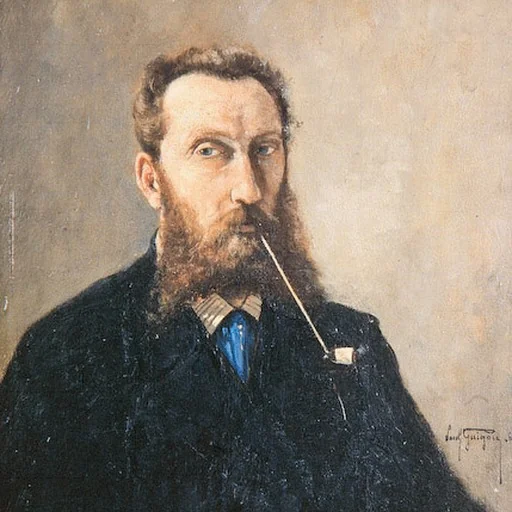
Artist
Paul Camille Guigou (15 February 1834 – 21 December 1871) was a French landscape painter.