Artwork
Mask of Fear
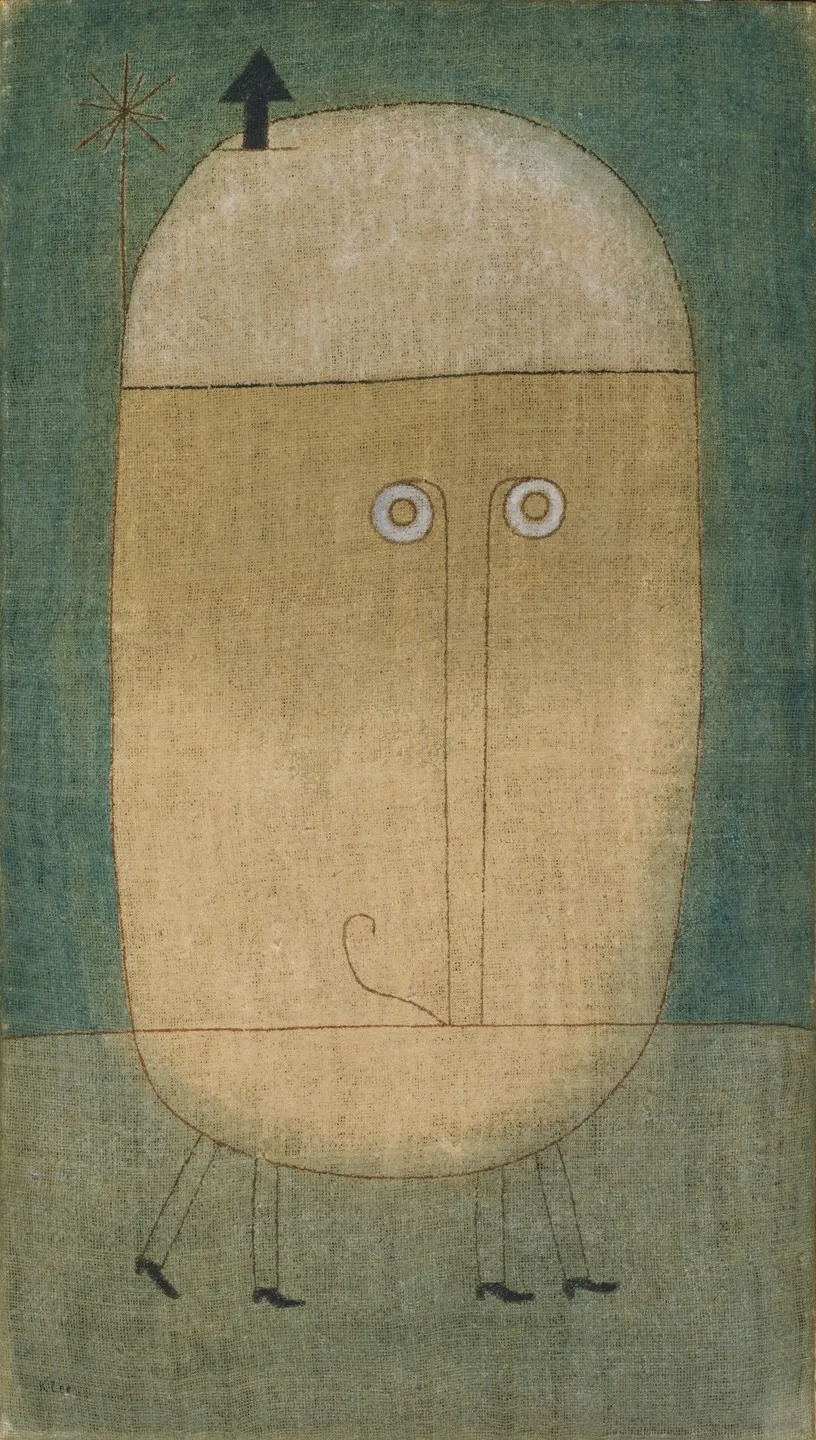
Mask of Fear is an oil painting by the Bauhaus artist Paul Klee. It dates from 1932 and is held in the collection of the Museum of Modern Art.
About this work
Overview
It resides in the Museum of Modern Art’s collection, representing a pivotal moment in Klee’s exploration of psychological expression through simplified imagery.
Paul Klee painted Mask of Fear in 1932 using oil on canvas. The work is a stylized portrait that merges symbolic form with abstract structure. Though rooted in the visual language of the Bauhaus, where Klee taught, the piece resists easy categorization, blending geometric precision with emotional resonance.
It resides in the Museum of Modern Art’s collection, representing a pivotal moment in Klee’s exploration of psychological expression through simplified imagery.
Subject & Meaning
The painting presents a face-like mask, its features reduced to essential shapes: an oval form, a narrow nose, and two eyes. A horizontal division suggests duality, perhaps inner conflict or contrasting states of being. The upward-pointing arrow and starburst may imply tension, direction, or unseen forces.
Klee often used such symbols to evoke inner states rather than depict external reality, inviting contemplation over narrative clarity.
Technique & Style
Klee applied oil paint with restrained brushwork, favoring flat planes and clean contours over texture or modeling. The light brown mask contrasts subtly with the dark green background, enhancing its frontal presence. Minimal detail and deliberate asymmetry reflect his interest in balancing order and spontaneity.
The arrow and starburst, rendered in precise lines, introduce a schematic quality, echoing his theoretical writings on visual rhythm and symbolic notation.
History & Provenance
Created during Klee’s final years in Germany before fleeing the Nazi regime, Mask of Fear emerged amid political unease and personal displacement. It was acquired by the Museum of Modern Art in New York in 1939, shortly after the artist’s emigration to Switzerland. The painting’s early entry into a major American institution underscores its recognition within modernist circles despite its quiet, non-dramatic appearance.
Context
Klee’s work in the early 1930s reflected his deepening engagement with symbolic systems and psychological depth, influenced by his Bauhaus teachings and interest in child art, non-Western masks, and musical structure. Mask of Fear aligns with his broader inquiry into how form can convey emotion without literal representation. The era’s rising authoritarianism may have informed its somber tone, though Klee rarely addressed politics directly in his imagery.
Legacy
The painting exemplifies Klee’s unique synthesis of abstraction and symbolism, influencing later generations of artists interested in psychological minimalism. Its inclusion in MoMA’s collection helped cement his reputation in the American modernist canon. While not overtly political, Mask of Fear endures as a quiet testament to the expressive potential of restraint, and the power of suggestion over declaration.
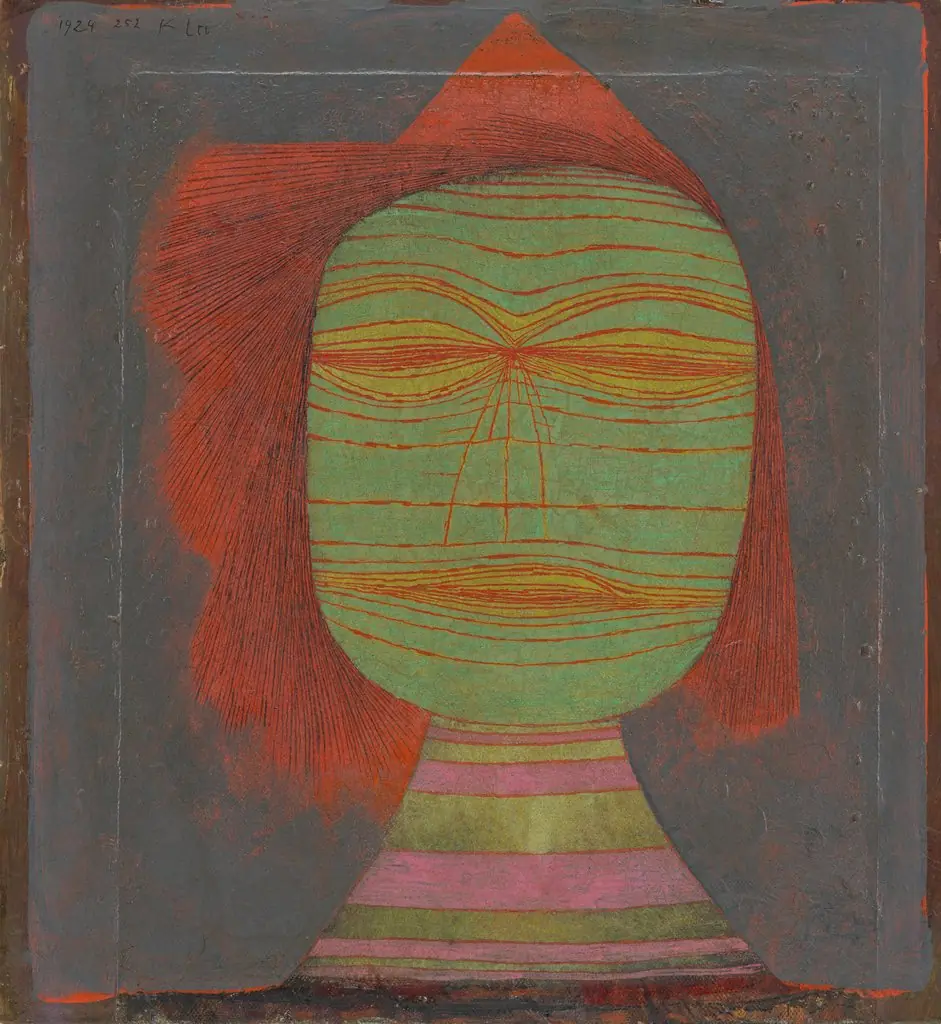
Artist & collection
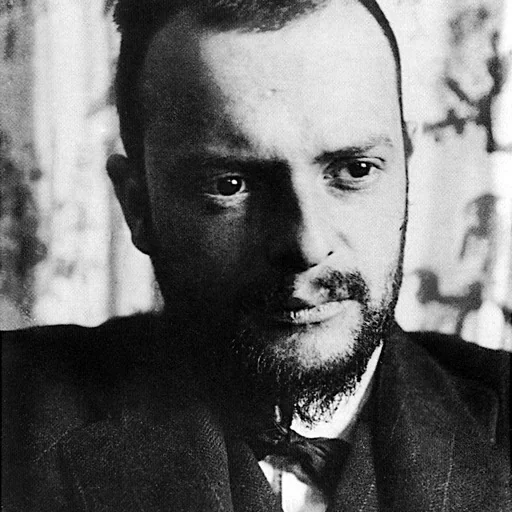
Artist
Paul Klee (German:; 18 December 1879 – 29 June 1940) was a Swiss-born German artist.