Artwork
Miraculous Landing, or the "112!"
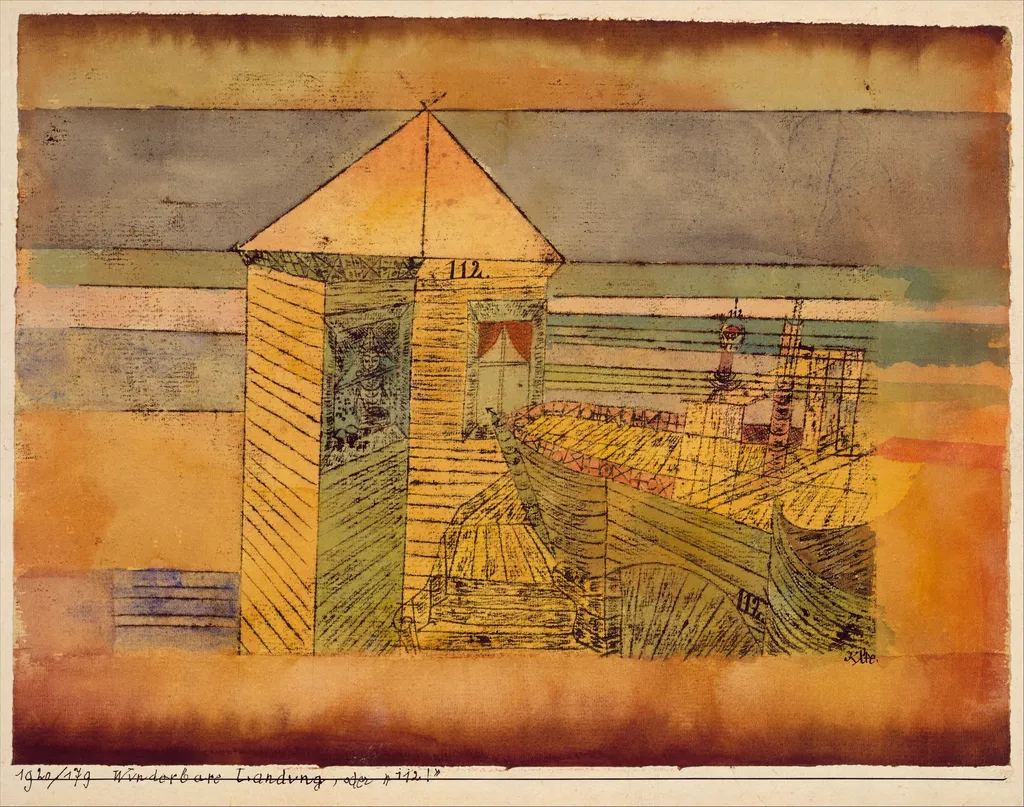
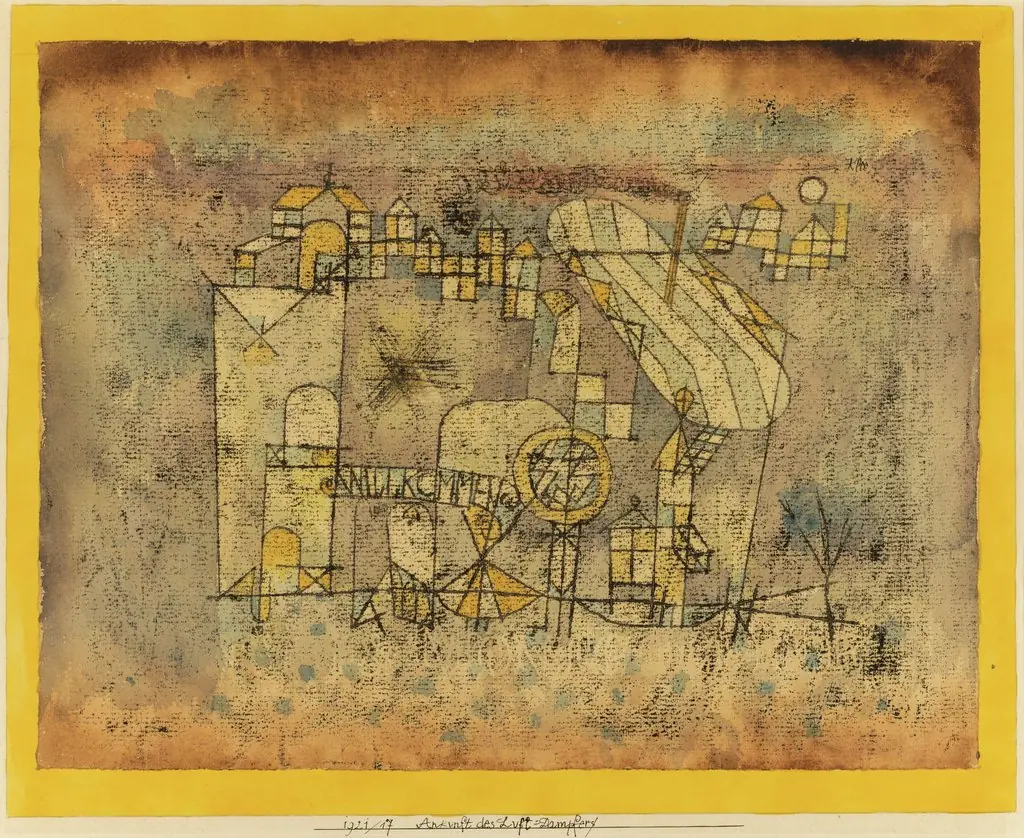
Miraculous Landing, or the "112!" is an unspecified painting by the Bauhaus artist Paul Klee. It dates from 1920 and is held in the collection of the Metropolitan Museum of Art. Created in 1920, Miraculous Landing, or the “112!
About this work
Technique & Style
Executed on paper support, the work exhibits fine brushstrokes and layered washes that convey both spontaneity and control, characteristic of his mature period.
Paul Klee created Miraculous Landing, or the "112!" in 1920 using watercolor on paper, a delicate medium that contributes to its subtle tonal transitions and intricate line work. The painting measures 31.1 cm in height and 38.1 cm in width, reflecting Klee’s precise compositional balance and stylized abstraction. Executed on paper support, the work exhibits fine brushstrokes and layered washes that convey both spontaneity and control, characteristic of his mature period. Its current location is the Metropolitan Museum of Art in New York.
The formal qualities of the piece emphasize geometric simplification and rhythmic patterning, with a muted palette that heightens the symbolic tension of the maritime motif. The handling of line and color demonstrates Klee’s synthesis of Cubist structure and Expressionist emotion, resulting in a composition that appears both whimsical and rigorously constructed.
Context
Miraculous Landing, or the "112!" (1920) by Paul Klee entered the Metropolitan Museum of Art collection shortly after its creation, reflecting the museum's early interest in acquiring modern European works. Klee's playful abstraction and symbolic use of numbers, exemplified in this piece, positioned him within the broader Expressionist movement while anticipating later avant-garde engagements with chance and automatism.
The work's whimsical narrative and formal experimentation have been cited in scholarship as emblematic of Klee's synthesis of childlike spontaneity with sophisticated compositional control, influencing mid-century abstract expressionists. Its presence in a major American institution underscores the transatlantic dialogue in modern art during the 1920s.
Overview
Created in 1920, Miraculous Landing, or the “112!” is an oil painting by Paul Klee, a Swiss‑born artist who worked in Germany and was active in the Bauhaus school. The work belongs to the collection of the Metropolitan Museum of Art in New York and exemplifies Klee’s interest in abstracted forms and symbolic titles.
Subject & Meaning
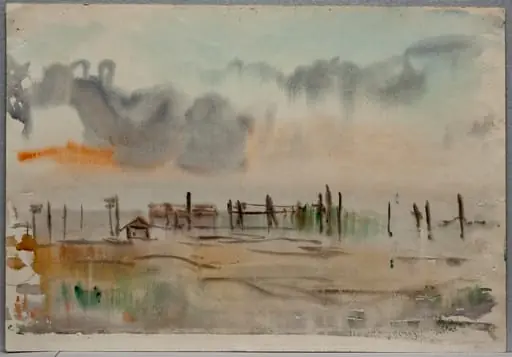
The composition presents a compact, irregular structure with a steep roof, its wooden‑plank walls bearing the numeral “112” above a window. Within the interior a tangled, dark mass suggests a wrecked vessel or a tangle of ropes, while thin trees and a faint horizon line the lower edge. The title and imagery together evoke a rescue or landing scenario, inviting speculative interpretation.
History & Provenance
The painting was produced during Klee’s tenure at the Bauhaus, a period marked by his theoretical lectures on form and design. After changing hands several times in the early twentieth century, it entered the Metropolitan Museum of Art’s collection, where it remains on display as part of the museum’s modern European holdings.
Own this work as a print
Artist & collection
Artist
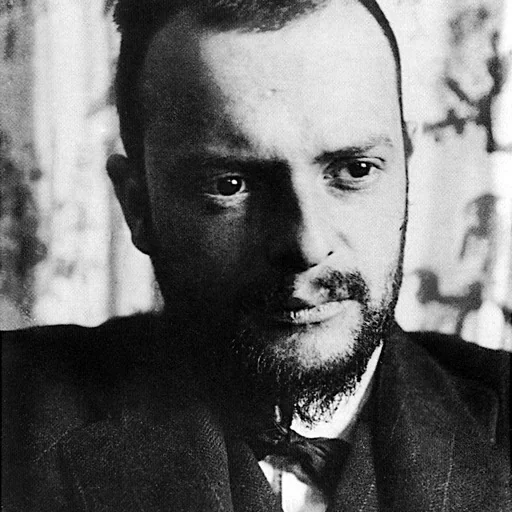
Paul Klee (German:; 18 December 1879 – 29 June 1940) was a Swiss-born German artist.