Artwork
The Barbed Noose with the Mice
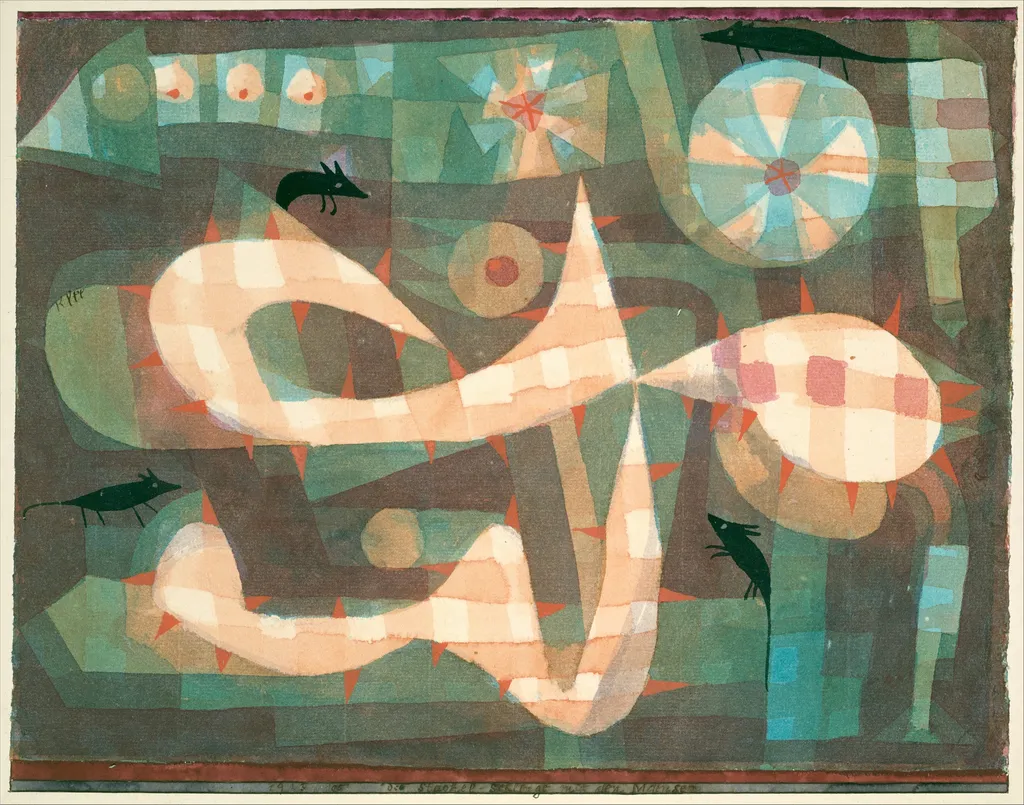
The Barbed Noose with the Mice is an unspecified painting by the Bauhaus artist Paul Klee. It dates from 1923 and is held in the collection of the Metropolitan Museum of Art.
About this work
Subject & Meaning
Scholars have interpreted the barbed noose as a symbol of violence and systemic constraint, while the mice may signify both victimhood and quiet persistence.
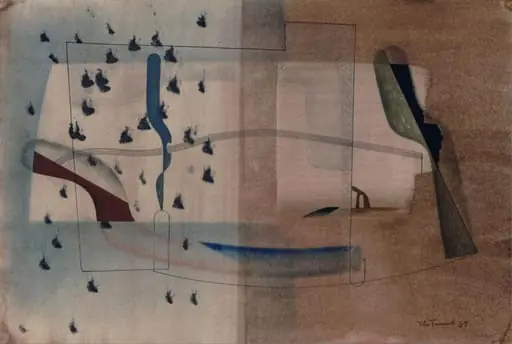
The work depicts a compact scene centered on a noose formed from barbed wire, its sharp coils framing the composition. Within this constricting circle, a group of mice appears: one clings to the inner curve of the noose while others cluster nearby, their forms rendered in delicate line and muted color. The mice’s presence within the noose suggests a paradoxical coexistence of entrapment and vitality, evoking themes of vulnerability and resilience under coercive structures.
Scholars have interpreted the barbed noose as a symbol of violence and systemic constraint, while the mice may signify both victimhood and quiet persistence. The juxtaposition of fragile life against an instrument of death conveys a layered meditation on power and survival in early 1920s Europe.
Technique & Style
The work is an oil painting on canvas, executed in 1923 and housed at the Metropolitan Museum of Art. Its dimensions measure 31.1 cm in height by 40 cm in width. The composition presents a stark, stylized barbed noose entwined with small mice, rendered through Klee’s characteristic delicate line work and muted palette.
These formal choices contribute to an unsettling yet poetic visual tension, reflecting his exploration of symbolic narrative within a controlled pictorial space.
History & Provenance
The Barbed Noose with the Mice was created by Paul Klee in 1923, as recorded in the work's cataloguing data. The painting entered the collection of the Metropolitan Museum of Art, where it remains held. No further details on commission, intermediate ownership, acquisition circumstances, or earlier provenance are documented in the available sources.
The Barbed Noose with the Mice has been part of the Metropolitan Museum of Art’s collection since its acquisition. The work is catalogued under the museum’s holdings of twentieth-century art.
The painting has been exhibited as part of the museum’s permanent displays, though specific loan exhibitions are not documented in the available sources.
Overview
Painted in 1923 during the Bauhaus period, this work by Paul Klee combines abstract forms with a restrained palette. The composition centers on a stylized, barbed loop that dominates the canvas, while muted tones of green, brown and blue fill the surrounding space. Small, dark silhouettes that suggest mice are scattered around the central knot, creating a subtle narrative tension.
Own this work as a print
Artist & collection
Artist
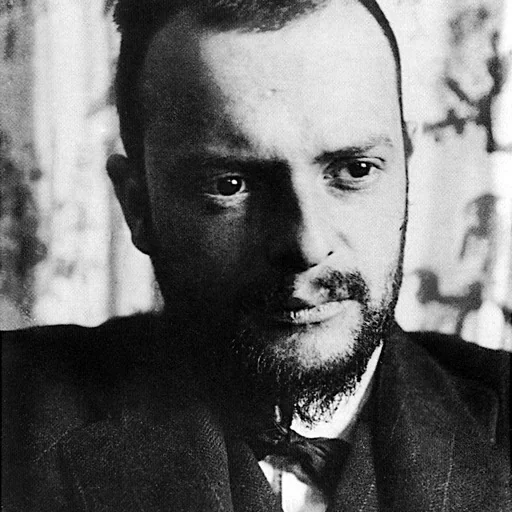
Paul Klee (German:; 18 December 1879 – 29 June 1940) was a Swiss-born German artist.