Artwork
Blonde Nymph
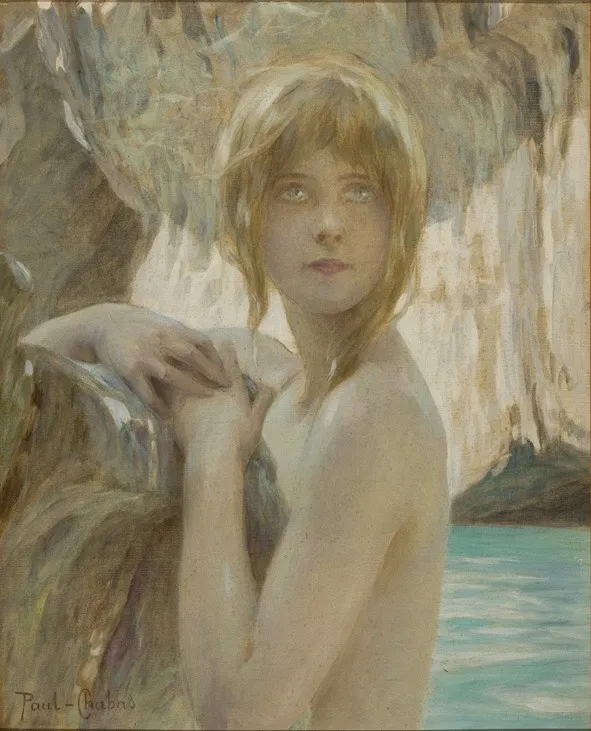
Blonde Nymph is an oil painting by the Post-Impressionist artist Paul Émile Chabas. It dates from 1913 and is held in the collection of the São Paulo Museum of Art.
About this work
Subject & Meaning
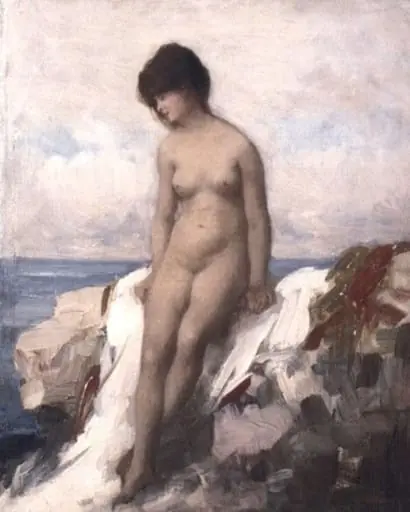
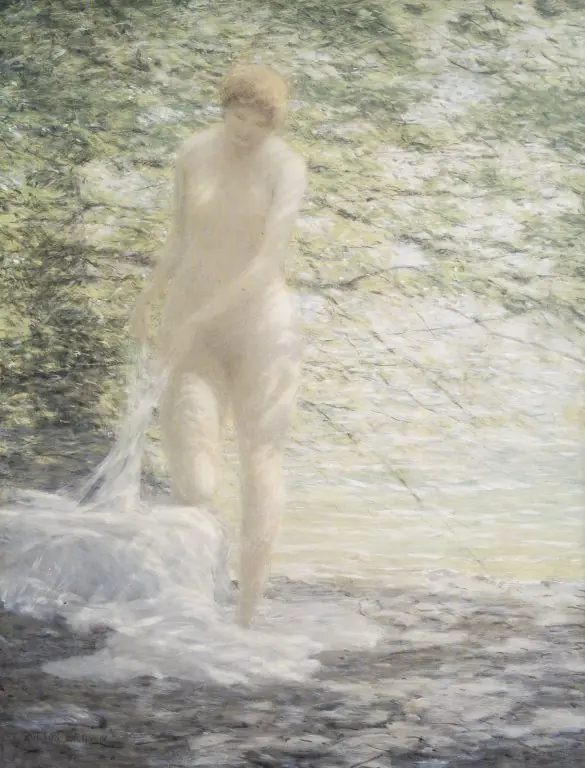
Blonde Nymph portrays a nude young girl bathing outdoors, her blond hair and bangs framing a face whose gaze meets the viewer.
Blonde Nymph portrays a nude young girl bathing outdoors, her blond hair and bangs framing a face whose gaze meets the viewer. She stands among rocks at the base of a cliff, her shoulder and body exposed as she pauses in the act of bathing. The painting draws on the classical tradition of the nymph, a mythological female spirit associated with freshwater springs, rivers, and secluded natural settings, here translated into a modern, naturalistic register.
By depicting an adolescent bather in a sunlit, rocky landscape, Chabas fuses the iconography of the timeless mythological nymph with the late nineteenth-century taste for plein-air realism, lending the figure an idealized, almost emblematic quality. The work's meaning rests on this tension between mythic archetype and observed reality: the girl becomes a symbol of natural innocence and the untamed landscape, while remaining a specific, individualized portrait subject.
Technique & Style
Executed in oil on canvas, Blonde Nymph measures 61.4 cm in height and 50.5 cm in width. The handling emphasizes smooth, blended transitions in flesh tones to render the figure’s skin with a luminous quality, while broader, visible brushwork animates the surrounding landscape. The composition isolates the blonde-haired subject against a simplified background of rock and sea, directing attention to her tranquil gaze and the soft modeling of form.
Stylistically, the work aligns with late-nineteenth-century academic conventions, combining naturalistic detail with an idealized portrayal of the nude. The figure’s relaxed posture and the calm coastal setting contribute to a serene, contemplative mood, characteristic of Chabas’s genre subjects.
History & Provenance
Blonde Nymph is an oil on canvas portrait painted by Paul Émile Chabas in the early 20th century. The work entered the collection of the São Paulo Museum of Art, where it has remained since its acquisition. Its dimensions are recorded as 61.4 cm in height and 50.5 cm in width.
Paul Émile Chabas's painting Blonde Nymph is held in the collection of the São Paulo Museum of Art in Brazil. The work is an oil on canvas portrait depicting a nude figure with blond hair standing on a rock. Its physical dimensions are recorded as 61.4 cm in height and 50.5 cm in width.
The provided sources do not contain an accession number or a list of specific exhibitions where the work has appeared.
Context
Paul Émile Chabas painted Blonde Nymph in 1912, a work that exemplifies early 20th-century academic portraiture while engaging with contemporary debates around the female nude and naturalistic representation. The painting, depicting a young woman in a state of undress on a rocky shoreline, was exhibited at the Salon des Artistes Français and received commentary for its delicate handling of light and texture, qualities that aligned with the artist’s broader focus on idealized yet intimate figurative scenes. As part of Chabas’s oeuvre, which frequently explored themes of femininity and the natural world, Blonde Nymph occupies a nuanced position between academic tradition and the evolving sensibilities of Belle Époque art, reflecting both technical mastery and subtle shifts in the portrayal of female subjectivity.
Its inclusion in the collection of the São Paulo Museum of Art underscores its significance as a representative example of French figurative painting from the period.
Scholarly assessments of the work have highlighted its role within Chabas’s exploration of light, atmosphere, and the sensual dimensions of the human form, situating it within wider discussions of gender, nudity, and artistic convention in the early 1900s. The painting’s composition, characterized by its soft tonal gradations and attention to anatomical detail, has been analyzed in relation to both academic traditions and the emerging modernist sensibilities of the time, contributing to ongoing dialogues about the boundaries of representation in figurative art. Its reception and legacy continue to inform studies of French academic painting, particularly in how such works navigated the tensions between classical form and contemporary artistic expression.
Chabas’s broader artistic context, marked by his focus on idealized naturalism and the poetic rendering of the human figure, positions Blonde Nymph as a key example of his approach to portraiture and the female form. The work’s engagement with themes of nature, femininity, and sensory experience reflects the artistic and cultural currents of its time, offering insight into the evolving discourse around the male gaze and the depiction of female subjectivity in art. Its placement within the São Paulo Museum of Art’s collection further emphasizes its relevance to international art historical narratives, particularly in how such works were received and preserved beyond Europe.
Overview
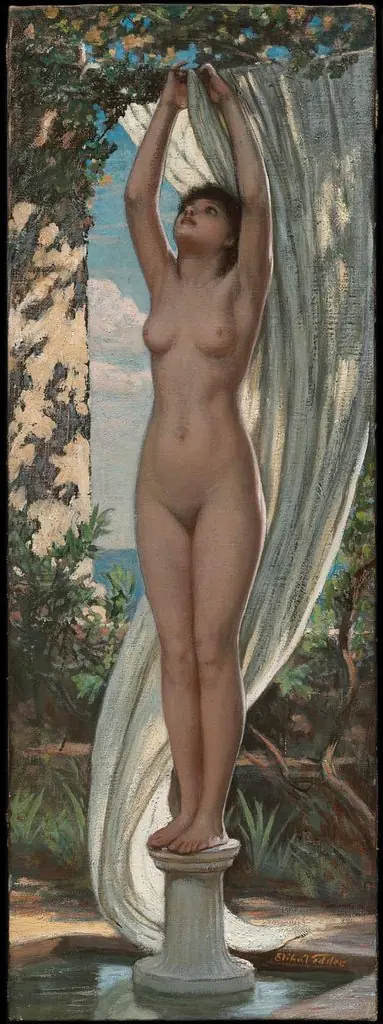
Created circa 1913 by French painter Paul Émile Chabas, Blonde Nymph is an oil on canvas executed in a post‑impressionist manner. The composition centers on a young, bare‑chested woman with wet, blonde hair, standing near water and holding a cloth. She is set against a muted blue‑green backdrop that suggests a tranquil shoreline, while a rocky cliff recedes into shadow behind her.
Artist & collection
Artist
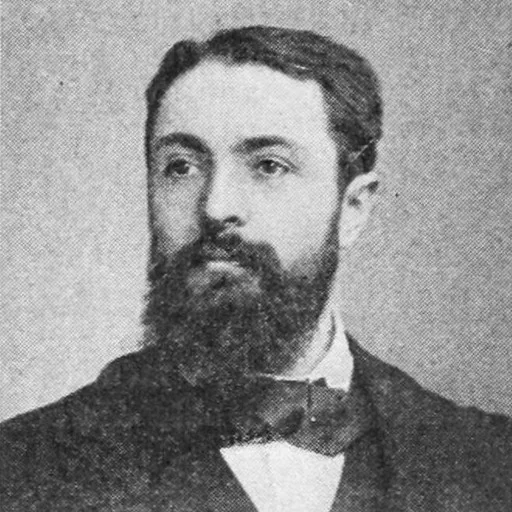
Paul Émile Chabas (March 7, 1869 – May 10, 1937) was a French painter and illustrator and member of the Académie des Beaux-Arts.