Artwork
September Morn
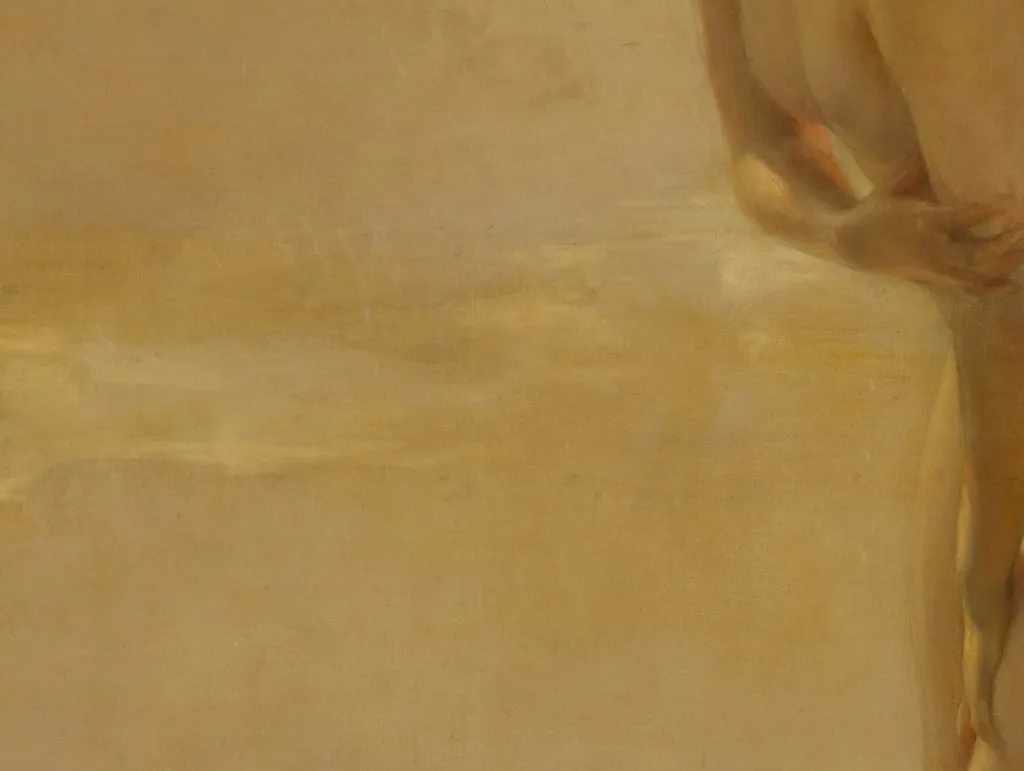
September Morn is an oil painting by the Post-Impressionist artist Paul Émile Chabas. It dates from 1912 and is held in the collection of the Metropolitan Museum of Art.
About this work
In May 1913 Anthony Comstock stormed into a Manhattan gallery and demanded the nude in the window come down. It was Paul Chabas's September Morn, a young woman standing in the shallows of Lake Annecy, painted over three summers near Talloires. The protest turned it into a scandal and spawned an estimated seven million reproductions. The oil now hangs at the Metropolitan Museum of Art.
Subject & Meaning
The work has been seen as an idealized genre scene of youth and nature, but its subtle eroticism also provoked debates about indecency and censorship.
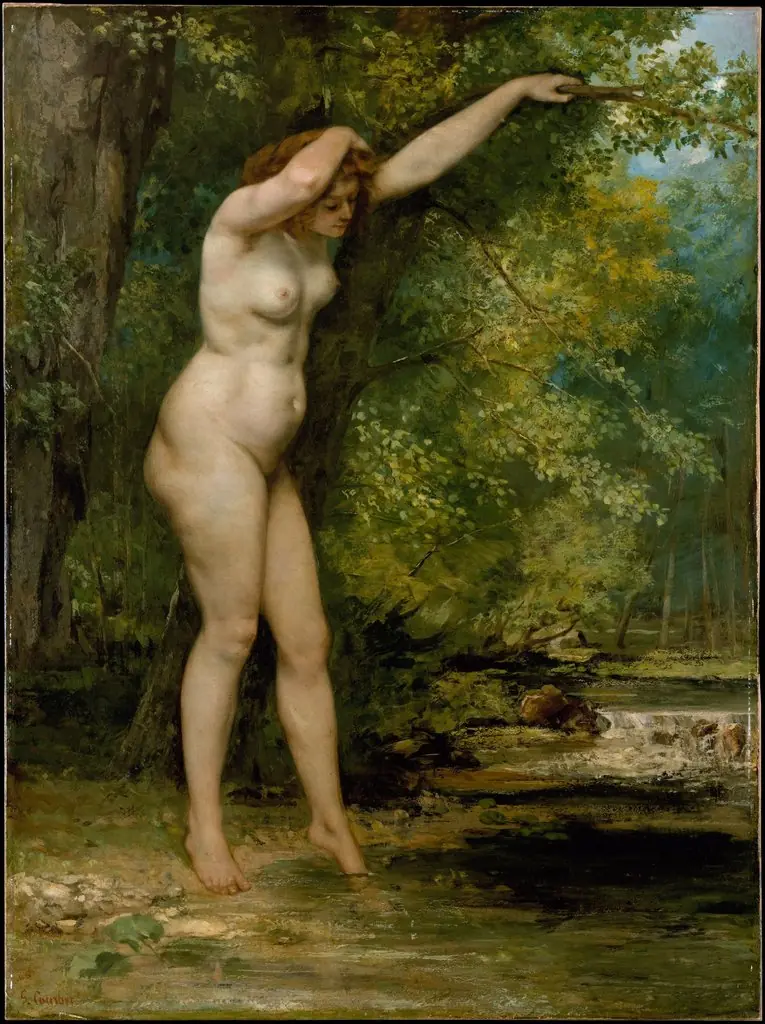
September Morn depicts a nude young woman standing in the shallow water of Lake Annecy at dawn, her arms crossed to cover her breasts and pubic area. The pose has been interpreted variously as a gesture against the cold, a modest covering of nudity, or a 'fetishisation of innocence.' The painting's title and its palette of grays evoke a September morning atmosphere.
Chabas never revealed the model's identity. The work has been seen as an idealized genre scene of youth and nature, but its subtle eroticism also provoked debates about indecency and censorship.
Technique & Style
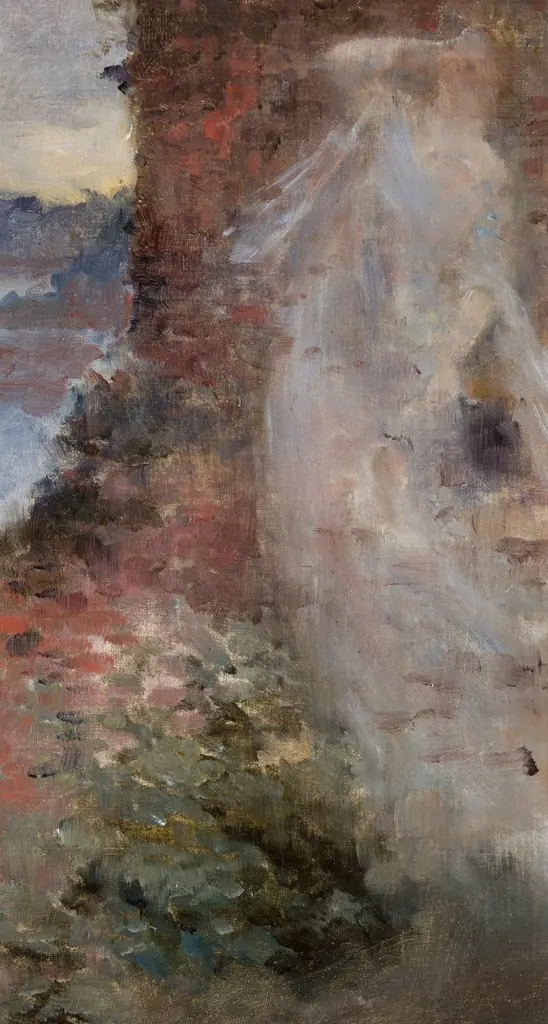
Executed in oil paint on canvas, September Morn measures 163.8 by 216.5 centimeters. Chabas worked on the painting over several summers, applying the pigment in layered grays that dominate the composition: blue-grays for the September water, green-grays for the sky, and pink-grays for the distant hills. The nude figure is backlit by the morning sun, rendering her shaded body in cooler grays and causing her to appear slightly darker than the luminous surroundings.
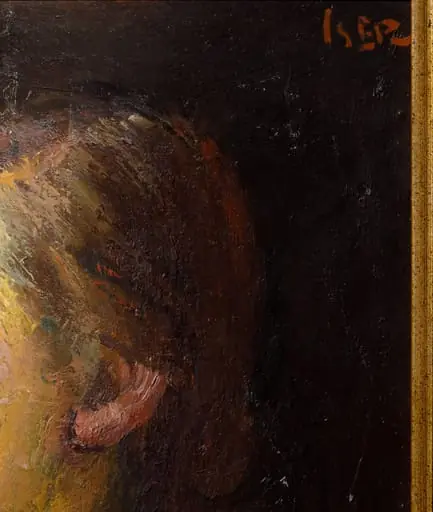
She stands ankle-deep in the lake, her arms folded ambiguously, one arm crossing below her breasts, the other concealing her pubic area, a pose that has been read as guarding modesty, shivering, or sponge bathing. Chabas's signature is located in the lower left corner. No significant condition issues are recorded in the available sources.
History & Provenance
Paul Émile Chabas painted September Morn over the course of three summers, completing it in either 1911 or 1912; sources differ on the exact year, though it was first exhibited at the Paris Salon of 1912, where it received a medal. The painting was not commissioned. The oil on canvas was acquired by the Russian collector Leon Mantashev by the end of 1913.
After the October Revolution of 1917 the painting was feared lost but resurfaced in 1935 in the collection of Calouste Gulbenkian. Following Gulbenkian's death in 1955, it was sold to a Philadelphia broker, who donated it anonymously to the Metropolitan Museum of Art in 1957, where it remains.
Context
September Morn is typical of Paul Émile Chabas's academic style, focusing on idealized nudes in natural light, as seen in his many lakeside scenes. The painting won a medal at the 1912 Paris Salon and was initially praised by the critic J. Valmy-Baysse for its 'chaste nudity' and evocation of adolescence. Later scholarship, however, has been critical; the art historian Bram Dijkstra argued that Chabas 'emphasized analogies of nude little girls and the familiar poses given to adult women,' exploiting prurient possibilities.
Other writers have dismissed the work as kitsch, valuable only as a historical artifact. Its iconic status derives less from artistic merit than from the U.S. censorship controversies that made it a pop-culture phenomenon. Today it is held by the Metropolitan Museum of Art as a curiosity of early twentieth-century academic painting.
Legacy
After its 1912 Salon debut, September Morn became a cultural phenomenon in the United States through mass reproduction. An estimated seven million copies were sold on calendars, postcards, and product packaging, and it inspired songs, stage shows, and films, though Chabas, who had not copyrighted the work, received no royalties. The painting's reputation shifted over time; later critics dismissed it as kitsch, valued only as a historical curiosity.
The original passed from a Russian collector to the Gulbenkian collection and was donated to the Metropolitan Museum of Art in 1957, where it remains as a testament to its contentious and enduring legacy.
Overview
Paul Émile Chabas's oil painting, September Morn, completed in 1911, depicts a young woman standing in the shallow waters of a lake. Rendered with the soft light of morning, the figure's nude form is subtly illuminated. Chabas worked on the canvas over several summers, capturing the scene near Lake Annecy in France.
The artwork, measuring 163.8 × 216.5 cm, was first presented to the public at the Paris Salon in 1912.
Own this work as a print
Artist & collection
Artist
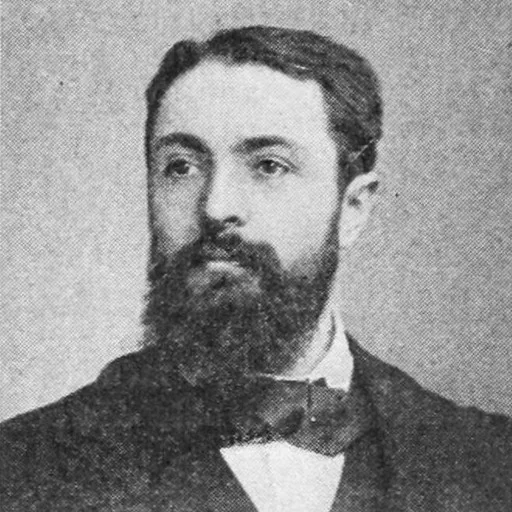
Paul Émile Chabas (March 7, 1869 – May 10, 1937) was a French painter and illustrator and member of the Académie des Beaux-Arts.