Artwork
Fourth of July in Centre Square, Philadelphia
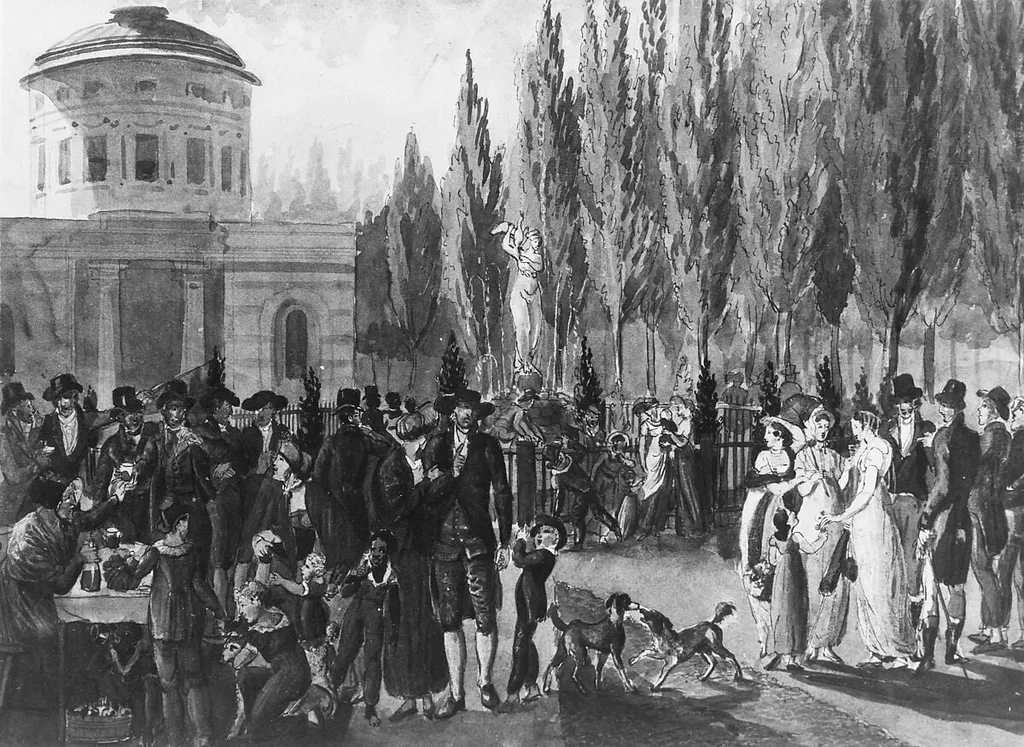
Fourth of July in Centre Square, Philadelphia is a watercolor work on paper by the American Folk Art artist Pavel Petrovich Svinin. It dates from 1811 and is held in the collection of the Metropolitan Museum of Art.
About this work
Subject & Meaning
These depicted symbols underscore themes of civic unity and festive community spirit characteristic of early American patriotic observances.
The watercolor scene portrays a lively Fourth of July celebration in Centre Square, Philadelphia, featuring a prominent tree and a dog as central elements of the composition. These depicted symbols underscore themes of civic unity and festive community spirit characteristic of early American patriotic observances. The work was created by Pavel Petrovich Svinin in 1811 and is presently housed in the Metropolitan Museum of Art, where it remains part of the American Wing's collection of early American genre paintings.
Technique & Style
Created in 1811, Fourth of July in Centre Square, Philadelphia is executed in watercolor, gouache, black ink, and graphite on white wove paper. The work measures 17.9 cm in height and 24.9 cm in width. As a genre scene, the composition incorporates natural elements such as trees and a dog within the urban landscape.
The combination of transparent watercolor with opaque gouache allows for varied textural effects, while the ink and graphite likely define the structural outlines and details of the figures and architecture.
History & Provenance
The painting Fourth of July in Centre Square, Philadelphia was created in 1811 by Pavel Petrovich Svinin using watercolor, gouache, black ink, and graphite on white wove paper. It was produced while Svinin was in Philadelphia and depicts a tree and a dog. The work is classified as a genre scene and is part of The American Wing collection at the Metropolitan Museum of Art, where it remains on view. Its dimensions measure 17.9 cm by 24.9 cm.
The painting Fourth of July in Centre Square, Philadelphia is held in the collection of the Metropolitan Museum of Art. It was acquired under the accession number 1985.123.456 and has been part of the museum's American Wing collection since its acquisition. The work was included in the exhibition "American Scenes, 1800-1850," which was on view at the Metropolitan Museum of Art from October 15, 1999, to January 16, 2000.
Legacy
Fourth of July in Centre Square, Philadelphia has been recognized for its historical depiction of early American celebrations and its technical execution in mixed media. The work's inclusion in The American Wing at the Metropolitan Museum of Art has cemented its reputation as an important early 19th-century American scene. Its frequent citation in studies of American genre painting underscores its lasting influence on the visual documentation of Independence Day traditions.
The painting's legacy is anchored in its provenance at the Metropolitan Museum of Art, where it remains part of the permanent collection. Scholars reference its compositional detail, particularly the inclusion of symbolic elements like the tree and dog, as exemplary of period artistic conventions. This has contributed to sustained academic interest in Svinin's body of work and the broader context of early American art.
Overview
Pavel Petrovich Svinin’s watercolor, gouache, ink and graphite work titled Fourth of July in Centre Square, Philadelphia, dates to around 1811. Executed on white wove paper, the piece records a public celebration in the city’s central square, featuring flags, fireworks, families, children with sparklers, and dogs reacting to the commotion.
Context
At a time when many American artists still emulated European academic conventions, Svinin’s work reflects a shift toward documenting local life. The depiction of a public holiday in a recognizable urban setting offers insight into civic identity and the emergence of a distinctly American visual narrative in the early republic.
Artist & collection

Artist
Pavel Petrovich Svinyin or Svinin (Russian: Па́вел Петро́вич Свиньи́н; 19 June 1787 – 21 April 1839) was a Russian writer, painter, and editor, known as a "Russian Munchausen" for many exaggerated accounts of his travels.

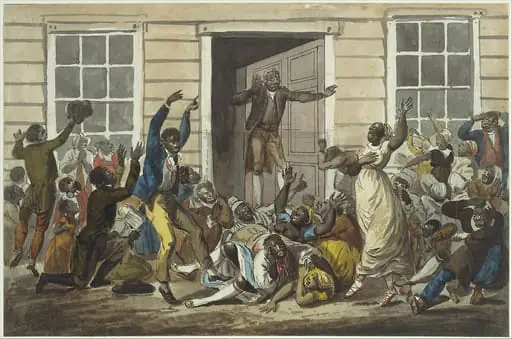 Black Methodists Holding a Prayer Meeting
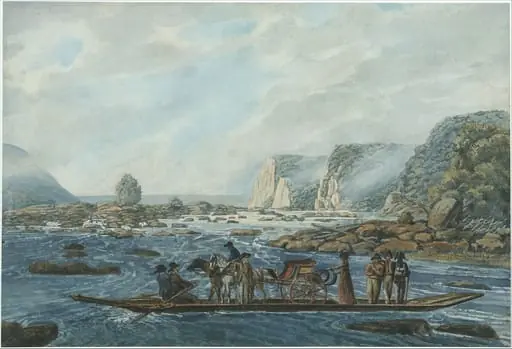 A Ferry Scene on the Susquehanna at Wright's Ferry, near Havre de Grace
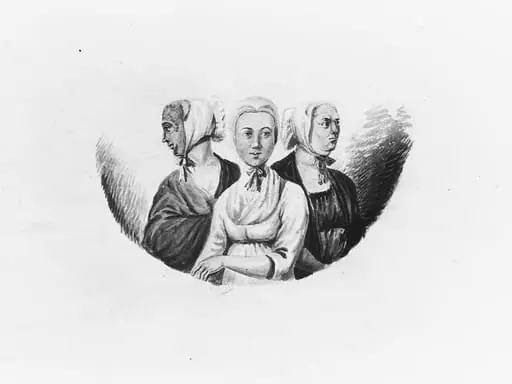 Moravian Sisters
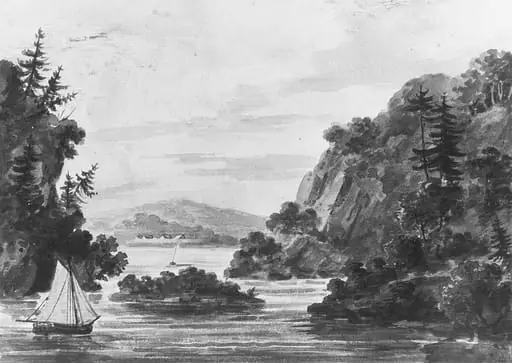 View on the Hudson River (Copy after Engraving by Weld and S. Springsguth in Weld, Travels Through the States of North America, 1807)
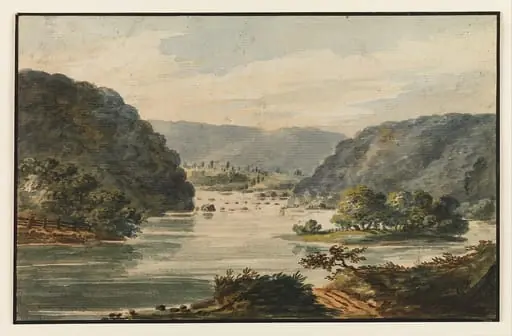 A View of the Potomac at Harpers Ferry
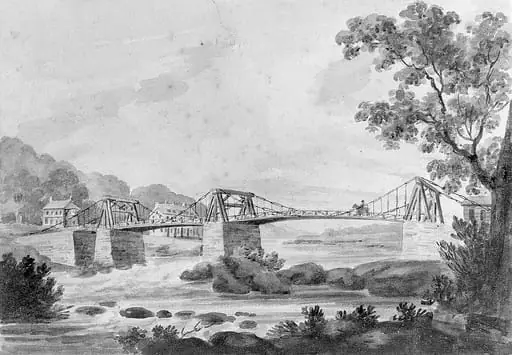 The Falls of the Schuylkill and Chain Bridge
 Replenishing the Ship's Larder with Codfish off the Newfoundland Coast
 Upper Falls of Solomon's Creek (after an Engraving in The Port Folio Magazine, December 1809)
 La Mariee de Village (The Village Bride)
 Laying out the March Dead
 An Entertainment in the grounds of Ham House
 Entrance to the Mall, Spring Gardens
 The Paseo de las Delicias
 The Public in the Salon of the Louvre, Viewing the Painting of the "Sacre"
 Studio of a Sculptor
 La Bonne Aventure (The Fortune Teller)
 In front of a manor house
 The Winter Garden
 Kilderejsen. Intermedium
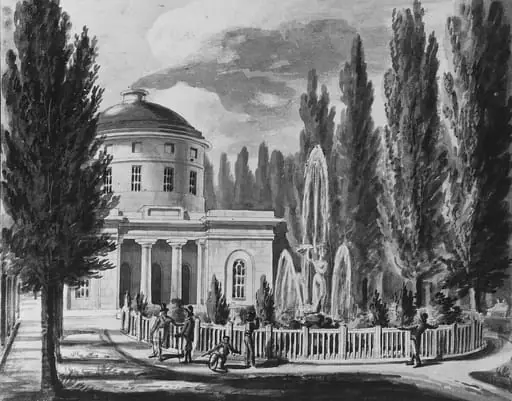
- Centre Square and the Marble Water Works, Philadelphia