Artwork
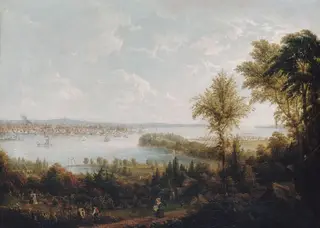
New York City and Harbor from Weehawken
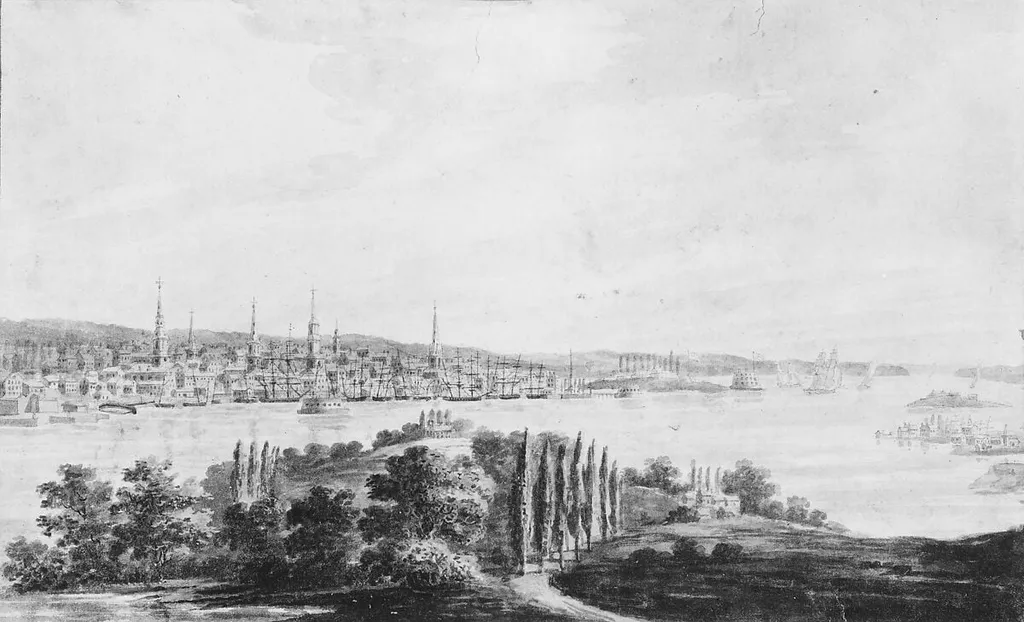
New York City and Harbor from Weehawken is a watercolor work on paper by the Romanticist artist Pavel Petrovich Svinin. It dates from 1811 and is held in the collection of the Metropolitan Museum of Art.
- Accession no.
- 42.95.5
- Credit line
- Rogers Fund, 1942
About this work
Subject & Meaning
As a landscape genre piece, the artwork serves as a topographical representation of the city's geography and its relationship to the adjacent river.
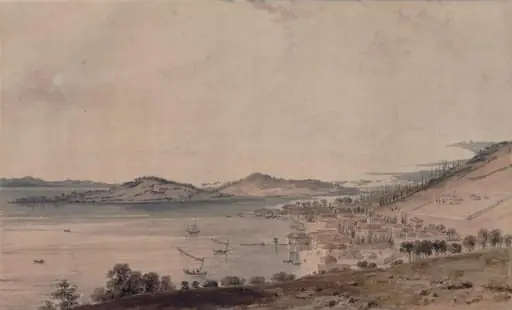
Created in 1811, Pavel Petrovich Svinin's New York City and Harbor from Weehawken is a landscape work that depicts the river and the urban skyline of New York City as viewed from the Weehawken shoreline. The composition captures the harbor environment, presenting a direct visual record of the American metropolis and its waterways during the early nineteenth century. As a landscape genre piece, the artwork serves as a topographical representation of the city's geography and its relationship to the adjacent river.
Technique & Style
The work is a watercolor and gouache on off-white wove paper, created in 1811 by Pavel Petrovich Svinin. It measures 15.2 cm by 25.4 cm and belongs to the landscape genre, depicting a river scene. The piece is part of The American Wing collection at the Metropolitan Museum of Art, reflecting its historical and artistic significance in early American landscape painting.
The medium combines transparent watercolor washes with opaque gouache, allowing layered atmospheric effects and precise detail in the harbor view. The paper support is off-white wove, typical of early nineteenth-century works, and the handling appears stable with no noted condition issues. Stylistically, the composition balances topographical accuracy with expressive brushwork, characteristic of Romantic-era landscape traditions.
History & Provenance
Pavel Petrovich Svinin created the watercolor and gouache work New York City and Harbor from Weehawken in 1811. Executed on off-white wove paper, the piece measures 15.2 cm in height and 25.4 cm in width. The artwork is currently held within the collection of the Metropolitan Museum of Art, specifically located in its American Wing.
As a landscape depicting a river view, it represents Svinin's documentation of the New York harbor during the early nineteenth century.
New York City and Harbor from Weehawken, an 1811 watercolor and gouache by Pavel Petrovich Svinin, is held in the collection of the Metropolitan Museum of Art. The work falls under the museum's American Wing classification.
No specific accession number or inventory designation is recorded in the available sources, and no exhibition history is documented.
Legacy
The work has influenced subsequent American landscape painters who studied Svinin's handling of atmospheric perspective and riverine light, particularly artists associated with the Luminist movement in the late nineteenth century. Its inclusion in The American Wing at the Metropolitan Museum of Art has cemented its reputation as a representative example of early Russian émigré contributions to the genre, and it is frequently cited in scholarly discussions of transatlantic artistic exchange.
Overview
New York City and Harbor from Weehawken is a watercolor and gouache work on paper, created circa 1811 by Pavel Petrovich Svinin, capturing a landscape view of the city's river and harbor from across the water in Weehawken.
Context
As a Russian diplomat, writer, and artist, Svinin's dual role influenced his artistic perspective, though this work contrasts with his tendency towards embellished narratives in favor of a more direct representation.
Artist & collection

Artist
Pavel Petrovich Svinyin or Svinin (Russian: Па́вел Петро́вич Свиньи́н; 19 June 1787 – 21 April 1839) was a Russian writer, painter, and editor, known as a "Russian Munchausen" for many exaggerated accounts of his travels.

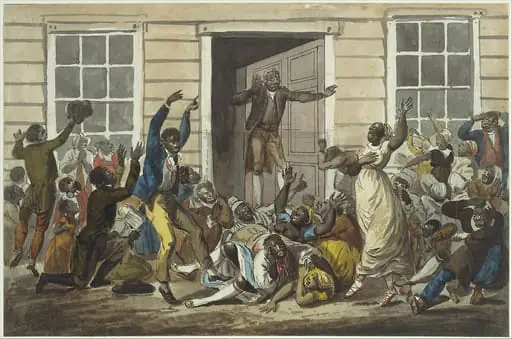 Black Methodists Holding a Prayer Meeting
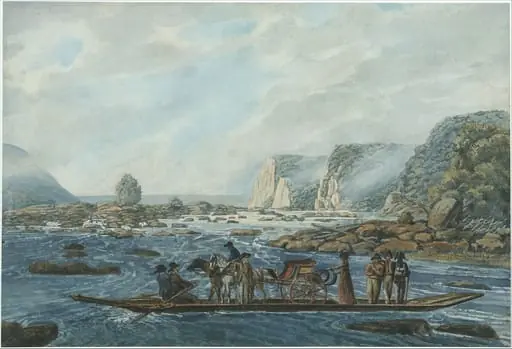 A Ferry Scene on the Susquehanna at Wright's Ferry, near Havre de Grace
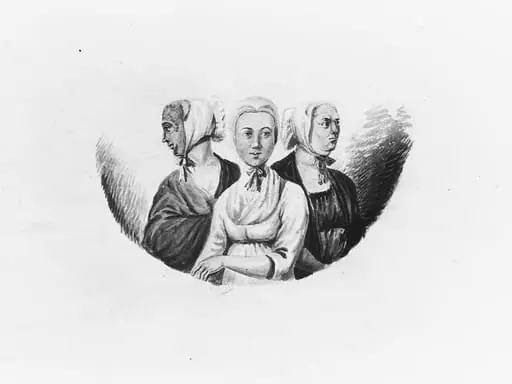 Moravian Sisters
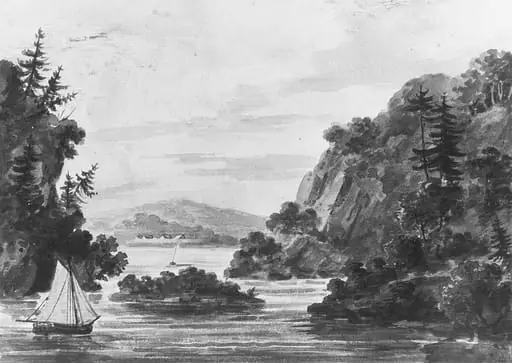 View on the Hudson River (Copy after Engraving by Weld and S. Springsguth in Weld, Travels Through the States of North America, 1807)
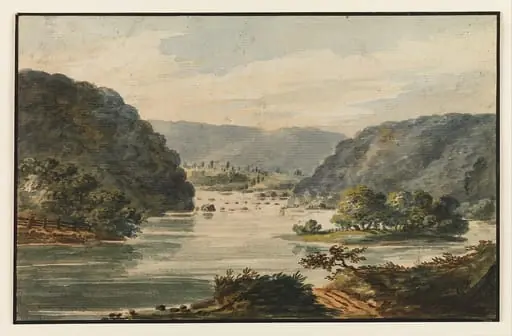 A View of the Potomac at Harpers Ferry
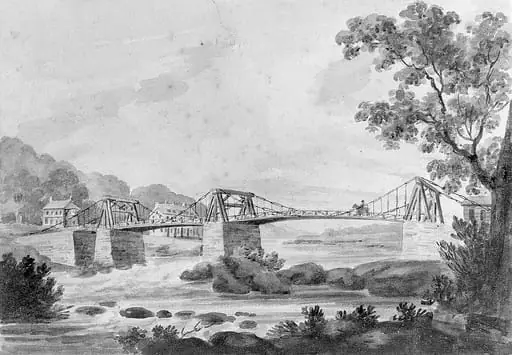 The Falls of the Schuylkill and Chain Bridge
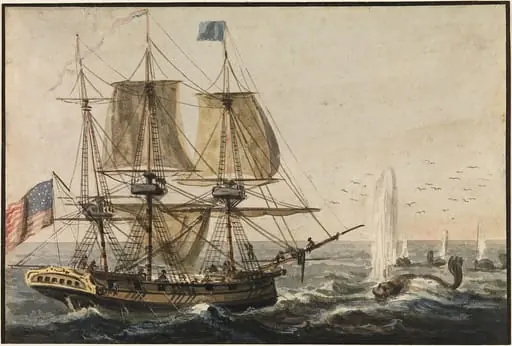 Replenishing the Ship's Larder with Codfish off the Newfoundland Coast
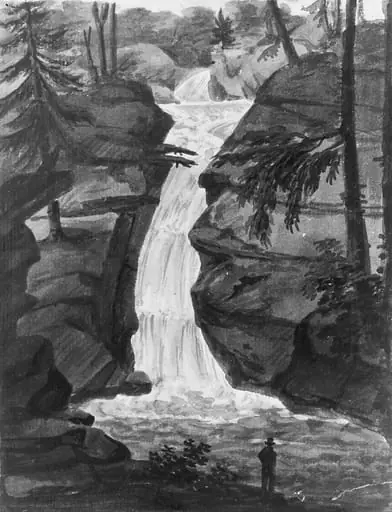 Upper Falls of Solomon's Creek (after an Engraving in The Port Folio Magazine, December 1809)