Artwork
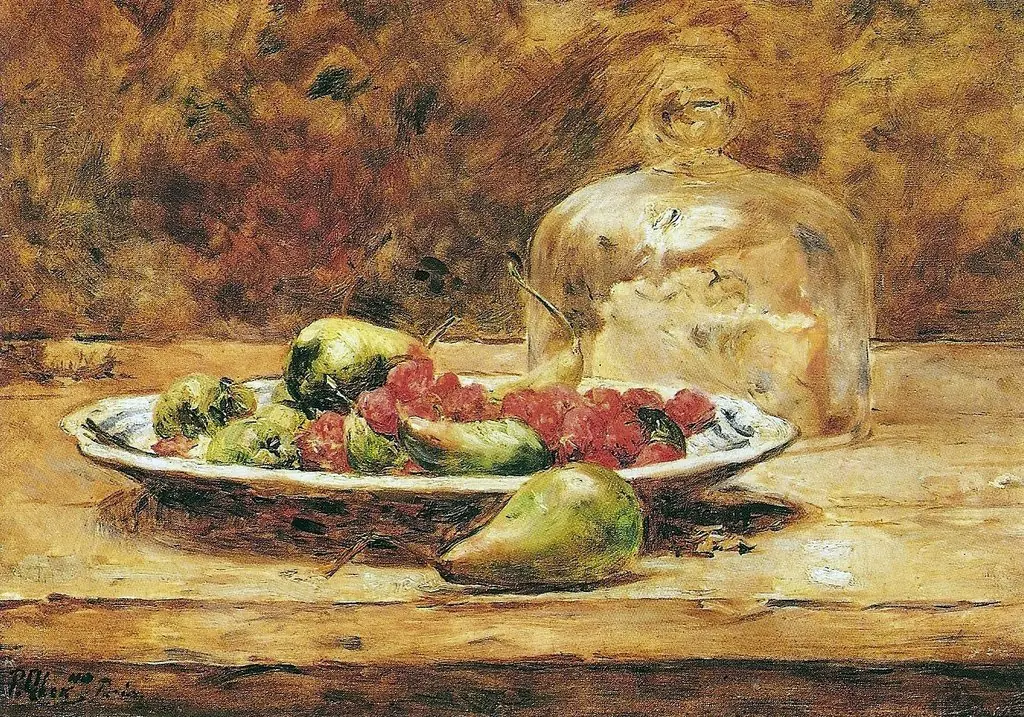
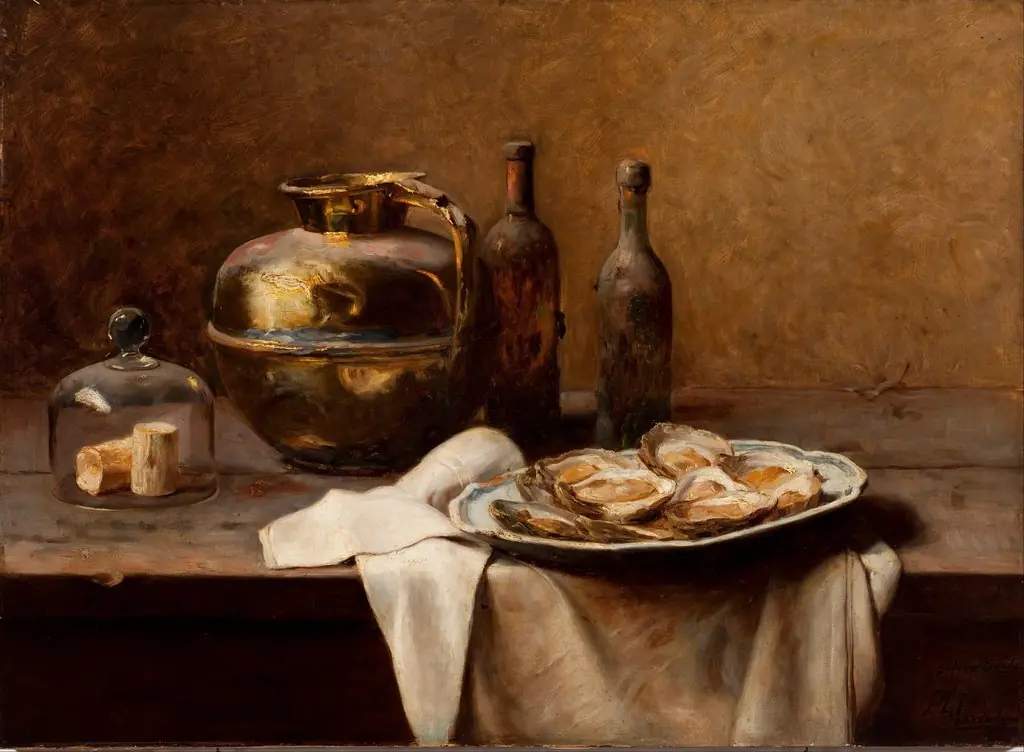
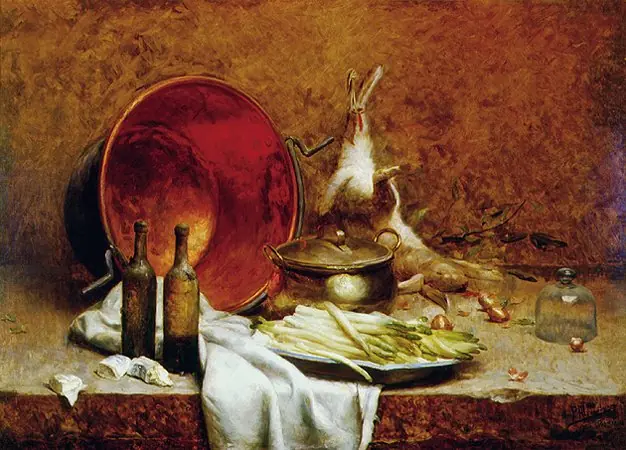
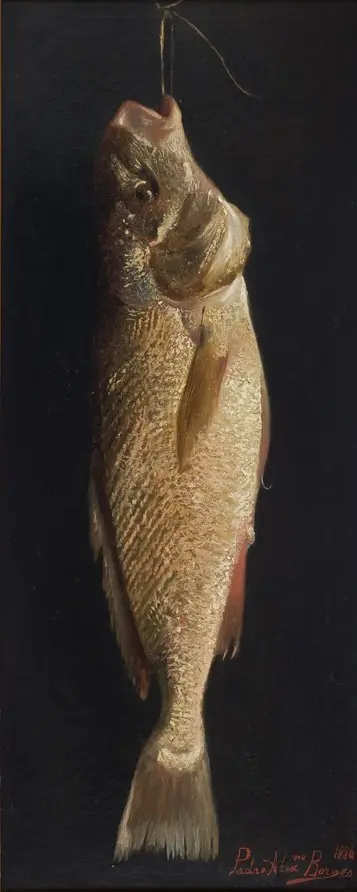
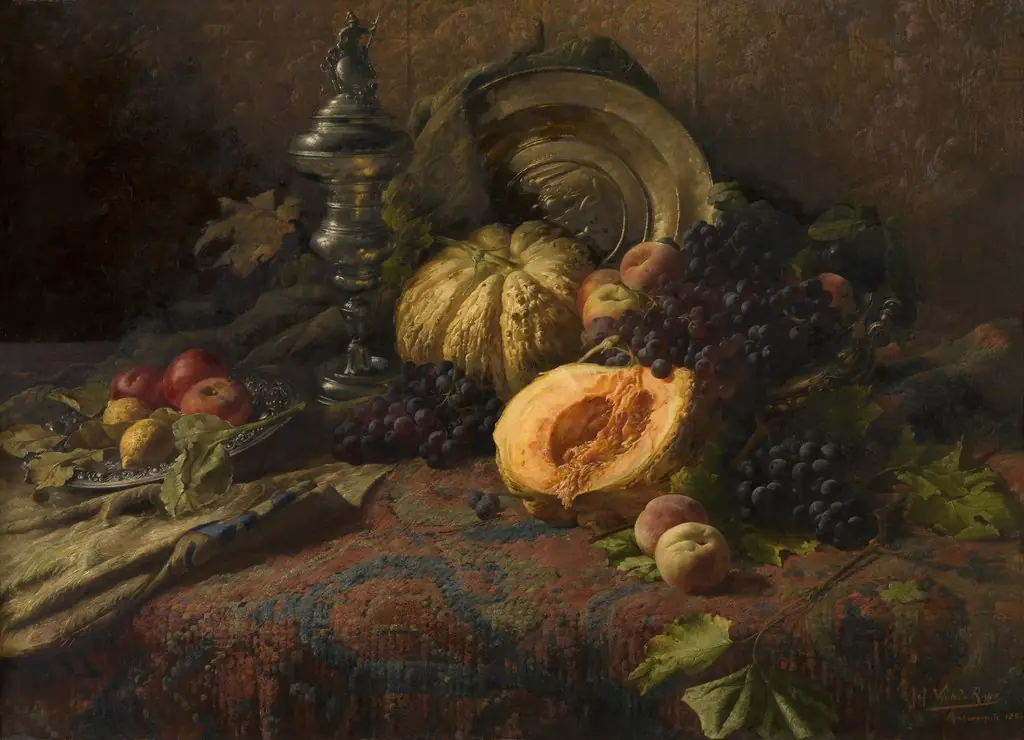
Still life - Grapes and Peaches
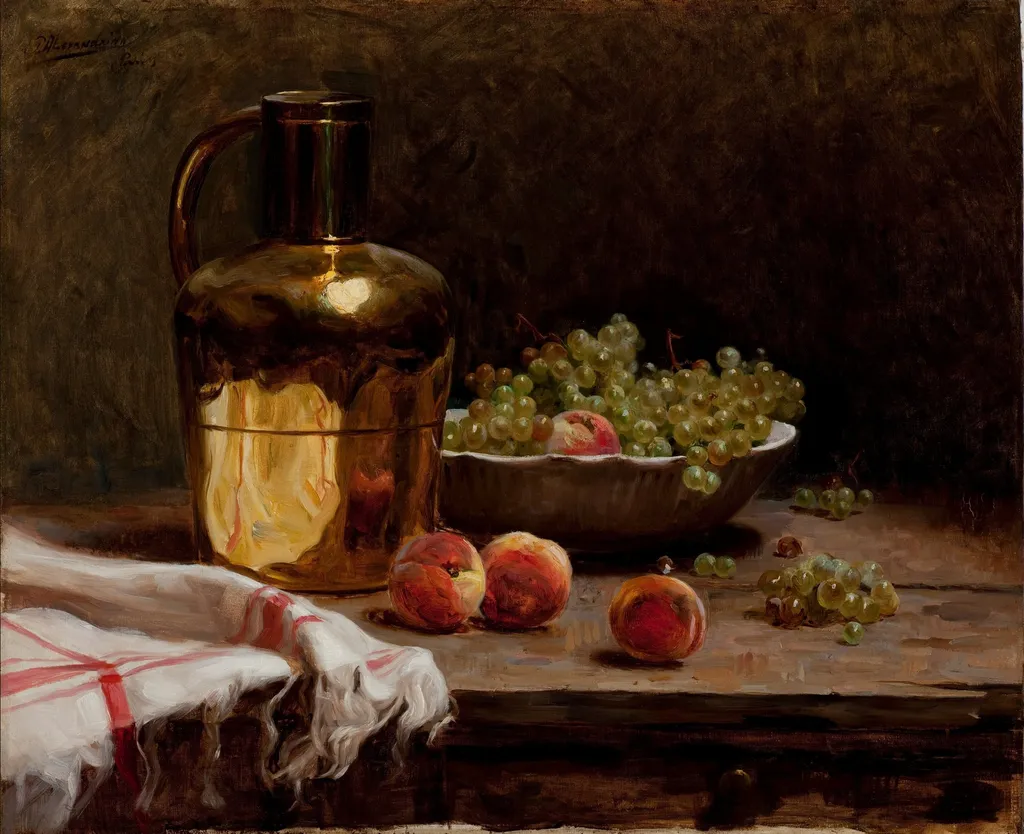
Still life - Grapes and Peaches is an oil painting by the Contemporary Realist artist Pedro Alexandrino Borges. It is held in the collection of the Pinacoteca de São Paulo.
About this work
Overview
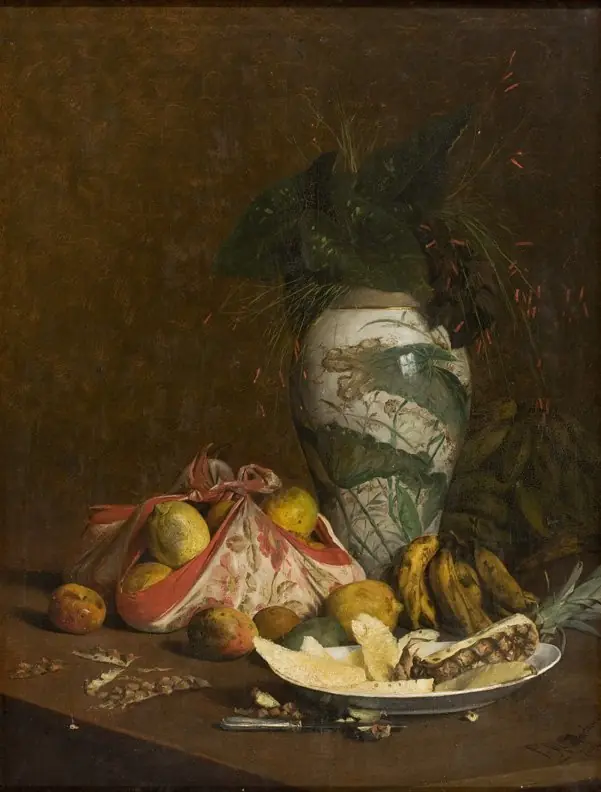
Painted around 1950 by Pedro Alexandrino Borges, this oil still life presents a quiet arrangement of fruit and a metallic jug against a dark background. The work belongs to the collection of the Pinacoteca do Estado de São Paulo and exemplifies a mid-20th-century Brazilian approach to traditional still-life subjects, emphasizing form and material presence over narrative.
Subject & Meaning
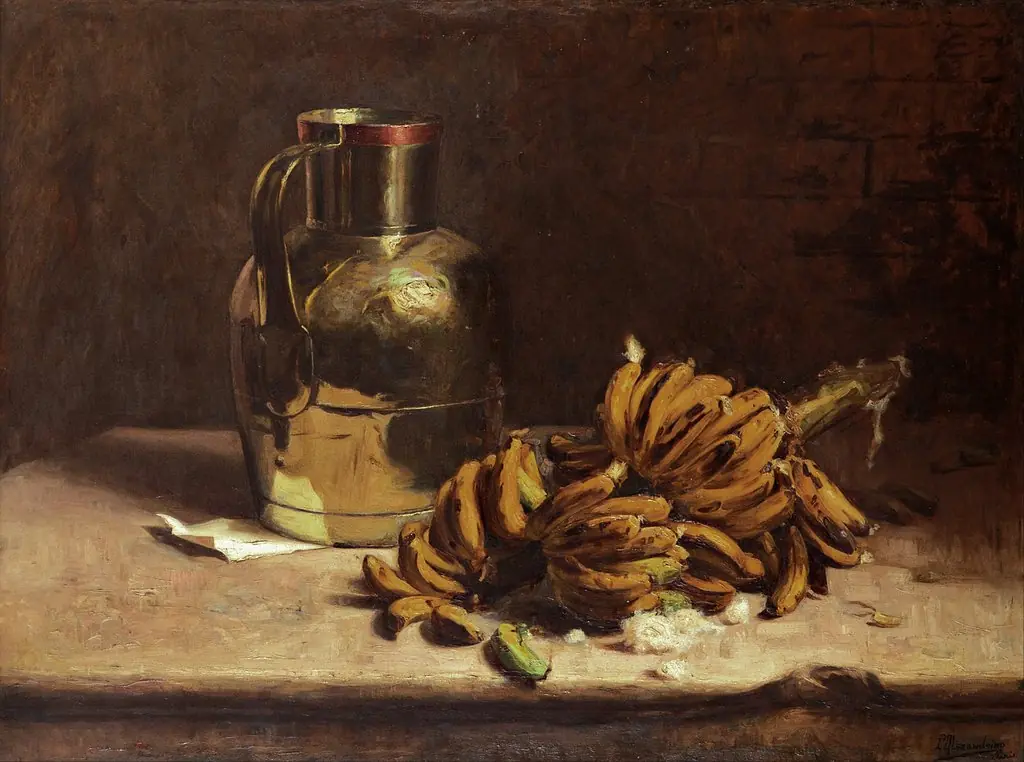
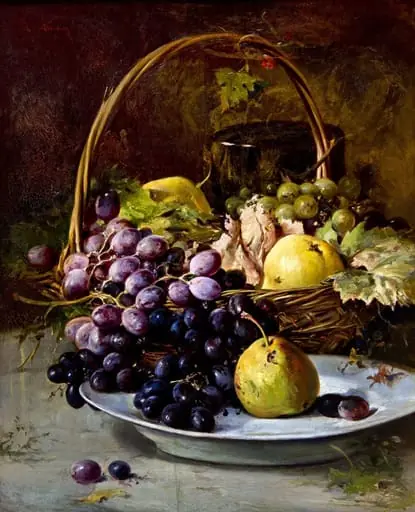
The composition centers on a bowl of grapes and several peaches placed beside a polished copper or brass jug. These everyday objects carry no overt symbolism; their value lies in their physicality, their weight, texture, and the way they interact with light. The arrangement invites contemplation of simplicity, abundance, and the quiet dignity of domestic items.
Technique & Style
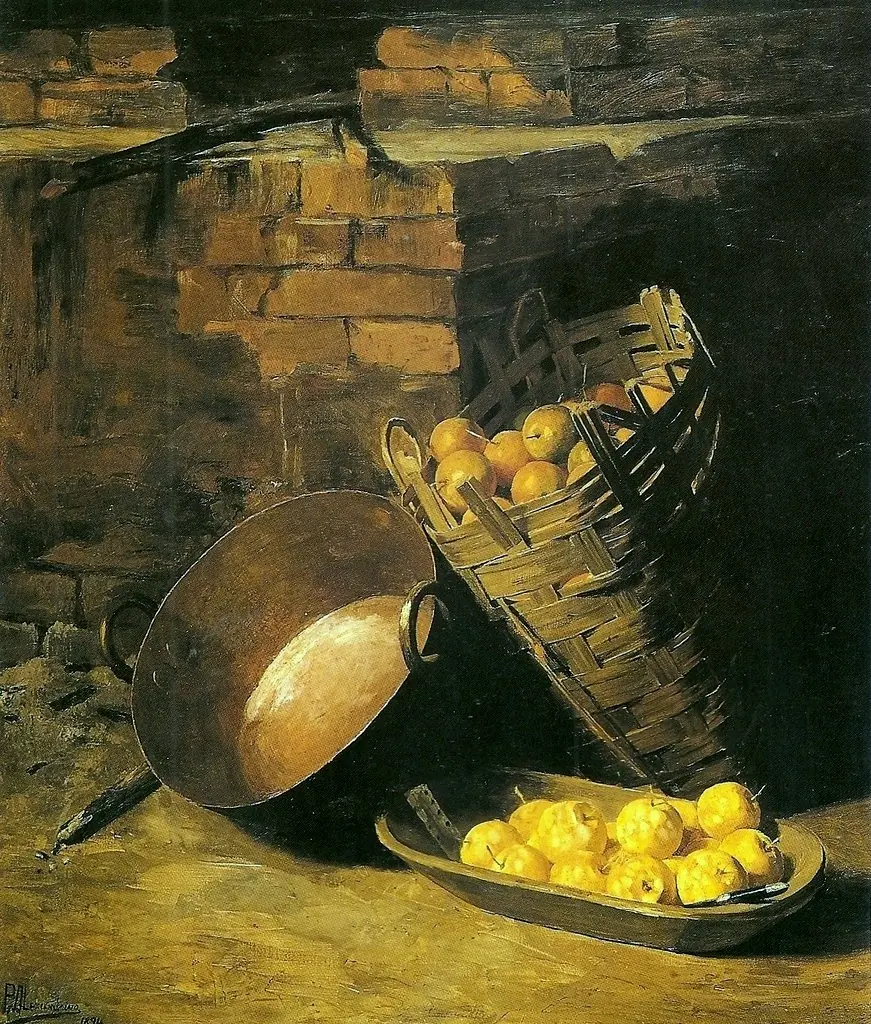
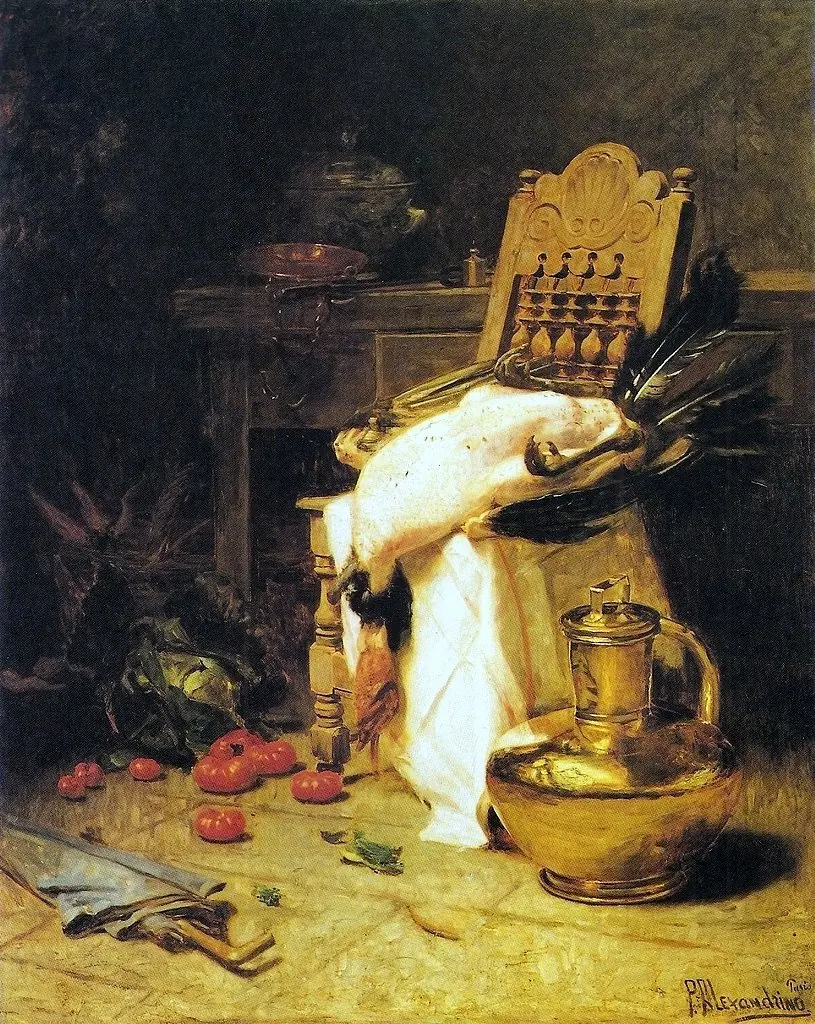
Borges employs oil paint to build subtle layers that capture the sheen of the metal jug and the soft fuzz of the peaches. Strong chiaroscuro defines the forms, with light falling sharply from one side to cast deep shadows, enhancing volume and spatial depth. The brushwork is controlled yet tactile, avoiding excessive detail in favor of suggestive realism.
History & Provenance
The painting was acquired by the Pinacoteca do Estado de São Paulo in the mid-20th century as part of a broader effort to document regional artistic production. Its origins are not tied to a major exhibition or public event, suggesting it was likely created for private patronage or personal study, reflecting the artist’s engagement with European traditions adapted to a Brazilian context.
Context
In postwar Brazil, still life remained a favored genre among artists exploring formal discipline and material observation. Borges’s work aligns with a quieter current in Brazilian modernism, one that valued technical precision and quiet composition over overt political or avant-garde statements, drawing quietly from Baroque lighting conventions without direct imitation.
Legacy
Though not widely reproduced or publicly celebrated, the painting contributes to the understanding of how Brazilian artists engaged with European pictorial traditions in the 20th century. It stands as a modest but thoughtful example of how chiaroscuro and careful observation continued to inform local practice, even amid broader shifts toward abstraction and social realism.
Own this work as a print
Artist & collection
Artist
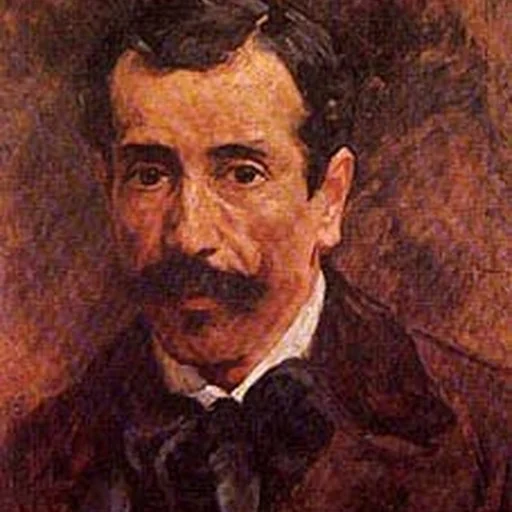
Pedro Alexandrino Borges (1856–1942) was an artist, born in São Paulo.