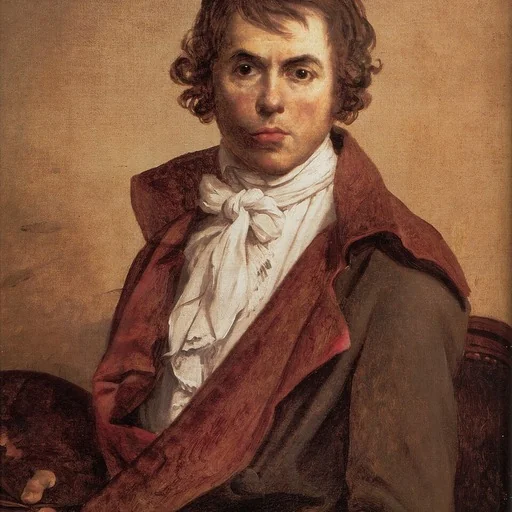
Subject
Jug
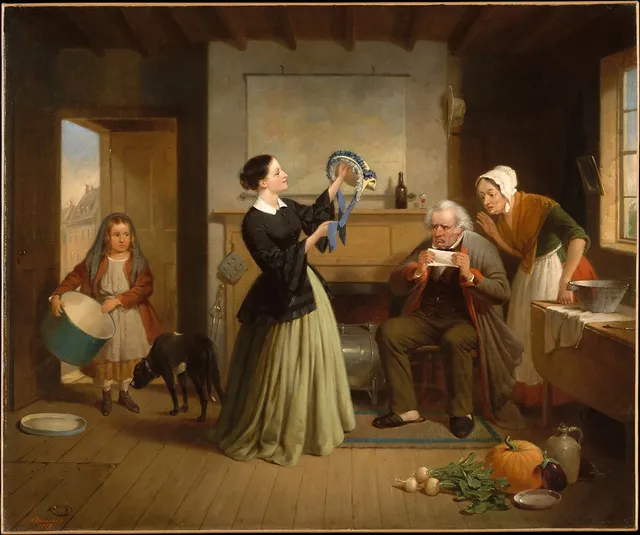
Jug is a subject in art. The gallery holds 110 works in this subject in art, including works by Jacques-Louis David, Francis William Edmonds and Camille Pissarro.
A jug is a type of container commonly used to hold and serve liquids, but not normally to drink from directly. It has an opening, sometimes narrow, from which to pour or drink, and has a handle, and usually a pouring lip.
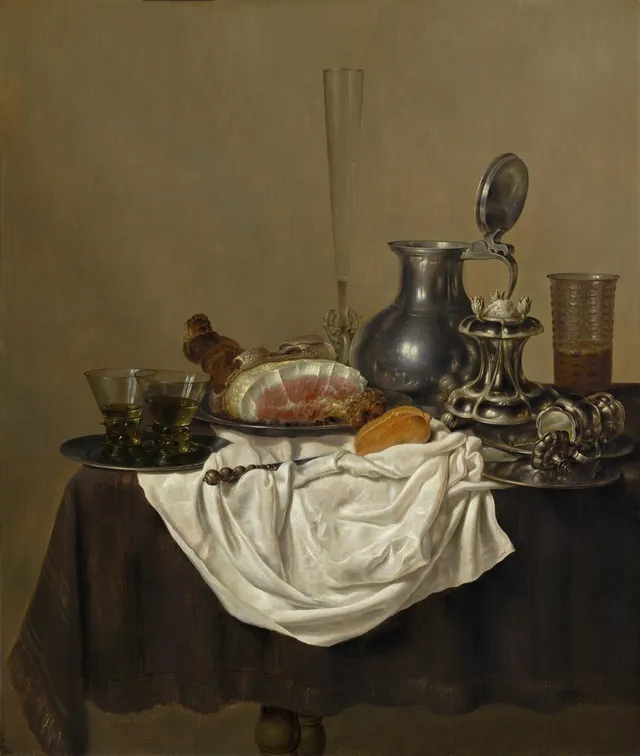
Key artists


Overview
A jug is a container designed to hold and serve liquids, distinct from drinking vessels in that it is not normally used to drink from directly. It characteristically features an opening, sometimes narrow, a handle, and usually a pouring lip to facilitate controlled dispensing of its contents. Historically, jugs have been manufactured from metal, ceramic, or glass, with plastic becoming a common material in modern production. The term itself first appeared in the late 15th century as jugge or jubbe, potentially derived from a contemporary term for a maidservant, which itself was an alteration of common personal names such as Joan or Judith.
Iconography & meaning
In visual culture, the jug carries associations with domesticity, hospitality, and the serving of drinkable liquids such as water, beer, and wine. Its function as a pouring vessel links it to acts of offering and sustenance. Historically, jugs used for personal washing, often made of metal or faience and paired with a matching basin, symbolize domestic hygiene and the intimacy of the toilette. The jug also holds a specific cultural meaning in certain regions, where it refers to a measured quantity of beer, linking the object to communal drinking and social gathering.
Across movements & periods
The treatment of the jug in art reflects shifts in material culture and artistic focus across periods. In antiquity, large ceramic jugs, such as the amphora, served as the primary medium for storing and transporting liquids like oil and wine, a utility that translated into early artistic representations. During later centuries, the rise of glazed earthenware and metal vessels brought new textures and reflective surfaces to still life and genre painting. Over time, traditional ceramic and wooden jugs were gradually supplanted by less breakable glass and plastic bottles in daily life, a shift that moved the jug from a ubiquitous utilitarian object to a more specialized or nostalgic item in the modern era.
Legacy
The cultural afterlife of the jug extends beyond its visual representation in fine art into vernacular traditions and language. In American folk music, empty stoneware jugs, originally used for whiskey, became musical instruments played with buzzed lips to produce a trombone like tone, giving the jug band its name. The object has also left its mark on linguistic idioms, such as the German expression volle Kanne, meaning with maximum effort or speed. While modern retail packaging has largely replaced the jug with the bottle and the pitcher, its enduring presence in art and language preserves its identity as a symbol of domestic life and communal consumption.
Works
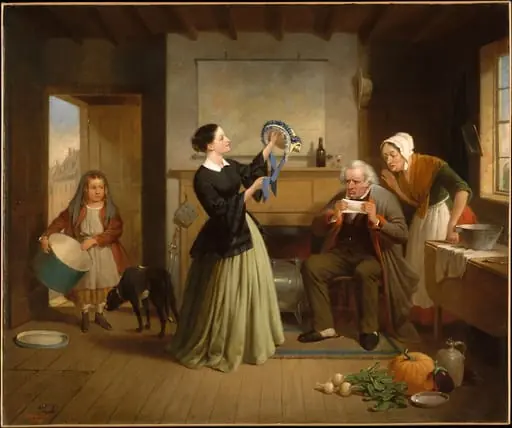 The New Bonnet
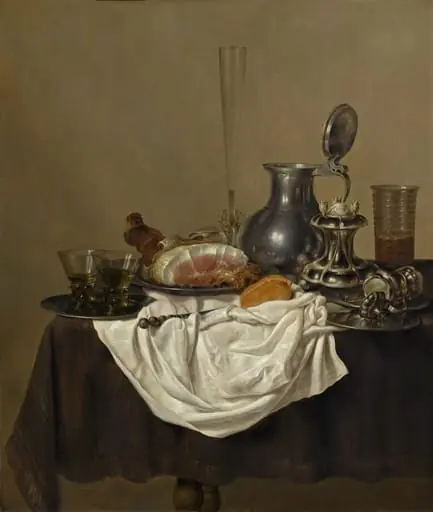 Still Life with Ham
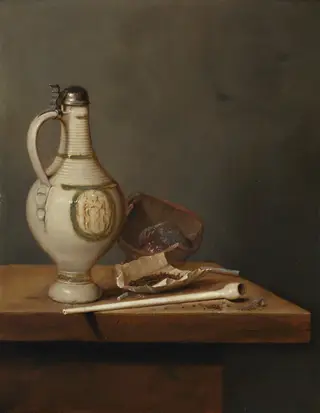 Still Life with Stoneware Jug and Pipe
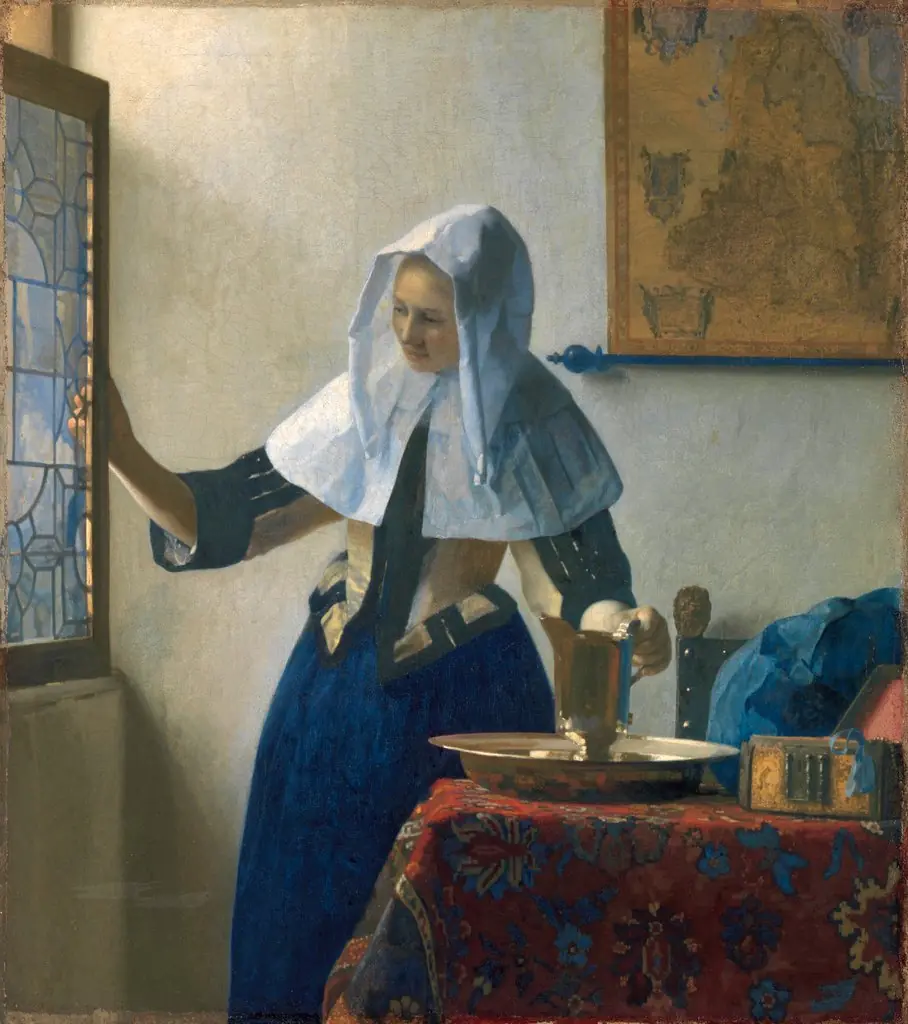 Woman with a Water Jug
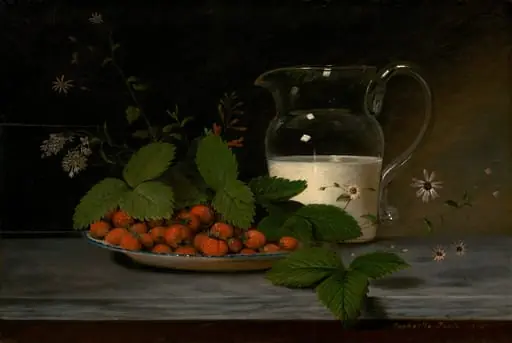 Strawberries and Cream
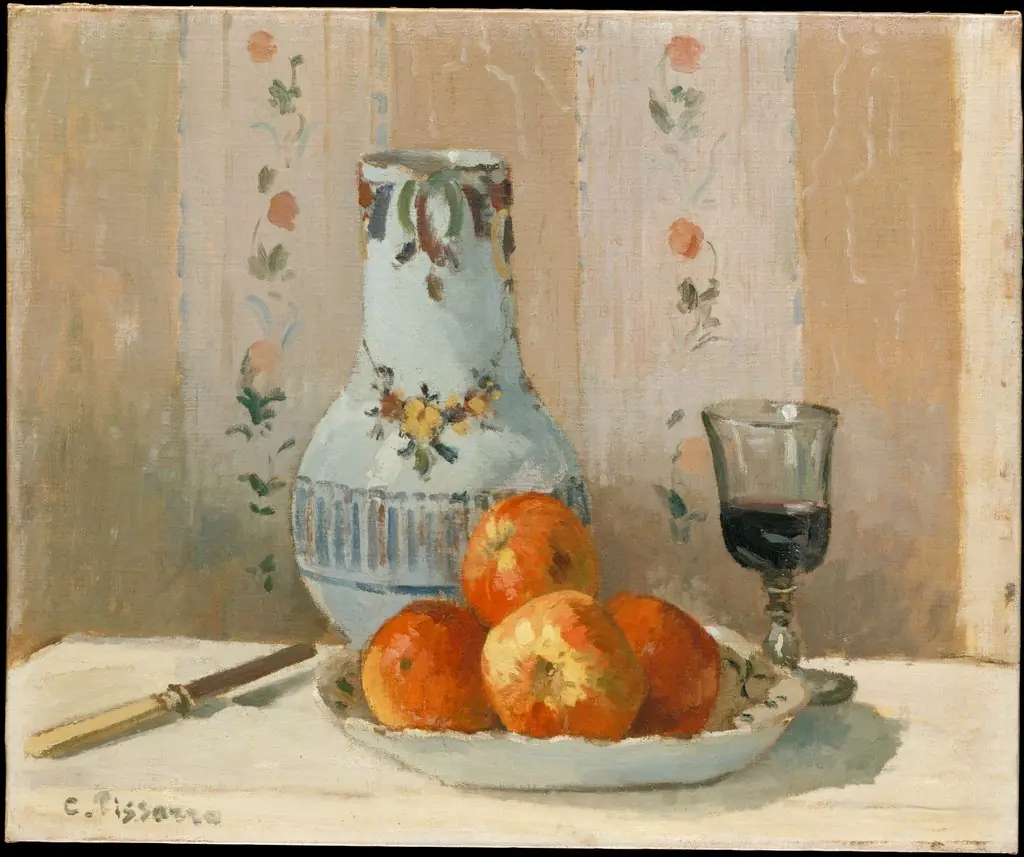 'Ghâtaignier' Apples and Glazed Earthenware on a Table
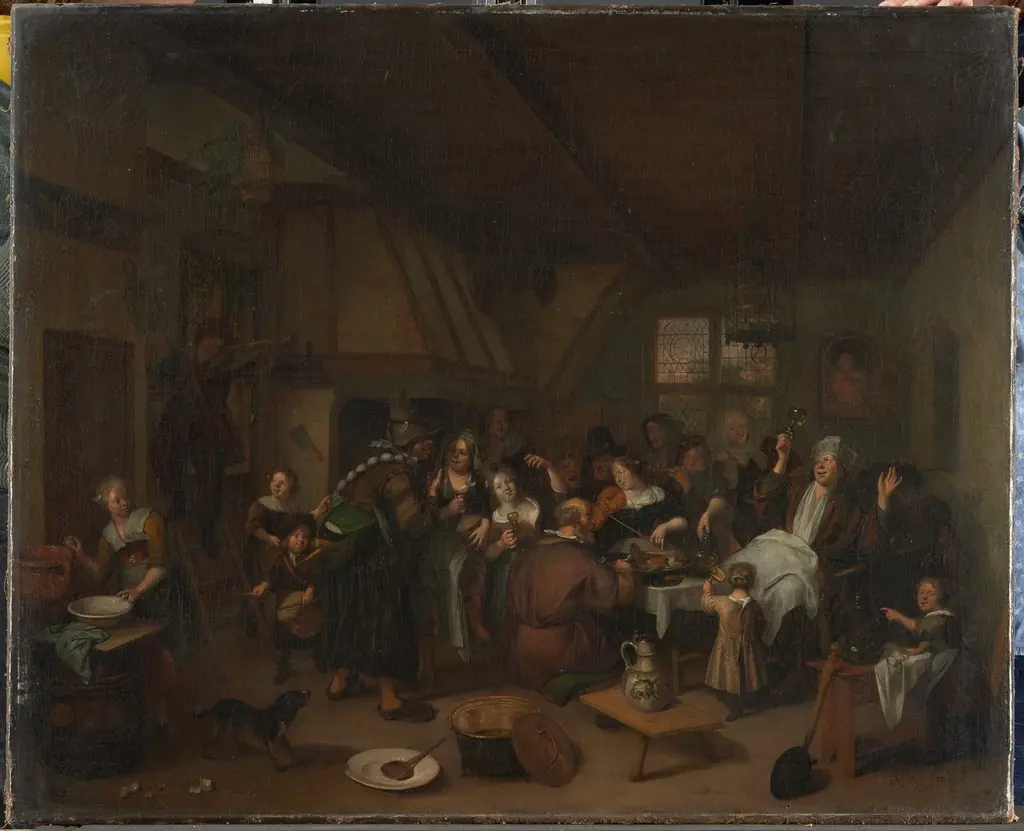 Interior with a company celebrating Twelfth Night, the Feast of Epiphany
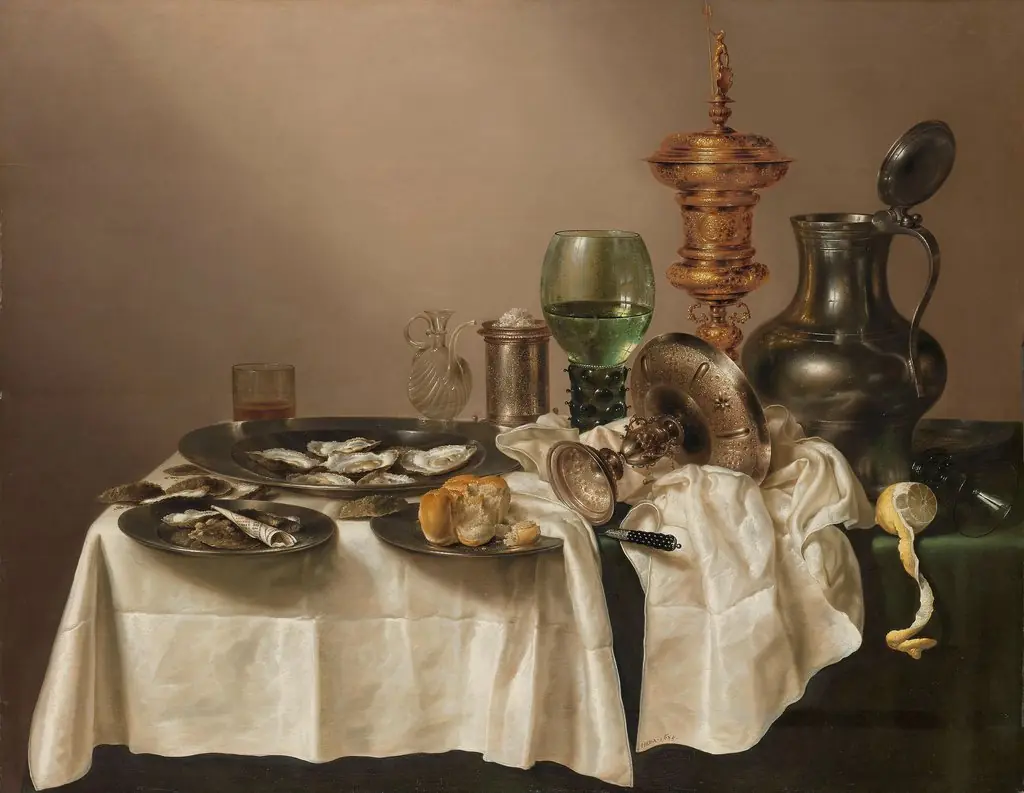 Still Life with a Gilt Cup
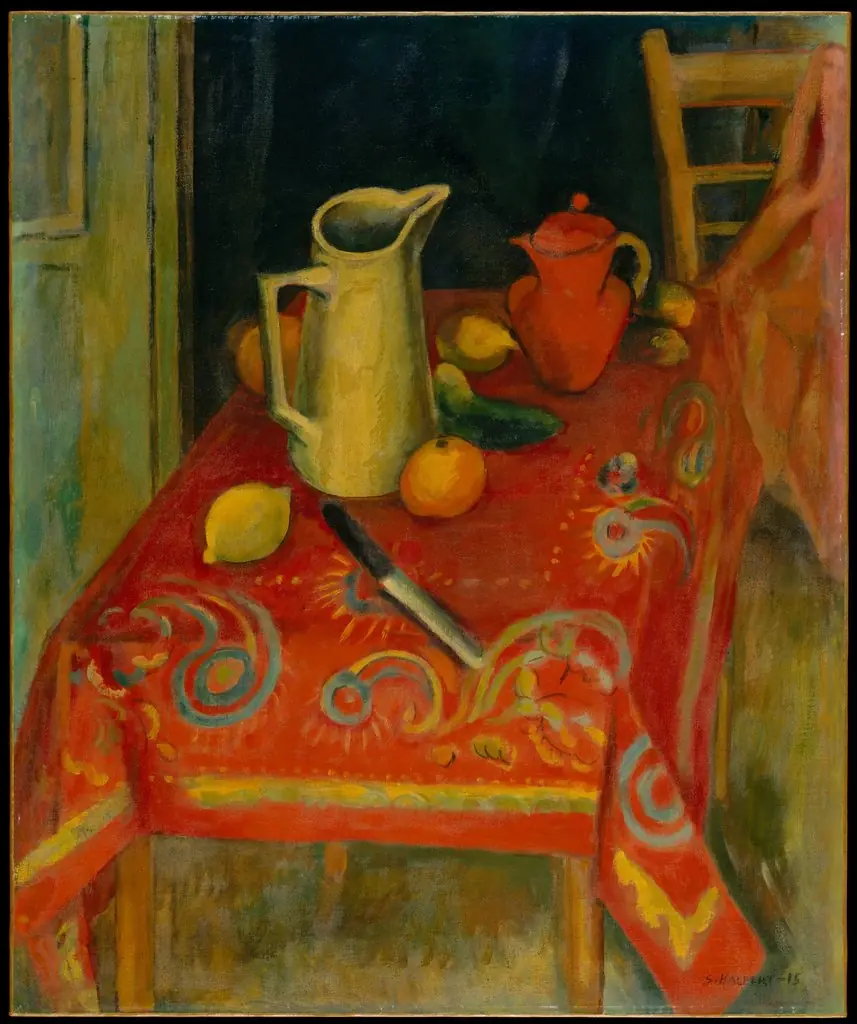 The Red Tablecloth
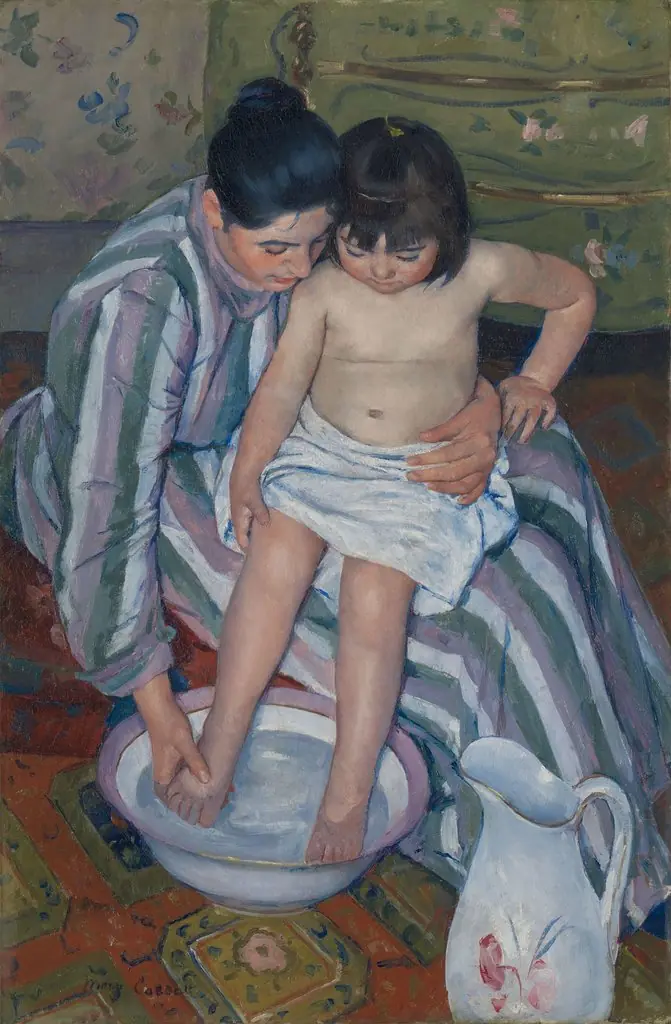 The Child's Bath
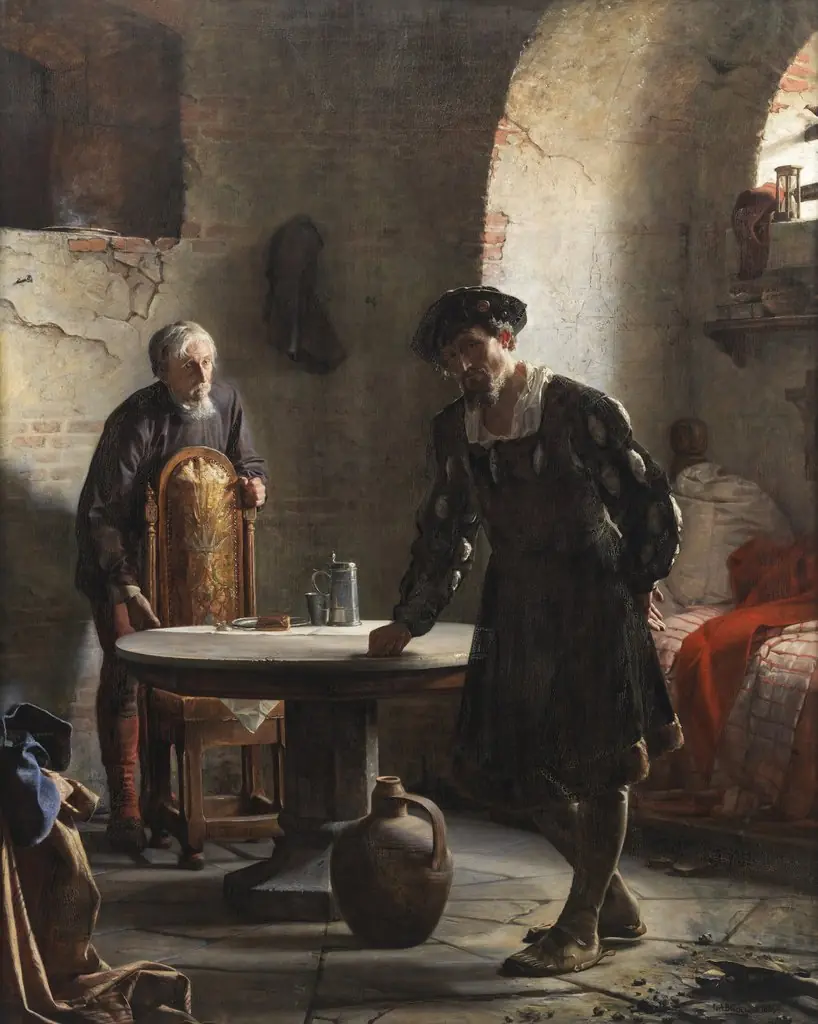 Christian II i fængslet på Sønderborg Slot
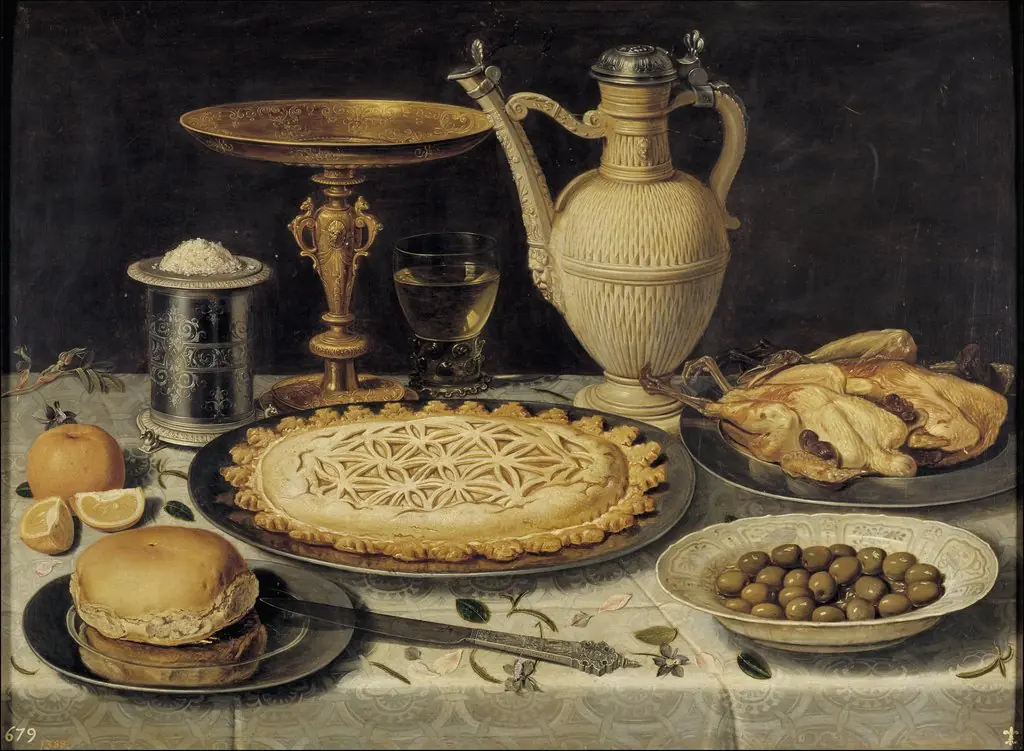 Still life with tazza, stoneware jug, saltcellar and dainties
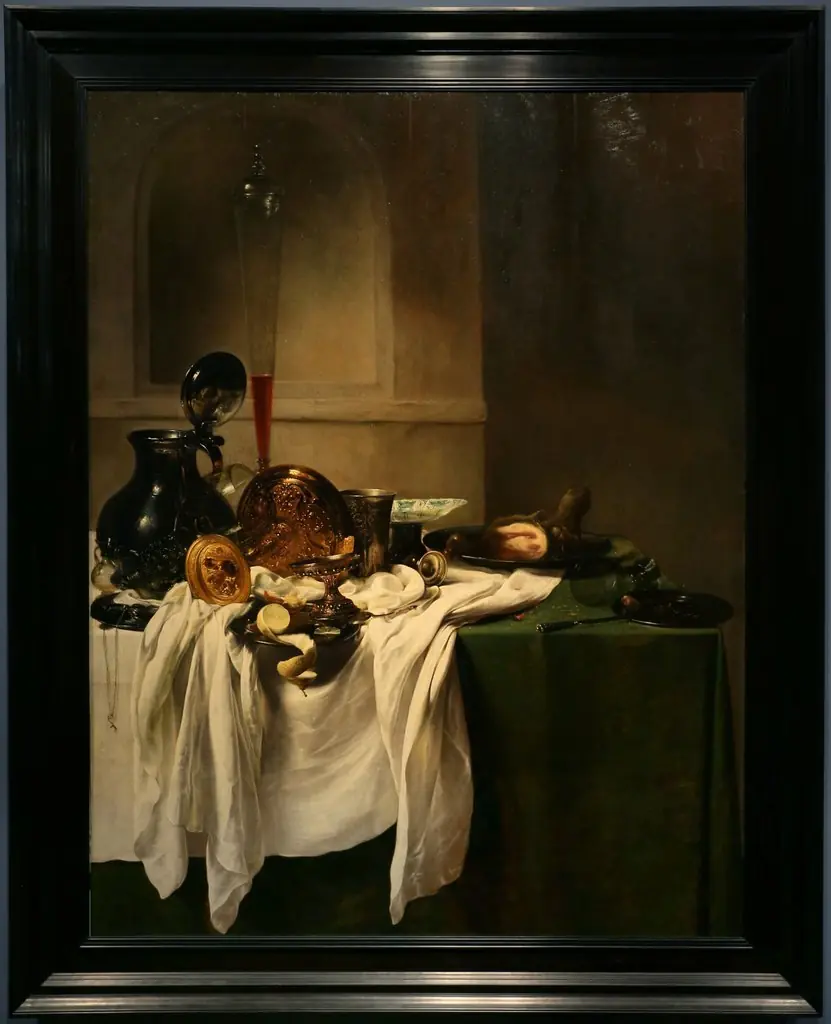 Still life of a laid table with ham and a view of a niche
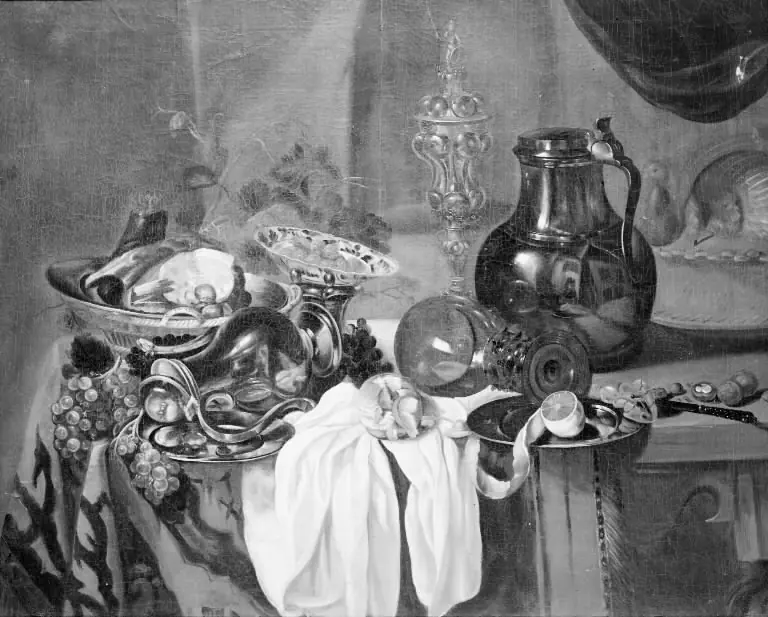 A Jug, Fruit, Food and other Things on a Table
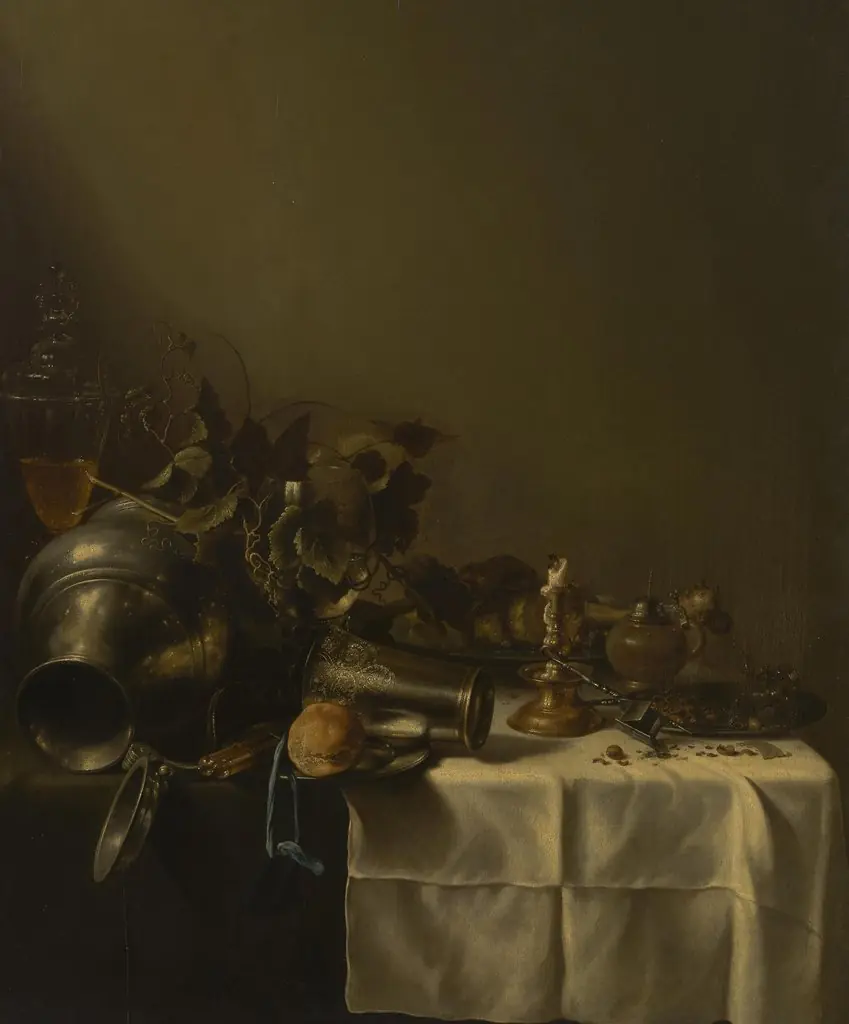 Overturned Jug and Other Items on the Tablecloth
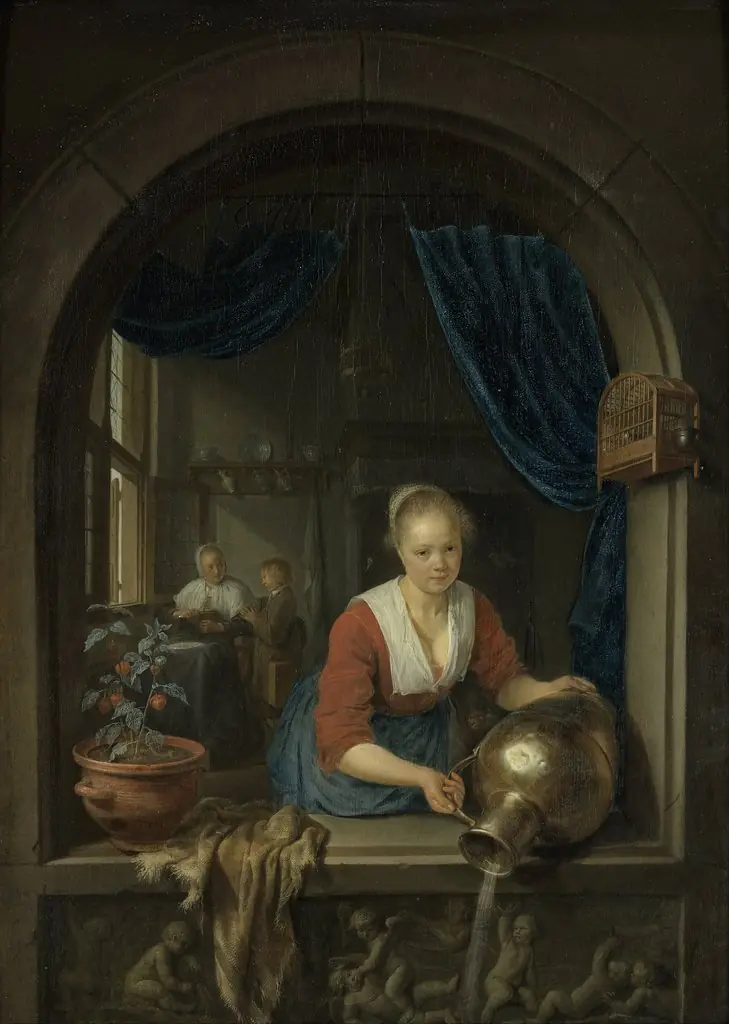 Maid at the Window
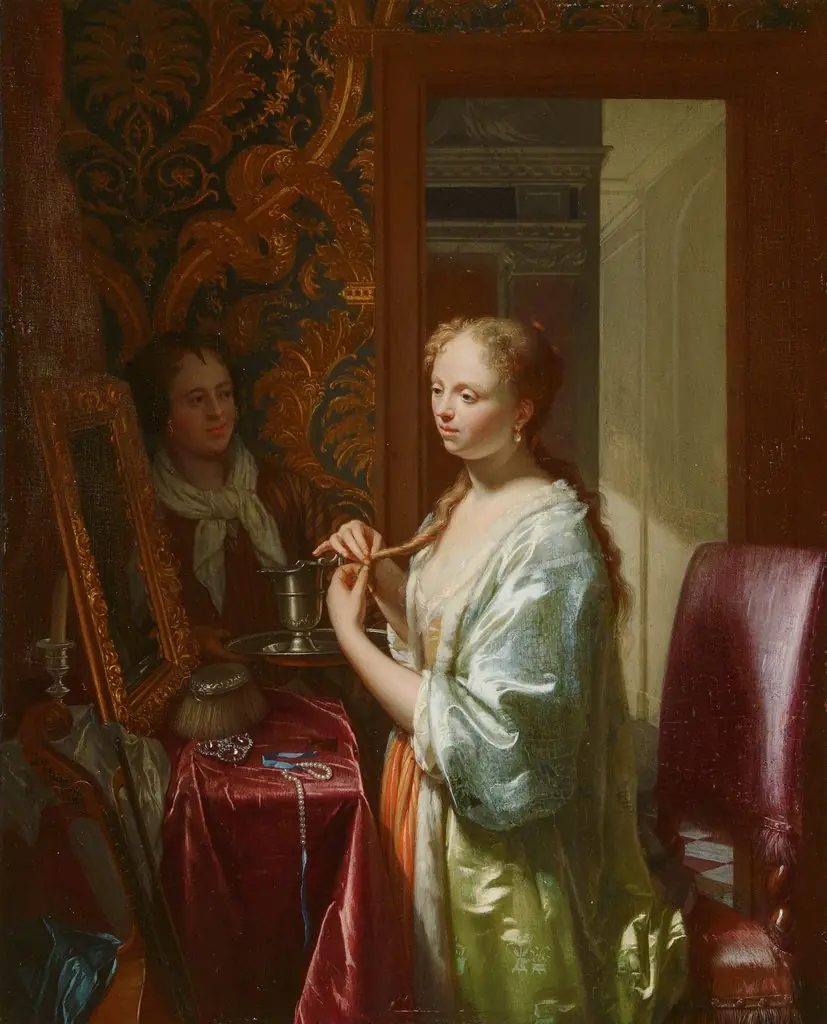 Lady attending to her toilet
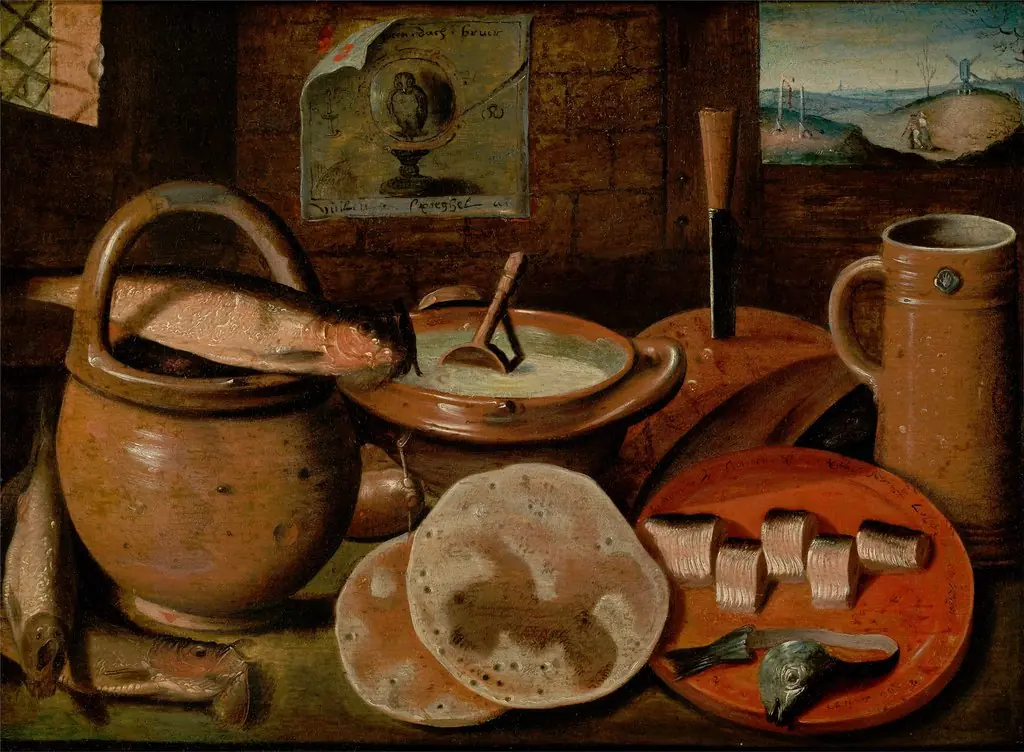 Still Life with a Poor Man's Meal of Porridge, Cheese, Herring and Pancakes
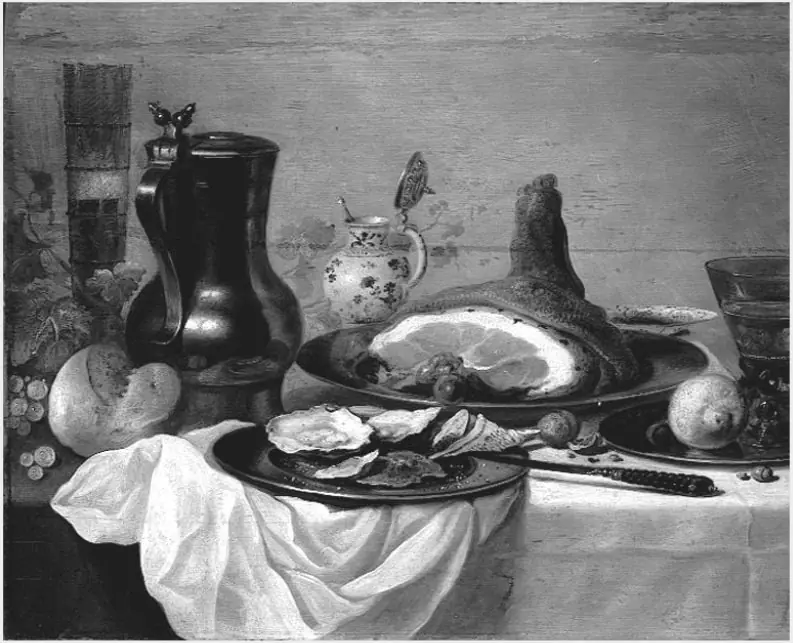 A Breakfast-piece
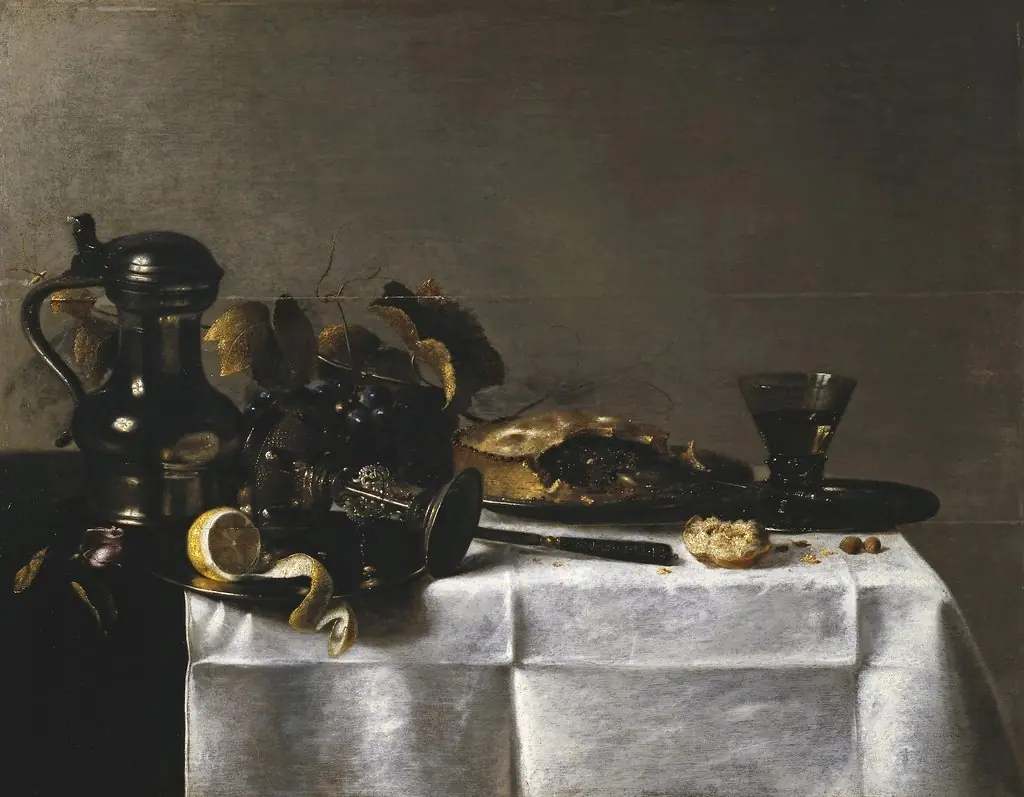 Breakfast
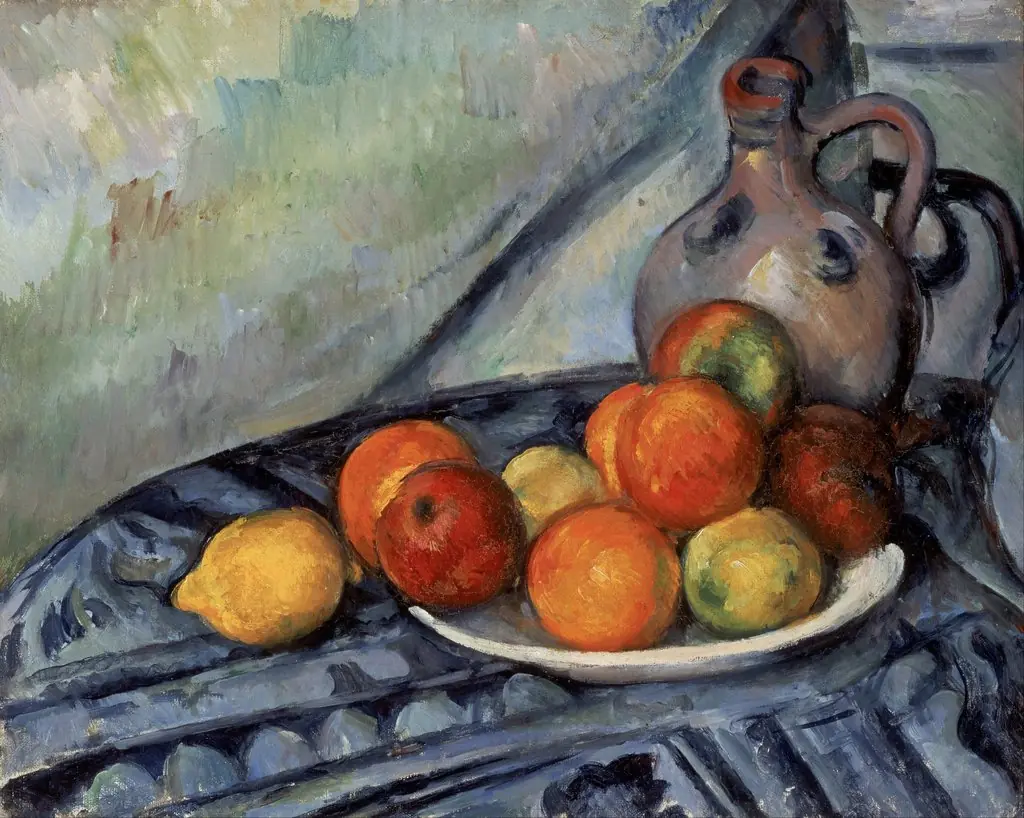 Fruit and a Jug on a Table
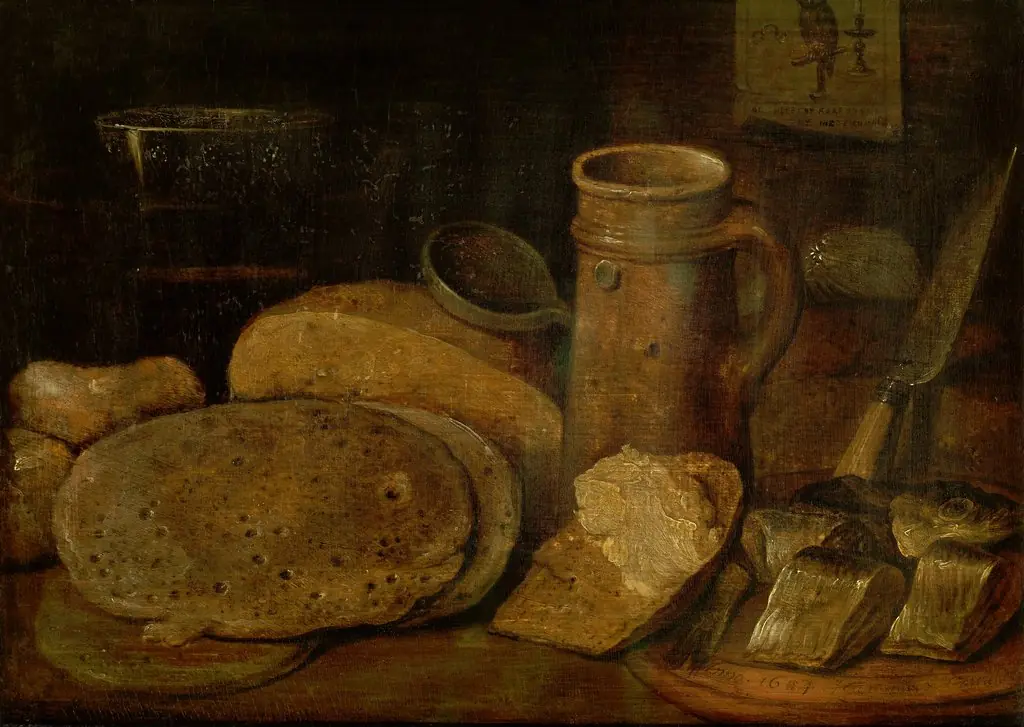 Still life with pottery, herring and pancakes, a print of an owl on the wall
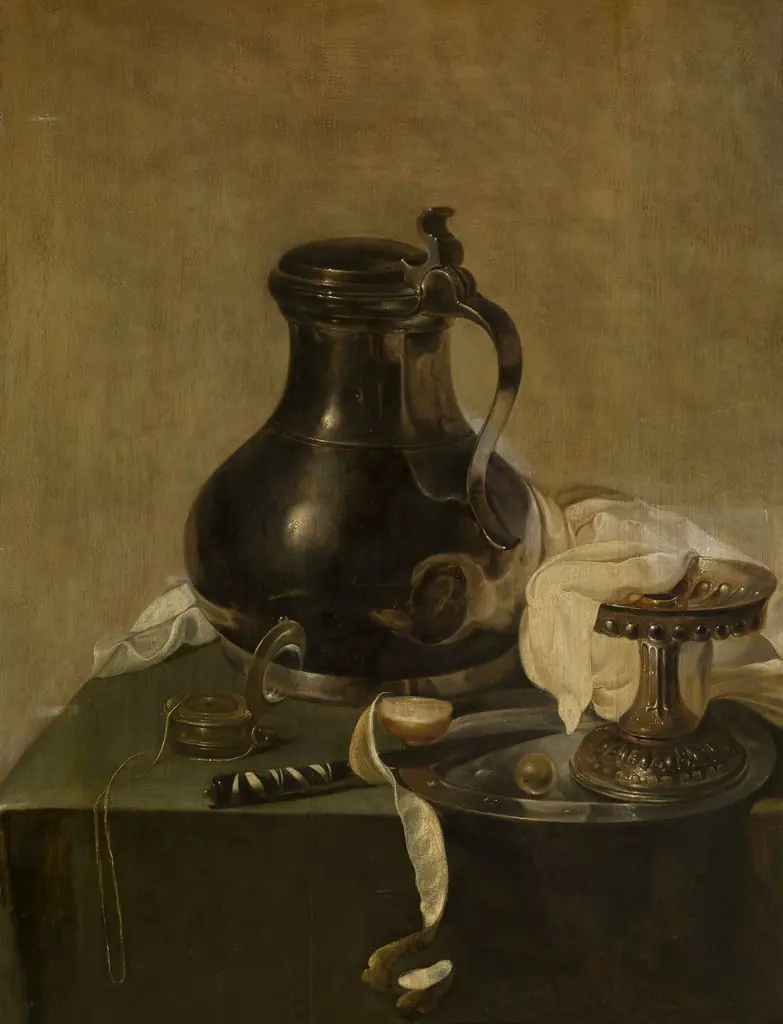 Still life with pewter jug
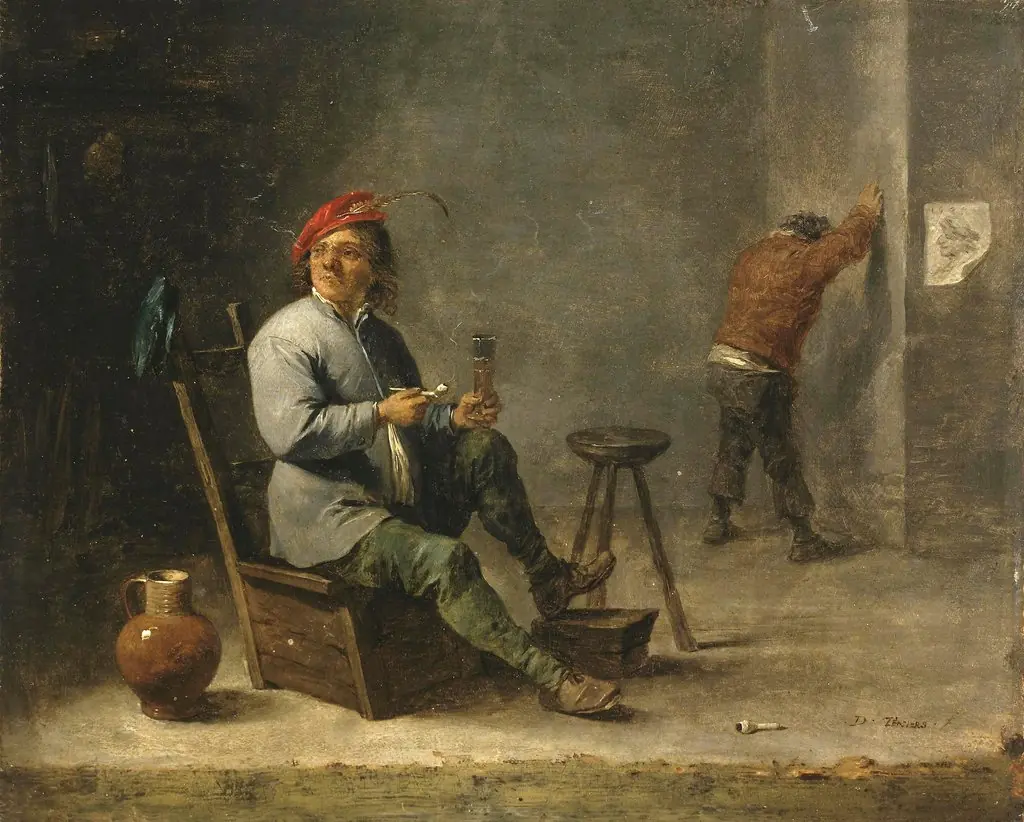 Smoker
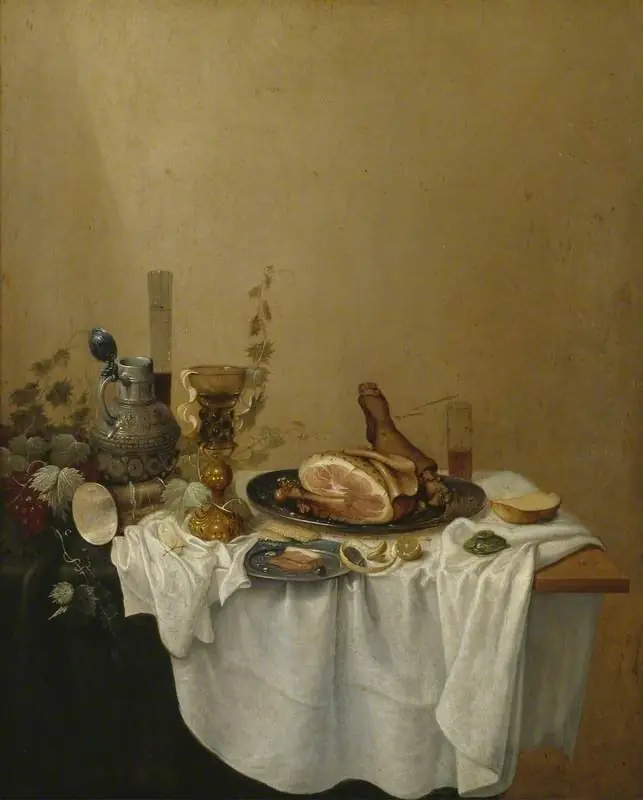 Still life with stoneware jug, bekerschroef, glassware and a leg of ham
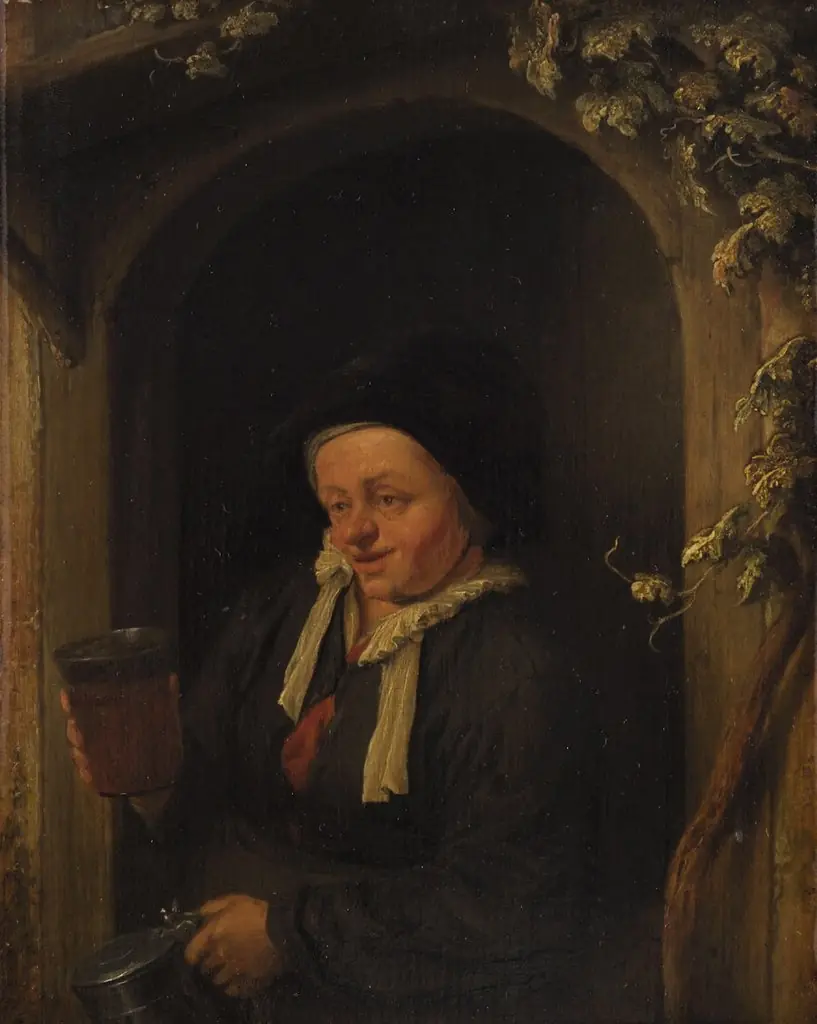 Woman in a Window, with Beer-glass and Jug
 Boerenerf
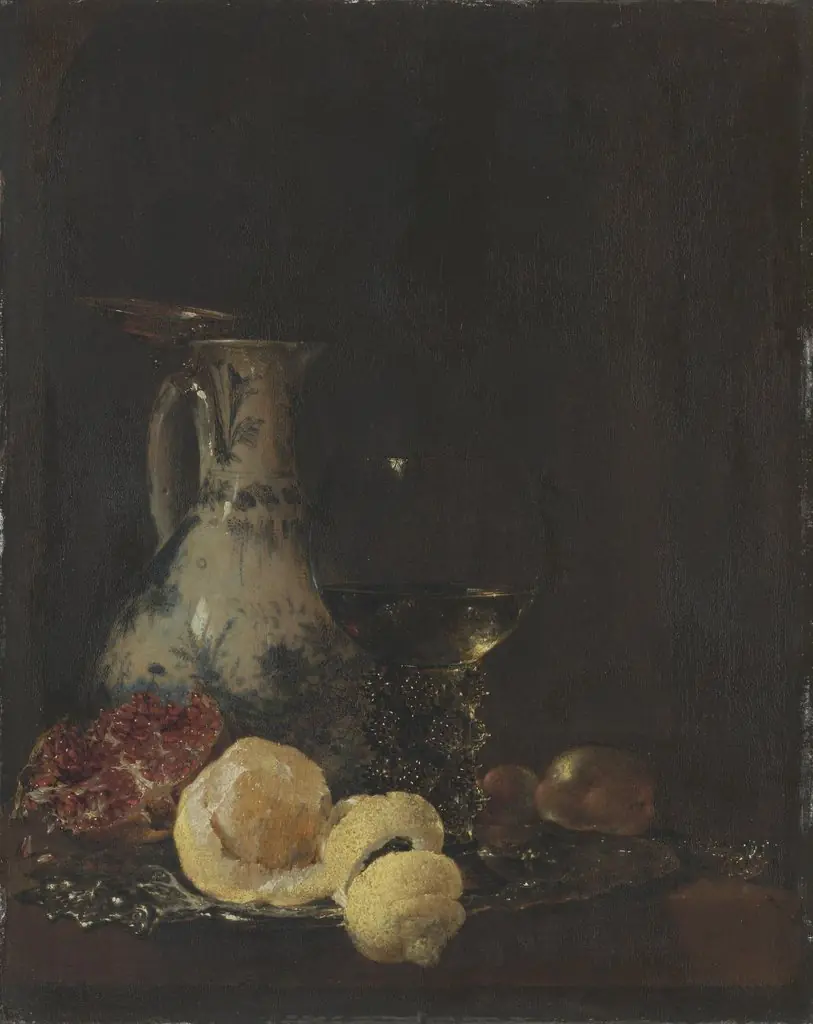 Still Life with a Ming Jug
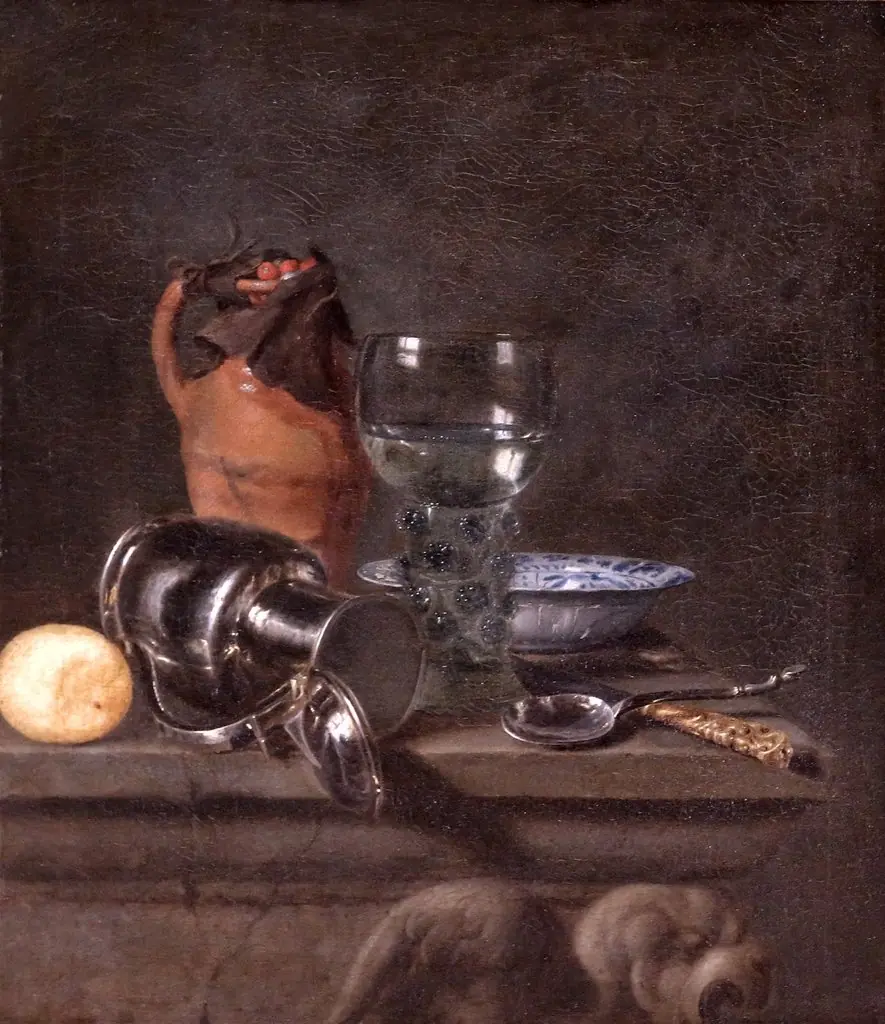 Still life with fallen pewter jug and roemer
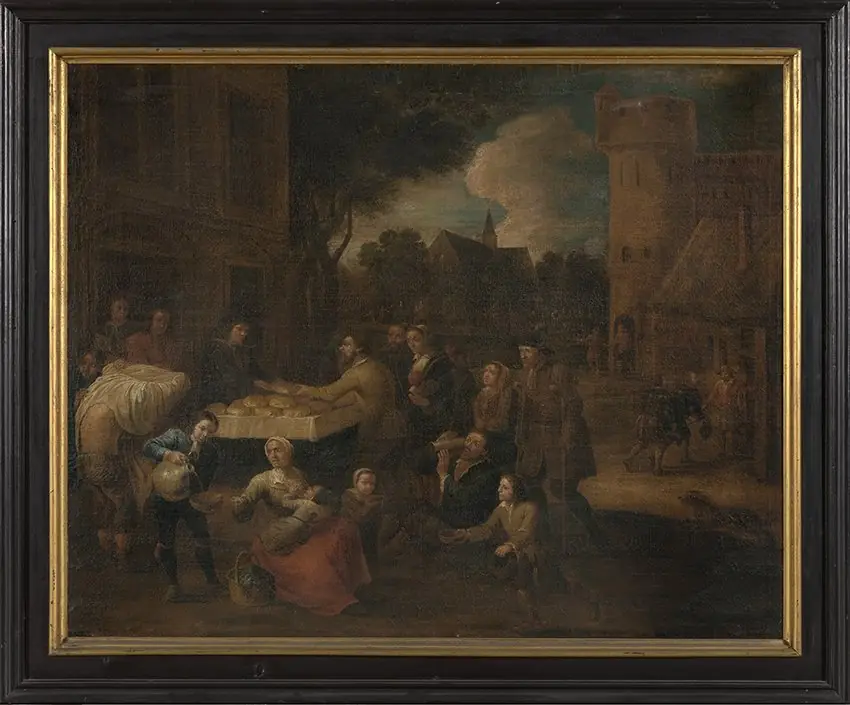 Werken van barmhartigheid
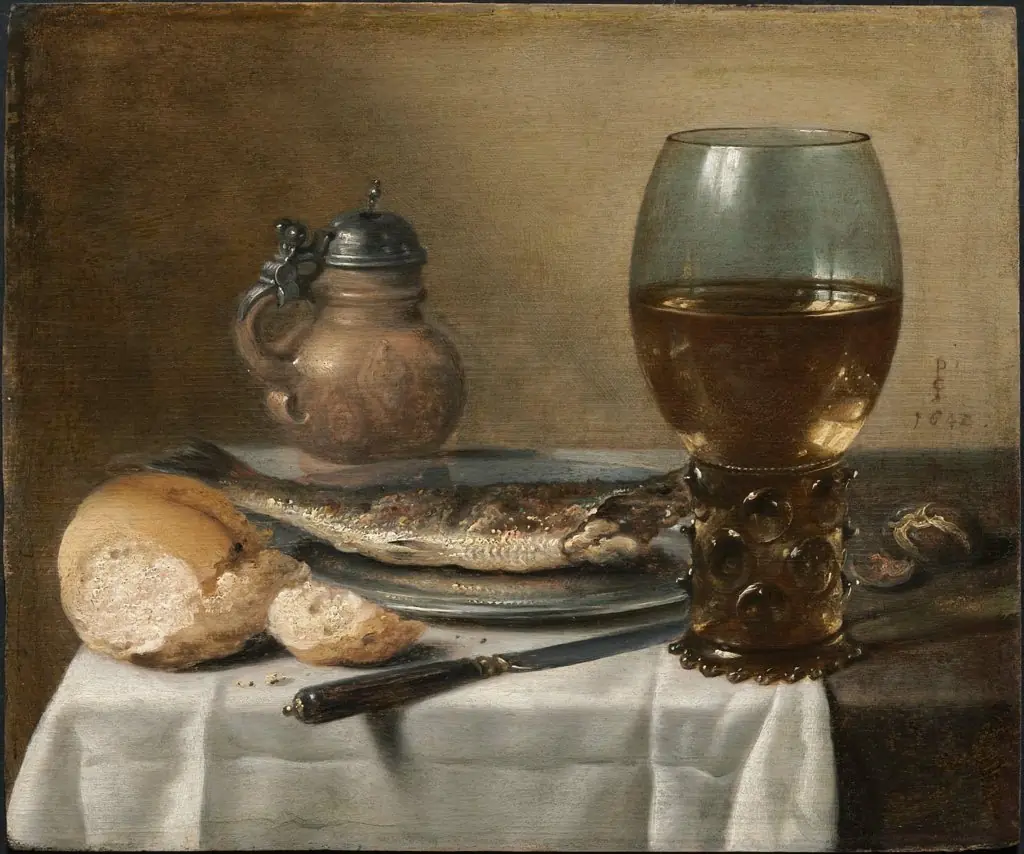 Still Life with Stoneware Jug, Wine Glass, Herring, and Bread
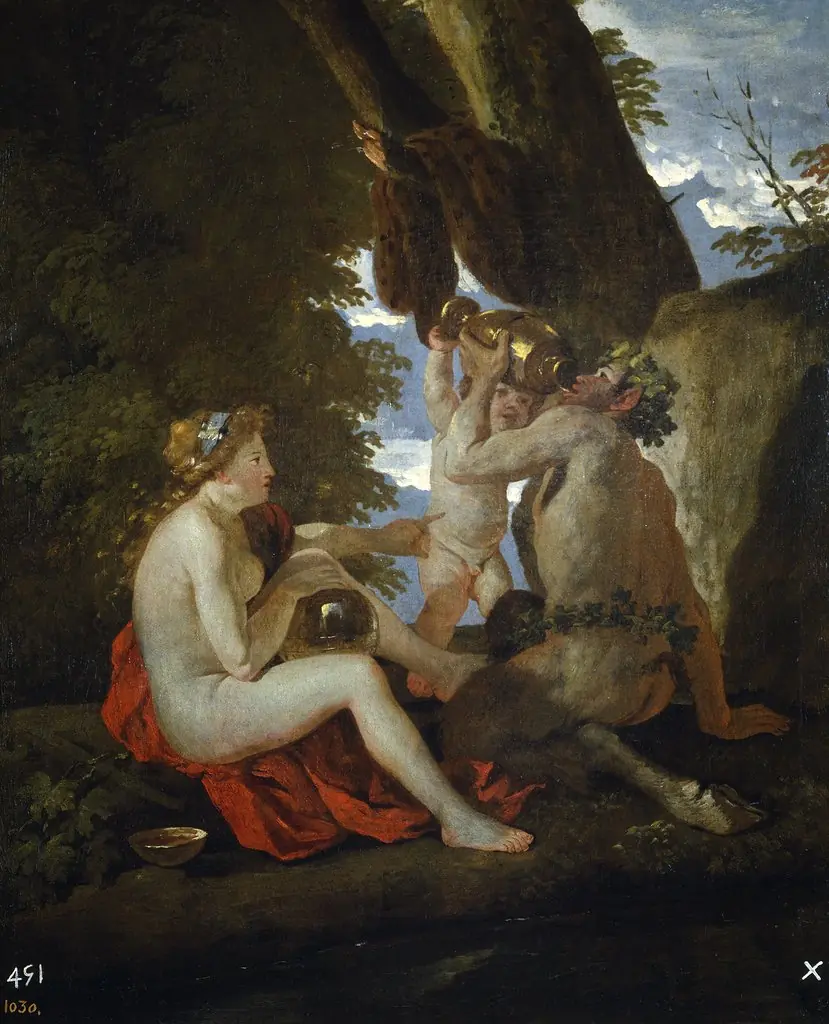 Bacchic Scene
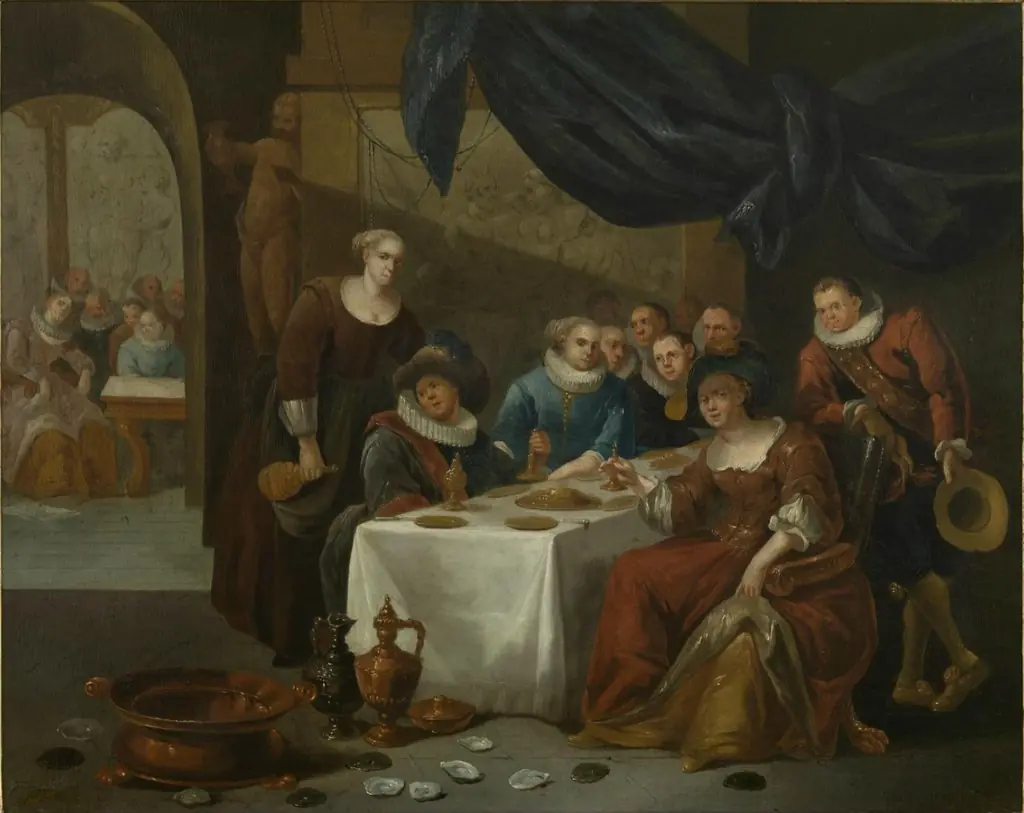 Galant gezelschap
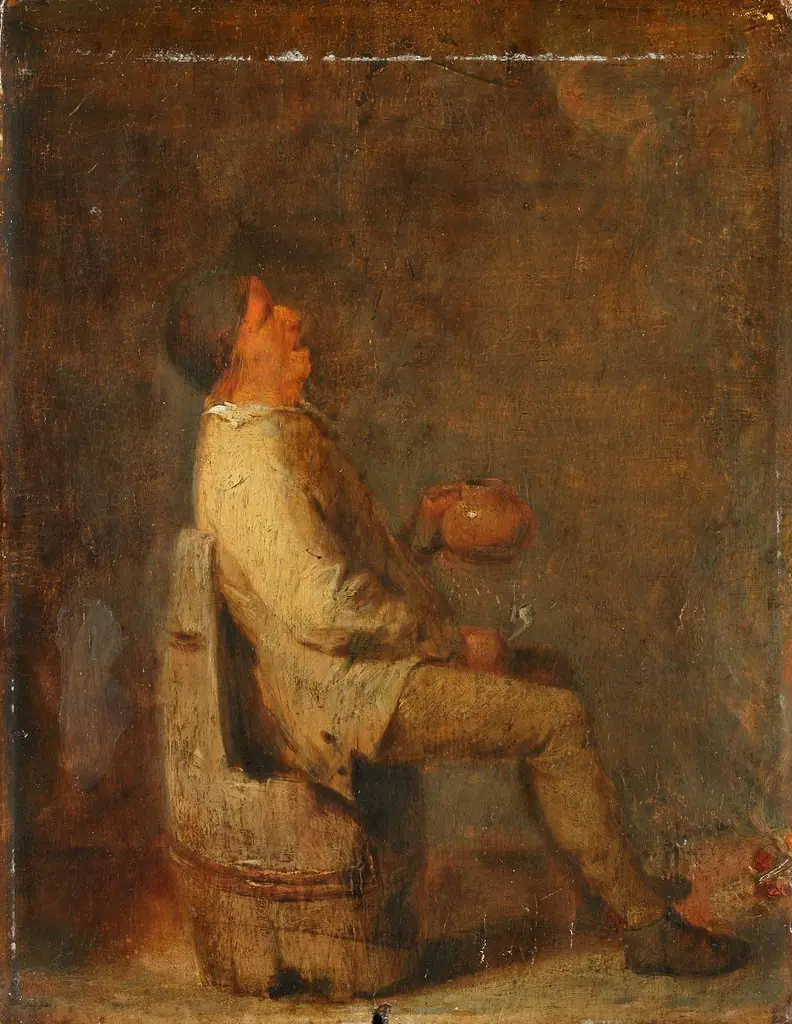 A Peasant Singing
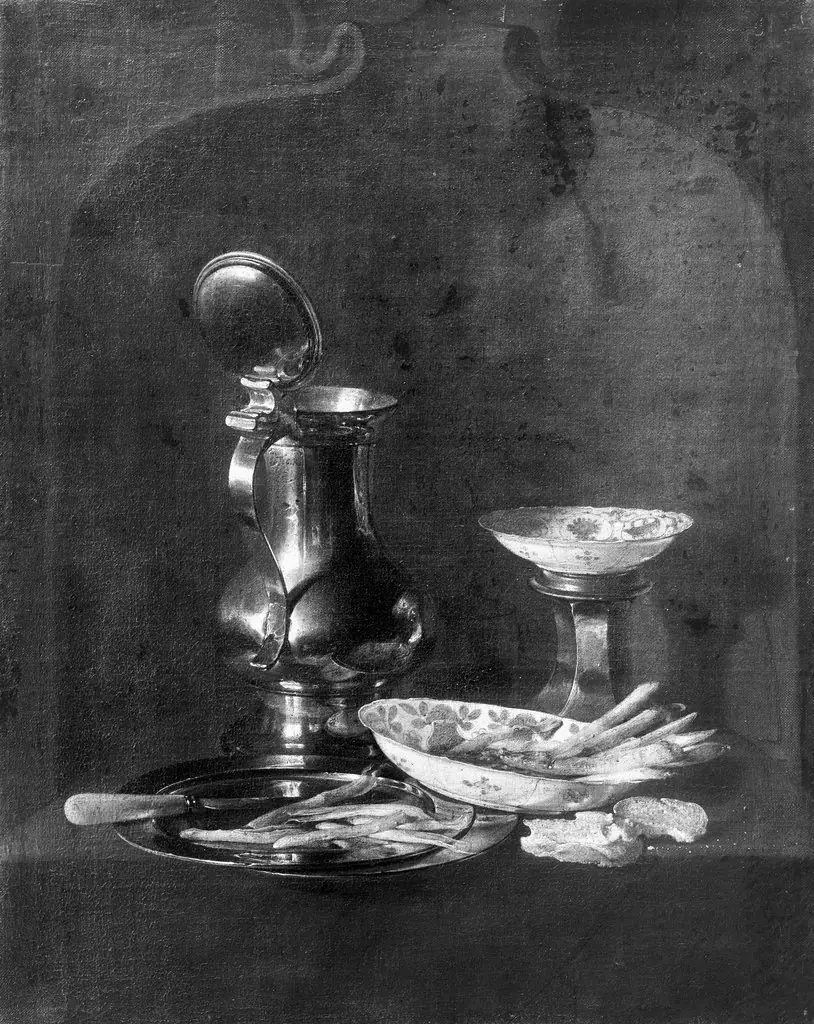 Still life with pewter utensils and Chinese bowls
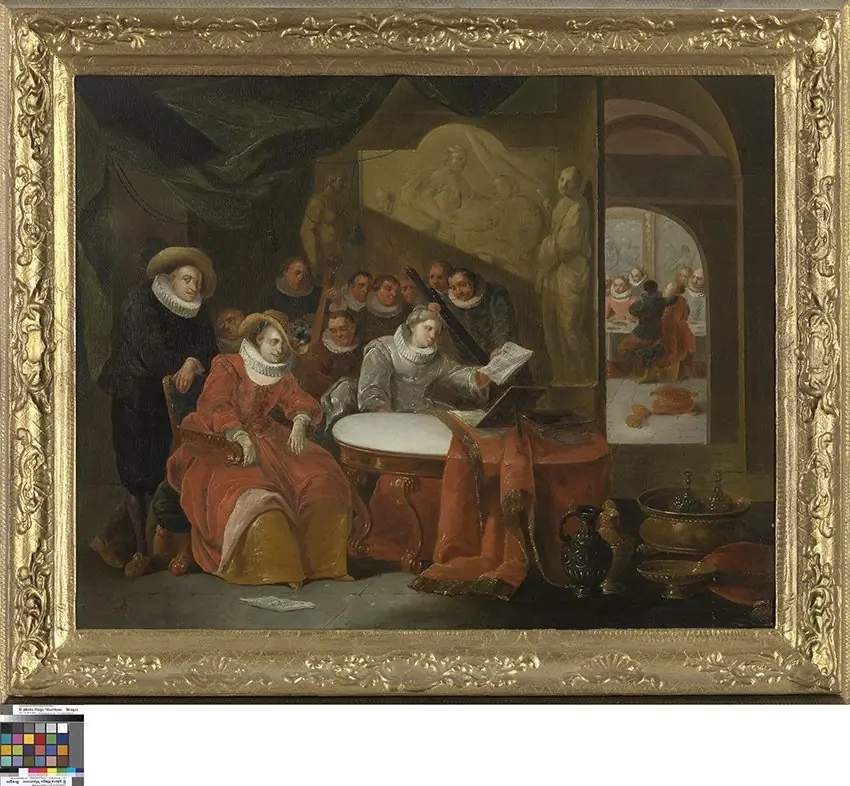 Galant gezelschap
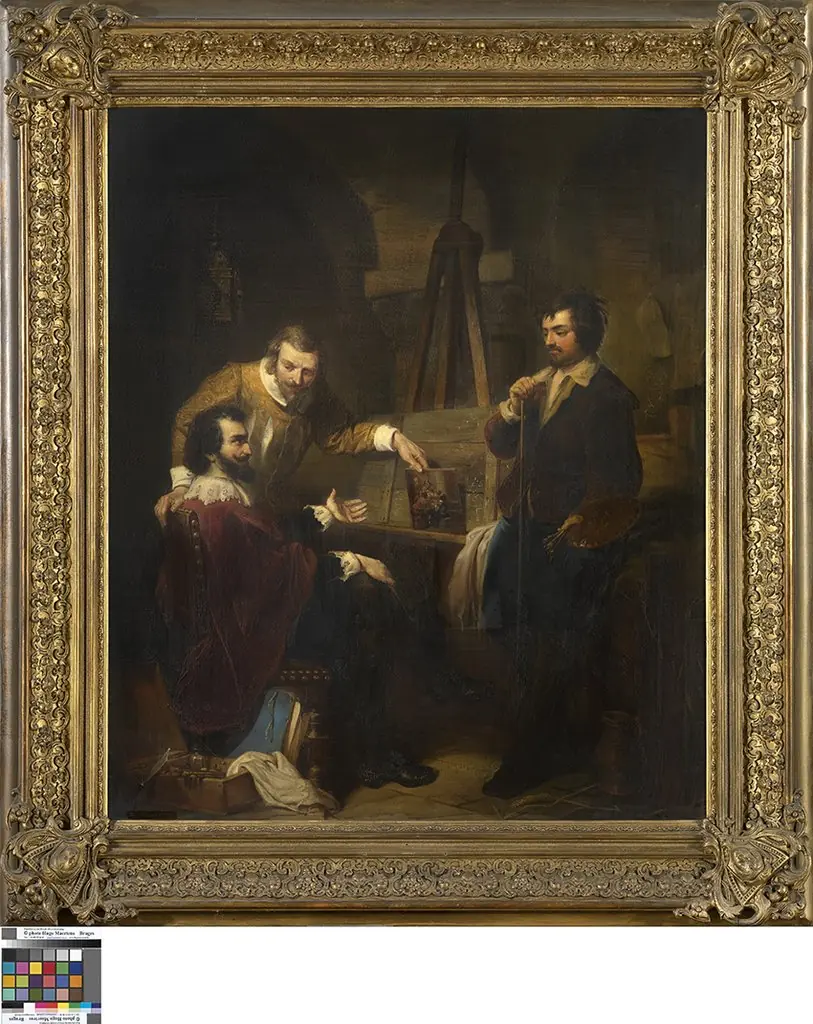 Peter Paul Rubens bezoekt Adriaen Brouwer in de Citadel van Antwerpen
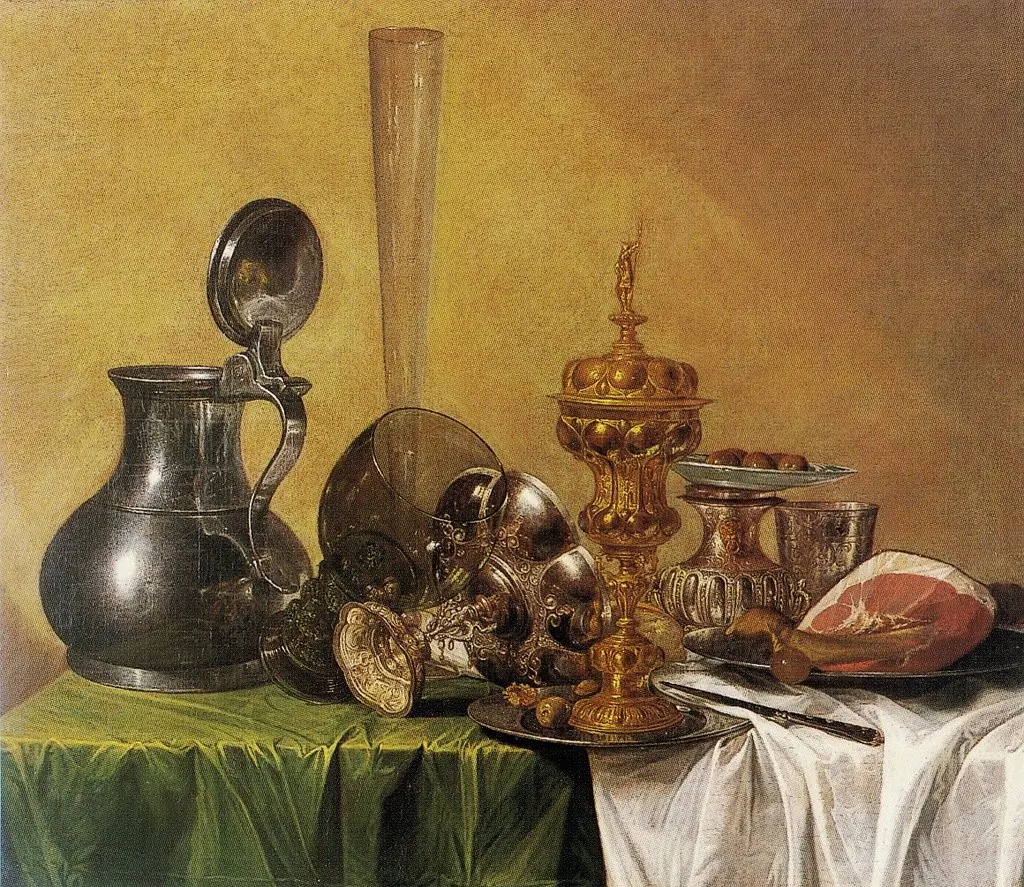 Still Life with Ham, Covered Beaker, Tazza, Rummer and Jug on a Table
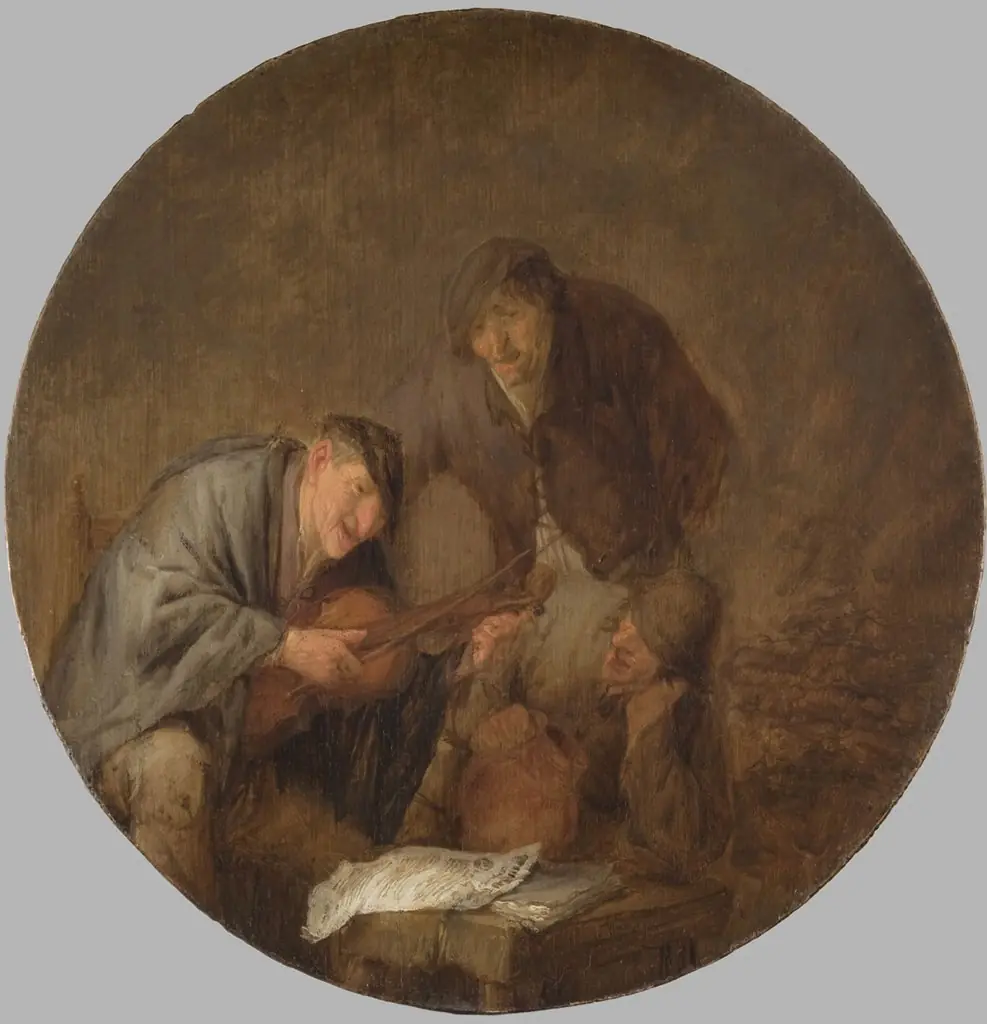 Peasants Making Merry
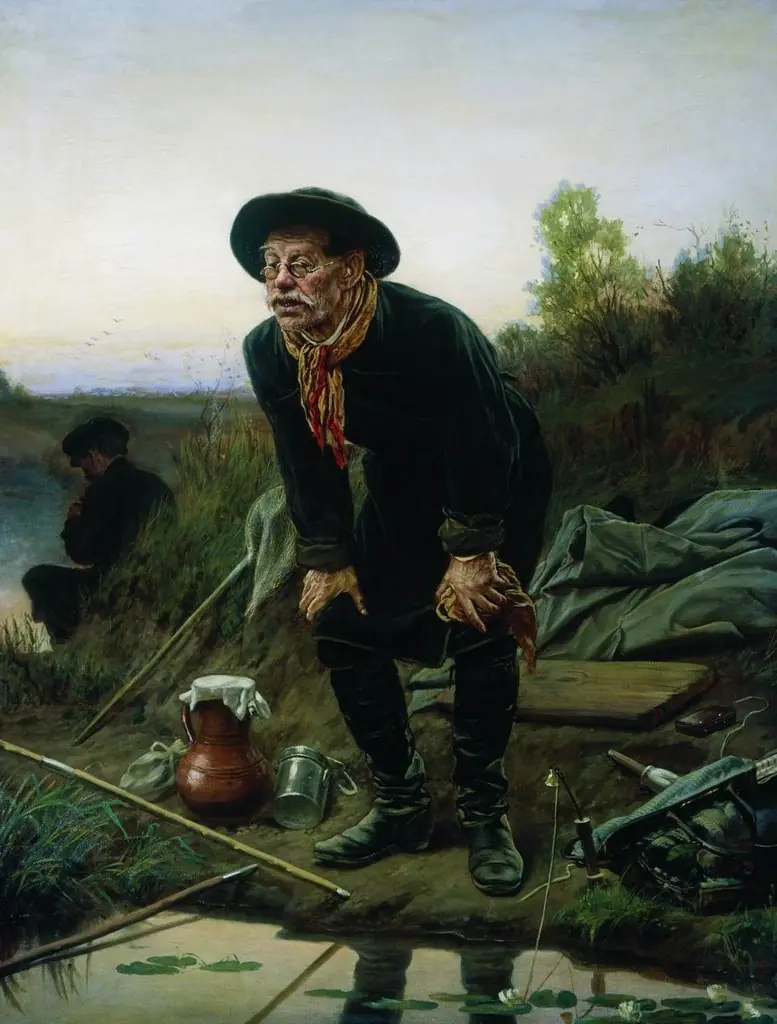 Рыболов
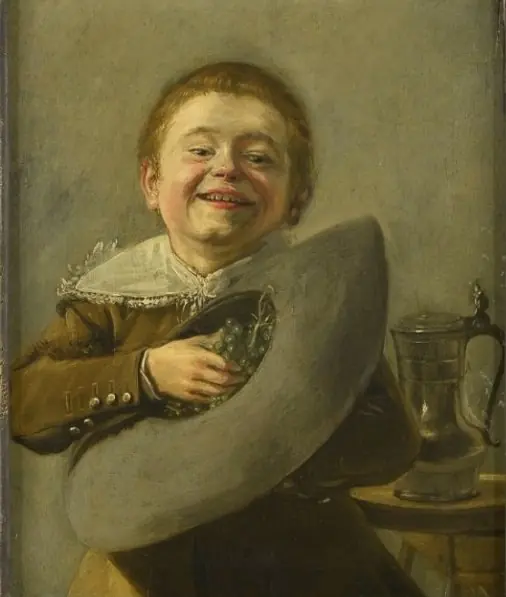 Smiling boy holding grapes in his hat
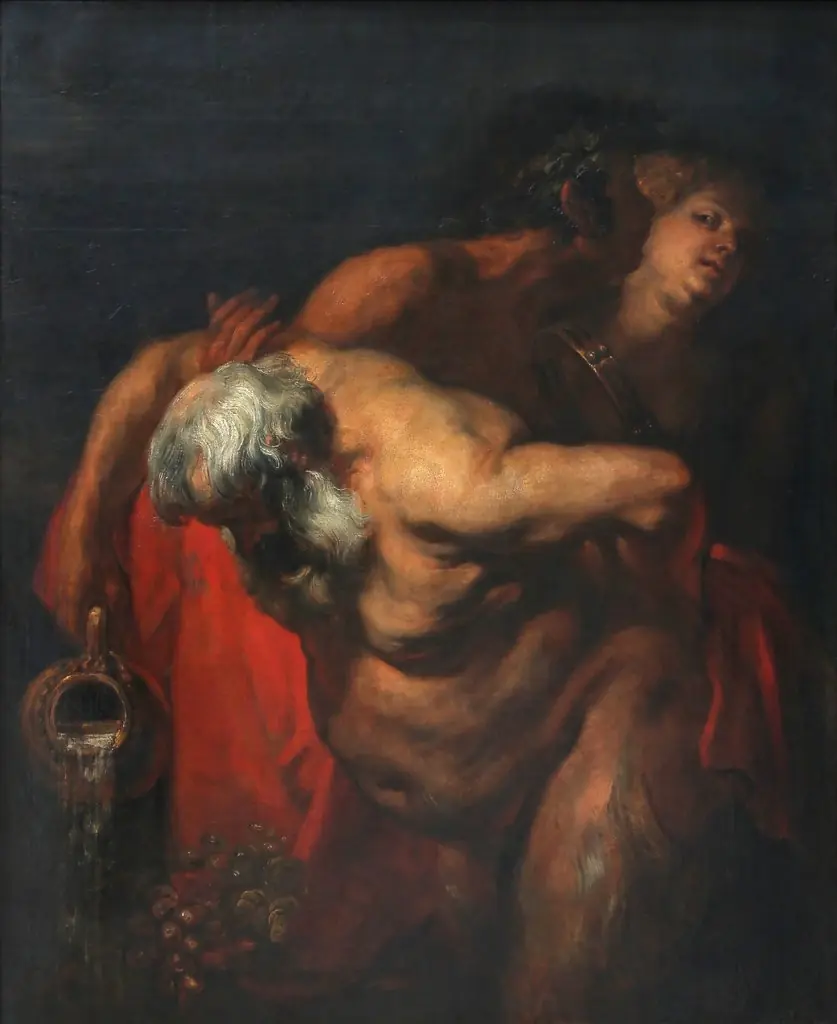 Drunken Silenus, supported by two bacchantes
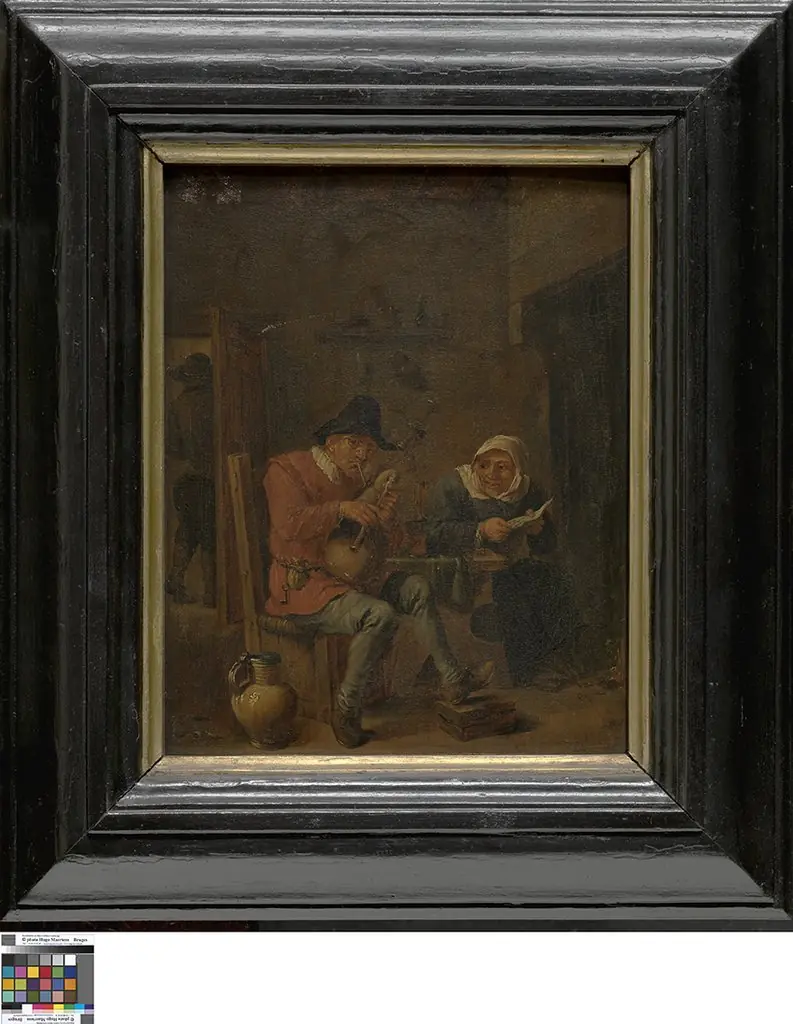 Musicerend paar
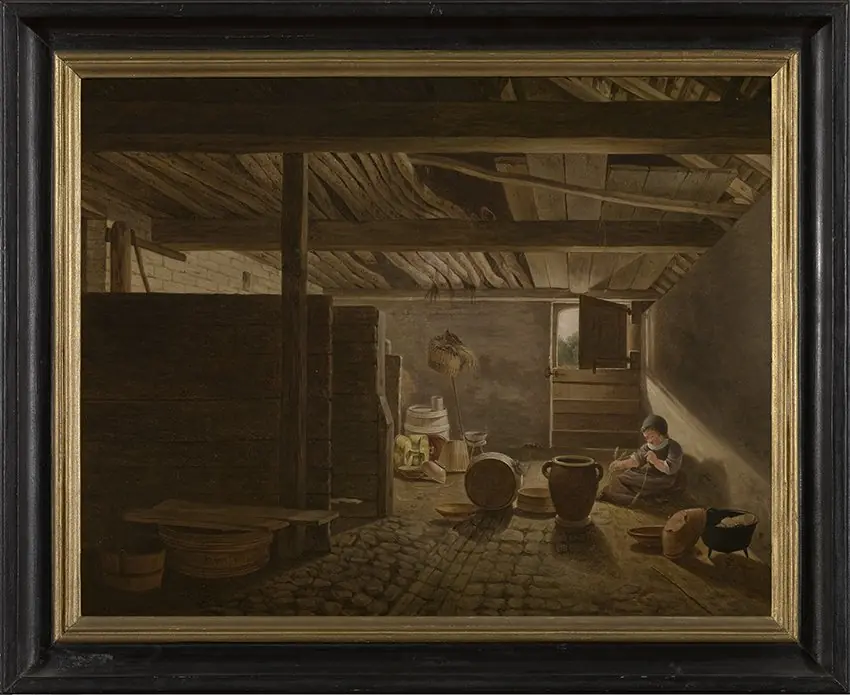 De stal
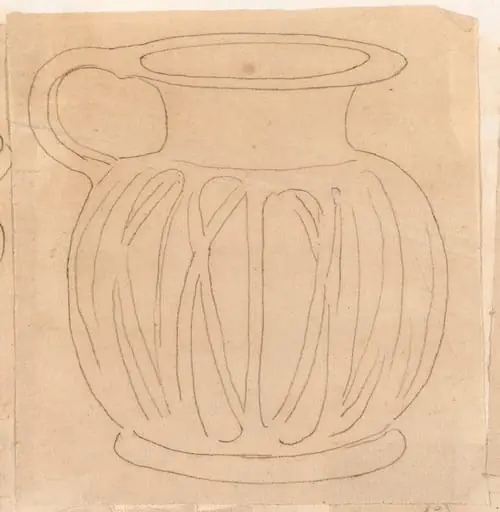 Round Pitcher
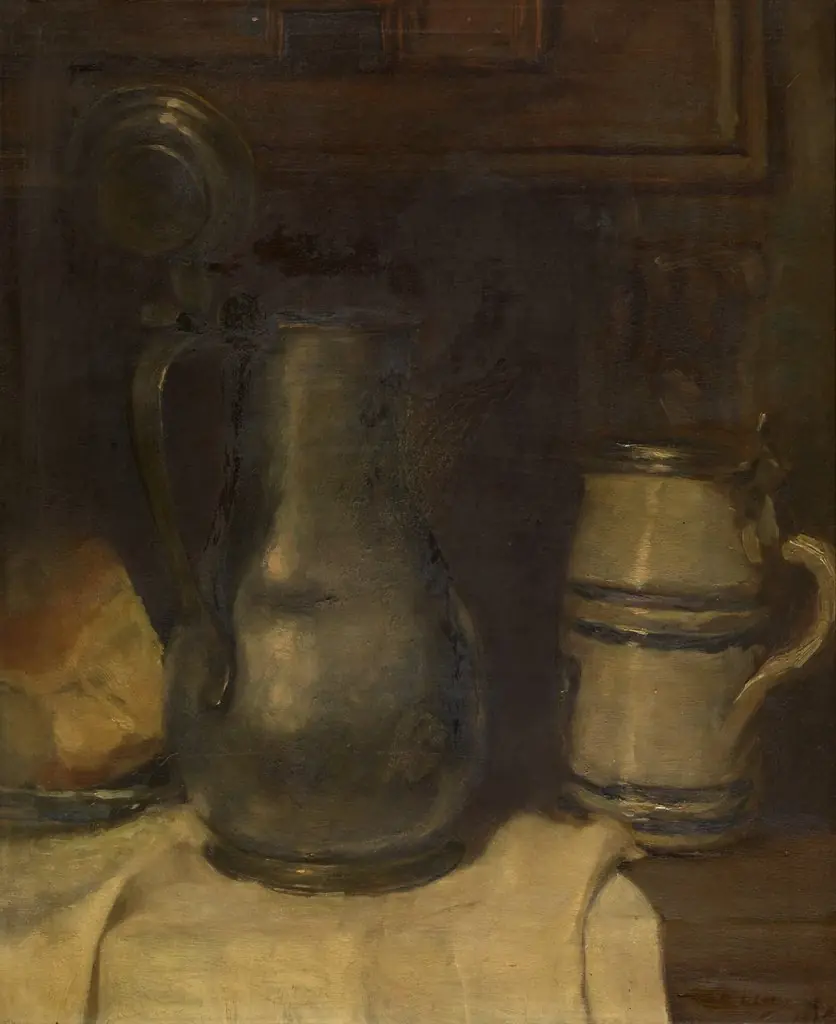 Still Life with Pewter Jar
 Odalisk
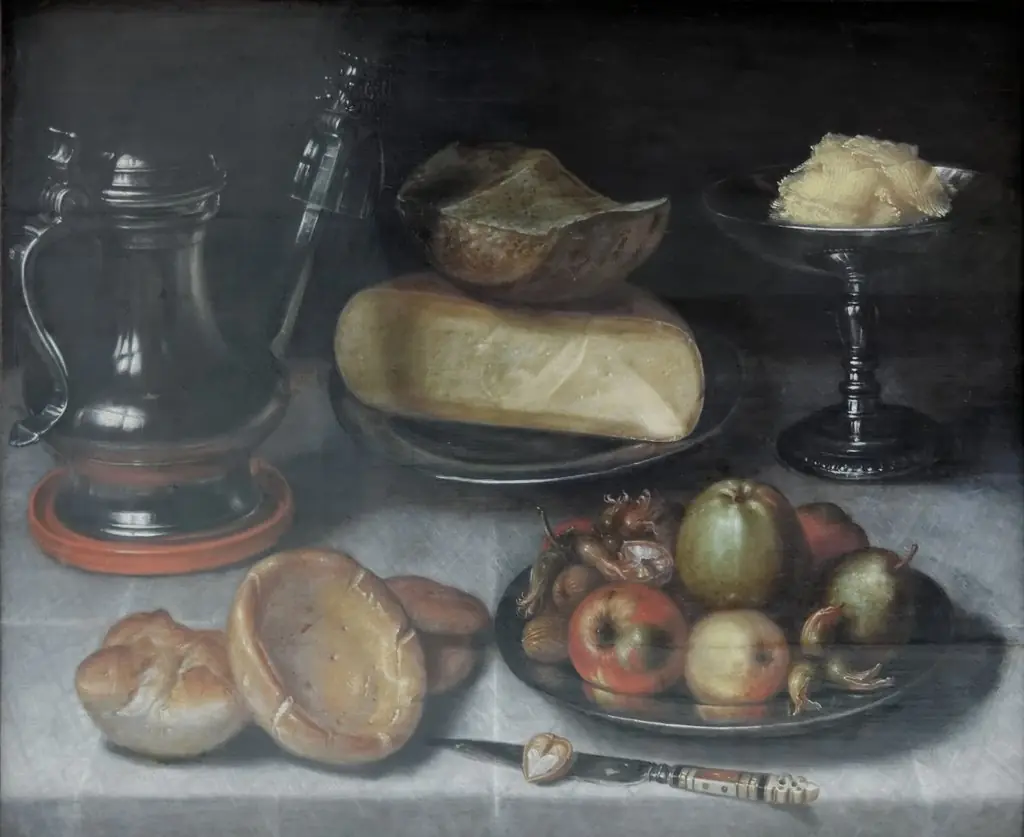 Still Life with Pewter Jug, Fruit and Cheese
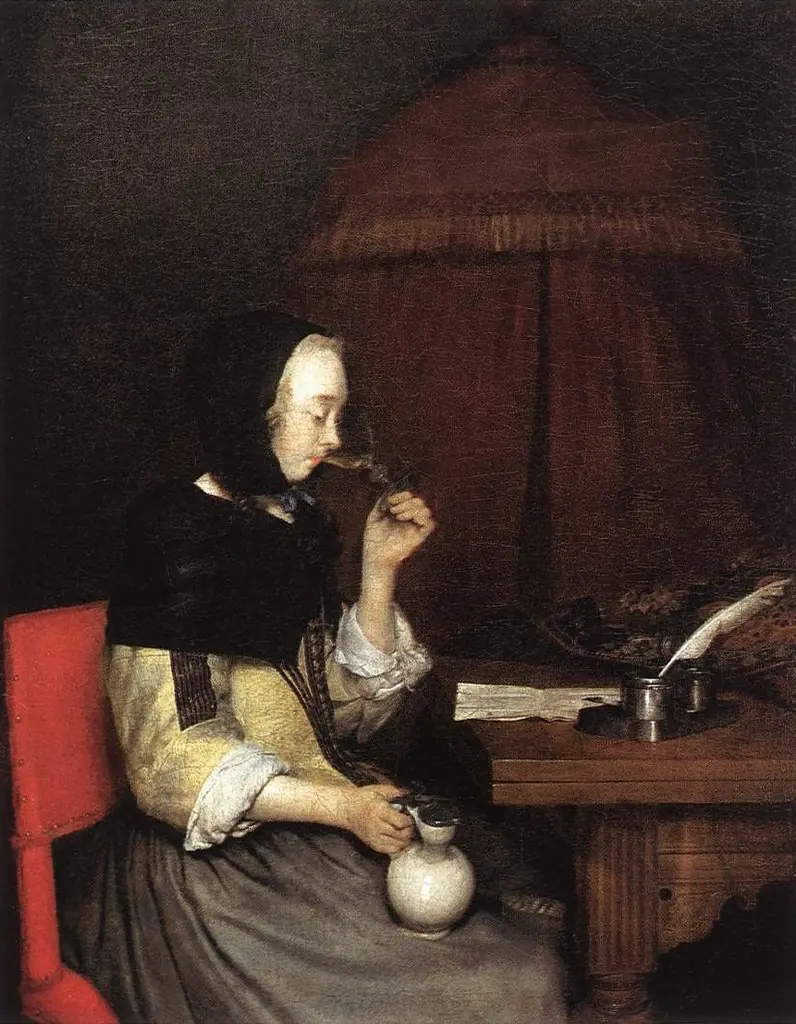 Woman Drinking Wine
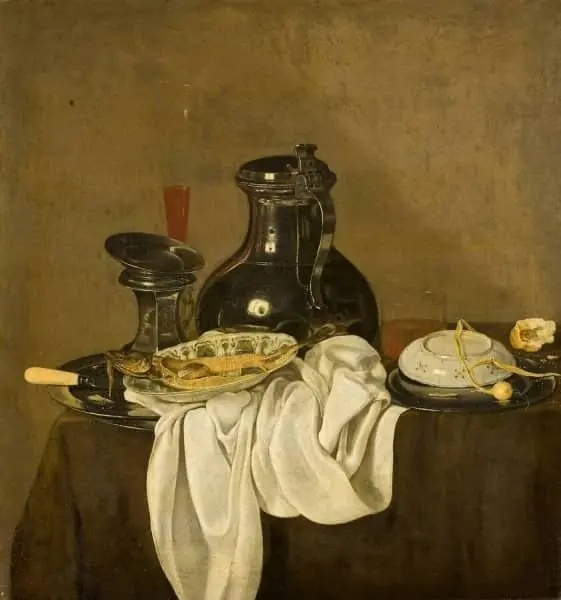 Still Life circa 1640
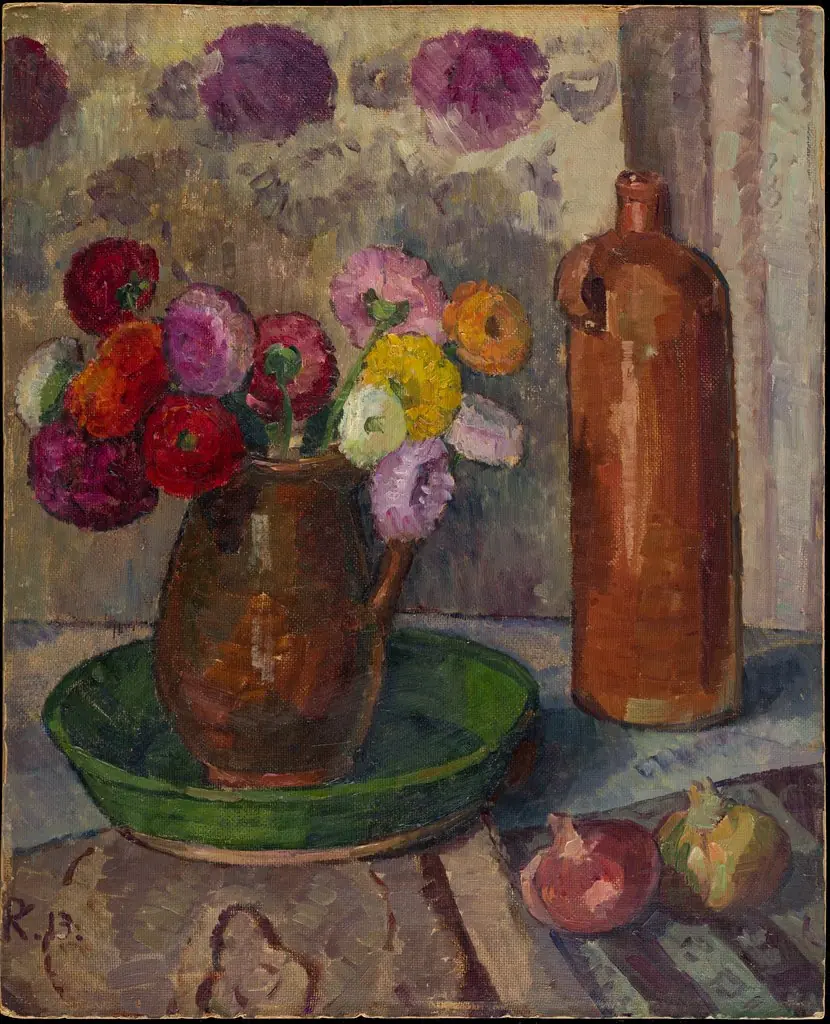 Still Life with Flowers, Onions and Stoneware Jug
![Study of a Pottery Jug [recto]](https://artifactworldgallery.com/img/john-everett-millais--study-of-a-pottery-jug-recto--0a3d6de45388ffd7-w320.webp) Study of a Pottery Jug [recto]
Study of a Pottery Jug [recto]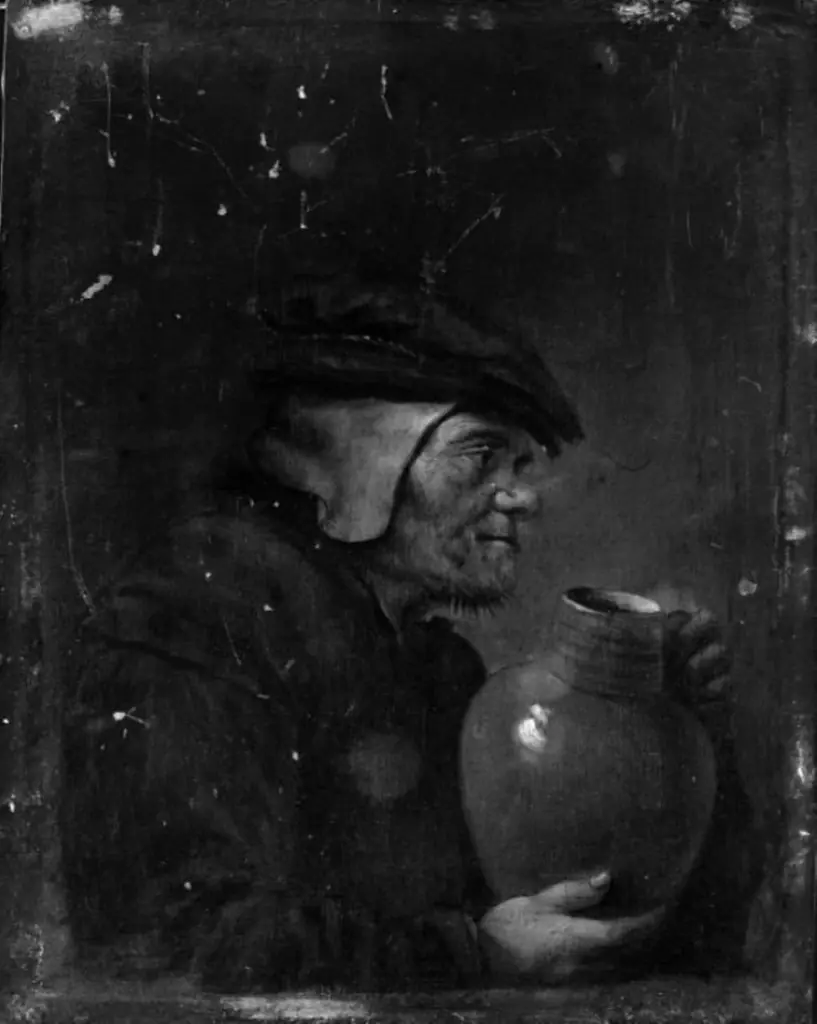 En gammel mand med en krukke
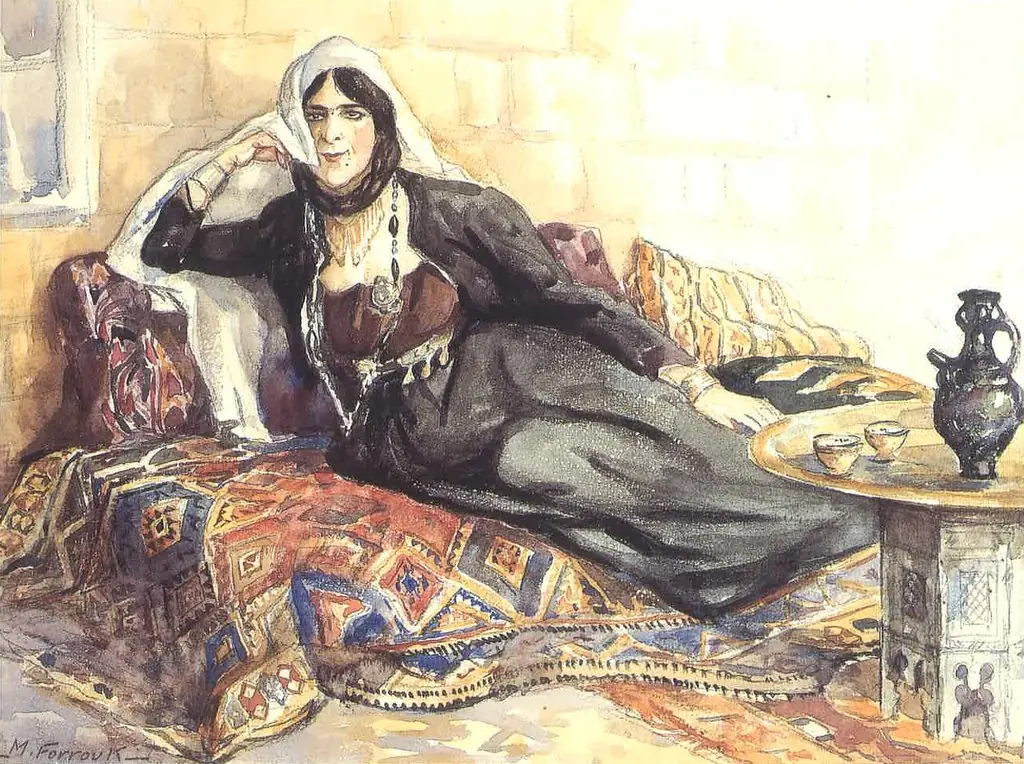 A Lady From the Mountain
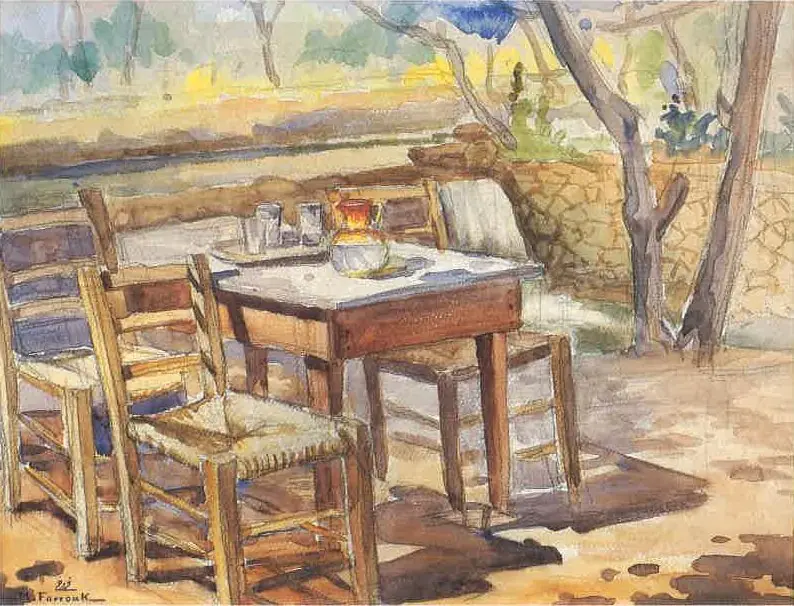 Café
Café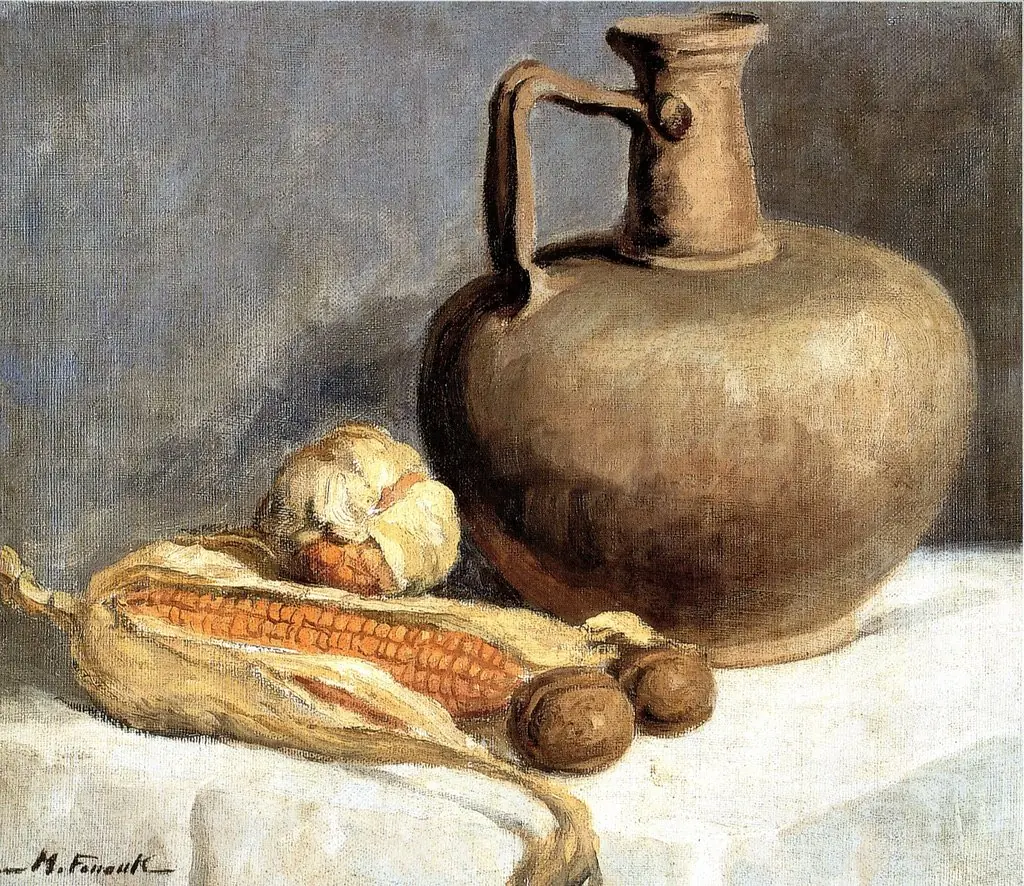 Still Life and a Cob
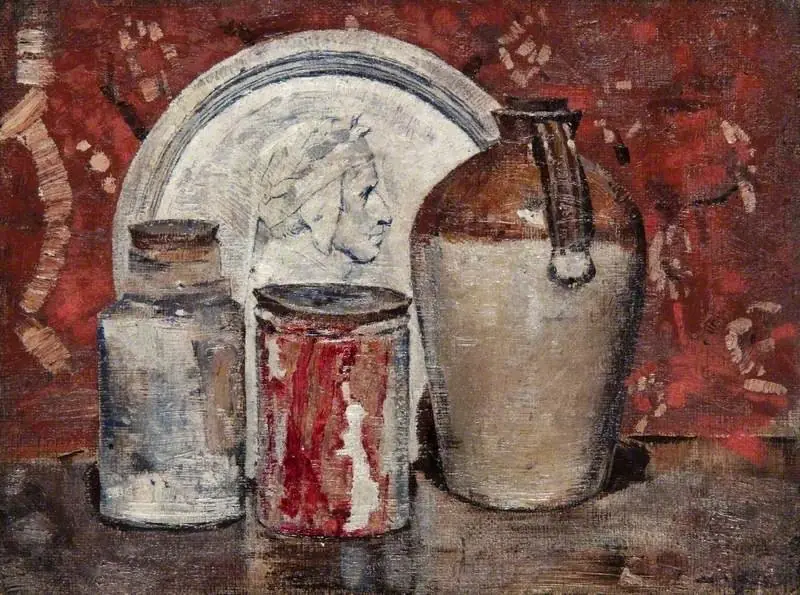 Still Life with the Head of Dante
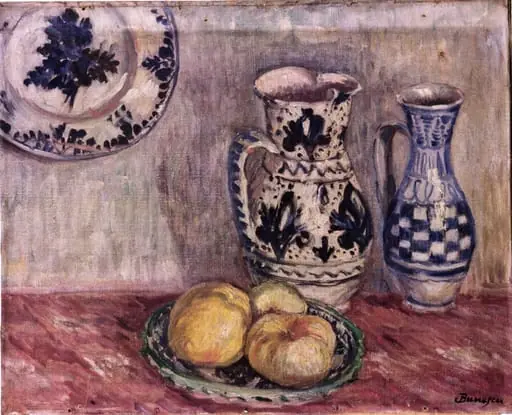 Natură statică cu mere
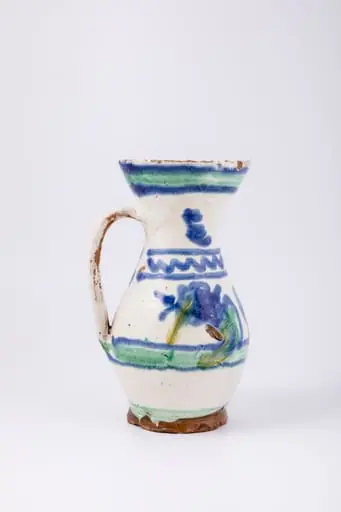 Cănceu piriform prevăzut cu o toartă, gât alungit și puternic evazat, toarta dispusă de la gât la diametrul maxim al piesei. Partea superioară și inferioară este decorată cu câte o bandă lată verde, mărginită de linii subțiri albastre. Decorul central este dispus în trei registre. Primul registru așezat pe gâtul vasului, redă un motiv fitomorf stilizat. Al doilea registru prezintă o bandă circulară realizată dintr-o linie vălurită, mărginită de două linii subțiri. Diametrul maxim al piesei este decorat cu un motiv floral, realizat din două rodii stilizate, în cromatică galben, verde și albastru.
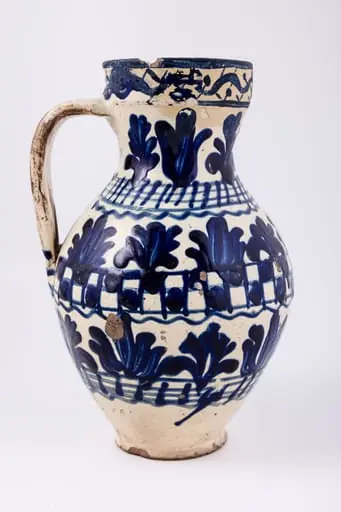 Cană piriformă prevăzută cu o toartă dreaptă și lată, gura rotundă. Suprafața decorativă a vasului este împărțită în șapte registre decorative: cel din partea superioară, pe buza vasului este dispus orizontal, iar celelalte șase, dispuse vertical. Primul registru, așezat pe marginea dreaptă a cănii redă o linie vălurită intercalată de puncte. Registrul al doilea, al patrulea și al șaselea prezintă motive fitomorfe și florale, brăduți intercalați de lalele înflorite stilizate. Registrul al treilea, dispus pe gâtul cănii și al șaptelea, dispus la bază, prezintă linii circulare orizontale intersectate de linii verticale. Registrul al patrulea prezintă tabla de șah. Toarta este pictată cu pensula. Cromatica: alb, albastru-cobalt.
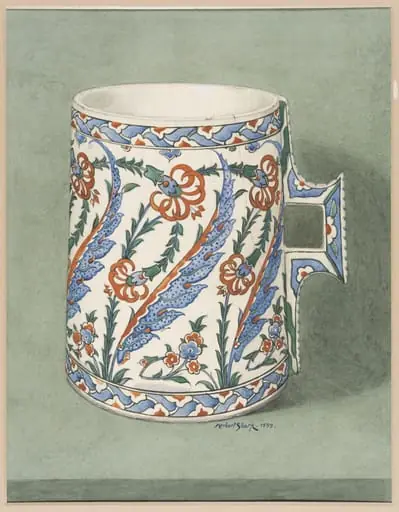 Untitled
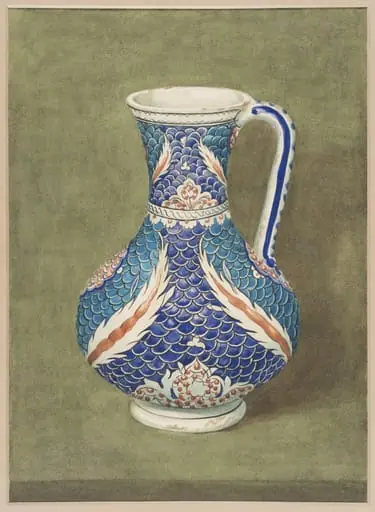 Untitled
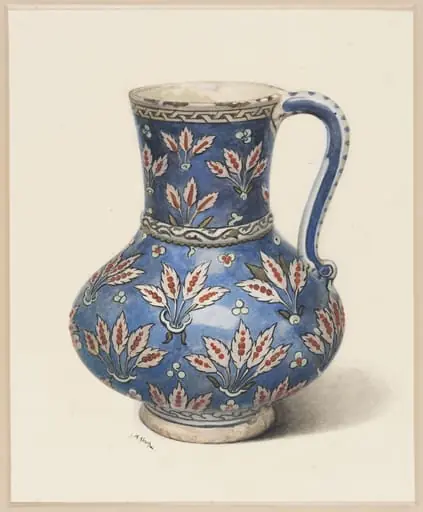 Untitled
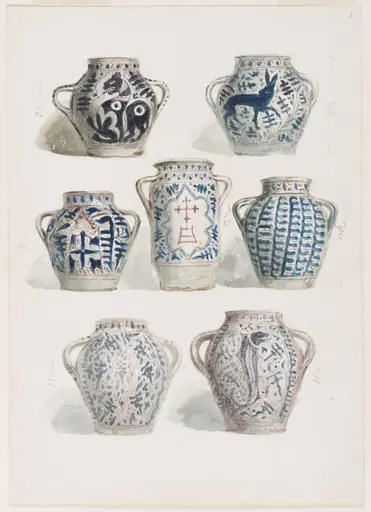 Sketches of Italian Maiolica.
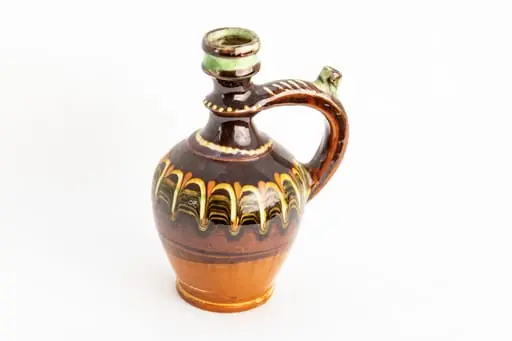 Ulcior prevăzut cu toartă cu țîtă, baza nesmălțuită; fond maro închis. Decorul amplasat în partea mediană, pe pîntec este realizat prin jirăvire, reprezintă semicercuri dispuse circular colorate în galben și cărămiziu. La baza gîtului este amplasat cu cerc de culoare albă. Toarta prinsă de pîntec și jumătatea gîtului este decorată cu linii oblice, paralele, de culoare albă; țîta vasului vopsită în verde.
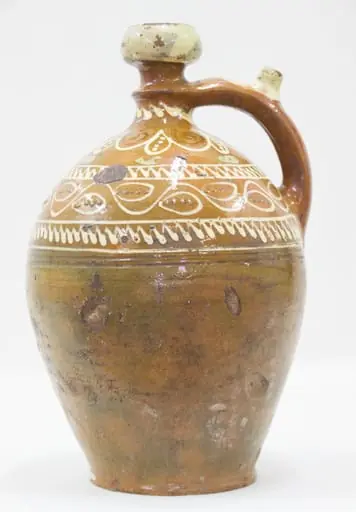 Ulcior de formă bitronconică cu gura îngustă și rotundă, cu o toartă și un orificiu pentru scurgerea lichidului, smălțuit și decorat pe jumătatea superioară cu motive vegetale (ghirlande) și geometrice (spirale; patru cercuri concentrice cu o linie șerpuită între ele).Cromatică: maro (fond), decor - galben, bej, alb, verde. Jumătatea inferioară a obiectului este nesmălțuită.
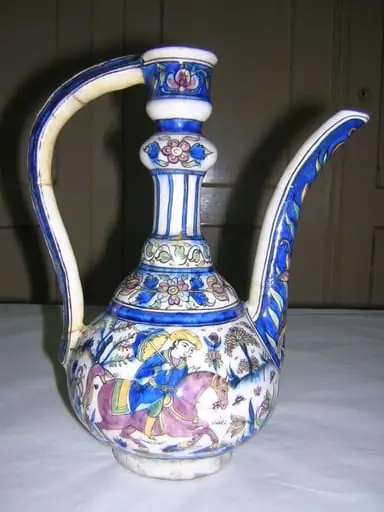 Ibric; Aftabe (persană)
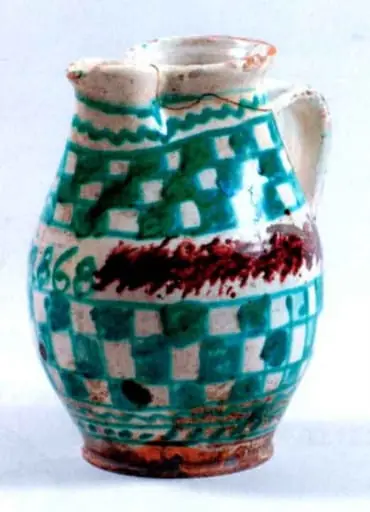 cană de vin
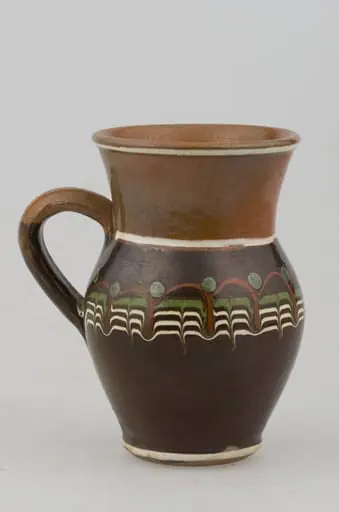 Cană ce are corpul bitronconic și baza îngustată. Prezintă toartăde formă semicirculară. Decorul este dominat de motive geometrice și este compus dintr-o succesiune de linii curbe și puncte. Cromatică: fond: brun; motive: cărămiziu; verde; alb; roșu.
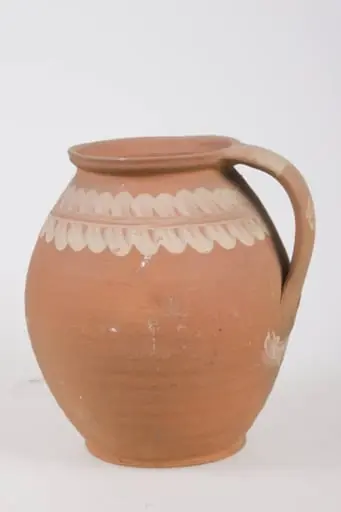 Oală ce are corpul bombat simetric cu diametrul maxim la mijlocul vasului, gâtul scurt și gura dreaptă. Buza este răsfrântă în exterior și toartă între buză și mijlocul vasului. Decor pe umăr cu linie ondulată realizată cu degetul și două linii paralele realizate cu fichieșul; dungi paralele pe toartă.
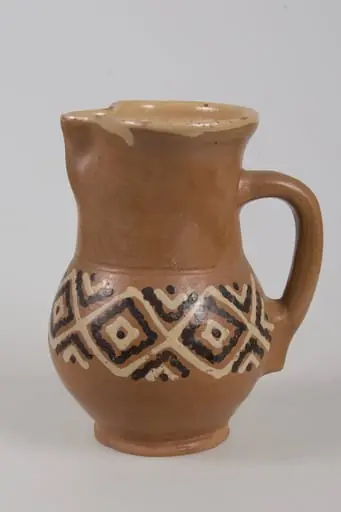 Vas din lut de formă sferoidală cu inel la bază, gât înalt și drept, cu toartă prinsă între gât și mijlocul vasului. Capătul inferior al toartei are un pinten. Angobat in interior cu smalț la exterior și interior. Decor cu motive geometrice: brâu de romburi pictat cu corn in hume naturale; două dungi imprimate cu piaptănul. Prezintă cioc de scurgere. Cromatică: fond: alb-crem în interior; cărămiziu în exterior; motive: alb; negre.
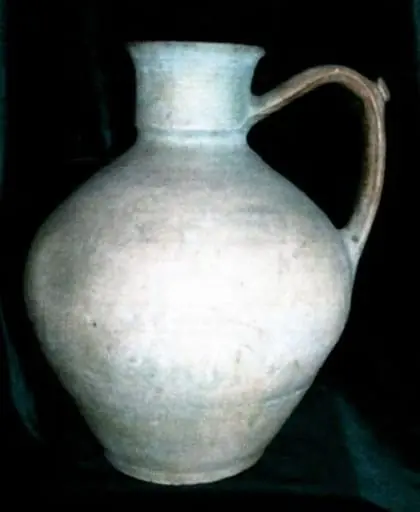 cantă
cantă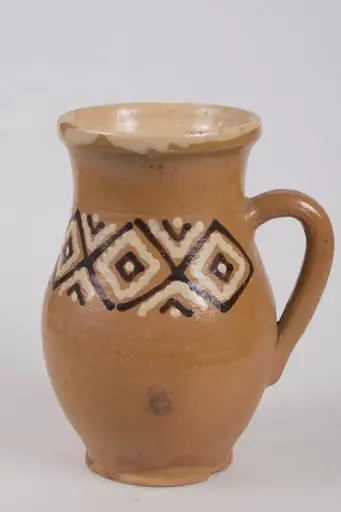 Vas mic de formă cilindrică cu gât svelt, gura dreaptă și buza ușor răsfrântă și inel la bază. Toarta este plasată de la mijlocul gâtului la mijlocul vasului. Interior angobat apoi smălțuit. Decor compus dintr-un brâu de romburi pictat cu cornul, din hume naturale; două dungi în partea superioară realizate prin apăsare cu pieptenul. Cromatică; fond: cărămiziu; motive; maron; crem
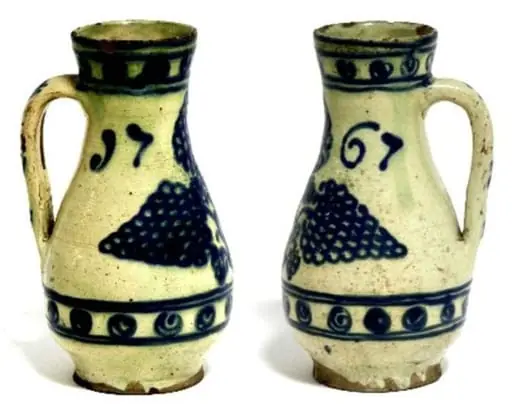 canceu
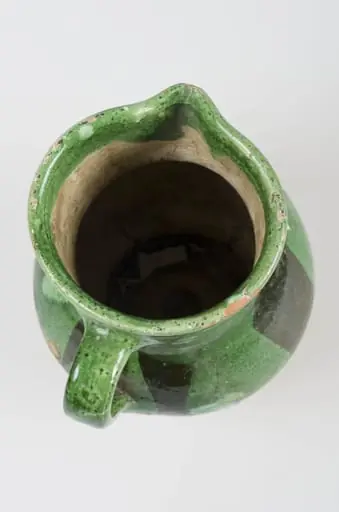 Cană modelată la roată, arsă și smălțuită. Ornamentată cu puncte, picățele, interior nesmălțuit. Vasul prezintă un cioc la buză și o toartă ce pleacă de sub gât și se uneste cu corpul aproape de zona diametrului maxim. Cromatică: verde; maro; roșu-cărămiziu.
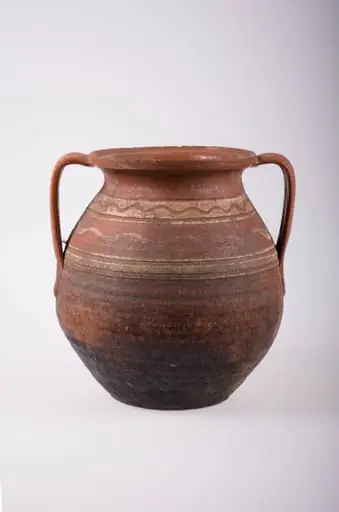 Oala bombată cu două toarte late, aplatizate, dispuse de o parte și de alta a gurii vasului; buză evazată; decorată în exterior cu motive geometrice: linii, linii vălurite pe un registru de cromatică albă. Cromatică: fond: maro; motive: alb-gălbui. Smălțuită pe gura vasului, interior și pe mânerul vasului.
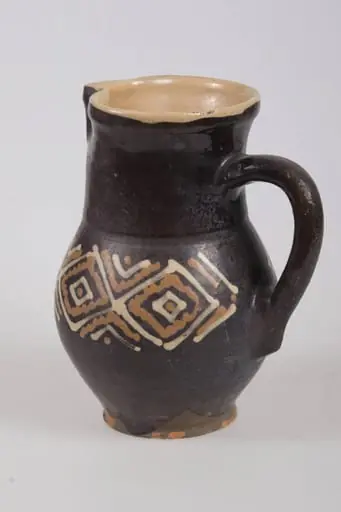 Cană de formă sferoidală cu inel la bază, gât înalt și drept cu gura bilobată. Toarta este fixată de la gât la mijlocul vasului. La capătul inferior al toartei avem un pinten. Gura este dreaptă cu buza ușor răsfrântă. Angobat, smălțuit în interior și în exterior. Decor format din motive geometrice: brâu de romburi colorate realizat cu cornul. Cromatică: fond: maro închis; motive: alb; galben; negru.
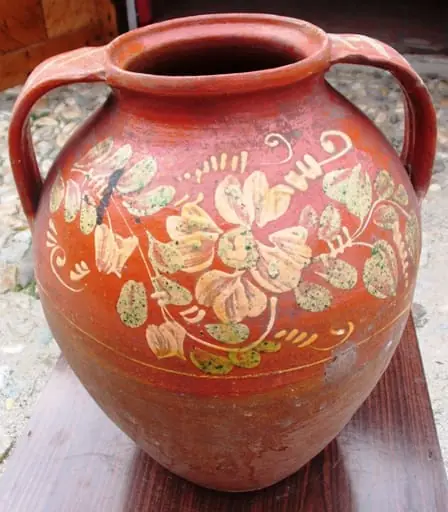 Borcan untură
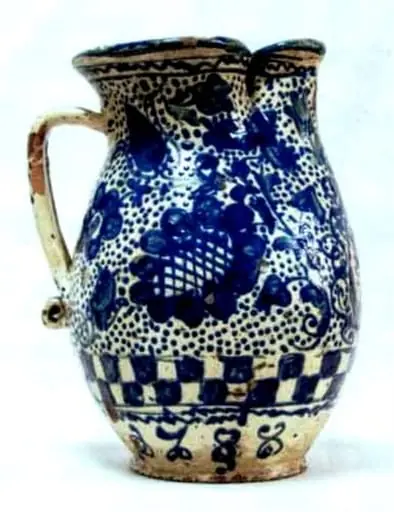 cană de vin
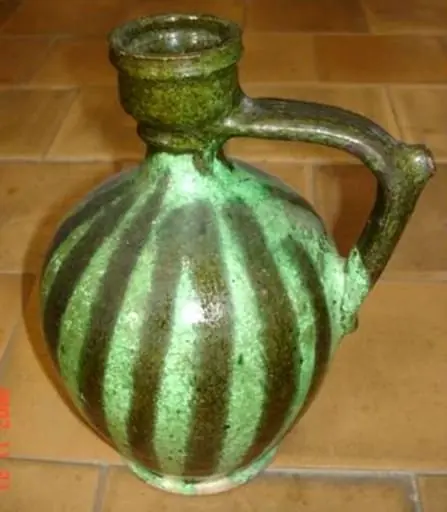 ulcior mic - pepene
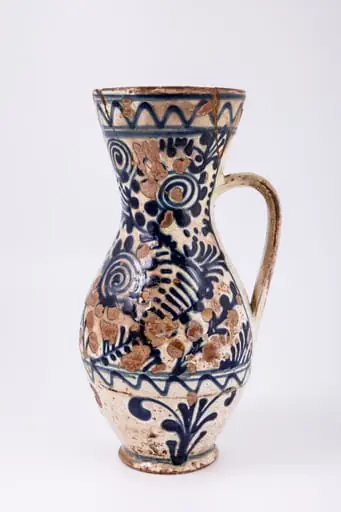 Cană cu corpul bombat, gât scurt, toarta dispusă de la gât la diametrul maxim al vasului. Suprafața decorativă a vasului este încadrată între linii subțiri și vălurite dispuse în partea superioară și inferioare. Decorul central reprezintă calea cu sori alcătuită din lujeri, linii paralel dispuse sub formă de raze, cercuri pline și floarea-soarelui stilizată. Cromatica: alb și albastru cobalt.
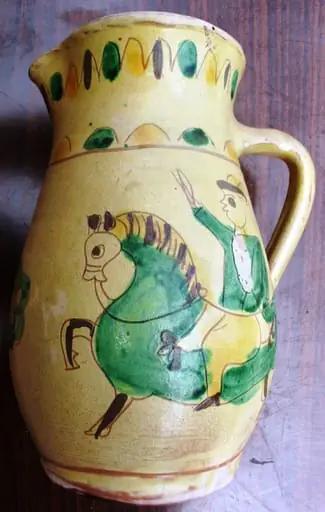 Cană kuty
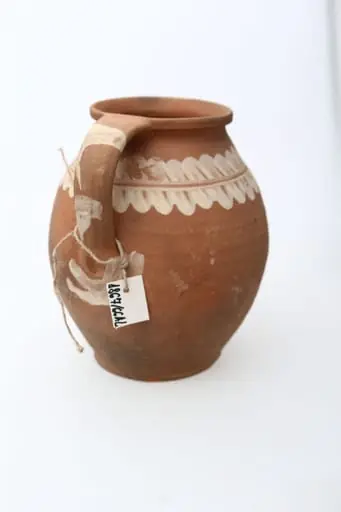 Recipient din lut nesmălțuit, de formă bitronconică, având gât îngust, gura ușor răsfrântă și buza dreaptă. Prevăzut cu o toartă lată și arcuită fixată la buză și la mijlocul vasului. Decorat cu degetul pe umeri cu motive zoomorfe (dintele de lup), și pe toartă cu motive geometrice neregulate. Decorat cu pastă de angobă, albă. Se folosește la fiertul mâncării pe vatră liberă în familii mai puțin numeroase. Cromatică:fundal cărămiziu,motive: alb.
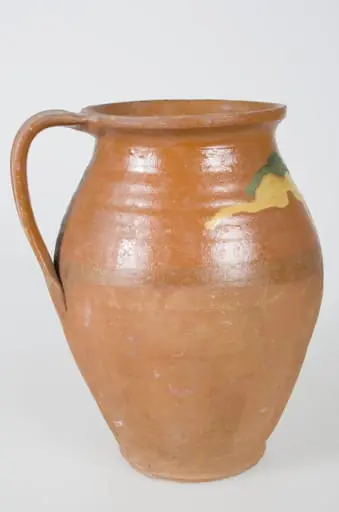 Vas bombat în partea mediană și cu buza evazată, smălțuit în jumătatea superioară. Prezintă o toartă ce leagă buza vasului de partea mediană. Decorații frontale realizate prin stropire, sub forma a două linii suprapuse și neregulate dispuse orizontal. Cromatică: fond cărămiziu; motive: verde; galben.
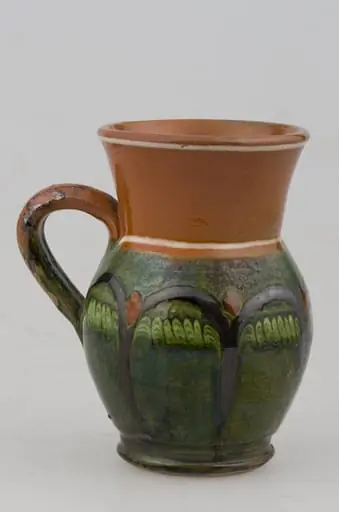 Vas bitonconic ce are corpul ușor bombat, buza lată și evazată. Prezintă o toartă decorată cu linii curbe și puncte; aceleași motive se găsesc și pe corpul ulcelei. Smălțuită la interior și la exterior. Cromatică: verde; negru; brun; alb.
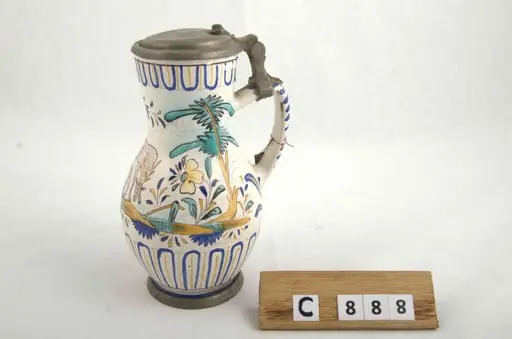 Cănceu cu capac de cositor
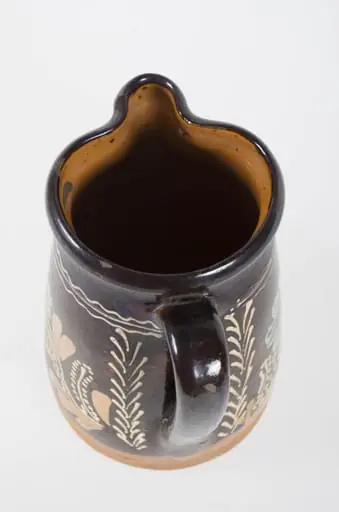 Vas de formă tronconică cu buza evazată și prevăzută cu cioc. Prezintă o toartă care pleacă de sub gât și se unește la partea inferioară. Vasul este smălțuită în interior și exterior (mai puțin ultimii 2 cm). Este decorat cu motive geometrice: două linii în val care încadrează o linie dreaptă dispuse pe corpul vasului la nivelul de la care pleacă toarta. Corpul vasului este decorat cu motive florale și vegetale: două flori care încadrează un pom al vieții stilizat. Toarta este mărginită de o parte și de alta de câte o crenguță de brad verticale. Cromatică: fond maro; motive: verde; alb; maro; crem.
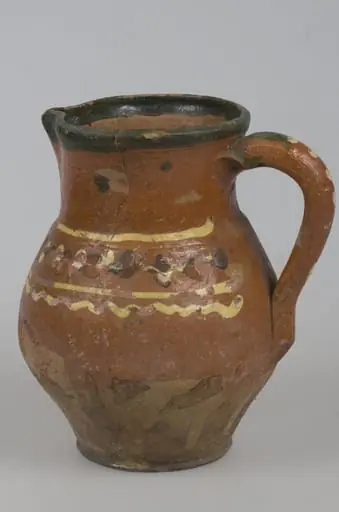 Vas de lut de mici dimensiuni, bombat, cu gât lung și puțin evazat, cu gură largă și cioc de scurgere. Toarta pornește de sub gură și coboară până în zona diametrului maxim al vasului. Este smălțuit în interior și exterior. Decorul dispus pe umărul vasului este format din: motive florale: o cunună din frunze încadrată de motive geometrice: o linie circulară în partea superioară și o linie circulară și una în val în partea inferioară. Buza vasului este vopsită în interior și exterior. Toarta este decorată cu puncte de culoare albă. Cromatică: fond: cărămiziu; motive: alb; verde; negru.
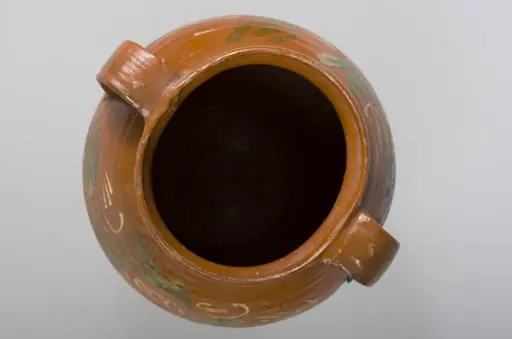 Vas de formă bitronconică, cu gât scurt cu buză rotunjită și evazată. Oala este smălțuită interior și pe 2/3 din exterior. Prezintă două toarte late ce unesc buza vasului de zona diametrului maxim. Decorații în registru floral-vegetal, dispuse concentric, în partea superioară a vasului, compuse din linii ondulate și palmate. Cromatică: fond: cărămiziu; motive: alb, verde.
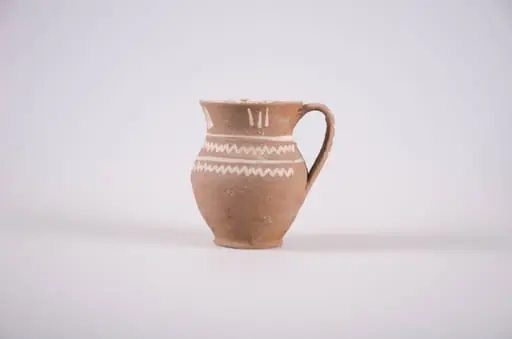 Recipient bitronconic cu gura largă. Are o toartă laterală care pleacă din buză până la diametrul maxim al vasului. Decor cu motive geometrice pe partea superioară a vasului și pe toartă: linii paralele, doua cercuri, linii ondulate. Cromatică: fond: cărămiziu; motive din angobă albă. Vasul este nesmălțuit.
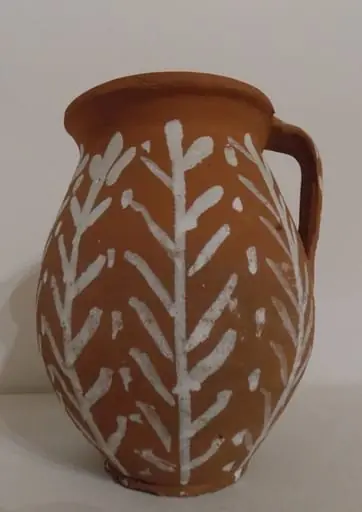 Moșoaică - ulcică de moși
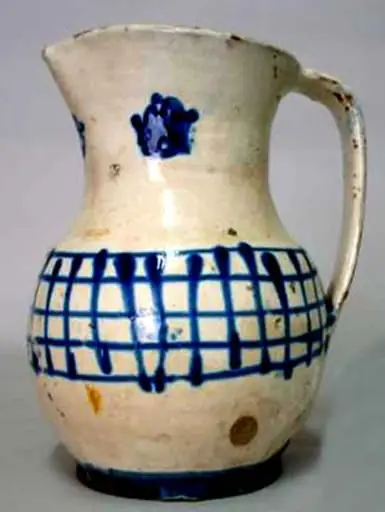 cană de lapte
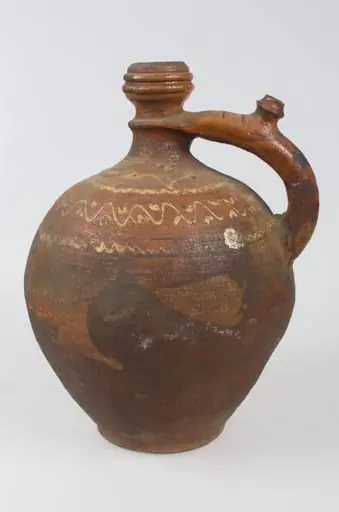 Vas de formă bitronconică prevăzut cun un gât ușor alungit și cu buză pe care se identifică două brâuri profilate. Pe toarta de formă semicirculară se identifică un orificiu pentru consumarea lichidului (”țâță”). Toarta pleacă din zona mediană a orificiului de umplere și se unește cu corpul vasului pe zona diametrului maxim. Vasul prezintă smalț la exterior cu urme de degradare. Decorul se identifică la baza gâtului și constă din motive geometrice: linii curbe, brâuri și motive vegetale. Cromatică: fond: cărămiziu: motive: crem; maron închis
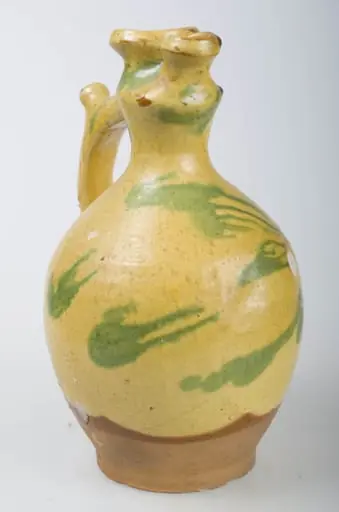 Recipient sferic cu gât îngust, gura bilobată, toartă cu țâță, piatră sunătoare și ciur. Ornamentat prin stropire cu smalț. Cromatică: fond: galben; decor: dungi verzi stropite.
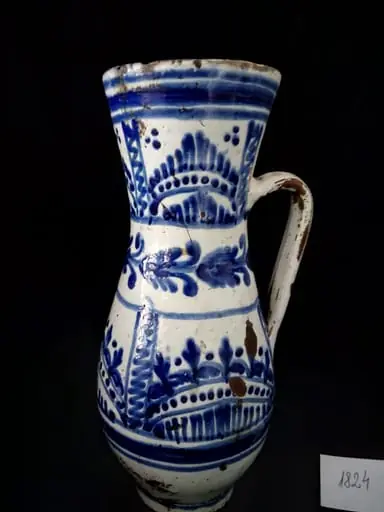 Canceauă
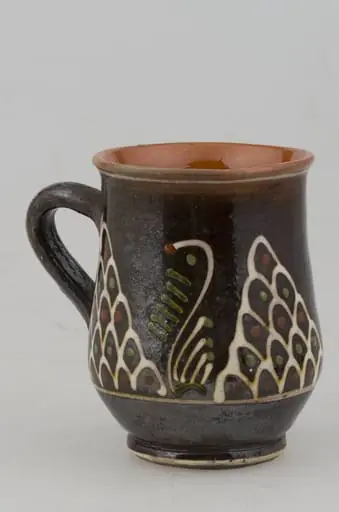 Cană cu corpul ușor bombat și buza evazată. Prezintă o toartă ce pleacă de la aproximativ doi centimetri sub buză până în jumătatea inferioară, pe maximul diametrului corpului. Decorat format din linii curbe, puncte și motive vegetale stilizate. Smălțuită la interior și la exterior. Cromatică: fond: brun; motive: verde; roșu; alb.
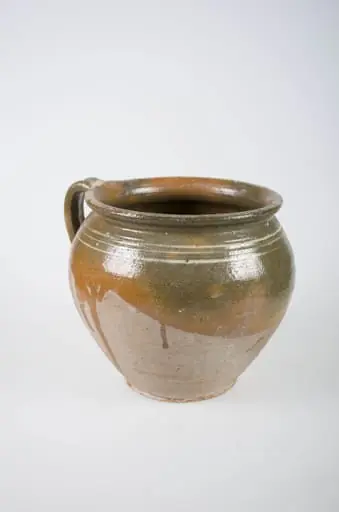 Vas cu corpul foarte bombat în partea superioară, cu un gât scurt și profilat, cu gura foarte lată, buza evazată și rotunjită. Din buză pornește o toartă care se unește cu corpul sub diametrul maxim. Vasul este smălțuit în interior și exterior (doar partea superioară). Este decorat cu motive geometrice: trei linii concentrice pe umăr și o linie scurtă orizontală pe toartă. Cromatica: fond: cărămiziu; motive: alb,.
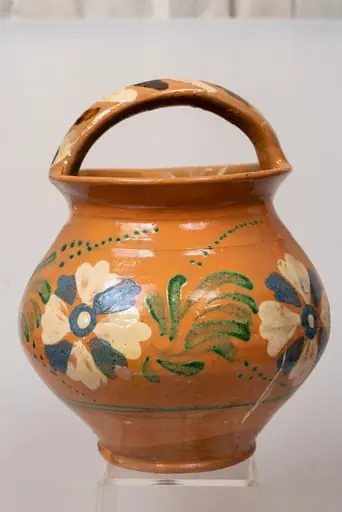 Piesă cu corp sferic, bombat, modelată din lut la roata olarului, gât îngust, drept și buză evazată; oala este prevăzută la gură cu o toartă orizontală pe post de mâner de prindere. Vasul este angobat pe suprafața exterioară cu un strat de angobă de culoare siena naturală, peste care este realizat decorul, prin pictare cu cornul și cu pensula. Toarta este decorată cu un șir de linii groase pictate în formă de V, de culoare albă și maro. Pe corpul vasului se desfășoară decorul principal, format din motive florale stilizate (patru flori cu opt petale de trifoi, de culoare albă și albastră) alternând cu motivul fitomorf caracteristic centrului: frunze alungite, de culoare verde. Partea inferioară a corpului este decorată cu trei linii subțiri concentrice, de culoare verde, pictate cu cornul. Cromatica: alb, siena naturală, maro, verde, albastru. Piesa este acoperită pe ambele fețe cu un strat de smalț transparent.
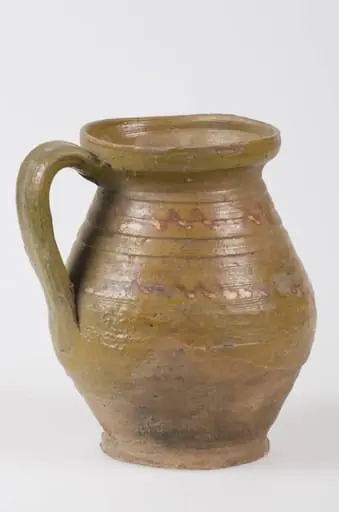 Vas bitronconic cu gât scurt și foarte profilat, cu gura înaltă și dreaptă. Prezintă o toartă care pleacă de sub buză și se unește cu corpul sub zona diametrului maxim. Este smălțuit în interior și la exterior (parțial nesmălțuit în partea de jos). În partea superioară prezintă un decor geometric realizat din cinci linii incizate și două linii în val pictate. Toarta este decorată cu puncte. Cromatică: fond: cărămiziu și pe alocuri verziu; motive: alb; maroniu. Prezintă uzură funcțională.
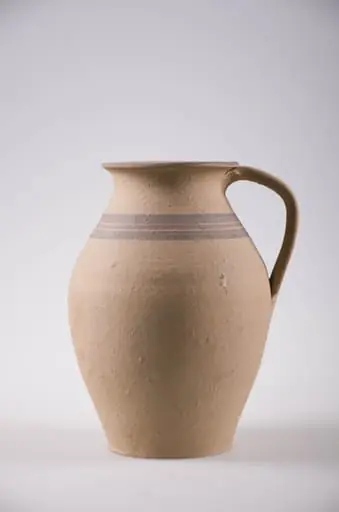 Oală borcan cu gât foarte pronunțat și buză evazată; de sub gât pleacă o toartă, unindu-se cu corpul în zona diametrului maxim; este decorată pe umeri cu cinci linii - două negre încadrează trei linii maro. Cromatică: fond: cărămiziu; motive: negru, maro închis.
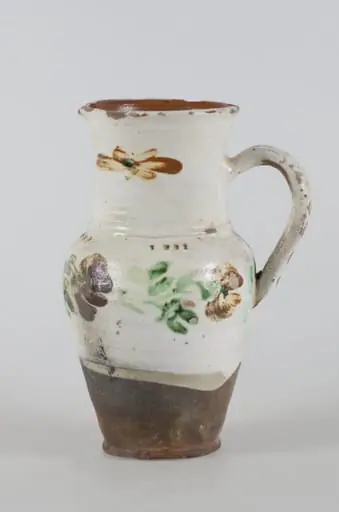 Recipient din lut de formă bitronconică, cu un gât cilindric și buza evazată. Smălțuit două treimi din partea superioară. Buza are o țuguiere pentru scurgere. Prezintă motive geometrice, vegetale, florale, pictate cu pensula. Prevăzut cu mâner în partea superioară, pentru manipulare. În interior, vasul este cărămiziu, la exterior fond: crem; motive: maro; verde; galben.
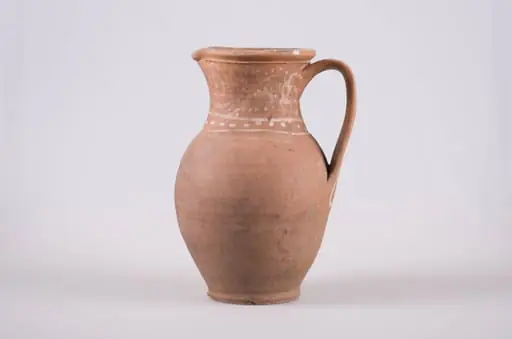 Recipient sferoidal cu gura largă și cioc. Prezintă toartă laterală. Decorul este floral și geometric pe toată suprafața gâtului format din linii, puncte, spirale. Decorat și pe toartă cu o linie de jur împrejur, iar pe buza vasului format din puncte. Cromatică: fond: cărămiziu; motive: alb.
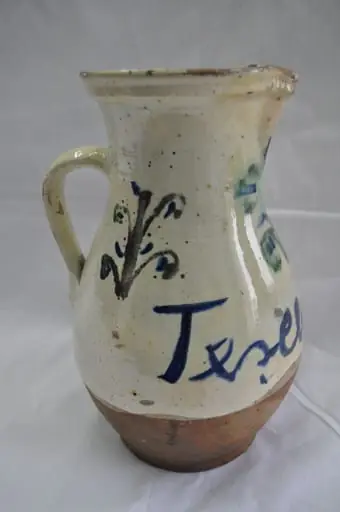 cană
cană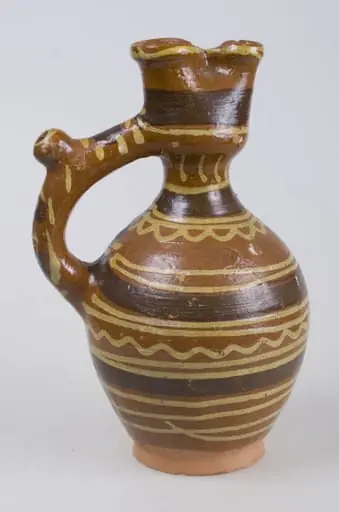 Recipientul este confecționat din lut, cu pântecul extins în zona mediană, cu gât îngust și gură bilobată. Acesta prezintă ciur la gură și în interior piatră sunătoare. Obiectul este prevăzut cu o toartă tubulară cu țâță pentru scurgerea lichidului, lipită de gât și de mijlocul diametrului maxim al corpului. Ulciorul este smălțuit până aproape de fundul vasului. Decorul este format din motive geometrice, pictate cu cornul, pe toată suprafața corpului, inclusiv pe mâner: linii circulare, linii vălurite, linii oblice dispuse vertical, semicercuri pe umeri. Cromatică: fond: cărămiziu; decor: galben; maro închis.
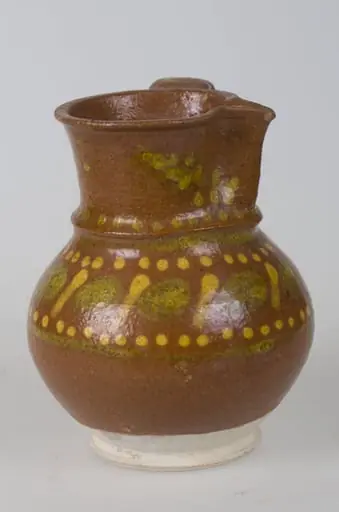 Vas cu corpul de formă cilindrică, cu fundul plat, corpul pântecos, gâtul înalt și gura largă, este prevăzută cu un cioc de scurgere așezat la nouăzeci grade față de toartă. Decorul pictat a fost realizat cu pensula în zona pântecului și a gâtului, format din motive geometrice. Pe pântecul vasului a fost pictat un registru încadrat între două linii de culoare verzuie, între care se află alte două linii realizate din puncte de culoare galbenă. În interiorul liniilor menționate anterior se află registre circulare format din pete de culoare verzuie, separate de linii galbene orizontale înclinate. Pe marginea vasului și pe toartă au fost pictate trei flori de culoare verde, de tipul „spicului de grâu”. Cromatică: alb (fund), maro-roșcat restul suprafeței; motive: galben; verde.
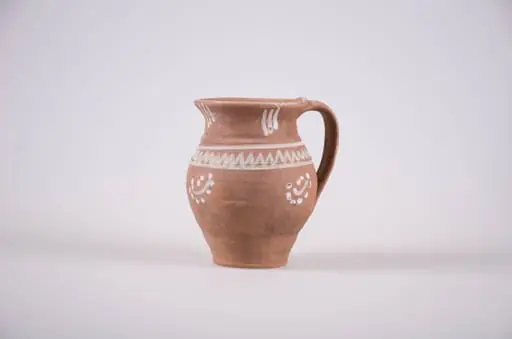 Recipient bitronconic cu gura largă. Prezintă toartă laterală care pleacă din buză până la diametrul maxim al vasului. Decor geometrizant pe partea superioară a vasului și pe toartă; linii paralele, cercuri, linie ondulată, puncte. Cromatică: fond: cărămiziu; motive trasate cu angobă albă. Vasul este nesmălțuit.
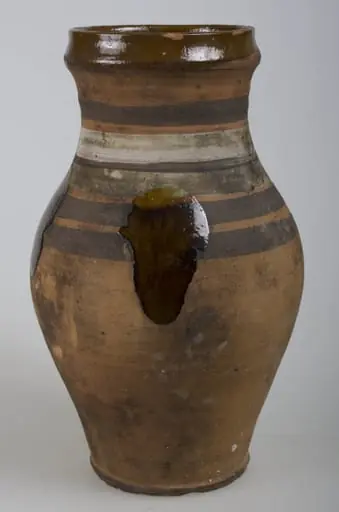 Oala are formă bitronconică, cu gâtul înalt și buza ușor invazată. Aceasta a fost modelată la roată, arsă, parțial smălțuită (prezintă pete pe buza acesteia). Decorul este unul liniar realizat prin alternanța negru-maro-alb, doar în partea superioară. Toarta este nesmălțuită. Cromatică: fond: cărămiziu; decor: maro; negru; alb.
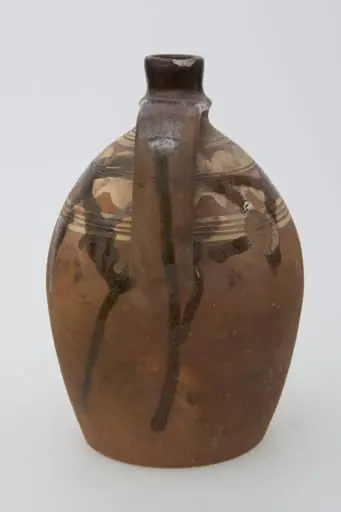 Ulciorul este realizat din ceramică. Pereții vasului sunt bombați și îngustați spre partea superioară unde se termină printr-un gât cu buza răsfrântă în exterior. Din partea superioară a gâtului aproape de buză pornește toarta vasului arcuită și prevăzută cu o "țâță". La baza gâtului și la diametrul maxim al ulciorului linii concentrice din angobă. Vasul este nears. Cromatică: maro deschis, maro închis, alb.
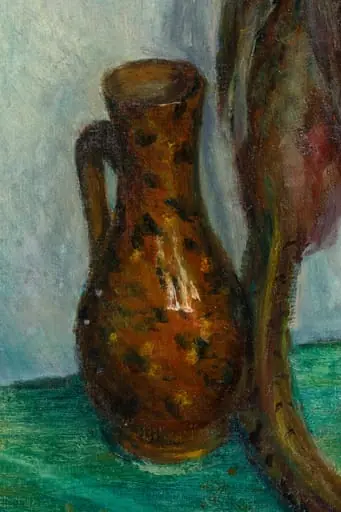 Fazan
Fazan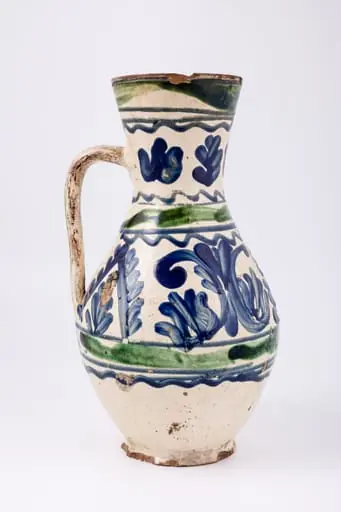 Cănceu piriform prevăzut cu o toartă, gât scurt și ușor evazat, corpul pântecos, toarta de la gât la diametrul maxim al vasului. Decorul este împărțit în două registre verticale separate printr-o bandă lată verde, mărginită de linii subțiri vălurite. Registrul superior este decorat cu motive florale și fitomorfe, câte o lalea înflorită intercalată de brăduți stilizați. Registrul inferior este decorat cu motive florale reprezentând stilizări ale pomului vieții alcătuit din lalele și triunghiuri decorate cu motivul bradului stilizat.
Frequently asked questions
What is Jug?
Jug is a subject in art. A jug is a type of container commonly used to hold and serve liquids, but not normally to drink from directly.
How many Jug works does Artifact World Gallery have?
Artifact World Gallery holds 110 public-domain Jug works, all free to view and download.
Who are the key Jug artists?
Key Jug artists in the collection include Jacques-Louis David, Francis William Edmonds and Camille Pissarro.
Where can I see Jug works?
Jug works in the collection are held by ASTRA National Museum Complex, Groeningemuseum and National Gallery of Art.