Artwork
The Triumph of David
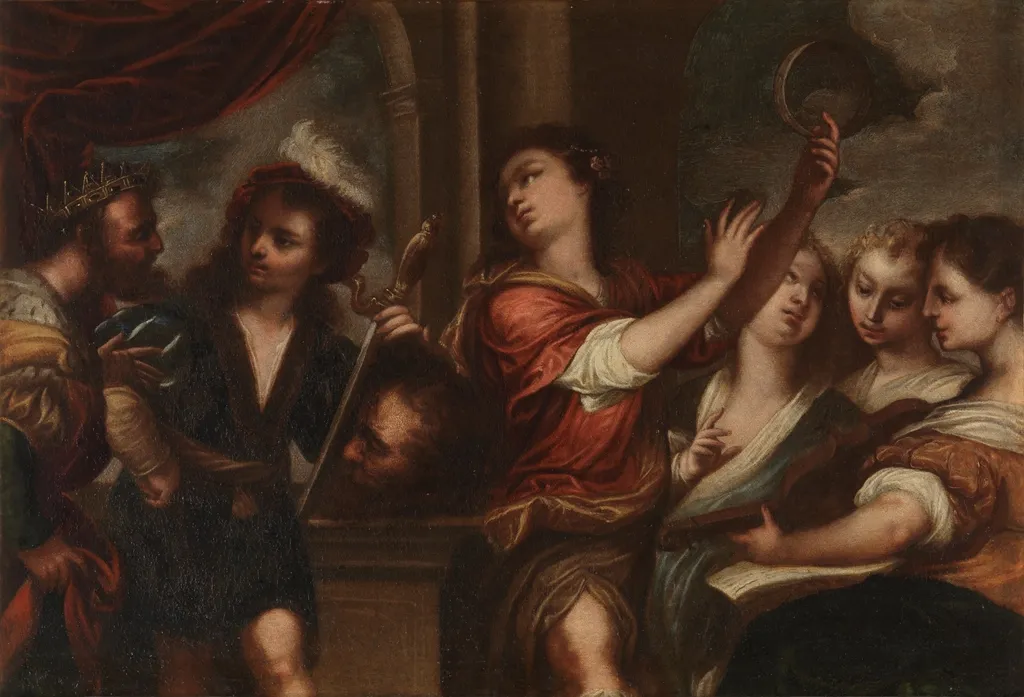
The Triumph of David is an oil painting by the Early Baroque Italian artist Pedro Atanasio Bocanegra. It dates from 1601 and is held in the collection of the Museo del Prado.
About this work
Subject & Meaning
The composition underscores divine favor and the triumph of righteousness over brute force, a common theme in Counter-Reformation religious art.
The painting depicts the biblical episode of David’s victory over Goliath, aligning with the Old Testament narrative in 1 Samuel 17.
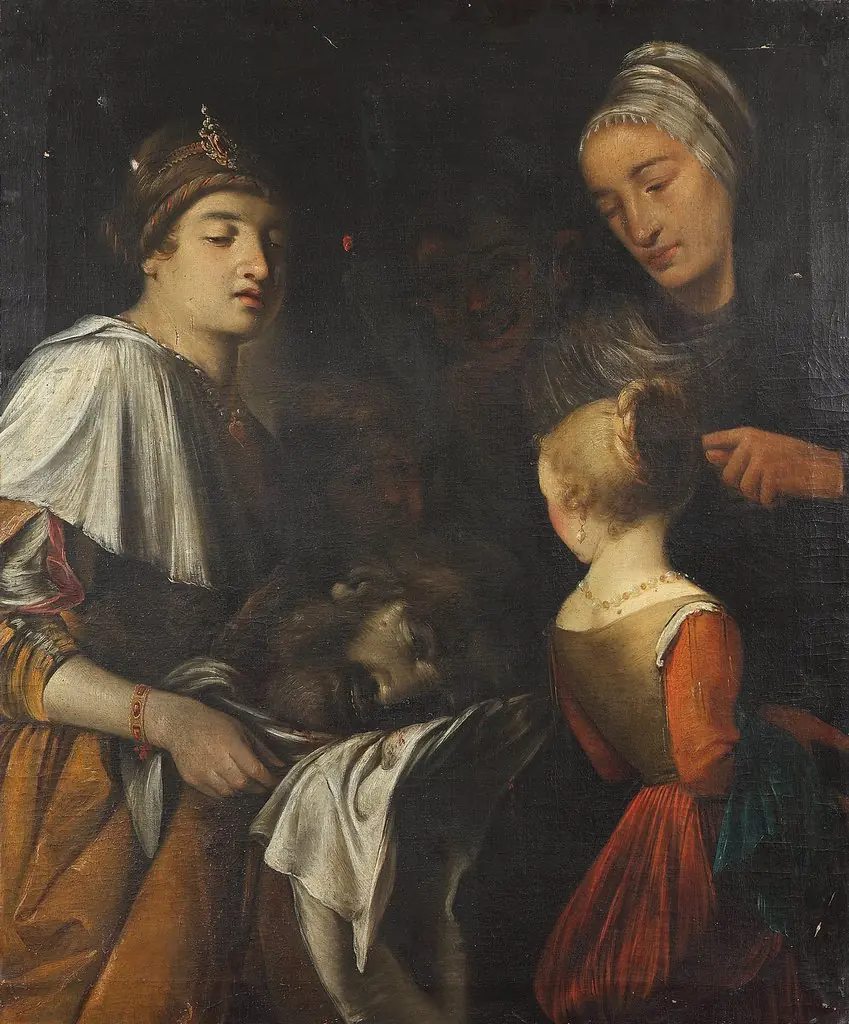
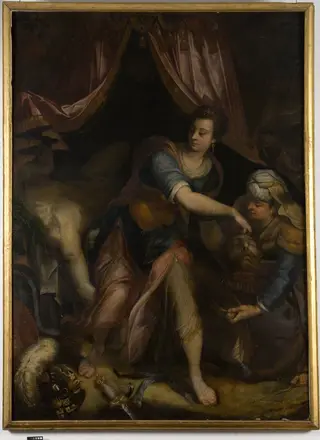
Bocanegra emphasizes David’s triumph by showing him as a youthful shepherd crowned with laurels, holding the giant’s severed head. The instruments, a guitar and a rattle, appear near David, likely alluding to the instruments used in the subsequent celebration of his victory, as well as to the victory hymns of the Psalms traditionally attributed to him. The composition underscores divine favor and the triumph of righteousness over brute force, a common theme in Counter-Reformation religious art.
Technique & Style
Executed in oil on canvas in 1601, the work measures 56 cm in height and 81 cm in width. The handling reflects a late-Mannerist sensibility, with sharply delineated figures and linear drapery that emphasize the narrative climax of David’s triumph over Goliath. Bocanegra’s palette is subdued, relying on earthy browns and ochres to model the central group, while cooler accents in the surrounding figures draw attention to the protagonist.
The composition stages David at the center, holding Goliath’s severed head, with angular, exaggerated gestures that heighten the dramatic tension.
The canvas support and oil medium were typical of Spanish religious painting at the turn of the seventeenth century, supporting Bocanegra’s academic approach to figure drawing and chiaroscuro.
History & Provenance
The Triumph of David is an oil on canvas painting executed in 1601 by Pedro Atanasio Bocanegra. The work depicts the biblical scene of David and Goliath, incorporating symbols such as a guitar and rattle. It is currently housed in the Museo del Prado, where it has been part of the museum’s collection since its creation.
The painting was commissioned as a devotional piece, reflecting the religious climate of early 17th-century Spain. Its dimensions measure 56 cm by 81 cm, and it was produced using oil paint on canvas. The artwork’s provenance is straightforward, moving directly from the artist’s workshop to the Prado’s holdings, where it remains on public display.
The Triumph of David is held in the collection of the Museo del Prado. The painting, executed in oil on canvas, measures 56 cm in height by 81 cm in width. No further details regarding an inventory or accession number, nor specific exhibition history, are provided by the available sources.
Overview
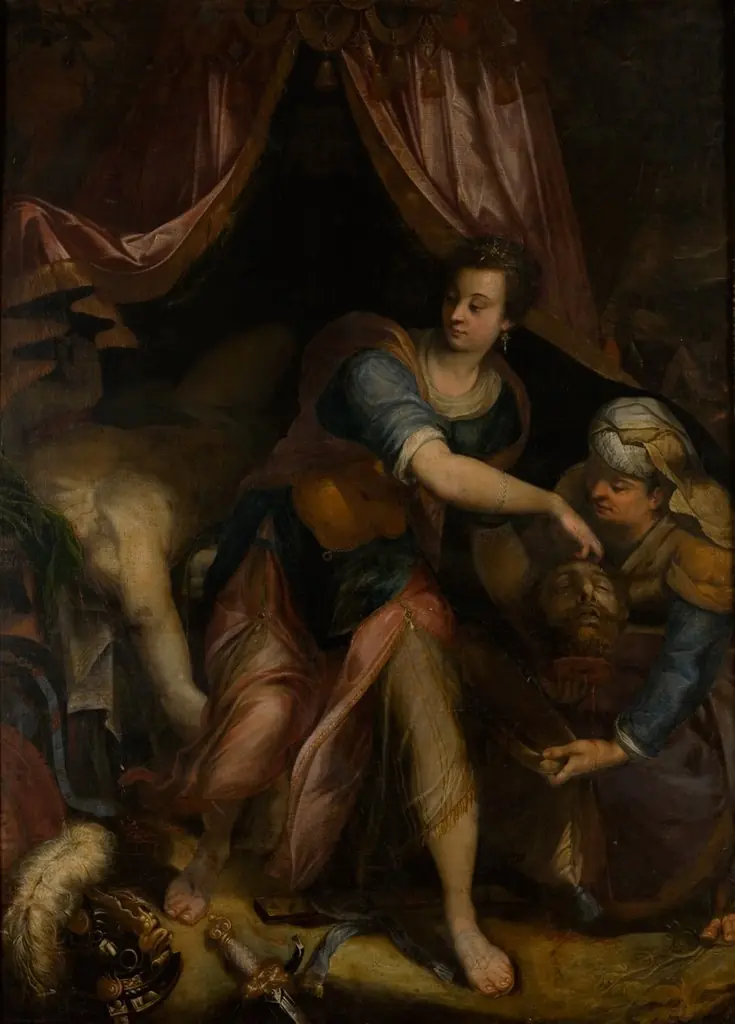
Pedro Atanasio Bocanegra’s oil on canvas, dated 1601, portrays a celebratory biblical moment now displayed in Madrid’s Museo del Prado. The composition centers on a figure in a red robe clutching a sword and a severed head, surrounded by attendants and architectural elements, all rendered with a dramatic contrast of light and shadow.
Context
Created during Spain’s Golden Age, the painting aligns with contemporary devotional imagery that emphasized heroic biblical narratives as moral exemplars. Bocanegra’s approach mirrors the broader Baroque interest in theatricality and emotional engagement, reinforcing the triumph of faith through visual spectacle.
Own this work as a print
Artist & collection
Artist
Pedro Atanasio Bocanegra (1638–1689) was an artist, born in Granada.