Artwork
Kermis in a Flemish village
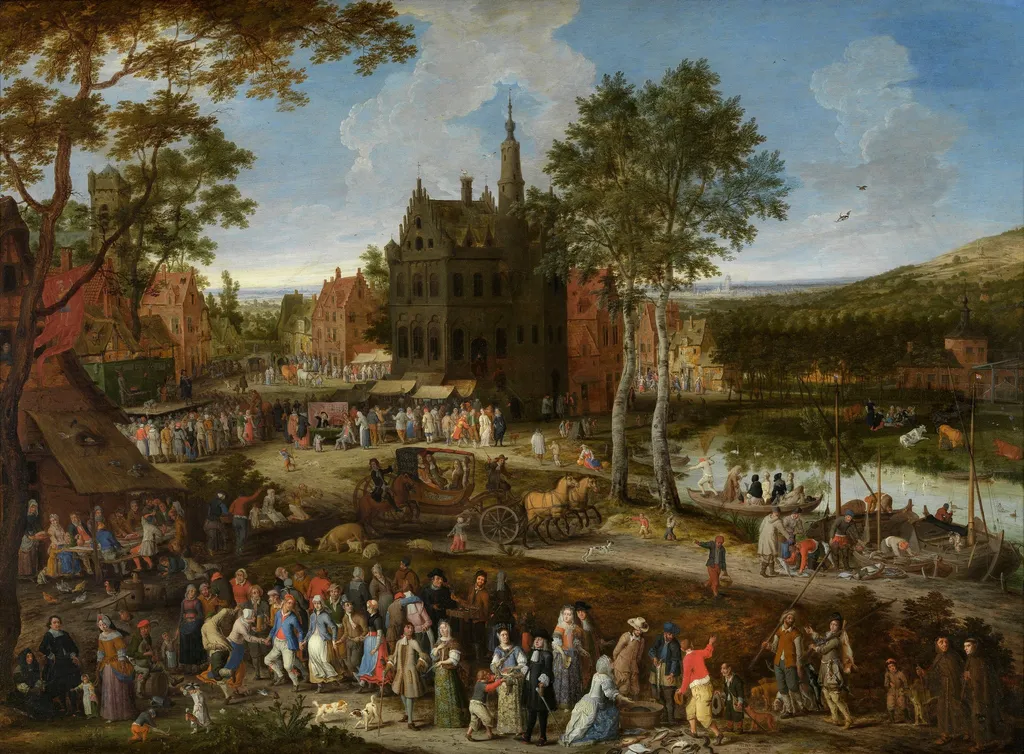
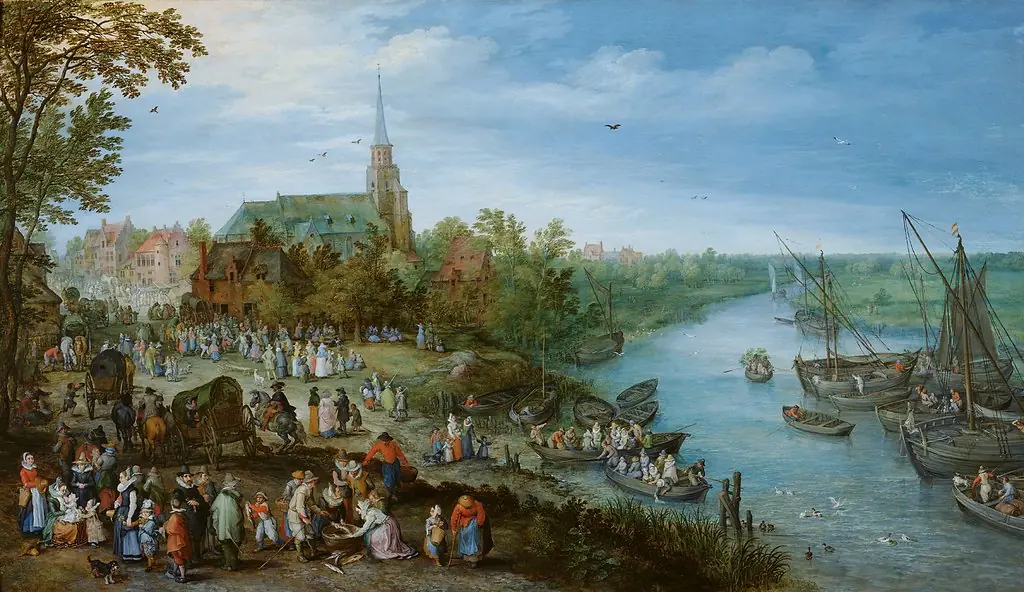
Kermis in a Flemish village is an oil painting by the Flemish Baroque painting artist Peeter Gijsels. It is held in the collection of the Royal Museum of Fine Arts Antwerp.
About this work
Subject & Meaning
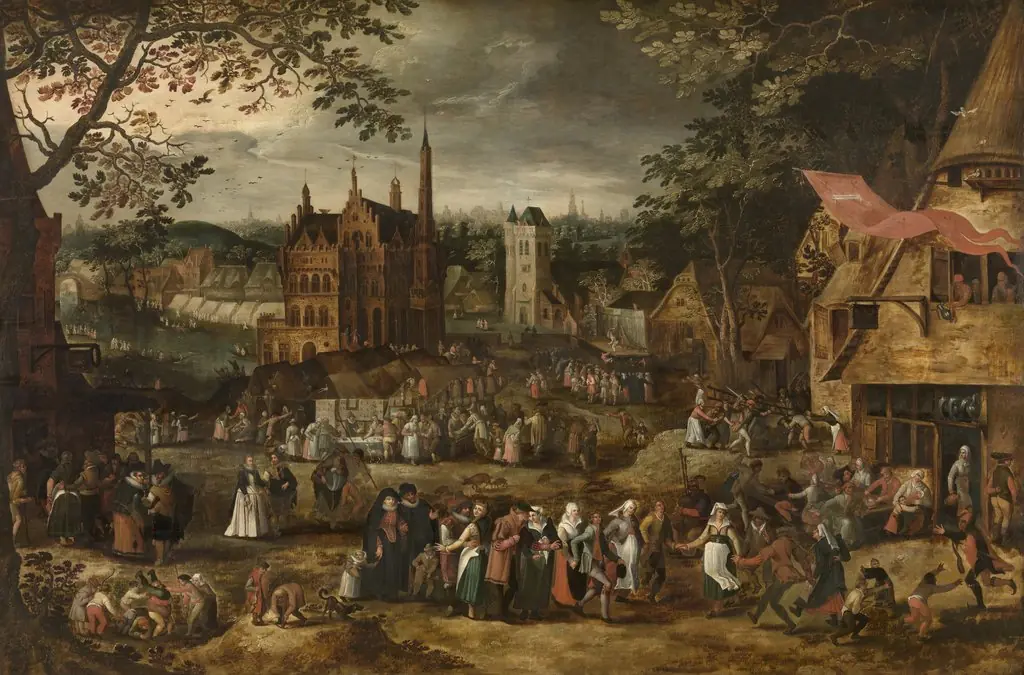
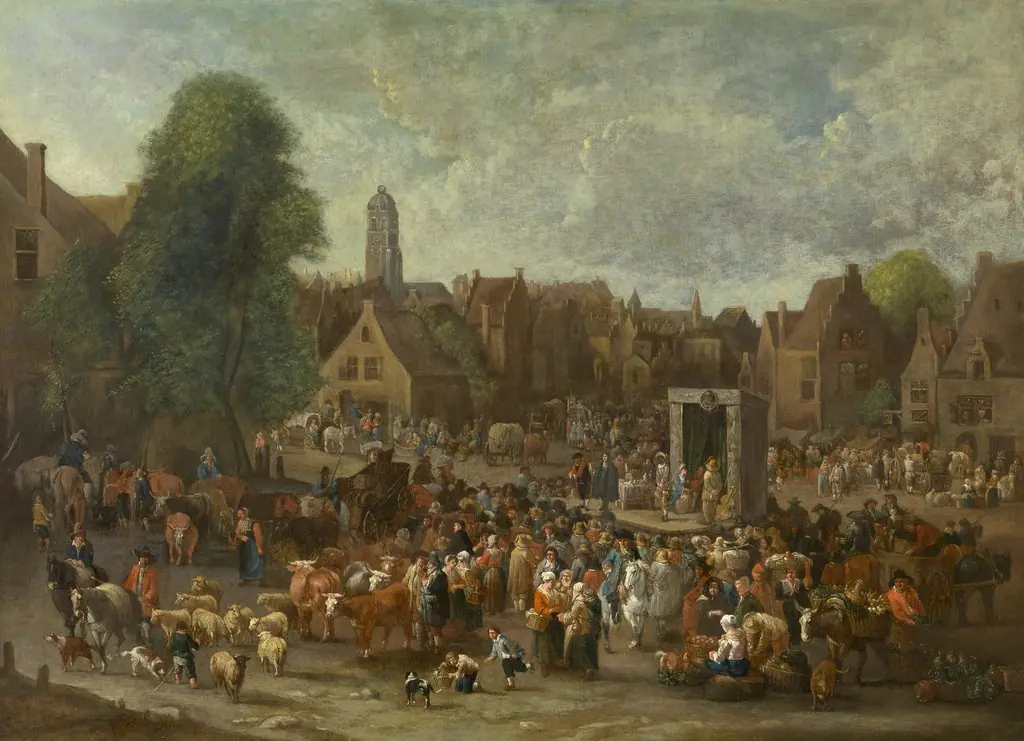
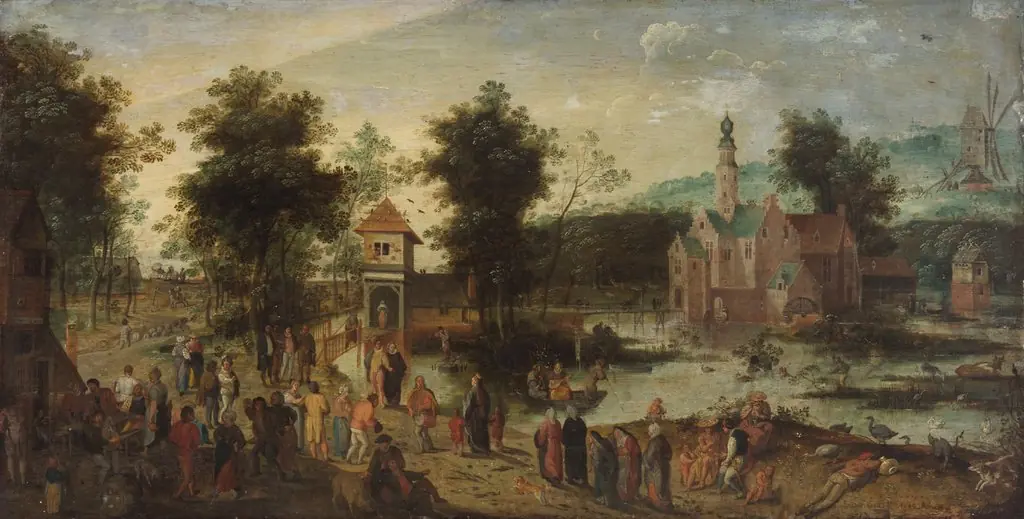
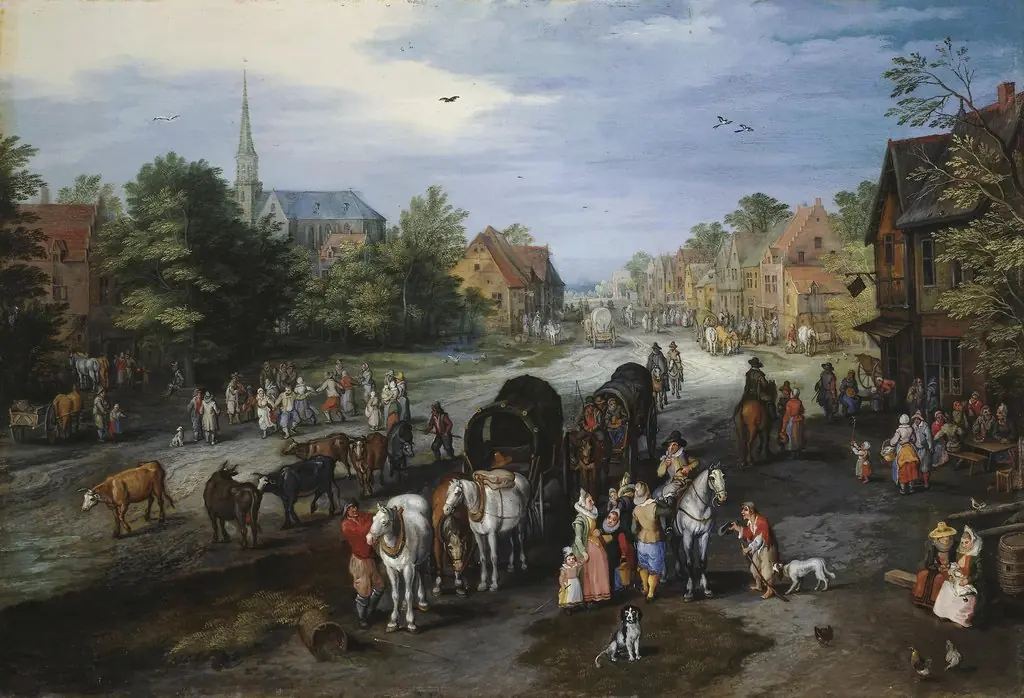
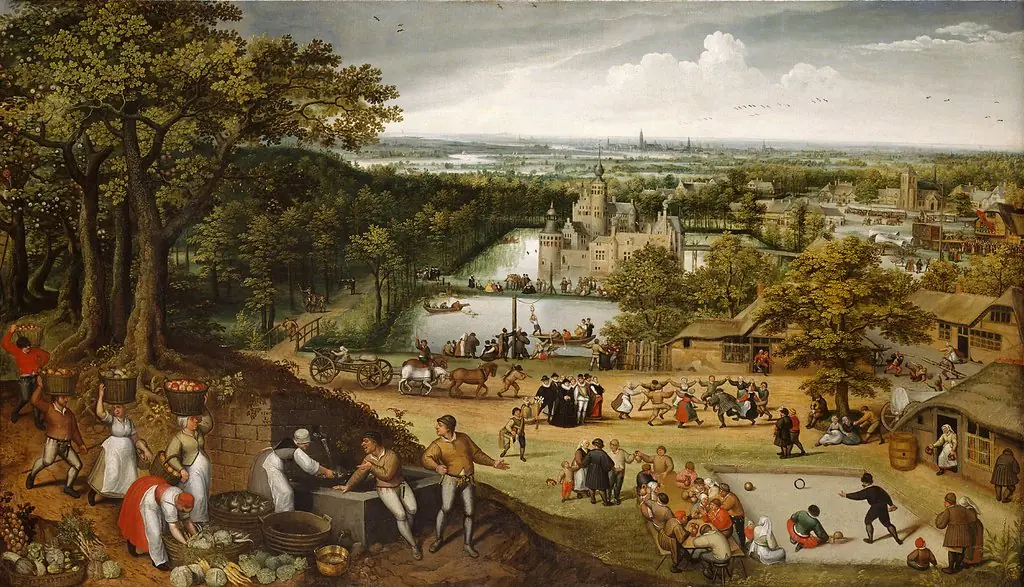
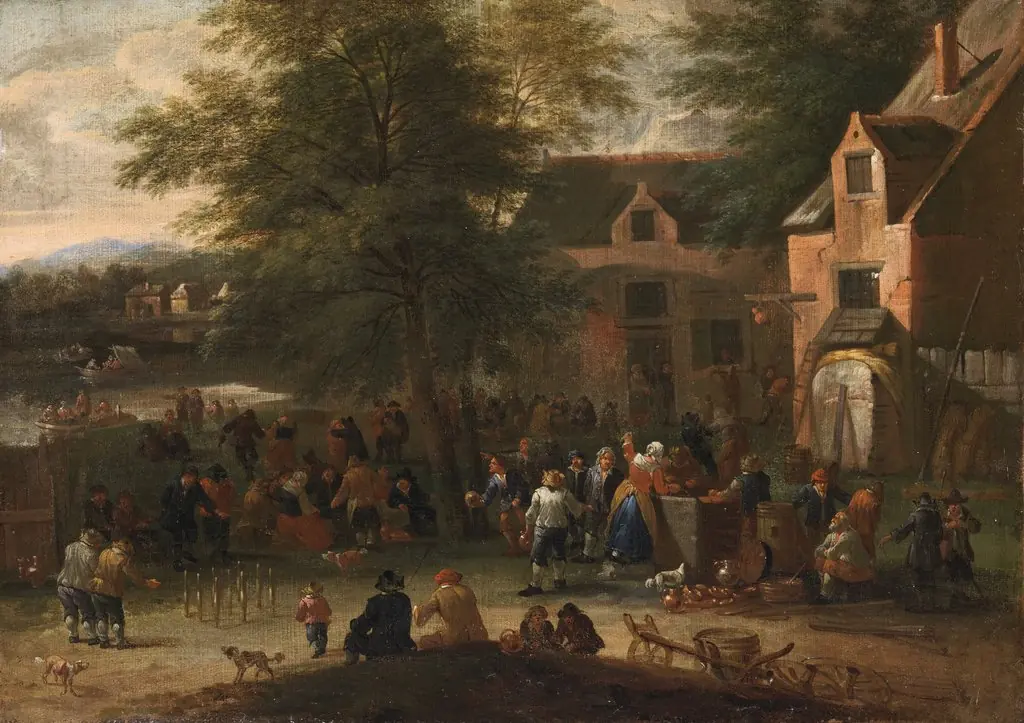
The scene features a river and includes a horse-drawn wagon, elements that collectively illustrate a communal rural celebration.
Painted in 1687, this work depicts a kermis, or village fête, set within a Flemish landscape. The scene features a river and includes a horse-drawn wagon, elements that collectively illustrate a communal rural celebration. As a landscape painting executed in oil on copper, the composition focuses on the lively atmosphere of the gathering rather than specific religious or allegorical symbolism.
The imagery represents a snapshot of local custom and social life in the region during the late seventeenth century.
Technique & Style
The work is executed on a copper support with oil paint, reflecting 17th-century panel painting practices. Its dimensions measure 60.2 cm in height by 83 cm in width, and the composition depicts a festive village scene with a river and horse-drawn wagon, rendered in a landscape genre. The handling of light and atmospheric detail conveys a formal stylistic approach characteristic of Flemish village festivities.
The painting's condition appears stable, preserving the original textural qualities of the oil medium on metal, while the formal qualities emphasize spatial depth and narrative clarity within the genre.
History & Provenance
The painting Kermis in a Flemish village was created by Peeter Gijsels in 1687. Executed in oil paint on a copper support, the work depicts a village fête featuring a river and horse-drawn wagons. It is currently held in the collection of the Royal Museum of Fine Arts Antwerp.
While the specific commission details are not recorded in the available sources, the work's creation date is firmly established as 1687. The piece measures 60.2 cm in height and 83 cm in width.
Context
Peeter Gijsels' 1687 oil painting on copper, depicting a village kermis with a river, horse-drawn wagon, and festive figures, exemplifies late 17th-century Flemish genre landscapes. The work, housed in the Royal Museum of Fine Arts Antwerp, reflects the artist's specialization in topographical scenes and seasonal celebrations characteristic of the Low Countries' artistic tradition. Its detailed narrative composition and use of copper support highlight contemporary technical practices within the genre.
Scholarly attention to this painting centers on its role within Gijsels' oeuvre and Flemish landscape evolution, though comprehensive critical analysis remains limited compared to more prominent contemporaries. The artwork's inclusion in the museum's collection since inception provides contextual grounding for studying regional artistic practices of the period.
Overview
Peeter Gijsels, a Flemish painter working in Antwerp during the late 17th century, executed the copper painting Kermis in a Flemish village in 1694. The work captures a bustling village fair, populated by townspeople, a horse‑drawn wagon, and a river that runs through the settlement. It is part of the collection of the Royal Museum of Fine Arts in Antwerp.
Own this work as a print
Artist & collection
Artist
Peeter Gijsels or Pieter Gijsels (1621, Antwerp – 1690, Antwerp), was a Flemish Baroque painter.