Artwork
Untitled
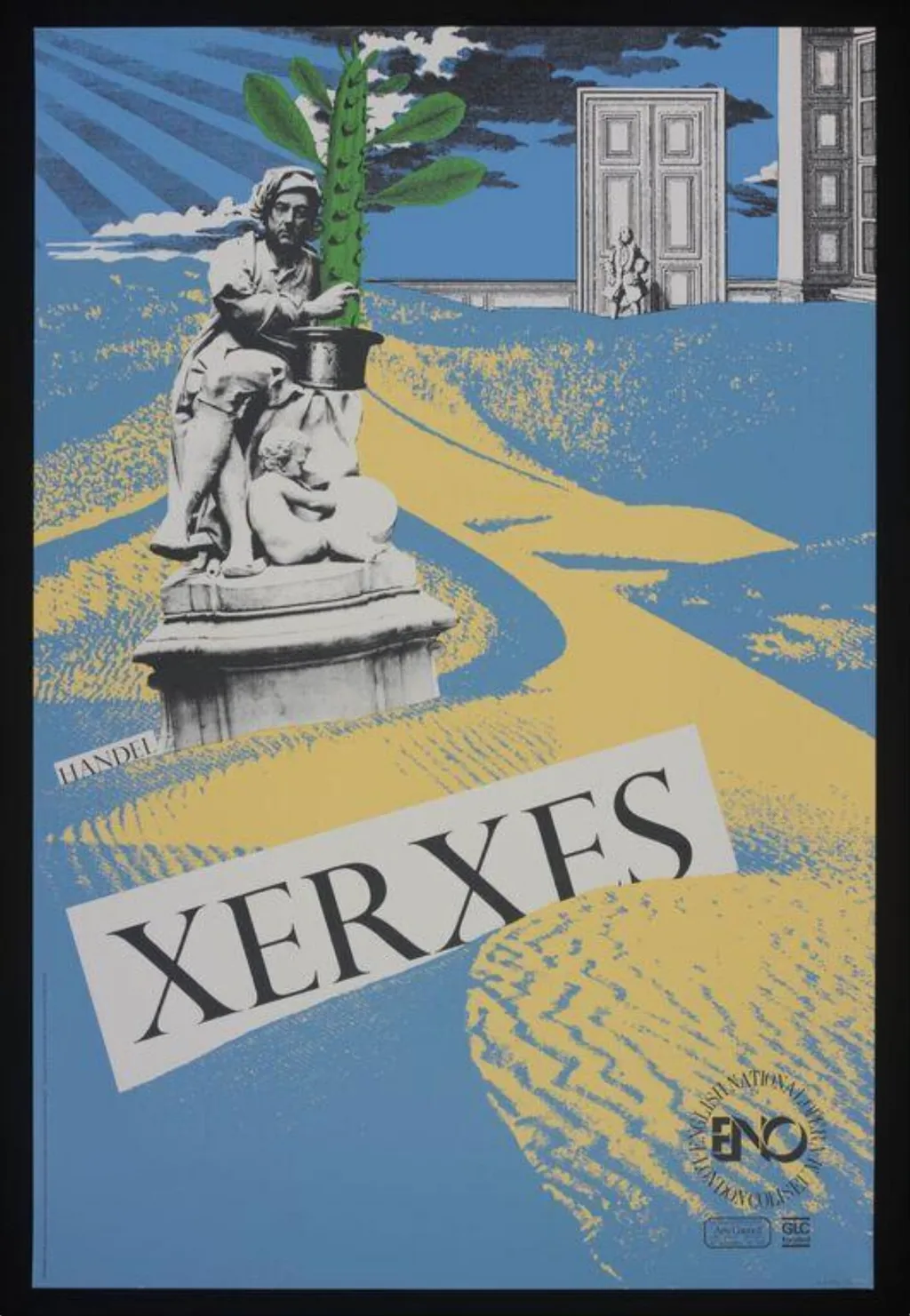
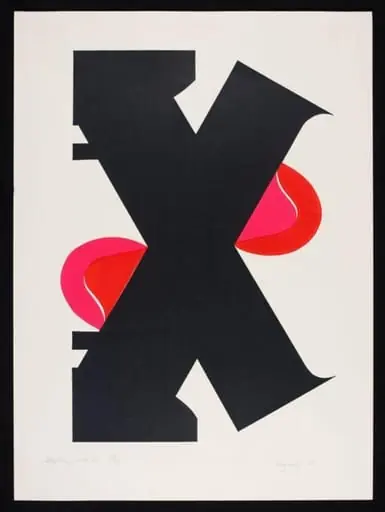
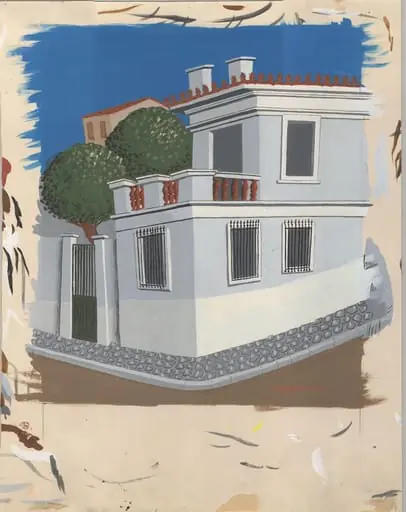
Untitled is a poster by Anthea Pender. It dates from 1985 and is held in the collection of the Victoria and Albert Museum. This 1985 poster was created to promote the English National Opera’s staging of Handel’s opera Xerxes at the London Coliseum.
About this work
Overview
This 1985 poster was created to promote the English National Opera’s staging of Handel’s opera Xerxes at the London Coliseum.
This 1985 poster was created to promote the English National Opera’s staging of Handel’s opera Xerxes at the London Coliseum. It combines a photographic reproduction of an 18th-century sculpture with bold graphic design elements. The composition uses high-contrast colors and simplified shapes to draw attention, blending historical imagery with modern promotional aesthetics typical of theater advertising in the 1980s.
Subject & Meaning
The central figure is a statue of George Frideric Handel, sculpted by Louis-François Roubiliac, depicted seated and holding a plant. Though historically inaccurate, Handel is shown with a cactus, an anachronistic element, the choice evokes the exoticism of the opera’s Persian setting. The word 'Xerxes' dominates the design, anchoring the visual narrative to the opera’s title and reinforcing its thematic focus on ancient power and spectacle.
Technique & Style
The poster juxtaposes a detailed, realistic photograph of the sculpture with flat, graphic overlays: a bright blue sky, yellow sand, and a stylized building with two doors. The typography is bold and unadorned, contrasting with the textured surface of the statue. This deliberate clash between photographic realism and graphic abstraction creates visual tension, a hallmark of late-20th-century poster design aimed at immediate public recognition.
History & Provenance
The poster was produced for the English National Opera’s 1985 season at the London Coliseum. It references Roubiliac’s 1738 sculpture of Handel, originally commissioned for Vauxhall Gardens and now held in the Victoria and Albert Museum. The use of this historical image reflects a broader trend in British cultural promotion during the 1980s, where classical art was repurposed to lend gravitas to contemporary performances.
Context
In the 1980s, British opera companies increasingly adopted graphic, visually arresting posters to attract wider audiences. This design aligns with efforts to modernize classical music’s public image. The anachronistic cactus, while historically inaccurate, served as a symbolic shorthand for the exotic East, a common trope in Western interpretations of Xerxes. The poster reflects a period when cultural institutions balanced tradition with populist appeal.
Legacy
The poster remains an example of how cultural institutions used visual design to bridge historical artifacts and contemporary performance. Its combination of classical sculpture and graphic minimalism influenced later theater promotions in the UK. Though not widely reproduced, it is preserved in collections such as the Victoria and Albert Museum as a representative artifact of 1980s British arts advertising.
Artist & collection
Artist
This mid-1980s artist made bold, single-sheet posters that feel like snapshots from a city wall.