Artwork
The Vegetable Seller
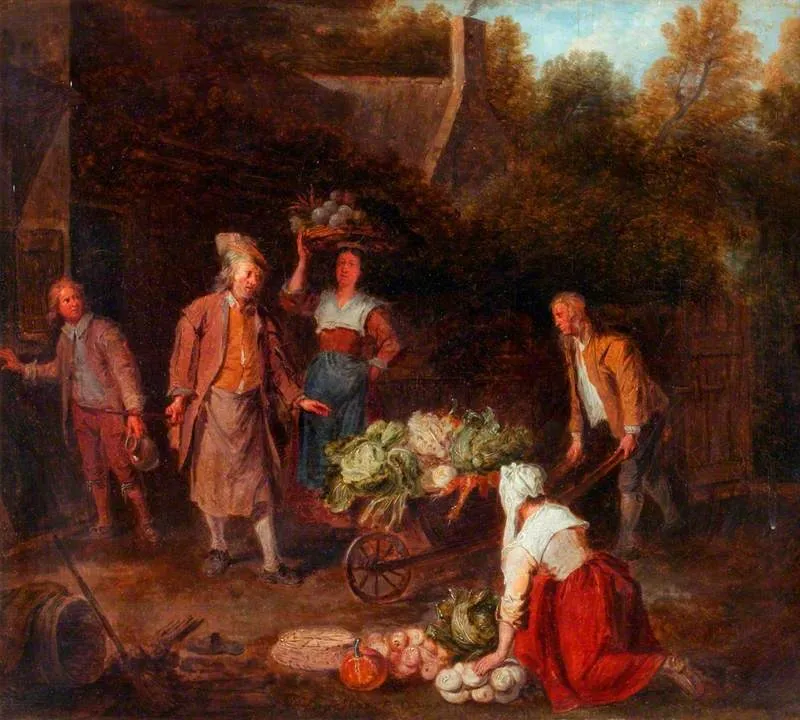
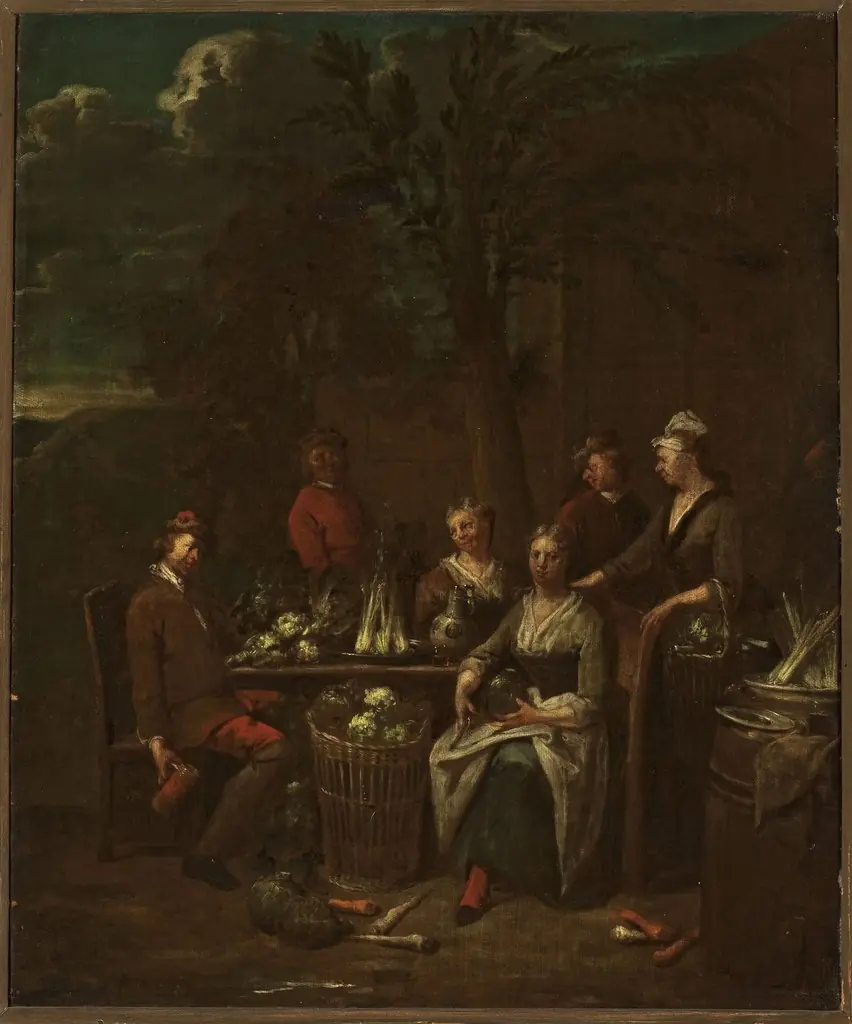
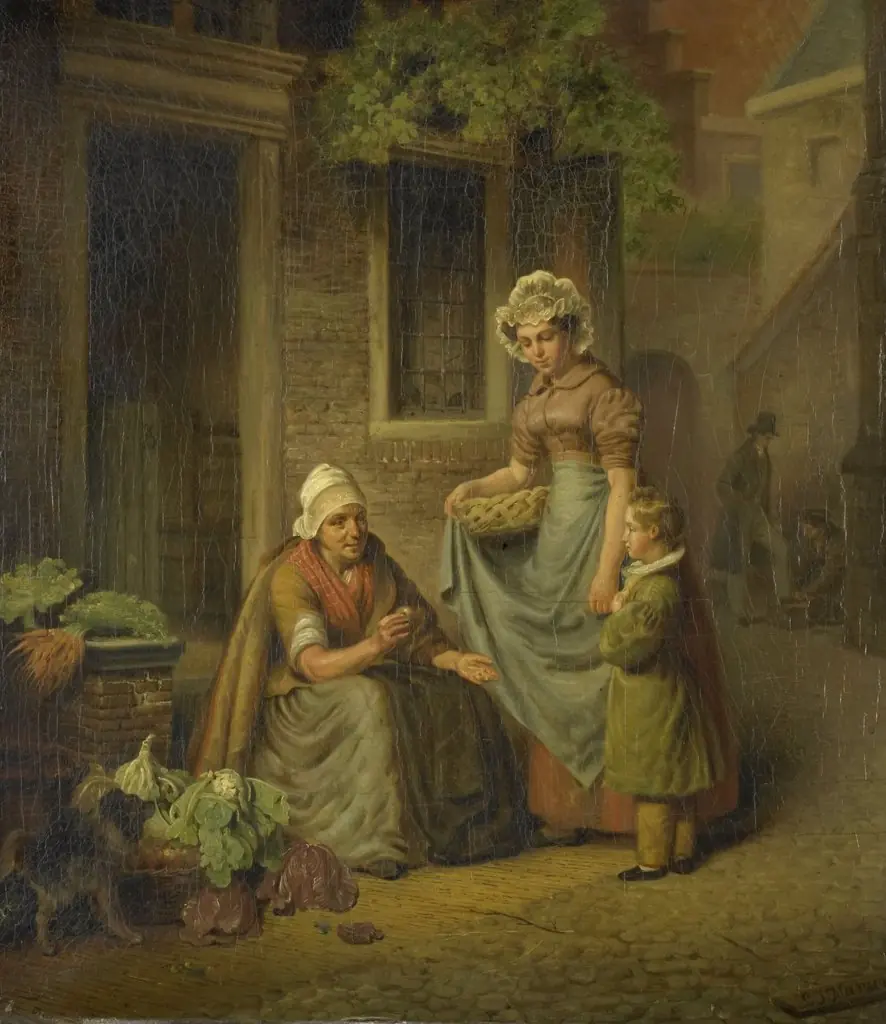
The Vegetable Seller is an oil painting by the Rococo painting artist Peter Angellis. It dates from 1724 and is held in the collection of the Victoria and Albert Museum.
About this work
The group includes a man in a brown coat and hat, a woman holding a basket of vegetables, and another man pushing the cart.
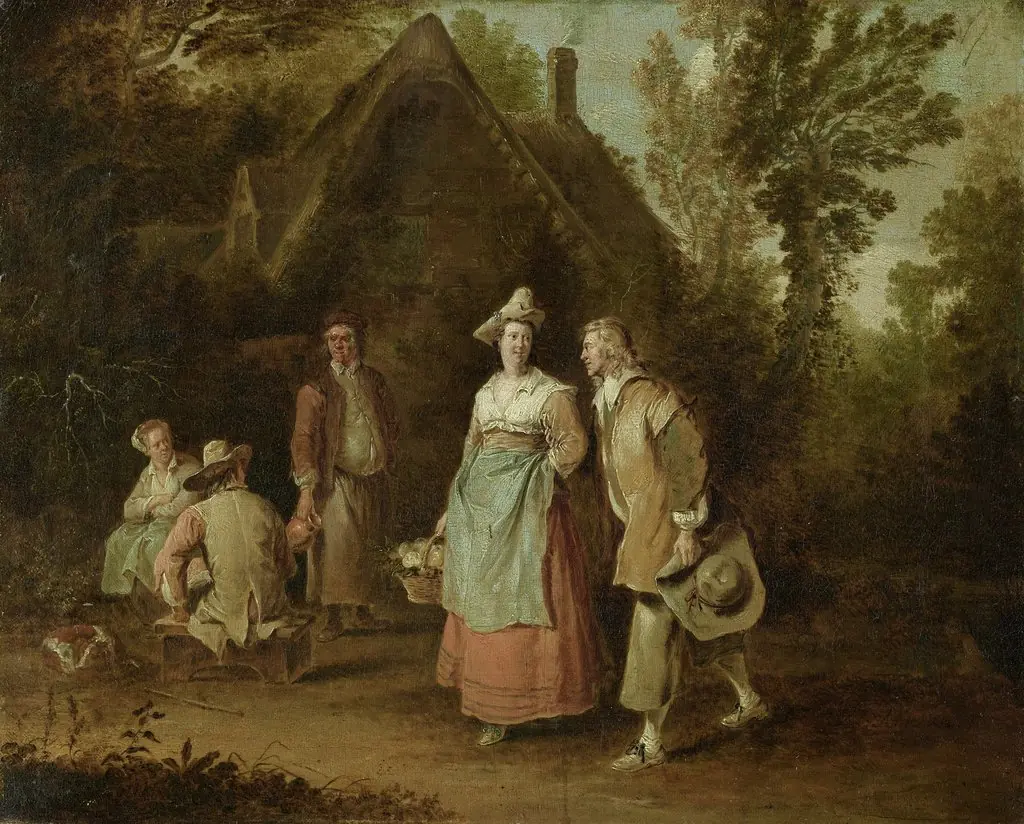
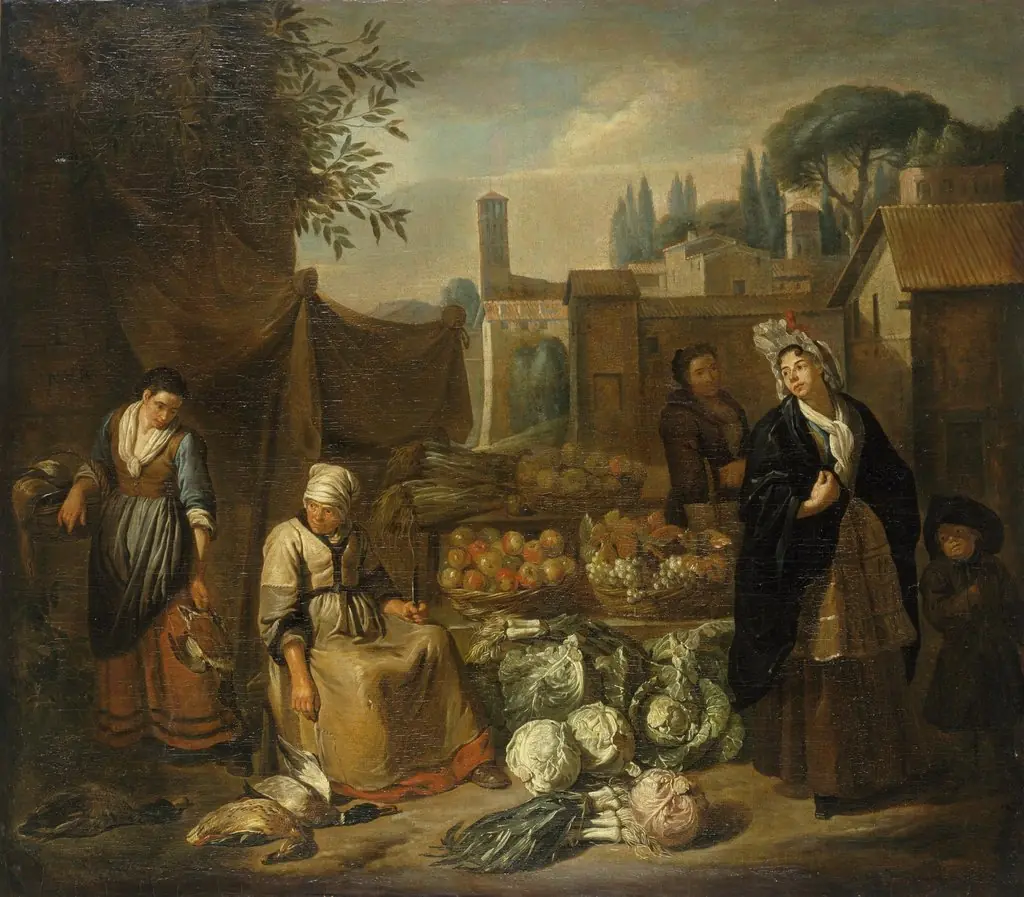
This painting shows a lively outdoor scene with people gathered around a cart filled with vegetables. The group includes a man in a brown coat and hat, a woman holding a basket of vegetables, and another man pushing the cart. In the foreground, a woman in a red skirt is kneeling, surrounded by more vegetables.
The scene is set against a backdrop of trees and a building, with a blue sky visible above. The artist's use of warm colors and loose brushstrokes creates a sense of energy and movement.
The painting is a great example of a genre scene, which was a popular style during the 18th century. To learn more about the artist's technique, check out the use of chiaroscuro.
Overview
Peter Angelis’s oil painting The Vegetable Seller, executed in 1724, portrays a bustling market tableau rendered in the light, decorative manner typical of the Rococo era. The work is part of the Victoria and Albert Museum’s collection, offering a glimpse of everyday commerce through a composition that balances activity with a graceful, ornamental touch.
Subject & Meaning
The canvas captures a small group gathered around a vegetable-laden cart: a man in a brown coat and hat, a woman clutching a basket, another man guiding the cart, and a kneeling woman in a red skirt surrounded by produce. The scene celebrates ordinary labor and the vitality of public market life, emphasizing the dignity of commonplace tasks.
Technique & Style
Angelis employs warm, saturated hues and fluid brushwork that convey motion and atmosphere. Subtle chiaroscuro models the figures, while the loose handling of paint softens edges, reinforcing the Rococo preference for elegance over strict realism. The background of trees, a building, and a clear sky situates the figures within an open, airy setting.
History & Provenance
Born in Flanders, Angelis travelled extensively across Europe, working in Germany, Italy, England, and France before settling in the early 18th‑century art market. The Vegetable Seller entered the Victoria and Albert Museum’s holdings through acquisition in the early 20th century, where it remains on display as a representative example of his genre work.
Context
During the early 1700s, genre paintings depicting daily life enjoyed considerable popularity among patrons seeking relatable yet refined subjects. Angelis’s work aligns with this trend, merging the decorative flair of Rococo aesthetics with a sincere observation of market scenes, reflecting the broader cultural shift toward celebrating the ordinary in visual art.
Artist & collection

Artist
Peter Angelis (5 November 1685 – 1734), variously recorded as Pieter Angellis, Pieter Anchillus, Pieter van Angellis or Pieter Angelles, was a painter active in Flanders, Germany, Italy, England and France.