Artwork
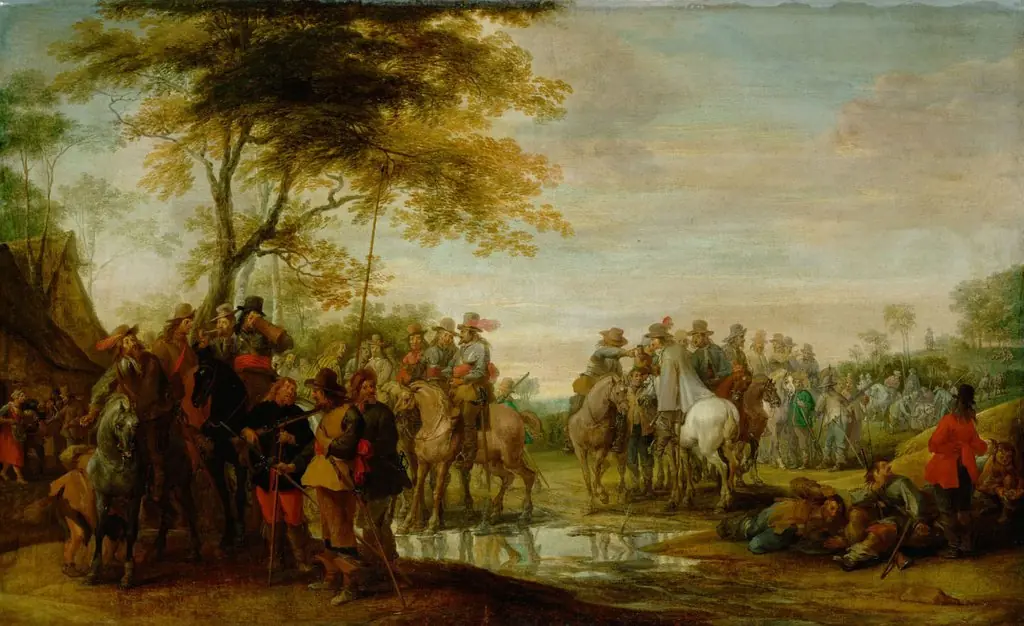
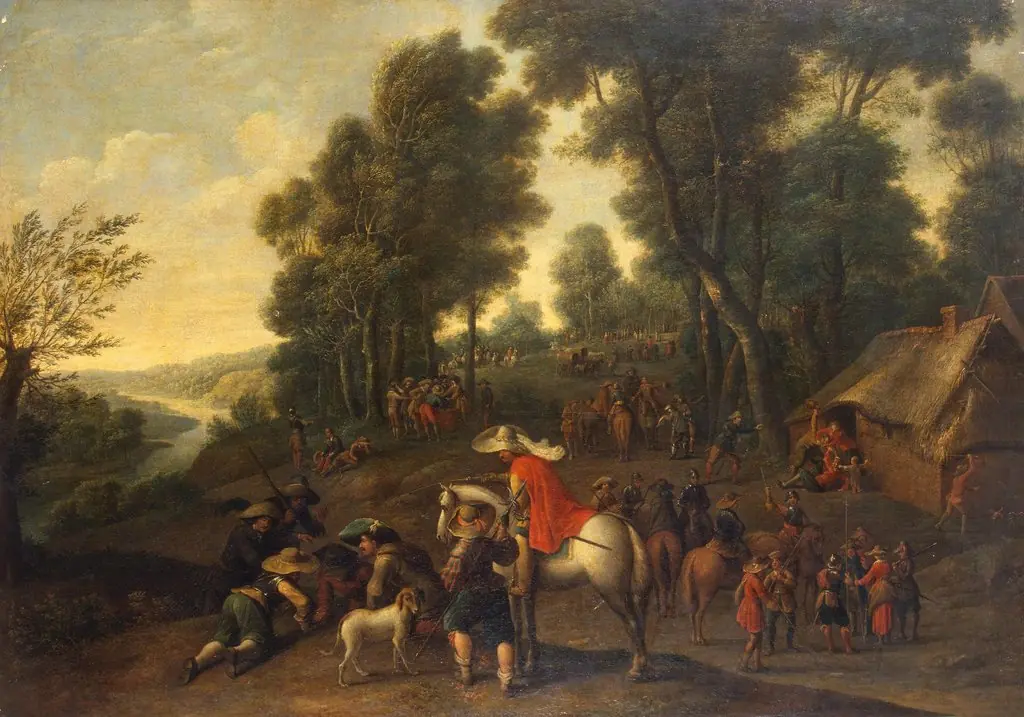
Soldiers Bivouacking
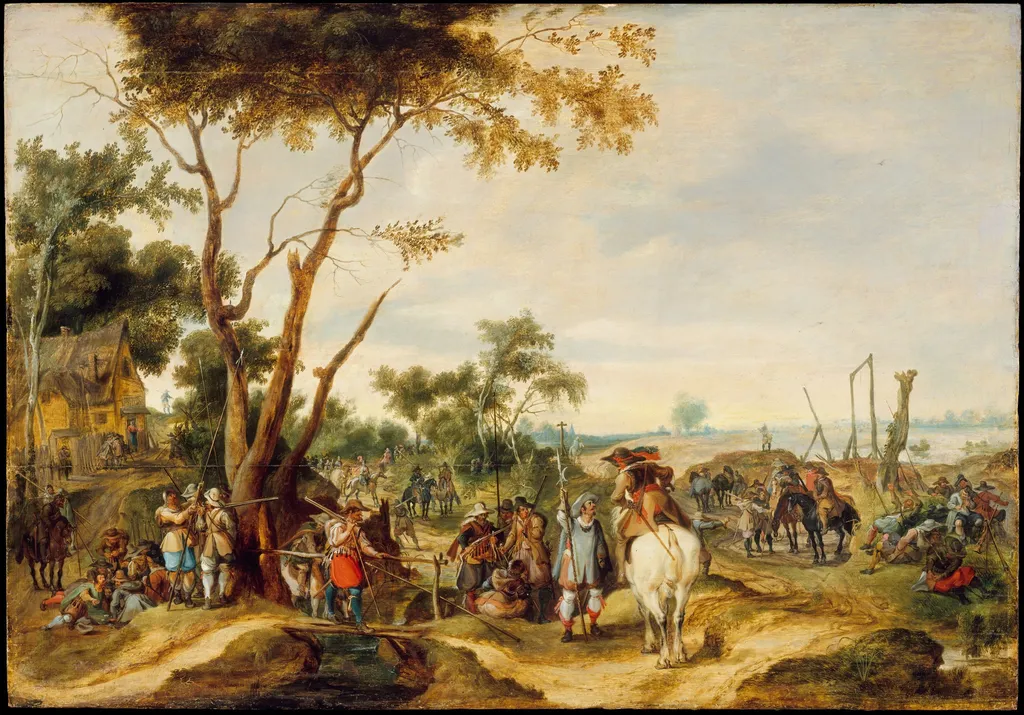
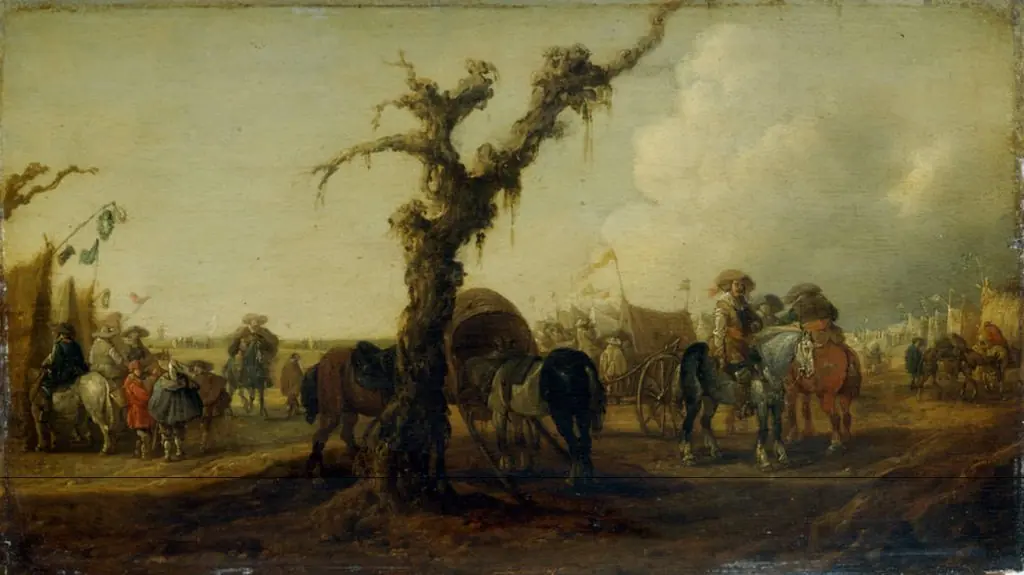
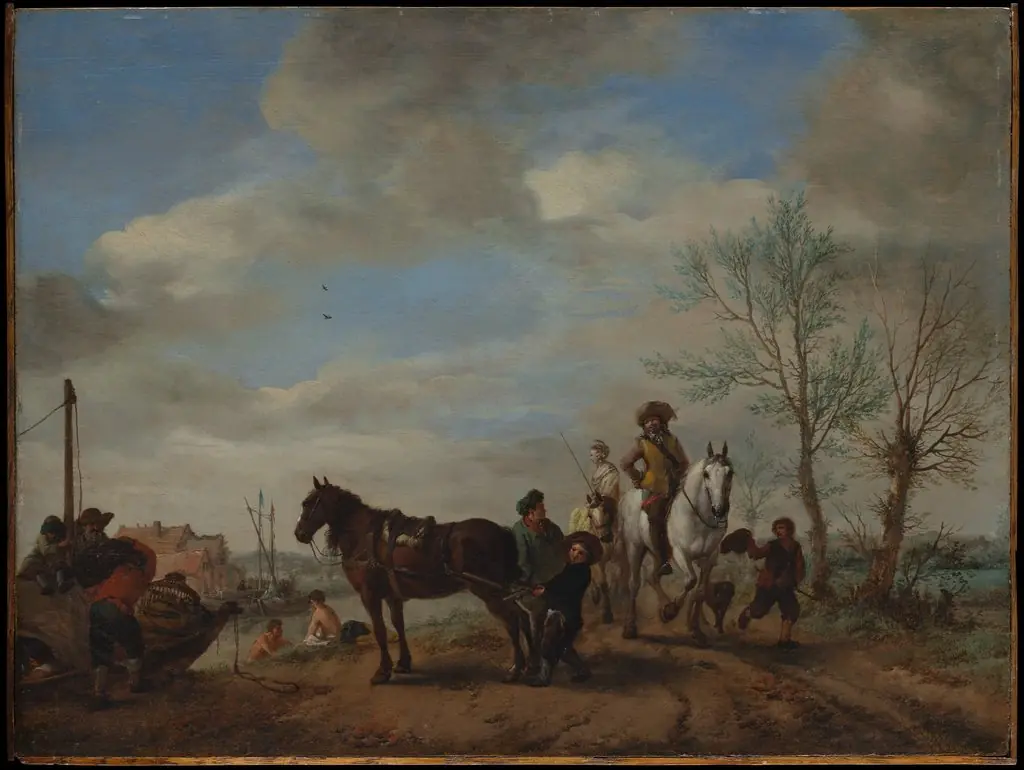
Soldiers Bivouacking is an oil painting by the Flemish Baroque painting artist Peter Snayers. It dates from 1639 and is held in the collection of the Metropolitan Museum of Art.
About this work
Subject & Meaning
The painting Soldiers Bivouacking, executed by Peter Snayers in 1639, portrays a military encampment set within a landscape that includes a tree, a solitary man, and an equestrian figure. The composition combines genre conventions of landscape painting with iconographic elements of soldiers in temporary shelter, suggesting themes of discipline, camaraderie, and the relationship between troops and their natural environment. The work’s material, oil on panel, enhances the textured rendering of foliage and terrain, while its placement in the Metropolitan Museum of Art underscores its historical significance as an early modern depiction of martial life.
Technique & Style
Stylistically classified as a landscape, the composition incorporates elements of equestrianism and depicts soldiers within a natural setting featuring trees.
Executed in 1639, Soldiers Bivouacking is an oil painting applied to a wooden panel support. The work measures 72.7 by 104.5 centimeters. Stylistically classified as a landscape, the composition incorporates elements of equestrianism and depicts soldiers within a natural setting featuring trees.
The application of oil paint on panel allows for the detailed rendering of figures and the environment, characteristic of the artist's approach to this genre during the period.
History & Provenance
Soldiers Bivouacking is an oil painting on panel created in 1639 by the Flemish artist Peter Snayers. The work, measuring 72.7 cm in height and 104.5 cm in width, depicts a landscape populated by soldiers and equestrian figures. While the specific commission details or initial ownership chain are not recorded in the available documentation, the painting is currently held in the collection of the Metropolitan Museum of Art.
The creation date is firmly established as January 1, 1639, situating the piece within the artist's mid-career period of landscape and military subject matter. The work remains a significant example of Snayers' output in the genre of landscape painting during the seventeenth century.
Context
Soldiers Bivouacking, executed by Peter Snayers in 1639, stands as a significant example of 17th-century Flemish landscape painting. The work, currently held in the collection of the Metropolitan Museum of Art, exemplifies Snayers' specialization in military scenes integrated into expansive natural settings. While the painting depicts soldiers and equestrian figures within a wooded environment, its primary art-historical importance lies in its contribution to the genre of landscape painting during the Baroque period.
The piece demonstrates the artist's ability to combine narrative military elements with atmospheric landscape composition, a characteristic approach in Snayers' wider oeuvre. As an oil-on-panel work measuring 72.7 by 104.5 centimeters, it reflects the technical standards and subject matter preferences of mid-17th-century Northern European art, serving as a documented instance of how military themes were contextualized within the broader landscape tradition of the era.
Overview
Painted in 1639, Soldiers Bivouacking is an oil on canvas landscape by the Flemish artist Peter Snayers, a specialist in military scenes and battlefields. The work depicts a contingent of soldiers resting during a campaign, organized around a large tree that anchors the foreground composition. Figures are arranged in naturalistic clusters: some sit on the ground, others stand in conversation, and a few remain mounted on horses, illustrating the pause in military movement.
The setting extends into a detailed background featuring a village with a distinct church steeple and a small house situated near a river, while additional troops march along a winding dirt path. This painting exemplifies Snayers' mature style, characterized by a harmonious balance between the human activity of the foreground and the expansive, atmospheric landscape. Created during the height of the Thirty Years' War, the work reflects the artist's role as a chronicler of contemporary military life, prioritizing topographical accuracy and the depiction of camp routines over the chaos of active combat.
It stands as a significant example of 17th-century Flemish military art, demonstrating Snayers' ability to integrate narrative detail within a cohesive landscape structure.
Own this work as a print
Artist & collection
Artist
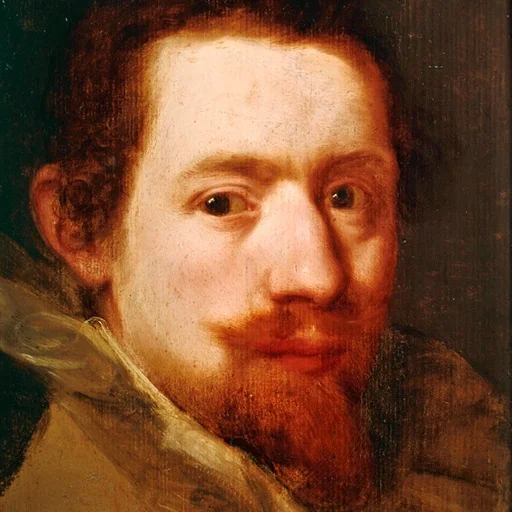
Peter Snayers or Pieter Snayers (1592–1667) was a Flemish painter known for his panoramic battle scenes, depictions of cavalry skirmishes, attacks on villages, coaches and convoys and hunting scenes.