Artwork
Untitled
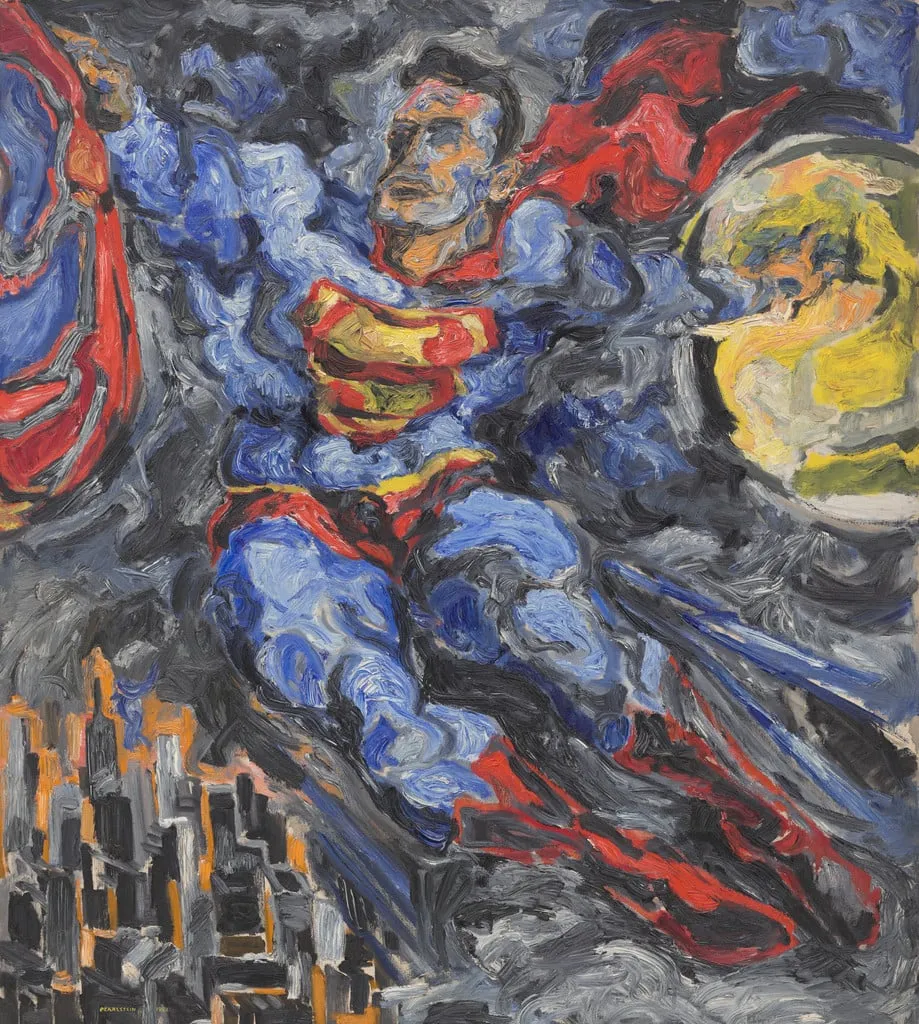
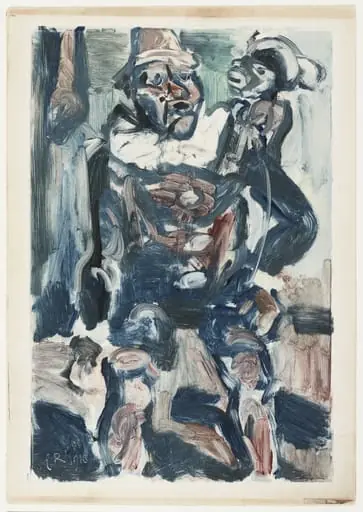
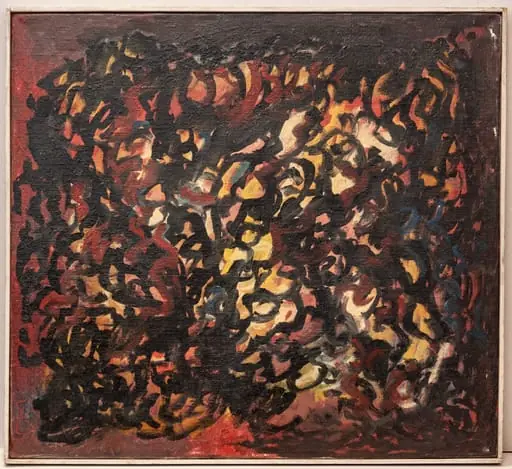
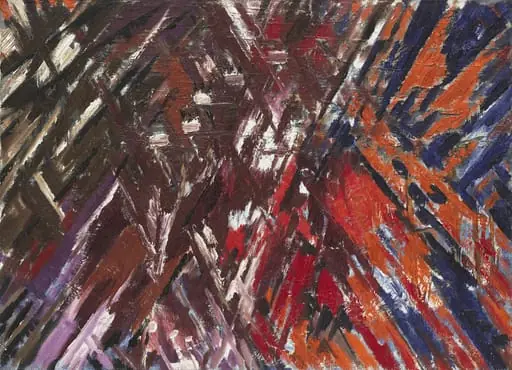
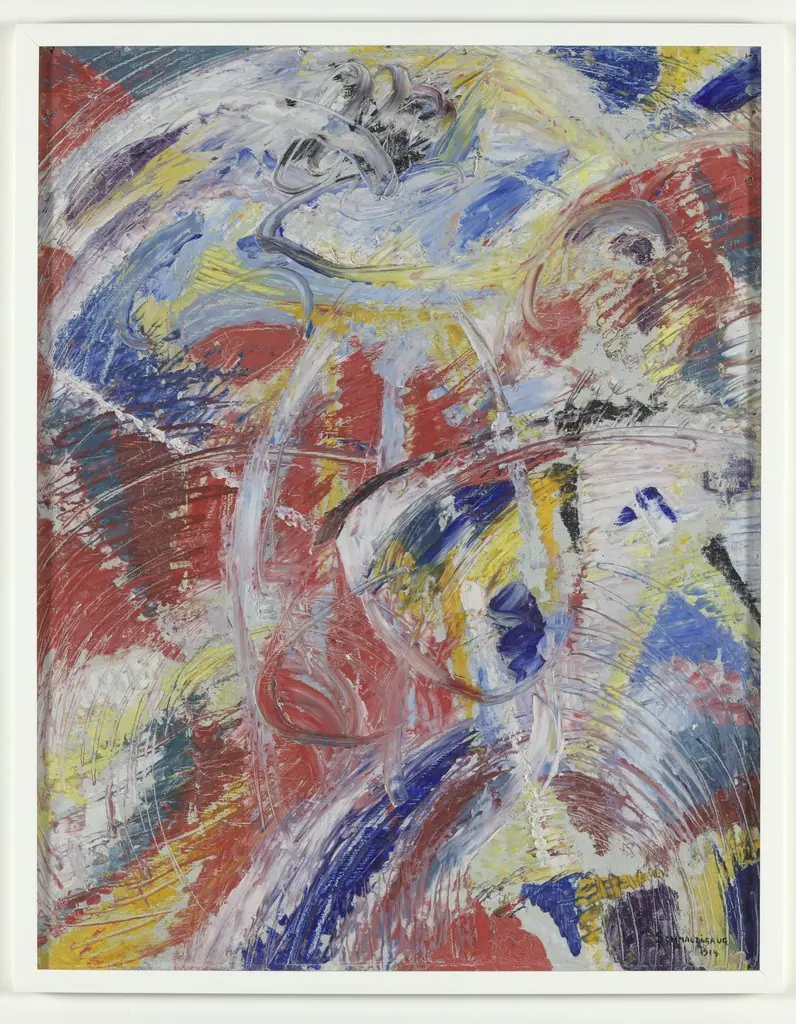
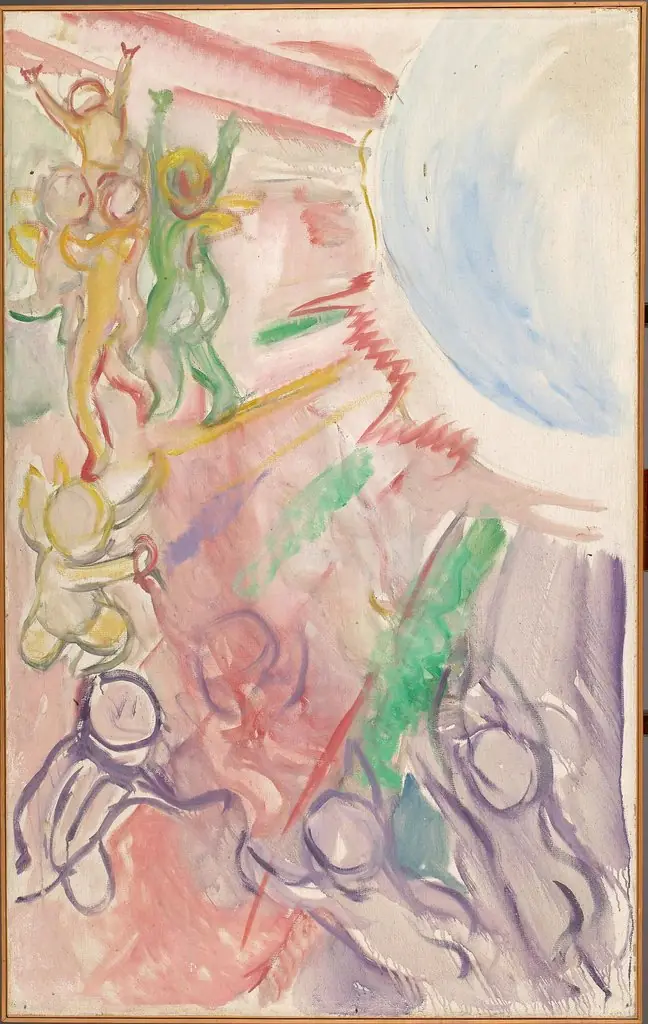
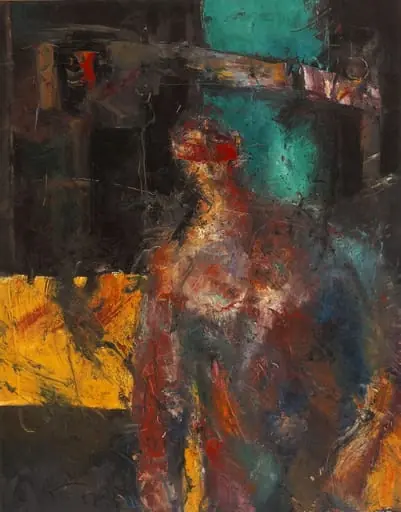
Untitled is an oil painting by the Contemporary Realist artist Philip Pearlstein. It dates from 1952 and is held in the collection of the Museum of Modern Art.
About this work
Overview
Philip Pearlstein painted this oil on canvas in 1952, and it resides in The Museum of Modern Art’s collection.
Philip Pearlstein painted this oil on canvas in 1952, and it resides in The Museum of Modern Art’s collection. Though often associated with his later realist figure studies, this early work diverges into abstraction, reflecting the artist’s engagement with postwar expressive modes. The composition centers on a costumed form amid energetic brushwork and layered pigment, suggesting movement and psychological tension rather than literal representation.
Subject & Meaning
The central figure, clad in a blue and red garment, evokes superhero iconography without direct reference. Its isolation within a turbulent field of swirling blues, grays, and whites implies a psychological or emotional state rather than a narrative. The yellow orb in the upper right may suggest a sun, a light source, or an abstract symbol of energy. The faint cityscape below anchors the figure in an urban context, hinting at modern alienation or aspiration.
Technique & Style
Thick, gestural brushstrokes build a textured surface, emphasizing materiality over detail. Color is applied with intensity, creating contrast between the figure’s saturated hues and the muted, chaotic background. The paint is worked aggressively, with visible impasto and directional strokes that convey motion.
This approach aligns with mid-century abstract expressionism, though the inclusion of figurative elements distinguishes it from pure non-objectivity.
History & Provenance
Painted in 1952, the work emerged during Pearlstein’s formative years in New York, before his shift toward strict realism. It entered The Museum of Modern Art’s collection in the decades following its creation, likely through acquisition or donation. Its presence in the museum underscores its significance as an early example of Pearlstein’s experimentation before he became known for his nude studies.
Context
In the early 1950s, many American artists were exploring abstraction as a means of personal expression amid Cold War anxieties. Pearlstein, influenced by contemporaries like de Kooning and Kline, engaged with these currents while retaining traces of figuration. This painting reflects a transitional moment in his career, bridging expressive abstraction and the disciplined observation that would later define his practice.
Legacy
Though less known than his later realist works, this painting illustrates Pearlstein’s range and willingness to challenge expectations. It stands as a document of his artistic evolution, revealing how abstraction informed his understanding of form and space. Scholars cite it as evidence of his early engagement with the dominant styles of his time, before he forged a distinctive path in figurative painting.
Artist & collection
Artist
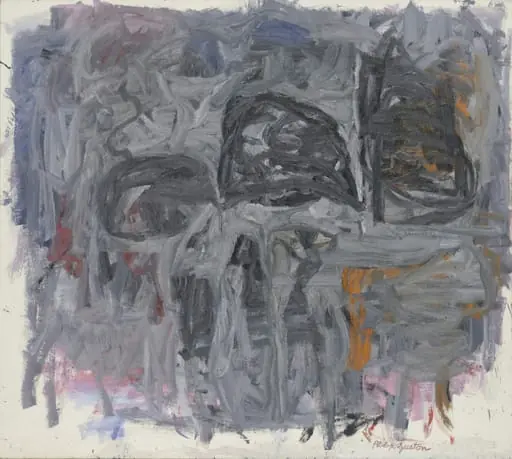
Philip Martin Pearlstein was an American painter best known for Modernist Realist nudes. Cited by critics as the preeminent figure painter of the 1960s to 2000s, he led a revival in realist art.