Artwork
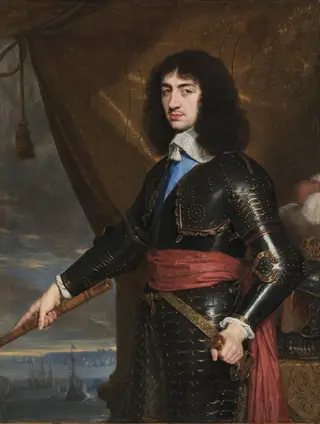
Portrait of King Charles II of England
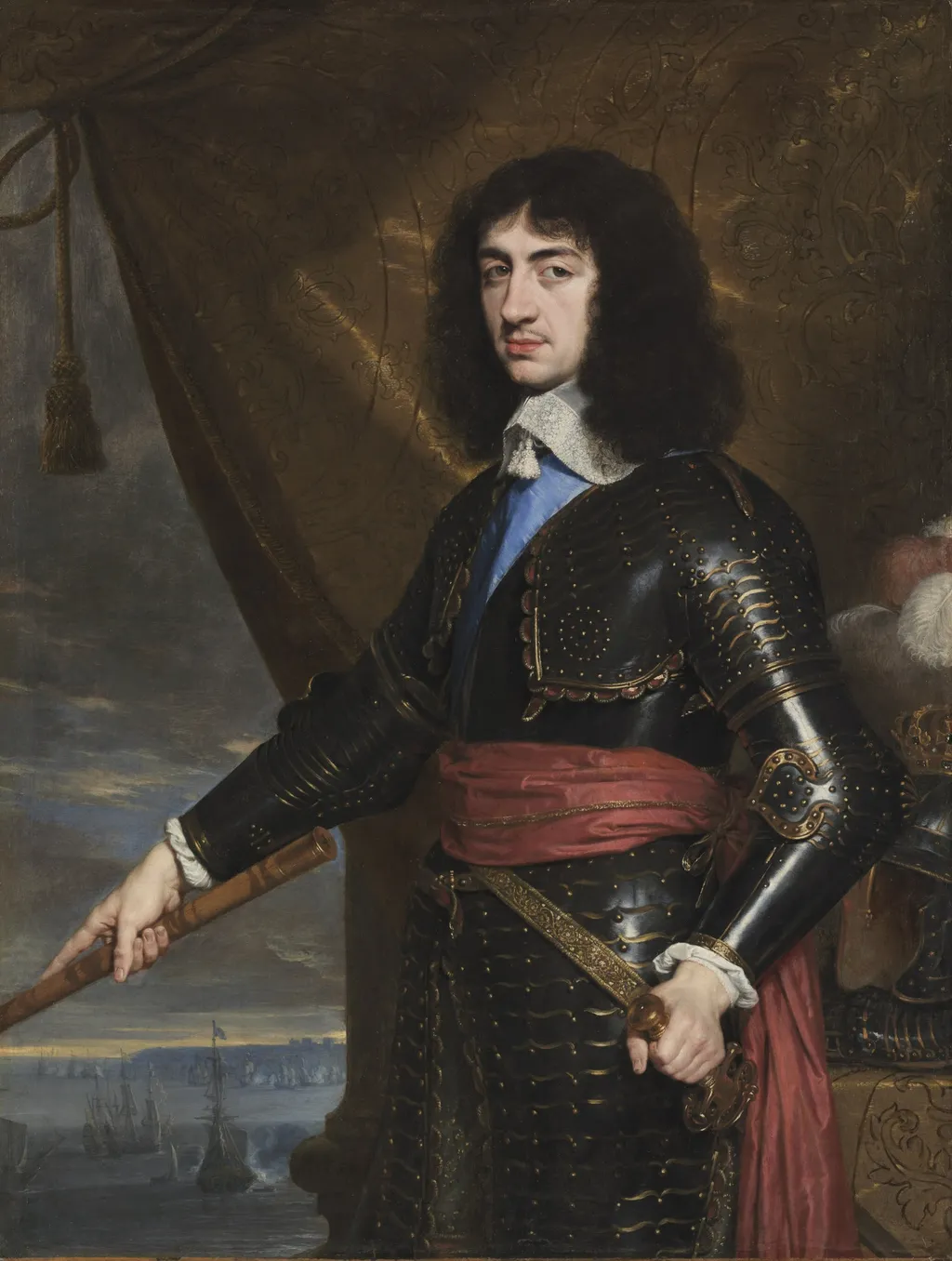
Portrait of King Charles II of England is an oil painting by the French Classical Baroque artist Philippe de Champaigne. It dates from 1653 and is held in the collection of the Cleveland Museum of Art.
About this work
Standing before the White Cliffs of Dover in French cuirassier's armor, the twenty-three-year-old Charles II gestures toward a fleet on the English Channel. Philippe de Champaigne painted the portrait in 1653, while the king lived in exile near Paris after his defeat at the Battle of Worcester. The armor dates to around 1630, and Charles would be the last British monarch depicted in full plate.
Subject & Meaning
Painted in 1653 during the Interregnum, when Charles II was in exile, the martial accoutrements signify his role as a military leader and legitimate monarch.
The portrait depicts King Charles II of England in body armor and a helmet, holding a baton, set against a landscape featuring a ship on the English Channel with the White Cliffs of Dover in the background. Painted in 1653 during the Interregnum, when Charles II was in exile, the martial accoutrements signify his role as a military leader and legitimate monarch. The inclusion of the English Channel and the iconic cliffs alludes to his exile across the water and his persistent claim to the throne, imbuing the work with political symbolism of restoration and rightful sovereignty. The combined portrait and landscape genre reinforces the narrative of a king poised to reclaim his realm.
Technique & Style
Executed in oil paint on canvas, this portrait measures approximately 129.5 by 97.2 cm, a standard format for seventeenth-century state portraiture. Philippe de Champaigne employs a formal, composed style: Charles II is depicted in body armor and helmet, holding a baton, while the background reveals a ship on the English Channel and the White Cliffs of Dover, elements that anchor the portrait to his exile and claim to the throne. The handling is characteristically precise and restrained, with smooth brushwork and a controlled palette that emphasizes the sitter's regal bearing.
No detailed condition report is provided in the sources, but the work is catalogued as a painting in the Cleveland Museum of Art's collection.
History & Provenance
Painted in 1653 by Philippe de Champaigne in France, this portrait of Charles II of England was later owned by the art dealership Wildenstein & Company. It entered the Cleveland Museum of Art collection in 1959, where it holds accession number 1959.38. No commission details or earlier provenance are recorded in the available sources.
Overview
This oil-on-canvas portrait, painted by Philippe de Champaigne in 1653, captures Charles II during his period of exile in France. The Brabant-born artist, a prominent figure in the French court, depicted the young monarch in full armor, standing before the English coast. The work served as a visual declaration of Charles's intent to reclaim his throne, a goal he would achieve seven years later with the Restoration of 1660. It measures 129.5 by 97.2 centimeters.
Context
Philippe de Champaigne created this work in 1653, while Charles II resided in exile in France following his defeat at the Battle of Worcester two years prior. The king, living on a pension provided by his cousin Louis XIV, commissioned the painting during a period when the English monarchy had been overthrown. This portrait thus reflects the political instability of the Interregnum and Charles's strategic efforts to maintain his royal image and aspirations abroad.
Legacy
Beyond its immediate purpose, this portrait is recognized today as a significant historical document. It stands as a key example of royalist propaganda from the Interregnum period, illustrating the efforts to sustain the monarchical ideal during the Commonwealth. The work also remains an important piece within Philippe de Champaigne's oeuvre, showcasing his skill as a portraitist during a politically charged era.
Own this work as a print
Artist & collection
Artist
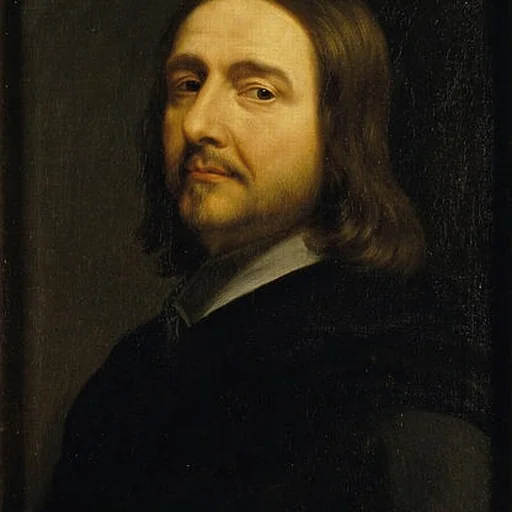
Philippe de Champaigne (French pronunciation:; 26 May 1602 – 12 August 1674) was a Brabant-born French Baroque era painter, a major exponent of French Baroque painting.

 Portrait of King Charles II of England
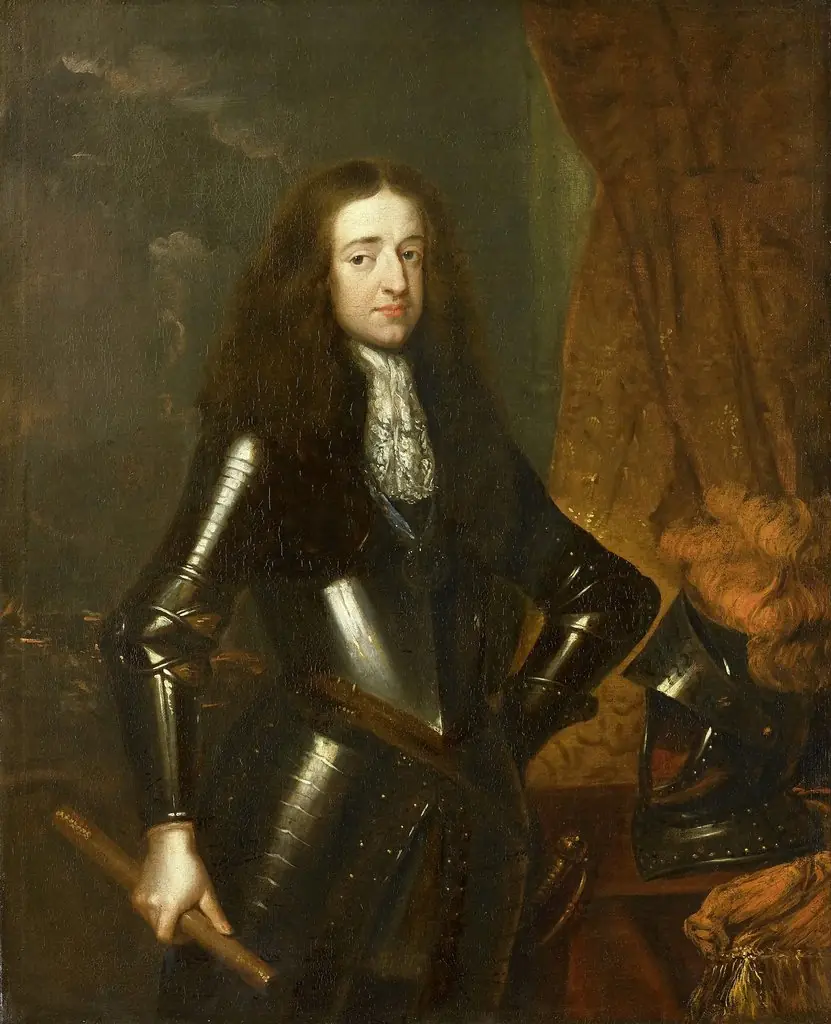 Portrait of Willem III (1650-1702), Prince of Orange and since 1689, King of England
 Portrait of Willem III (1650-1702), Prince of Orange and since 1689, King of England
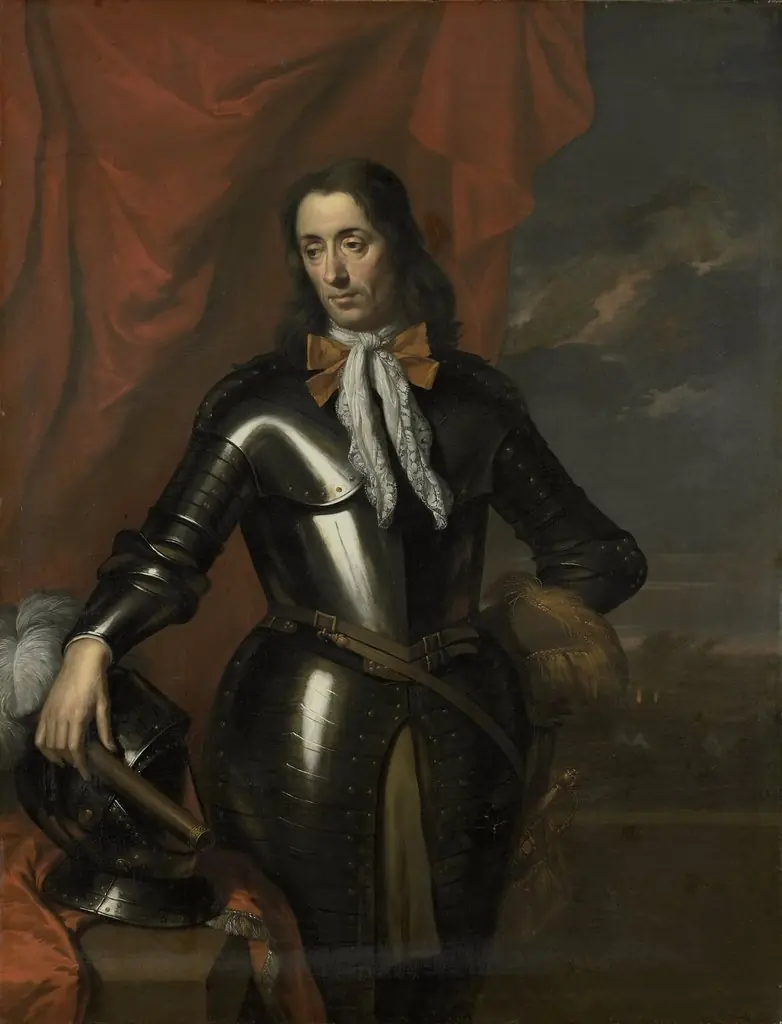 Portrait of Isaac de l'Ostal de Saint-Martin (ca 1629-96), governor of the Dutch East Indies and commander of the garrison at Batavia
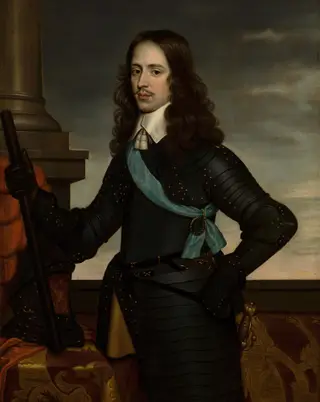 Portrait of Prince Willem II (1626-1650)
 Charles Louis, Elector Palatine
 Prince James of England