Artwork
The Annunciation
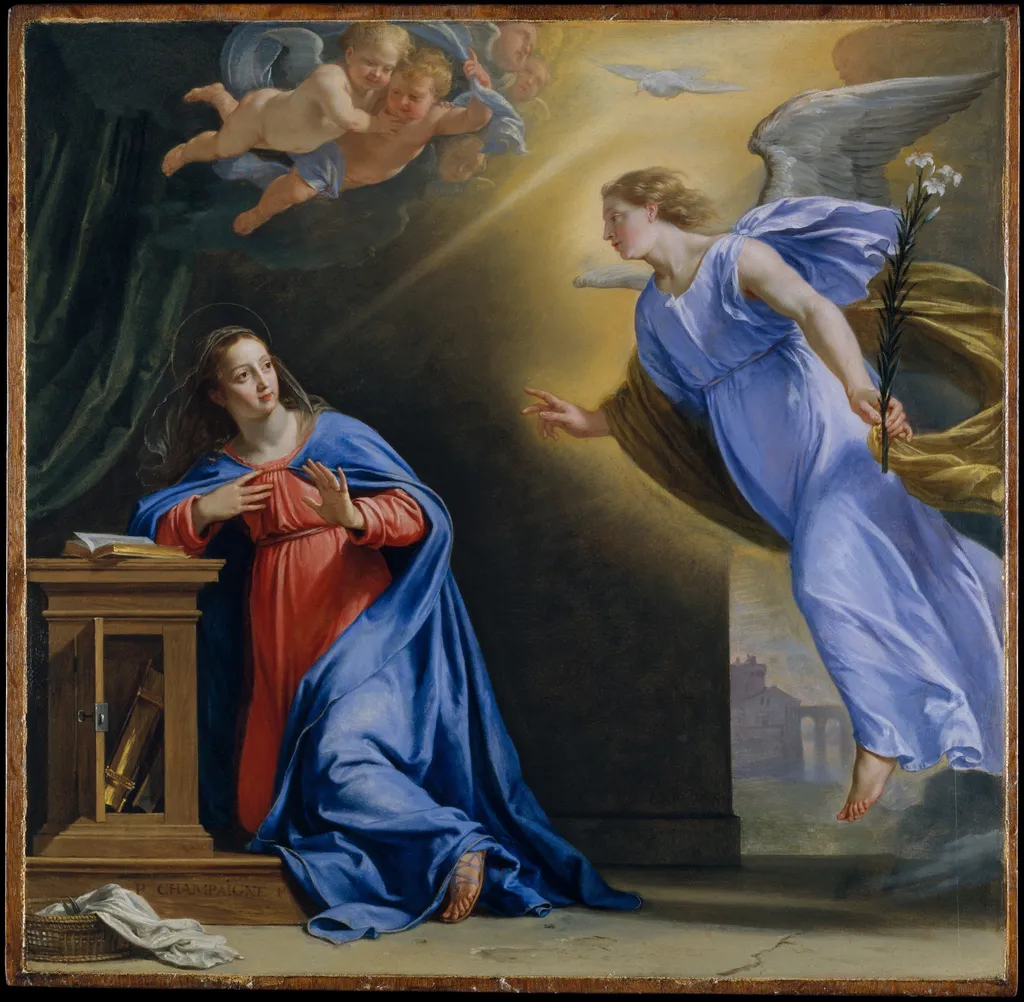
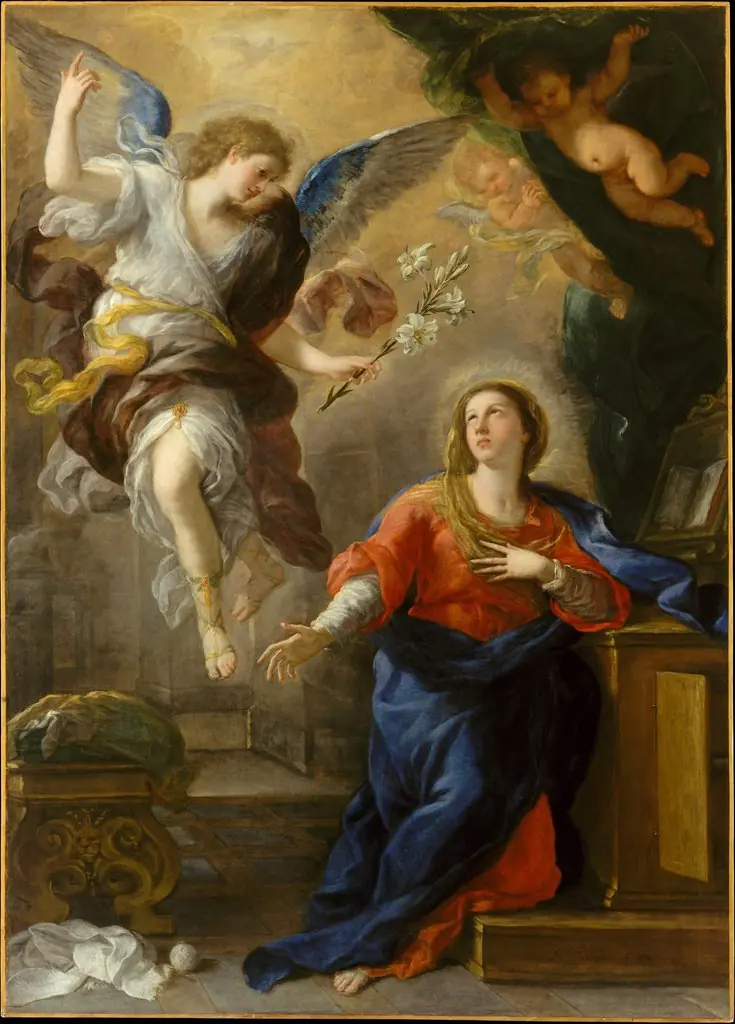
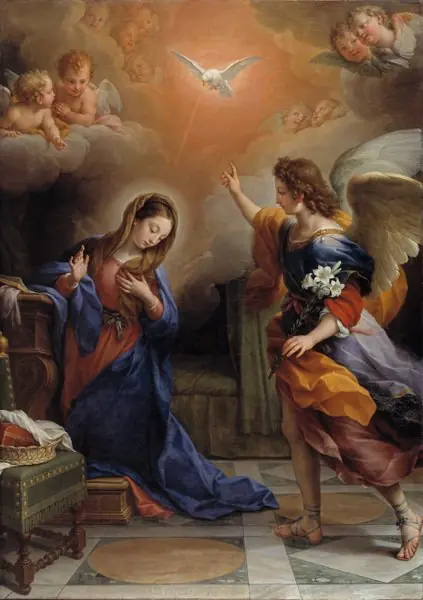
The Annunciation is an oil painting by the French Classical Baroque artist Philippe de Champaigne. It dates from 1644 and is held in the collection of the Metropolitan Museum of Art.
About this work
Subject & Meaning
The specific arrangement of Gabriel, Mary, and the dove visually communicates the theological narrative of divine intervention and the fulfillment of prophecy.
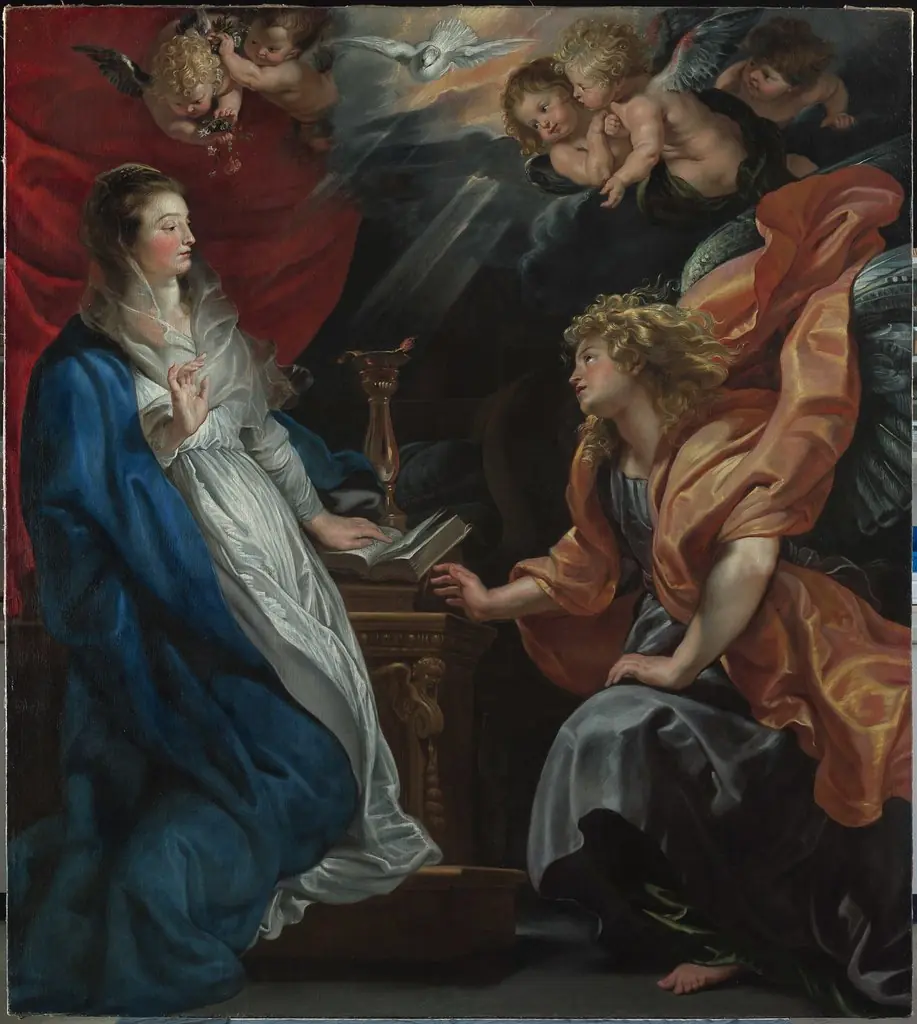
Philippe de Champaigne's 1644 oil painting, The Annunciation, depicts the biblical moment of the Archangel Gabriel announcing to the Virgin Mary that she will conceive the Son of God. The work's iconography centers on these two primary figures, Gabriel and Mary, who are the main subjects of the composition. A dove is also included in the scene, serving as a traditional symbol of the Holy Spirit's presence during this divine encounter.
As a work of religious art, the painting represents the pivotal event of the Incarnation in Christian theology. The specific arrangement of Gabriel, Mary, and the dove visually communicates the theological narrative of divine intervention and the fulfillment of prophecy.
Technique & Style
Executed in 1644, Philippe de Champaigne's The Annunciation is an oil painting created on a wooden panel support. The work measures approximately 69.2 cm in height and 70.5 cm in width, presenting a nearly square format. As a religious composition, the piece utilizes the oil medium to depict the biblical scene of the Annunciation, featuring the figures of the Archangel Gabriel and the Virgin Mary, along with the symbolic representation of the Holy Spirit as a dove.
The combination of oil paint and panel reflects standard materials for seventeenth-century European religious art, providing a durable surface for the artist's detailed rendering of the sacred narrative.
History & Provenance
The painting titled The Annunciation was executed by Philippe de Champaigne in 1644 as an oil work on panel, measuring 69.2 cm in height and 70.5 cm in width. It belongs to the religious genre and depicts the biblical moment of the Annunciation, featuring a dove, the angel Gabriel, and the Virgin Mary. According to the documented record, the work entered the collection of the Metropolitan Museum of Art, where it remains on public display.
No earlier ownership details or commissioning information are provided in the sources, but the provenance indicates that the painting has been part of the museum’s holdings since its creation.
Philippe de Champaigne's 1644 oil painting The Annunciation is held in the collection of the Metropolitan Museum of Art. The work, executed on a panel measuring 69.2 by 70.5 centimeters, depicts the biblical scene featuring the Virgin Mary, the archangel Gabriel, and a dove. While the artwork's current location and physical dimensions are documented, the provided sources do not contain specific inventory or accession numbers, nor do they list any past or current exhibitions for this piece.
Overview
Philippe de Champaigne, a prominent French Baroque painter, completed The Annunciation in 1644. This oil painting depicts the pivotal biblical moment when the Archangel Gabriel delivers divine news to the Virgin Mary. The composition also includes the Holy Spirit, traditionally represented as a dove.
The work is a significant example of Champaigne's religious output and is currently housed at The Metropolitan Museum of Art.
Context
Created in 1644, this work reflects Philippe de Champaigne's standing as a leading painter of religious subjects for the French court during the mid-17th century. A Brabant native, Champaigne was also a founding member of the Académie royale de peinture et de sculpture, an institution that shaped artistic standards in France. His contributions were instrumental in establishing the refined aesthetic of French Baroque art.
Own this work as a print
Artist & collection
Artist
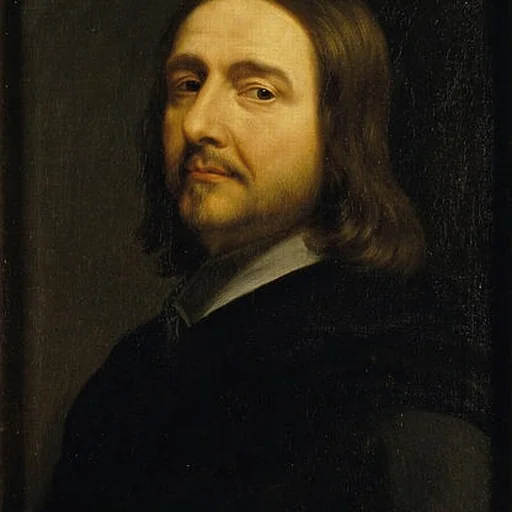
Philippe de Champaigne (French pronunciation:; 26 May 1602 – 12 August 1674) was a Brabant-born French Baroque era painter, a major exponent of French Baroque painting.