Artwork
Portrait of King Charles II of England
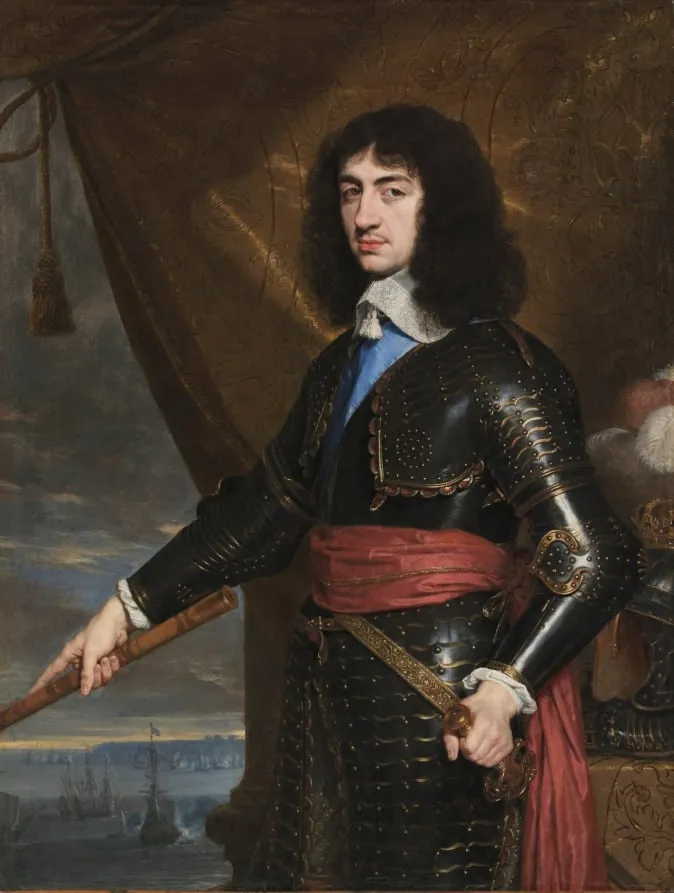
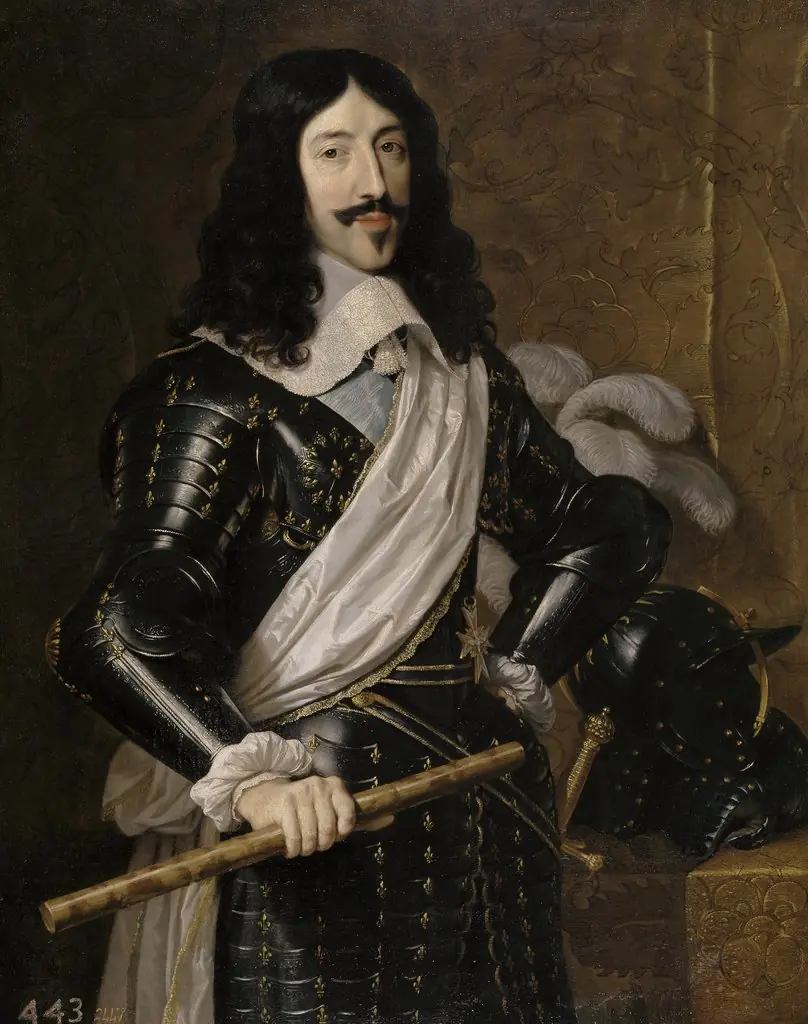
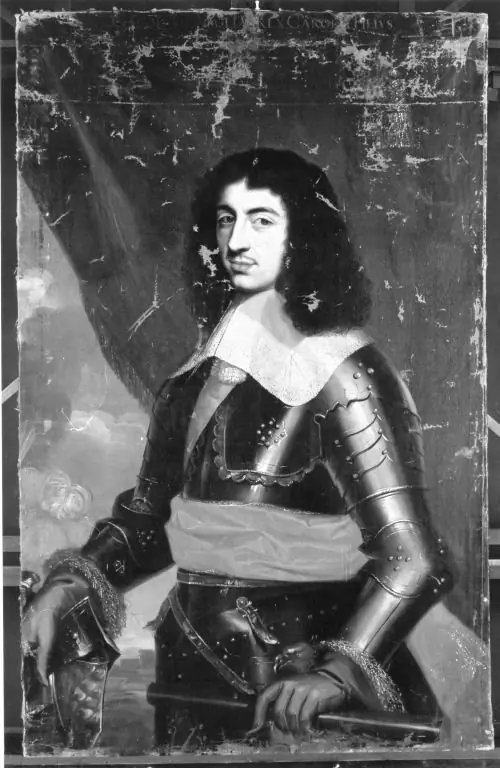
Portrait of King Charles II of England is an unspecified painting by the Baroque artist Philippe de Champaigne. It dates from 1653 and is held in the collection of the Cleveland Museum of Art. Painted during Charles II’s exile in France, this portrait captures the monarch in full armor, poised near the White Cliffs of Dover.
- Accession no.
- 1959.38
- Credit line
- The Elisabeth Severance Prentiss Collection
About this work
The armor isn’t just for show; it’s a reminder that he was the last British king to wear a full suit into battle, even if he never actually fought.
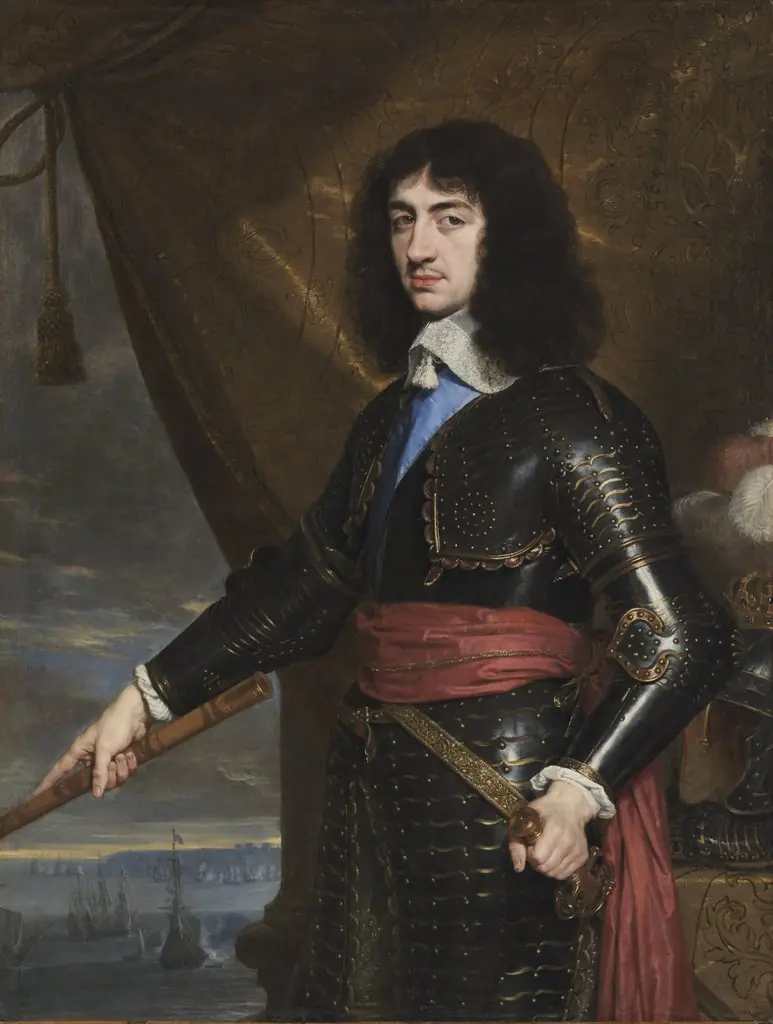
You see King Charles II in full armor, one hand resting on his helmet, the other pointing toward the sea. Behind him, ships wait near the white cliffs of Dover.
This portrait was painted while Charles was in exile, England was under military rule, and he was plotting his return. The armor isn’t just for show; it’s a reminder that he was the last British king to wear a full suit into battle, even if he never actually fought.
Look up more portraits from France, 17th century to see how other artists dressed power in paint.
Overview
Painted during Charles II’s exile in France, this portrait captures the monarch in full armor, poised near the White Cliffs of Dover. Though England was under parliamentary rule, the image asserts his claim to the throne. The composition emphasizes his royal identity through symbolic elements: armor, a distant fleet, and the sea as a threshold to restoration.
Subject & Meaning
Charles II is depicted not as a warrior but as a sovereign preparing to reclaim his realm. The armor, though never worn in combat, signifies legitimacy and continuity of monarchy. His gesture toward the fleet and the sea conveys intention and anticipation, framing his exile as a temporary interlude before the Restoration of 1660.
Technique & Style
The painting employs a restrained palette and precise detail to convey dignity rather than flamboyance. Light falls evenly across the armor, highlighting its polished surfaces and intricate engravings. The background is simplified, focusing attention on the figure and the symbolic horizon, a common approach in French court portraiture of the period.
History & Provenance
Commissioned while Charles resided in France, the portrait was part of a broader effort to maintain his public image abroad. It was likely created by a French or Flemish artist working in the royal circle. After his return to England, the painting entered royal collections, where it remained as a testament to the transition from republic to monarchy.
Context
In 1650s England, royal imagery was suppressed under Oliver Cromwell’s regime. Charles’s portrait in armor served as a quiet act of defiance, aligning him with the martial traditions of past monarchs. The Dover setting, a traditional point of return, reinforced his narrative of rightful restoration to a nation weary of military rule.
Legacy
This portrait stands as one of the last depictions of a British monarch in full armor, marking the end of a medieval tradition in royal representation. It influenced later images of monarchy that favored symbolic authority over battlefield heroism, shifting the visual language of kingship toward calm sovereignty rather than martial prowess.
Artist & collection
Artist
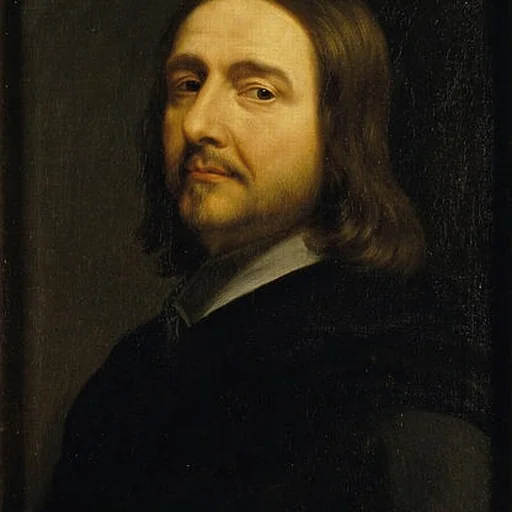
Philippe de Champaigne (French pronunciation:; 26 May 1602 – 12 August 1674) was a Brabant-born French Baroque era painter, a major exponent of French Baroque painting.

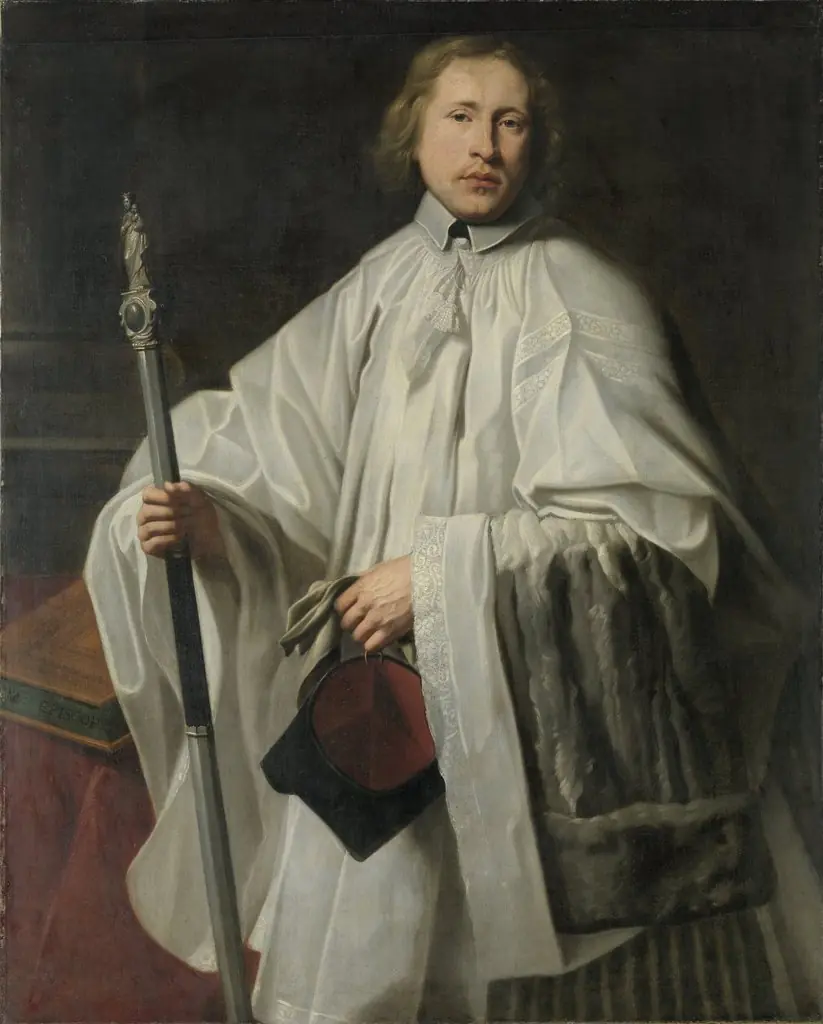
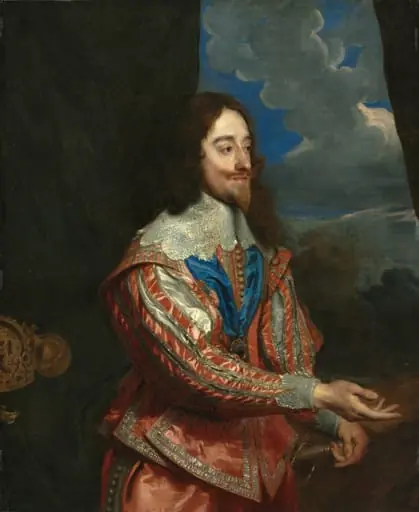 Portrait of Charles I (1600–1649)
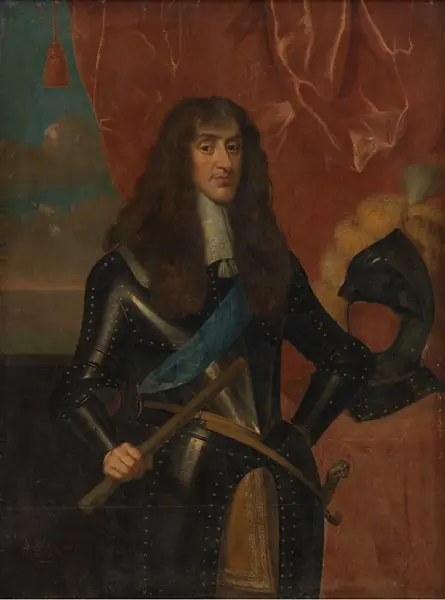 Portrait of James Stuart, Duke of York (1633-1701), later King James II of England
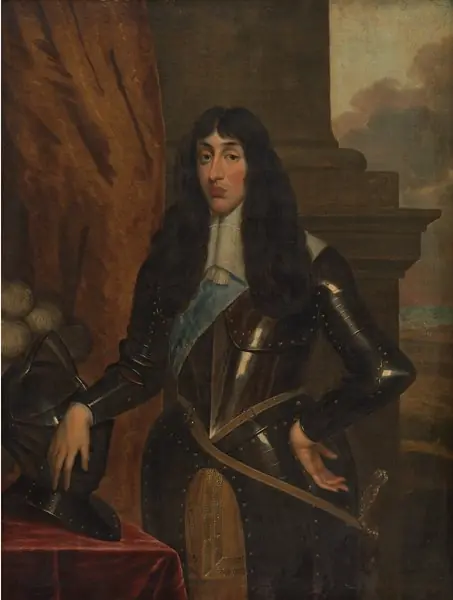 Portrait of Prince Henry of England
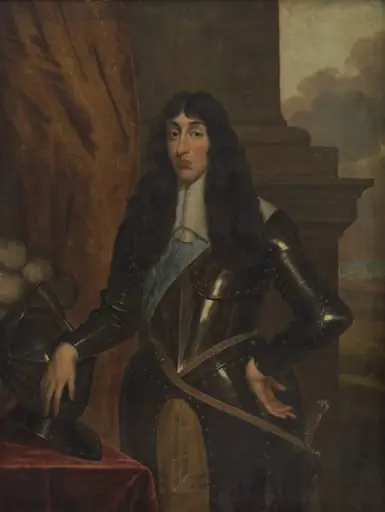 Portrait of Prince Henry of England
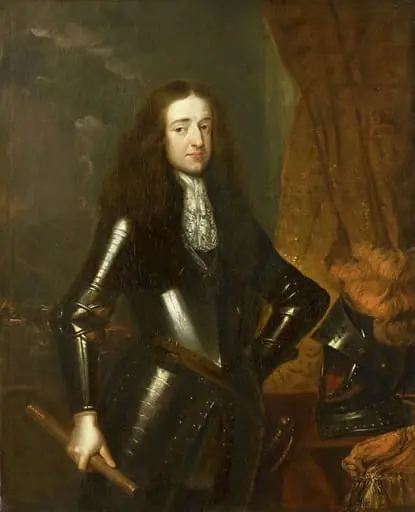 Portrait of Willem III (1650-1702), Prince of Orange and since 1689, King of England
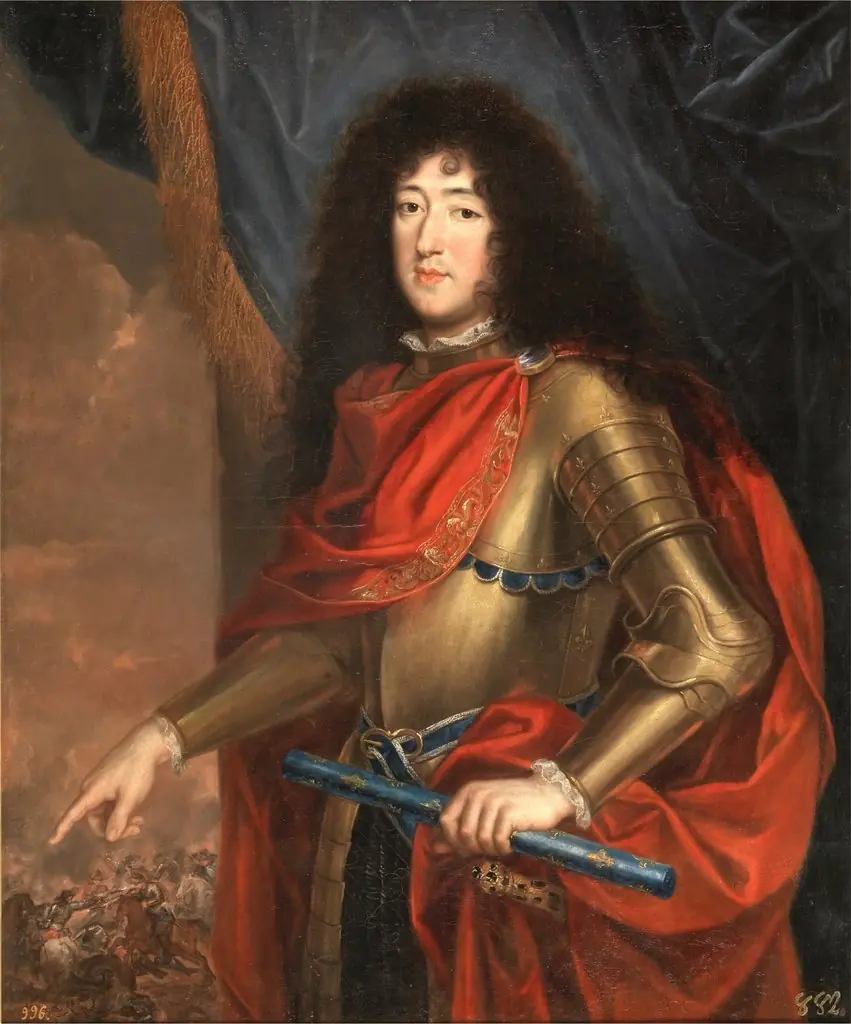 Phillip of France, I Duke of Orléans
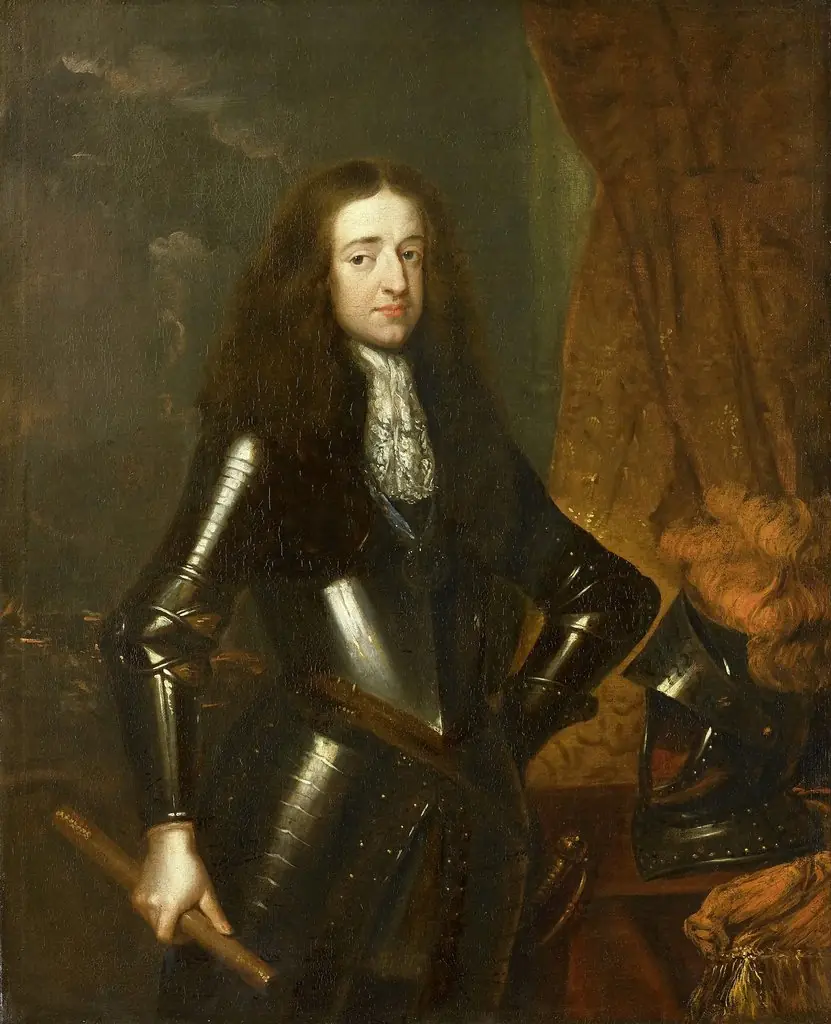 Portrait of Willem III (1650-1702), Prince of Orange and since 1689, King of England