Artwork
Path through the Dunes
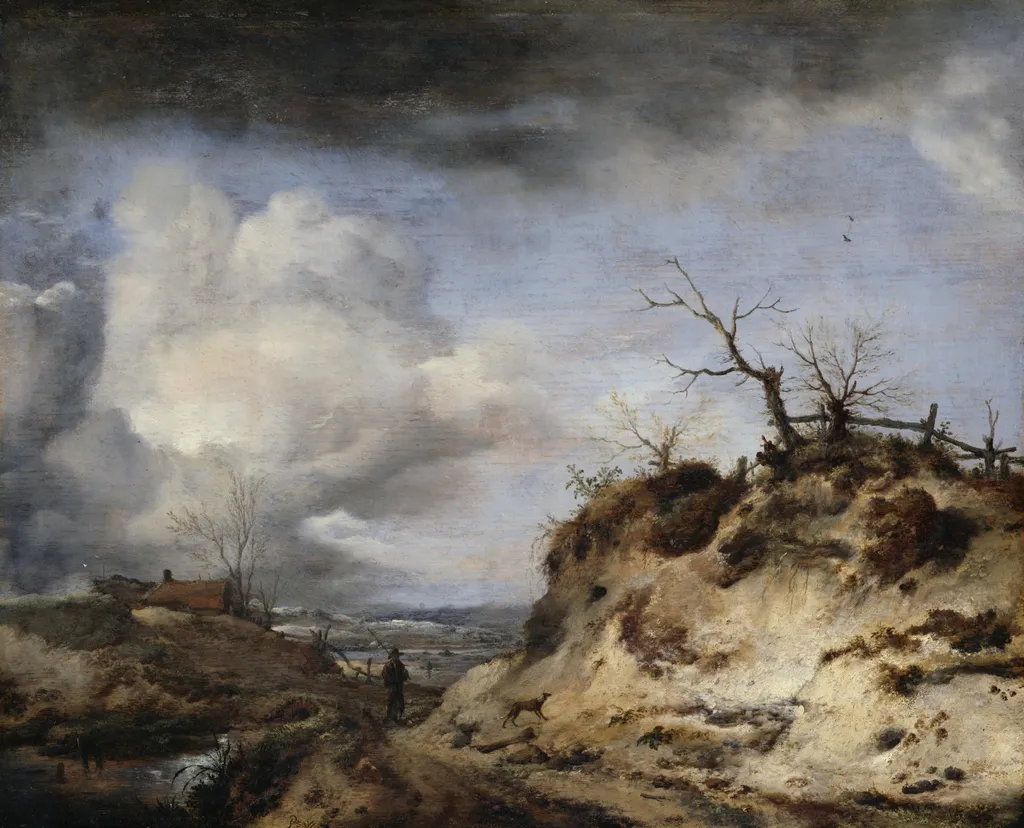
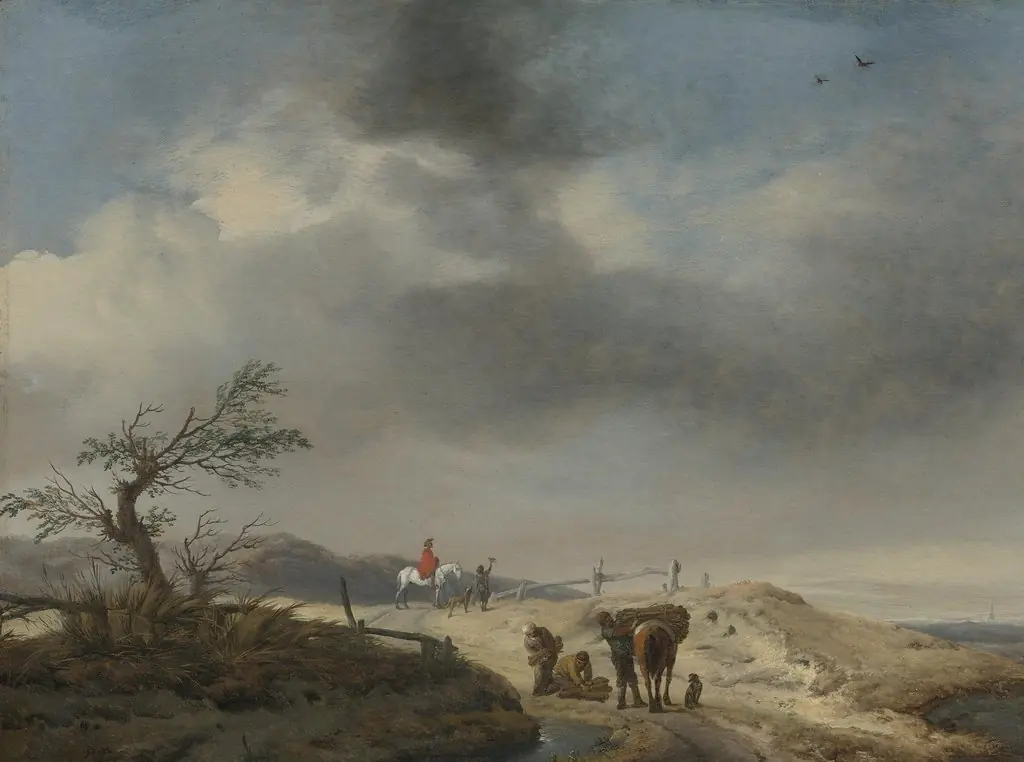
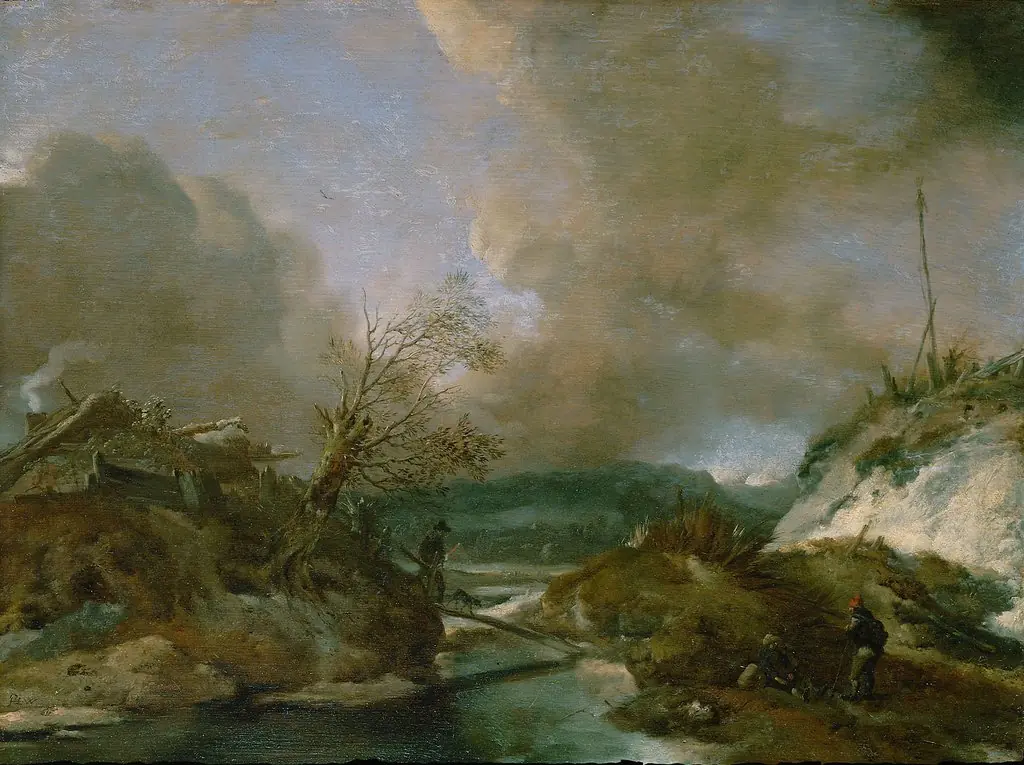
Path through the Dunes is an oil painting by the Dutch Golden Age artist Philips Wouwerman. It dates from 1655 and is held in the collection of the Gemäldegalerie Berlin.
About this work
Subject & Meaning
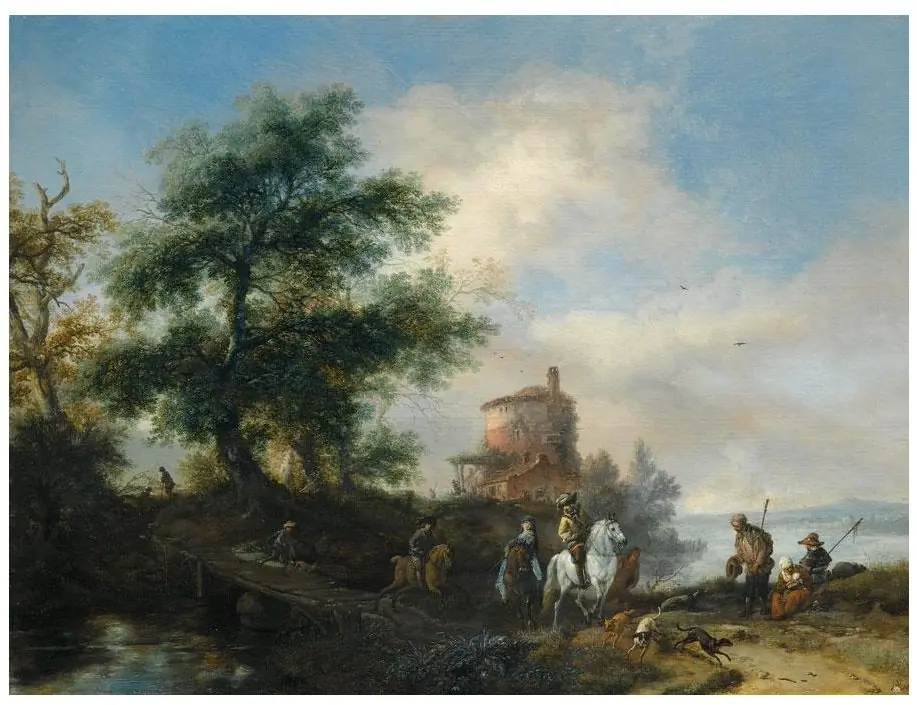
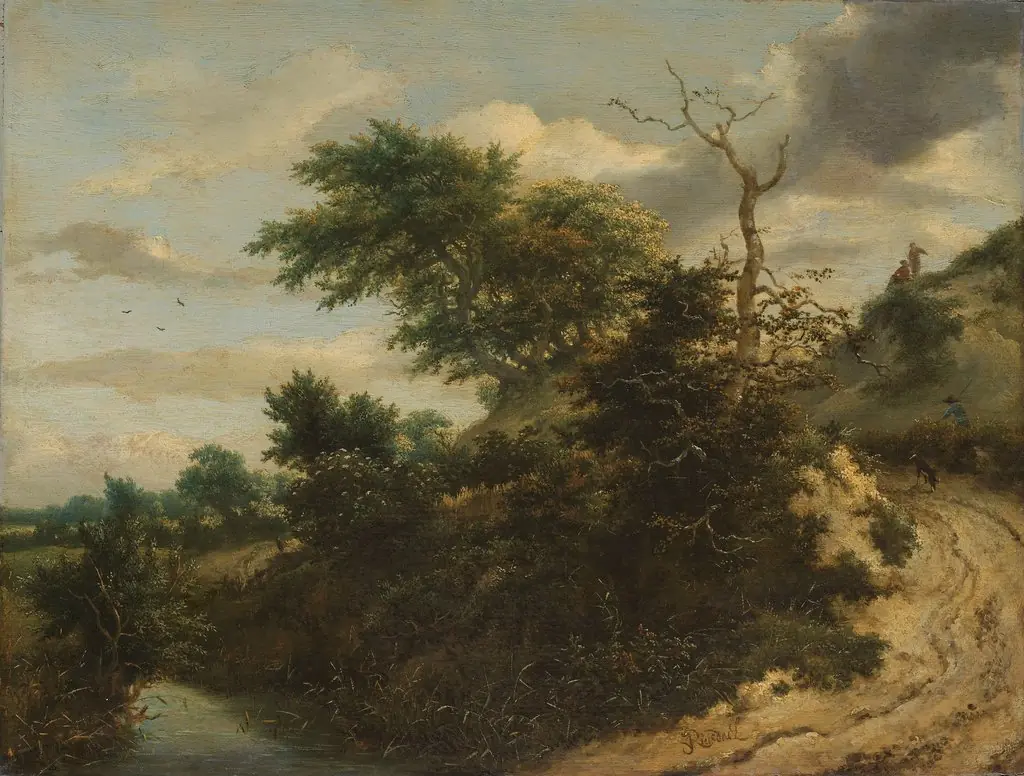
Philips Wouwerman's 1655 landscape painting, Path through the Dunes, depicts a rural scene characterized by a winding road cutting through sandy terrain.
Philips Wouwerman's 1655 landscape painting, Path through the Dunes, depicts a rural scene characterized by a winding road cutting through sandy terrain. The composition features specific natural and man-made elements, including dunes, a house, and a guard rail that structures the path. Human presence is indicated by the inclusion of a man traversing the landscape.
As a work of the landscape genre, the piece captures a moment of travel and settlement within a Dutch dune environment, focusing on the relationship between the figure and the surrounding geography.
Technique & Style
Executed in 1655, Path through the Dunes is an oil painting applied to an oak panel support. The work measures 35 cm in height and 43 cm in width. Stylistically, the composition functions as a landscape depicting a road winding through dune terrain, populated by a male figure and architectural elements including a house and a guard rail.
While primarily attributed to Philips Wouwerman, some records also associate Jan Wouwerman with the creation of the piece.
History & Provenance
Path through the Dunes is an oil painting on oak panel created in 1655 by Philips Wouwerman, with Jan Wouwerman also associated as creator. The work entered the collection of Gemäldegalerie Berlin through the dealer Frederik Muller & Co and remains part of that institution's holdings today. It is catalogued as a landscape painting and has been displayed in the museum's collection.
The painting measures 35 cm in height and 43 cm in width. Its subject includes a man, dune, road, house, and guard rail, reflecting Wouwerman's focus on detailed pastoral scenes. The work's provenance traces directly from its creation in 1655 to its acquisition by the Gemäldegalerie Berlin via Frederik Muller & Co.
The painting is part of the permanent collection at the Gemäldegalerie Berlin, where it is preserved and studied as an example of 17th-century Dutch landscape art.
The painting is held by the Gemäldegalerie Berlin, where it is inventoried as Path through the Dunes by Philips Wouwerman (accession not specified in sources).
It was included in the sale Frederik Muller & Co., Amsterdam, as part of the Wouwerman holdings, confirming its provenance within that collection before entering the Berlin museum.
Overview
Created in 1655 by Dutch artist Philips Wouwerman, Path through the Dunes is an oil painting that exemplifies his prolific output of landscape scenes during the Dutch Golden Age. The work is part of the Gemäldegalerie Berlin’s collection and presents a quiet, windswept environment rendered with careful observation of light and atmosphere.
Own this work as a print
Artist & collection
Artist
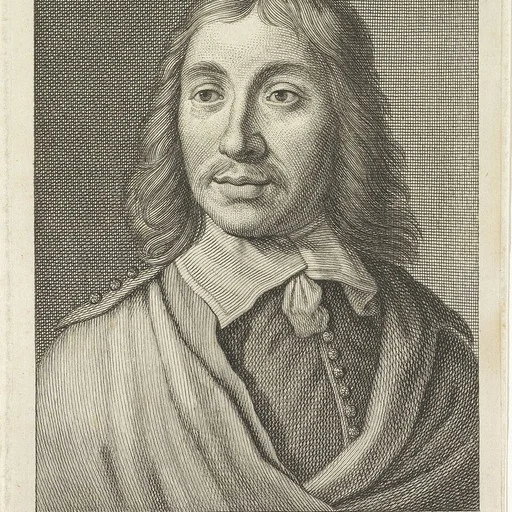
Philips Wouwerman (also Wouwermans) (24 May 1619 (baptized) – 19 May 1668) was a Dutch painter of hunting, landscape and battle scenes. He became prolific during the Dutch Golden Age and joined the Haarlem Guild of St. Luke.