Artwork
Dunes and bleaching fields
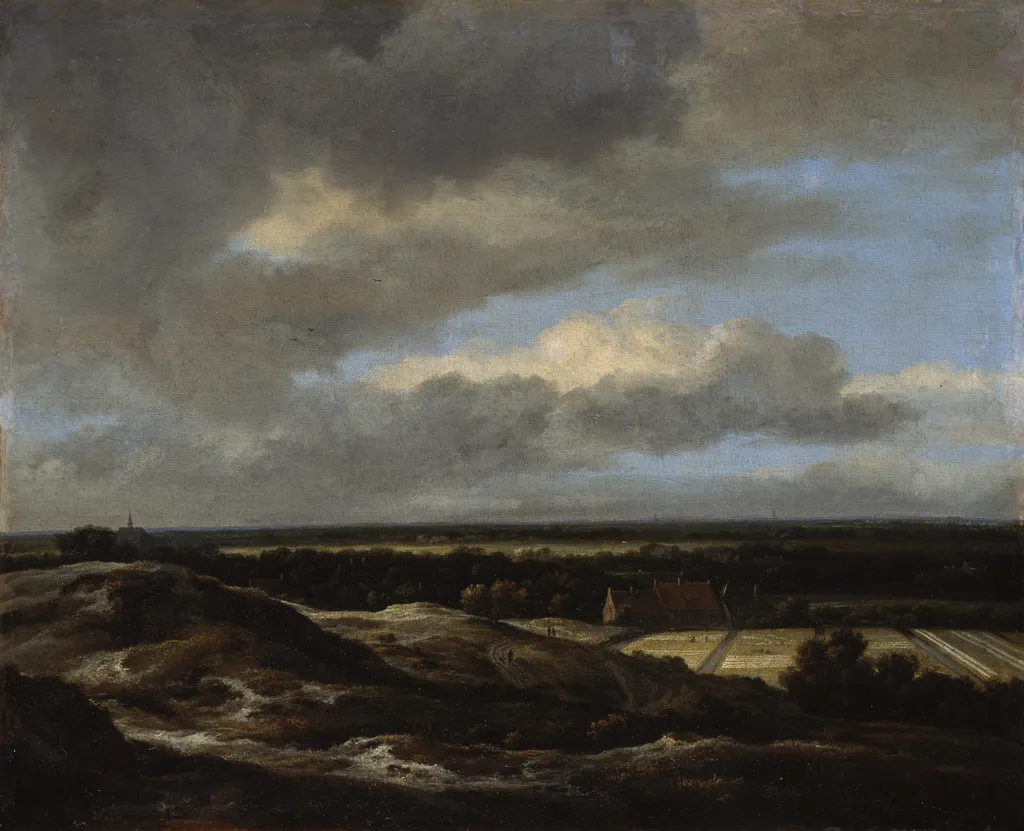
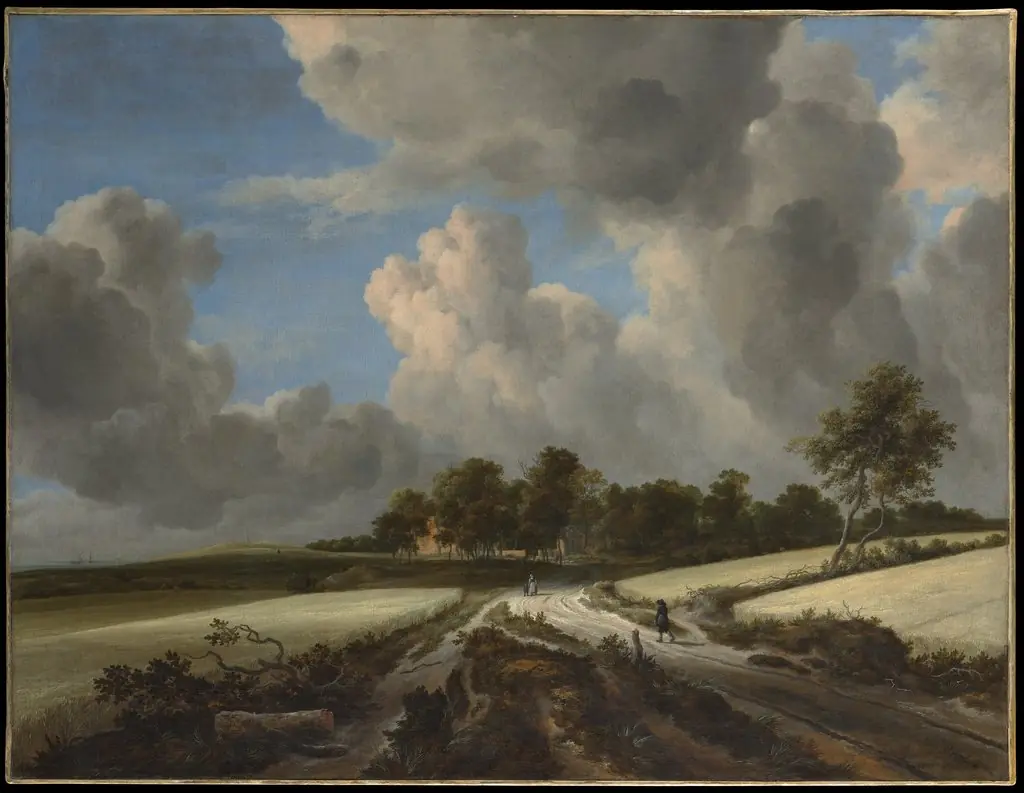
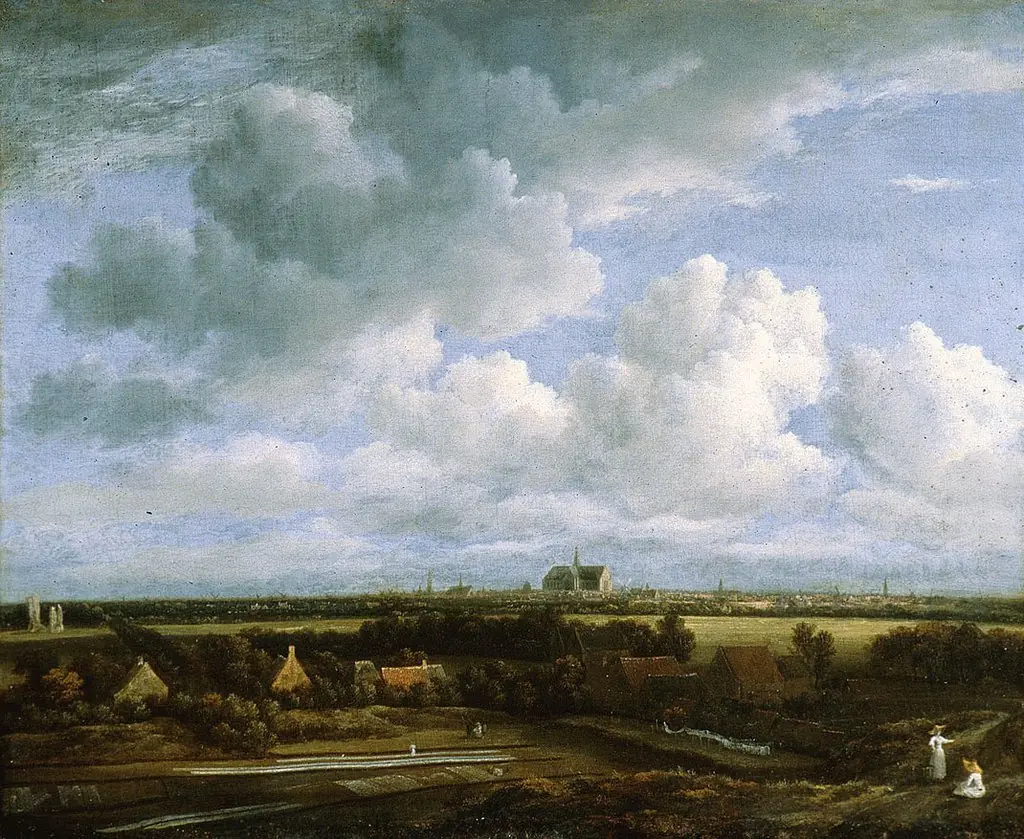
Dunes and bleaching fields is an oil painting by the Dutch Golden Age artist Jacob van Ruisdael. It dates from 1668 and is held in the collection of the Gemäldegalerie Berlin.
About this work
Subject & Meaning
The work combines naturalistic observation with subtle allegory, using the expansive sky and weathered terrain to suggest themes of impermanence and renewal.
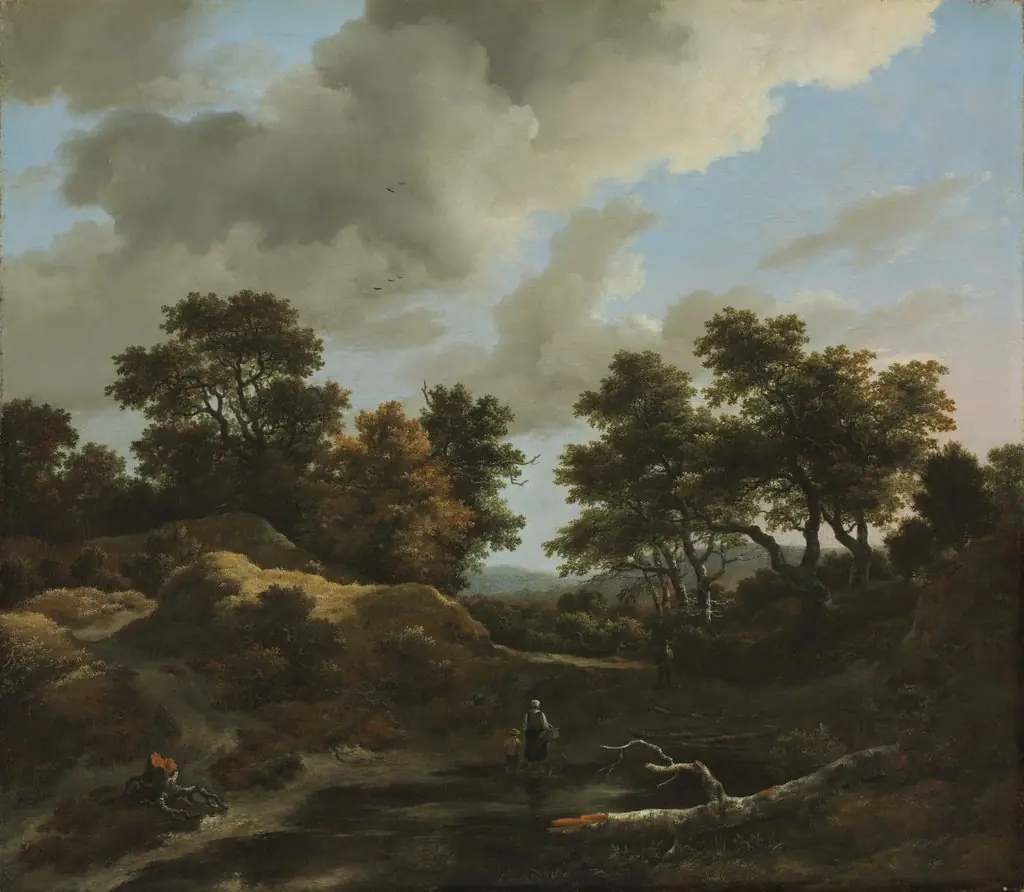
The painting portrays a coastal landscape featuring dunes and a bleaching field, elements that recur in van Ruisdael's late works to emphasize natural cycles and human interaction with the environment. The depicted bleaching field, a site for linen processing, references historical Dutch textile practices and adds a layer of socio-economic symbolism to the otherwise idyllic scenery.
The work combines naturalistic observation with subtle allegory, using the expansive sky and weathered terrain to suggest themes of impermanence and renewal.
The painting shows a dune, a cloud, a steeple, and a bleachfield.
The work is housed in the Gemäldegalerie Berlin.
Technique & Style
Jacob van Ruisdael painted Dunes and bleaching fields in 1668 using oil on canvas, a technique characteristic of Dutch Golden Age landscape painting. The work depicts a coastal dune landscape with a bleaching field, featuring atmospheric cloud formations and a distant steeple. It is an oil painting on canvas support, classified as a landscape genre work.
The painting measures 33.8 cm in height and 41.2 cm in width, reflecting the meticulous handling and formal composition typical of Ruisdael's mature period.
The formal qualities emphasize tonal gradation and spatial depth, with stylistic elements including dramatic sky treatment and precise rendering of natural terrain. These characteristics align with Ruisdael's approach to landscape painting, where he combined scientific observation with expressive brushwork to convey the grandeur of natural forms.
History & Provenance
The landscape painting Dunes and bleaching fields was created by Jacob van Ruisdael in 1668. Executed in oil paint, the work depicts dunes, clouds, a steeple, and bleachfields. The piece measures 33.8 cm in height and 41.2 cm in width. It is currently held in the collection of the Gemäldegalerie Berlin.
Jacob van Ruisdael's landscape painting Dunes and bleaching fields, created in 1668, is held in the collection of the Gemäldegalerie Berlin. The work is an oil on canvas measuring 33.8 cm in height and 41.2 cm in width. The provided sources do not list a specific inventory or accession number for the piece, nor do they document any exhibition history. The painting depicts dunes, clouds, a steeple, and bleachfields within the museum's holdings.
Overview
Jacob van Ruisdael’s oil painting Dunes and Bleaching Fields was completed in 1668. The work presents a broad, open landscape where rolling dunes occupy the foreground and cultivated bleaching fields extend toward the horizon. A low, cloud‑laden sky dominates the upper portion, while a distant steeple punctuates the scene, providing a visual anchor. The canvas is part of the collection of the Gemäldegalerie in Berlin.
Context
The work reflects the economic importance of linen bleaching in the Dutch Republic during the 1600s, when coastal plains were routinely transformed into temporary industrial sites. Ruisdael’s inclusion of a church steeple situates the scene within a recognizable, inhabited landscape, linking the natural environment to the cultural and religious life of the period.
Own this work as a print
Artist & collection
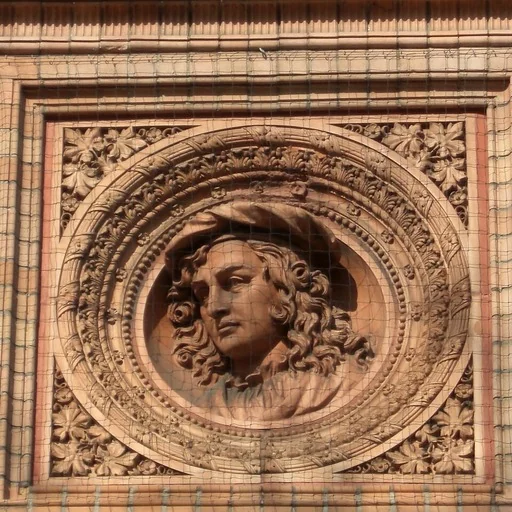
Artist
Jacob Isaackszoon van Ruisdael was a Dutch painter, draughtsman, and etcher. He is generally considered the pre-eminent landscape painter of the Dutch Golden Age, a period of great wealth and cultural achievement when…