Artwork
The Grey Horse
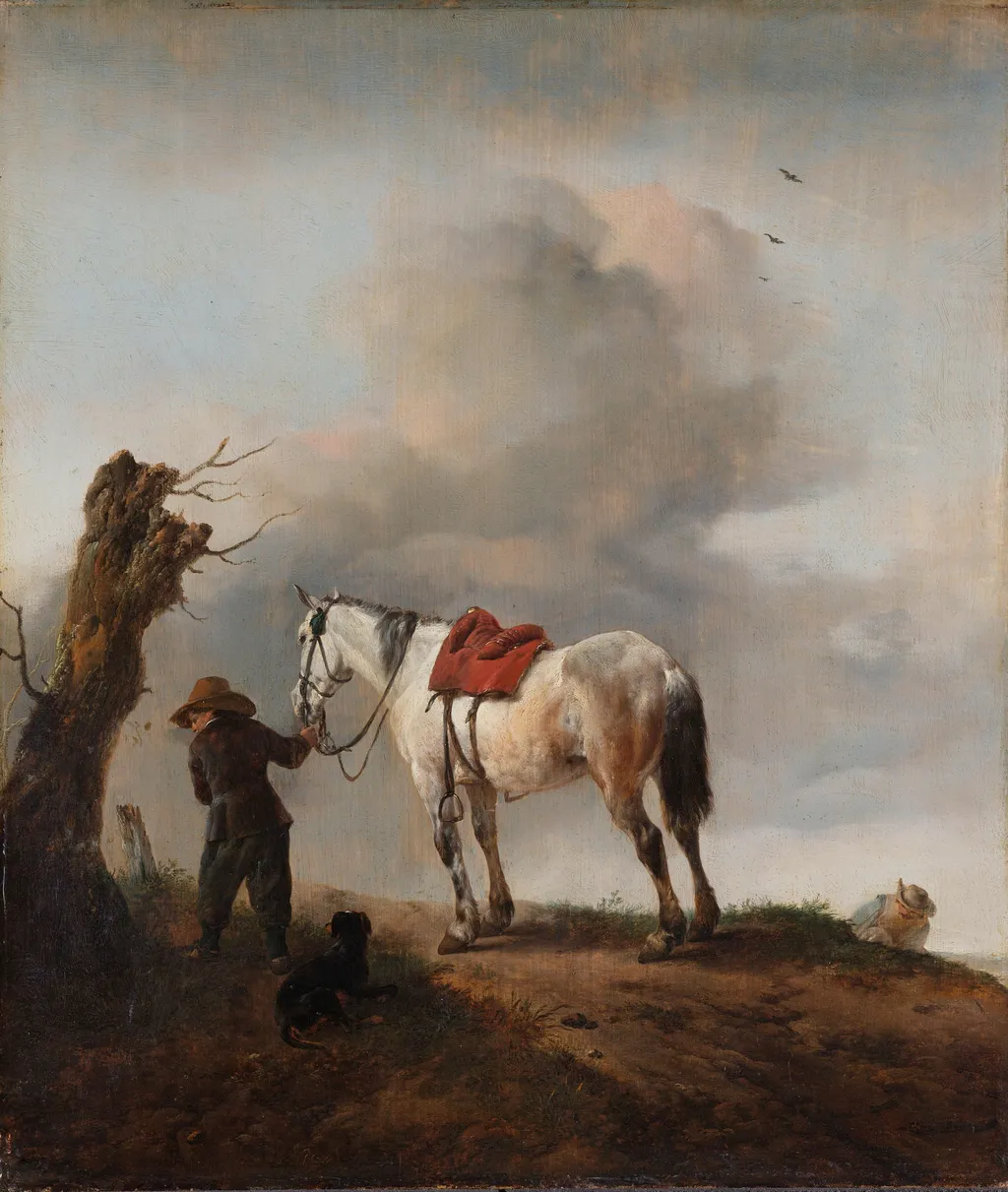
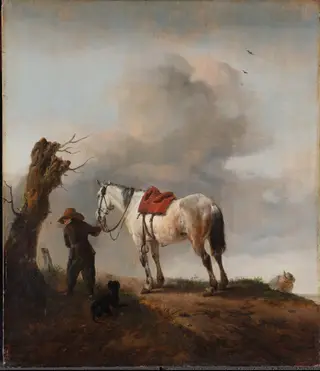
The Grey Horse is an oil painting by the Dutch Golden Age artist Philips Wouwerman. It dates from 1646 and is held in the collection of the Rijksmuseum.
About this work
Subject & Meaning
Wouwerman deliberately lowers the viewpoint to give the horse monumental proportions, positioning it atop a hill so that it stands out sharply against the sky.
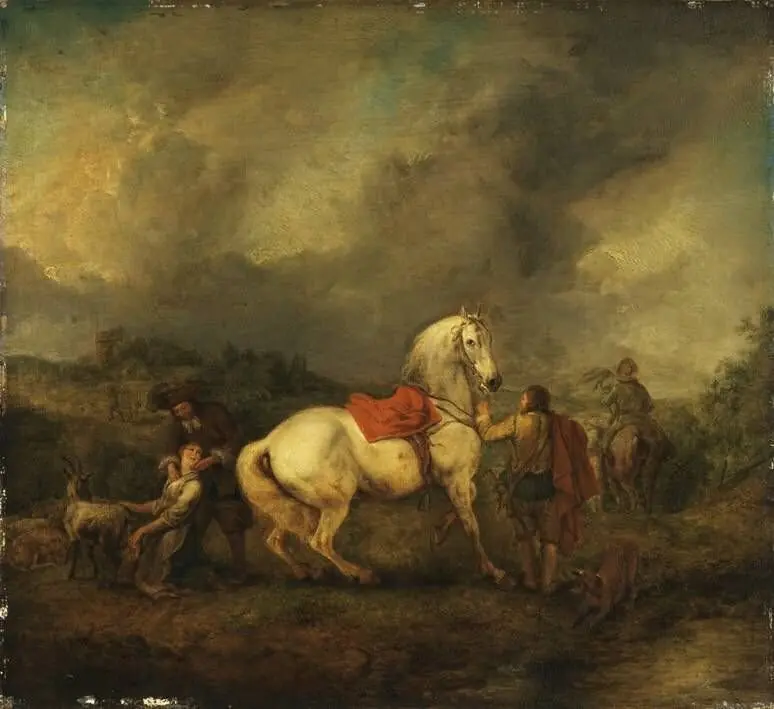
The painting centers on a grey horse seen from behind, held by a young man who is also turned away from the viewer, with a dog accompanying the pair. The composition is dominated by brown and grey tones, with a red saddle cloth providing a vivid accent against a typically Dutch cloudy sky. Wouwerman deliberately lowers the viewpoint to give the horse monumental proportions, positioning it atop a hill so that it stands out sharply against the sky.
The narrative element, characteristic of Wouwerman's work, lies in the anecdote behind the scene: the boy waits on the hilltop for his master, who is shown climbing up from behind the rise, having just relieved himself. The horse, the boy, and even the dog all look in the opposite direction, leaving the viewer to imagine who might be approaching and whether the rider will be disturbed.
The painting's meaning arises from the tension between the imposing, almost reverent depiction of the horse and the trivial, humorous anecdote concealed within it, two elements that appear to contradict one another.
Technique & Style
Created circa 1646, The Grey Horse is an oil painting executed on a wooden panel support. The work measures 43.5 cm in height and 38 cm in width. Stylistically, the composition is defined by a palette dominated by brown and grey tones, punctuated by a red saddle cloth that provides a sharp chromatic accent.
Philips Wouwerman employs a low viewpoint to grant the central grey horse, depicted from behind, a sense of monumental scale against a dramatic, cloud-filled sky. The artist's handling of the medium achieves a lifelike texture, particularly in the rendering of the horse's coat, which is described as almost touchable. This realistic depiction is set within a narrative context where the animal and a young attendant face away from the viewer, contrasting the grandeur of the animal with the mundane, anecdotal nature of the scene.
History & Provenance
Philips Wouwerman painted The Grey Horse around 1646 in Haarlem. For centuries, the work remained in various Dutch private collections before entering the prominent Amsterdam collection of the Messchert family in the nineteenth century. Following the death of Margaretha Catharina van Lennep, widow of former Amsterdam mayor Jan Messchert van Vollenhoven, her heirs offered the collection for sale in 1892.
The Rembrandt Society intervened to secure the painting for Dutch cultural heritage, negotiating a private agreement to acquire four key works, including this piece, while maintaining the appearance of public bidding. Although the pre-arranged price for the group was 40,000 guilders, competitive bidding at the auction drove the specific cost for The Grey Horse to 15,000 guilders. The society successfully transferred the painting to the Rijksmuseum in 1894.
The Grey Horse is held in the collection of the Rijksmuseum in Amsterdam. The painting entered the museum's holdings in 1894, placed there by the Rembrandt Society following an acquisition process initiated in 1892. It was purchased from the estate of Margaretha Messchert van Vollenhoven-van Lennep, having previously belonged to the prominent Messchert collection in Amsterdam.
During the 1892 sale, the Rembrandt Society secured the work for 15,000 guilders as part of a broader effort to preserve Dutch cultural heritage. The acquisition marked it as one of the final Philips Wouwerman paintings added to the Rijksmuseum during the nineteenth century.
Context
Philips Wouwerman was an exceptionally prolific and popular painter during the Dutch Golden Age, known for incorporating narrative elements and humor into his works. The Grey Horse, created around 1646, is cited as a prime example of his early style, demonstrating a technical perfection in depicting horses that was nearly unmatched in Dutch painting. The work creates a striking contrast between the monumental, realistic portrayal of the animal and the trivial, anecdotal scene of a man relieving himself in the background, leaving the viewer to interpret the resulting tension.
Although the painting resided in various private collections, including that of the Messchert family, it gained significant public prominence in the twentieth century. Following its acquisition by the Rembrandt Society and subsequent placement in the Rijksmuseum in 1894, it evolved into one of the artist's most favored pieces among connoisseurs. Scholars continue to analyze the work for its unique blend of sober realism and hidden storytelling.
Legacy
The Grey Horse has come to symbolize Wouwerman's mastery of equine subjects and influenced later animal painters through its dynamic composition and narrative ambiguity. Art historians note its role in shaping 19th-century depictions of horses as both subject and storytelling device, particularly its use of dramatic lighting and implied motion. The painting's acquisition by the Rijksmuseum in 1894, facilitated by the Vereniging Rembrandt, cemented its status as a key work in Dutch Golden Age collections, often cited in studies of 17th-century genre painting and horsemanship symbolism.
Its legacy persists in exhibitions exploring animal art's evolution, with scholars like Schumacher (2006) highlighting its technical innovation in rendering horse anatomy and its subtle commentary on human-animal relationships.
Overview
Philips Wouwerman’s 1646 oil painting The Grey Horse presents a tranquil rural scene in which a man in a brown coat and hat stands beside a white horse with a red saddle blanket. A black dog rests at the man’s feet, while a small bird is perched nearby, all set against a bare tree and a softly clouded sky.
Own this work as a print
Artist & collection
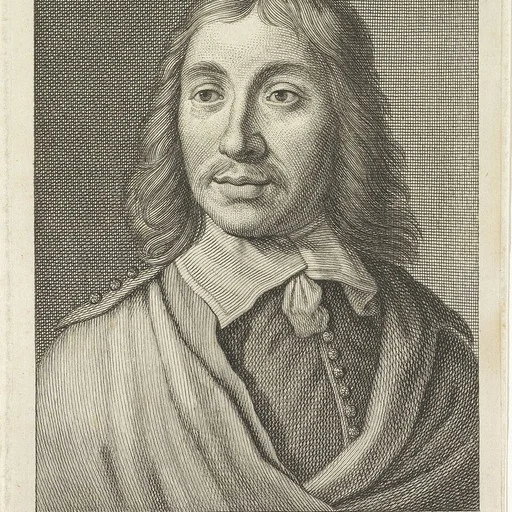
Artist
Philips Wouwerman (also Wouwermans) (24 May 1619 (baptized) – 19 May 1668) was a Dutch painter of hunting, landscape and battle scenes. He became prolific during the Dutch Golden Age and joined the Haarlem Guild of St. Luke.