Artwork
Alsa Slade
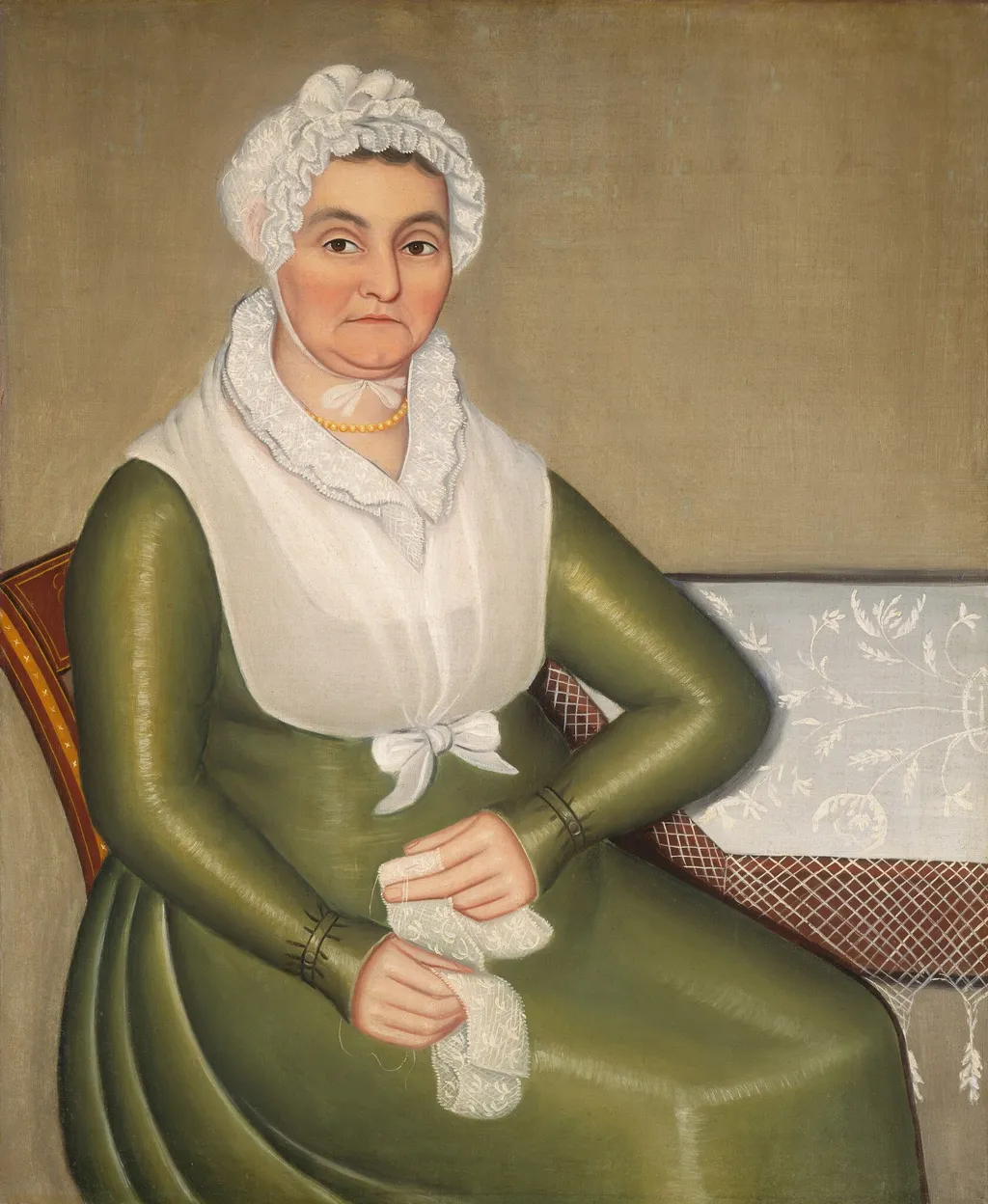
Alsa Slade is an oil painting by the American Folk Art artist Ammi Phillips. It dates from 1816 and is held in the collection of the National Gallery of Art.
- Inscription
- Inscribed:on reverse (no longer visible, photograph in object file [1953.5.53] in NGA curatorial records): ALCE SLADE AGED 49 YEARS AD 1816
About this work
Subject & Meaning
Within this setting, the embroidery serves not only as a marker of identity but also as a visual emblem of the sitter's social role and personal accomplishment.
The subject of Phillips's 1816 portrait is Alsa Slade, depicted in the act of embroidery, a needlework practice then associated with feminine virtue and domestic skill. Her engagement with the craft suggests ideals of industriousness and moral character central to early-nineteenth-century portraiture conventions for women. The work's provenance links it to the Slade family's Red, White, and Blue House in Waterford, New York, tying the image to a specific regional and familial context.
Within this setting, the embroidery serves not only as a marker of identity but also as a visual emblem of the sitter's social role and personal accomplishment.
Technique & Style
The portrait of Alsa Slade is executed in oil on canvas, a conventional support for early nineteenth-century American portraiture. Ammi Phillips rendered the figure with smooth, precise handling, emphasizing clarity and detail in the sitter's facial features and costume. Her attire, including an embroidered garment, is depicted with careful attention to texture and pattern, reflecting Phillips's methodical approach to surface realism.
The composition centers on the sitter's calm, frontal pose, framed by a neutral background that isolates the figure and directs focus to her expression and craft. The work's formal qualities, tight brushwork, restrained palette, and emphasis on individual identity, align with Phillips's documented style during the 1810s. The painting was accessioned by the National Gallery of Art in 1953.
History & Provenance
The painting titled Alsa Slade was created in 1816 by Ammi Phillips as an oil on canvas portrait of the sitter Alsa Slade, depicting her with embroidery. It originated in New York State, where it may have been displayed in the Red, White, and Blue House built by Benjamin Slade in Waterford. The work was later discovered in Lansingburgh (now part of Troy) by Frederick Fuessenich, sold in 1952 to Edgar William and Bernice Chrysler Garbisch, and gifted to the National Gallery of Art in 1953, where it has remained in the museum's collection.
Alsa Slade is held in the collection of the National Gallery of Art in Washington, D.C. The painting entered the NGA in 1953 as a gift from Edgar William and Bernice Chrysler Garbisch, who had acquired it in 1952 from Frederick Fuessenich of Litchfield, Connecticut. Fuessenich reportedly found the work in Lansingburgh, now part of Troy, New York. Earlier provenance situates the portrait in New York State, with a possible prior location in the Red, White, and Blue House built by Benjamin Slade, son of Joseph and Alsa Slade, in Waterford, New York, as noted in correspondence from a Slade descendant held in NGA curatorial files.
Overview
Ammi Phillips's 1816 oil on canvas painting, titled Alsa Slade, is a portrait that captures a woman engaged in the act of embroidery. This work exemplifies the artist's characteristic approach to depicting individuals, often within their domestic settings, through a focused and direct portrayal.
Own this work as a print
Artist & collection
Artist
Ammi Phillips (April 24, 1788 – July 11, 1865) was a prolific American itinerant portrait painter active from the mid 1810s to the early 1860s in Connecticut, Massachusetts, and New York.

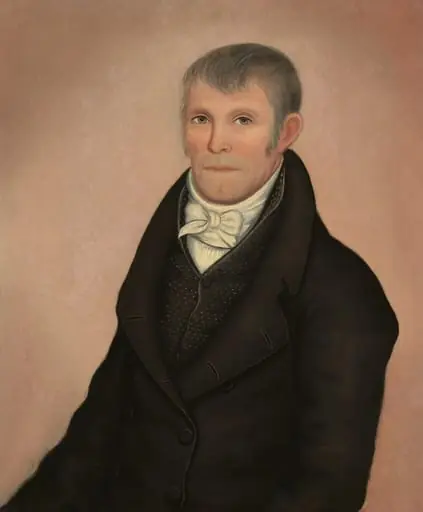

- Jane Daney Smith
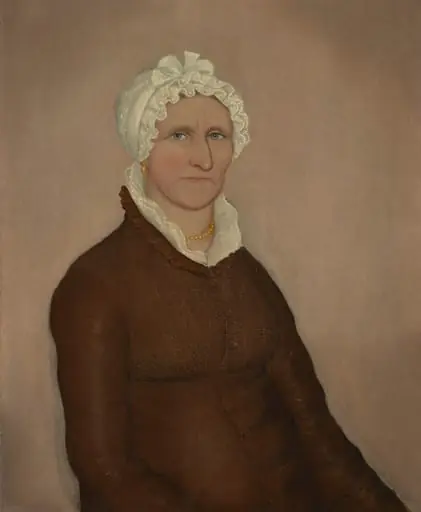 Portrait of a Lady
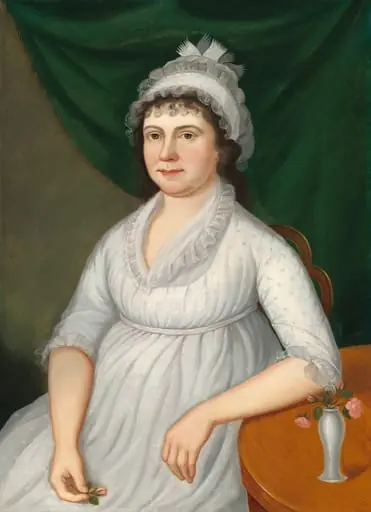 Hannah Lemmon Corcoran (Mrs. Thomas Corcoran)
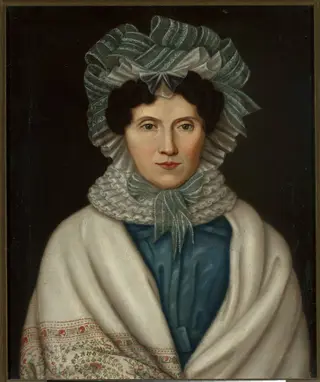 Portrait of Aniela Andrychewicz née Rudowska
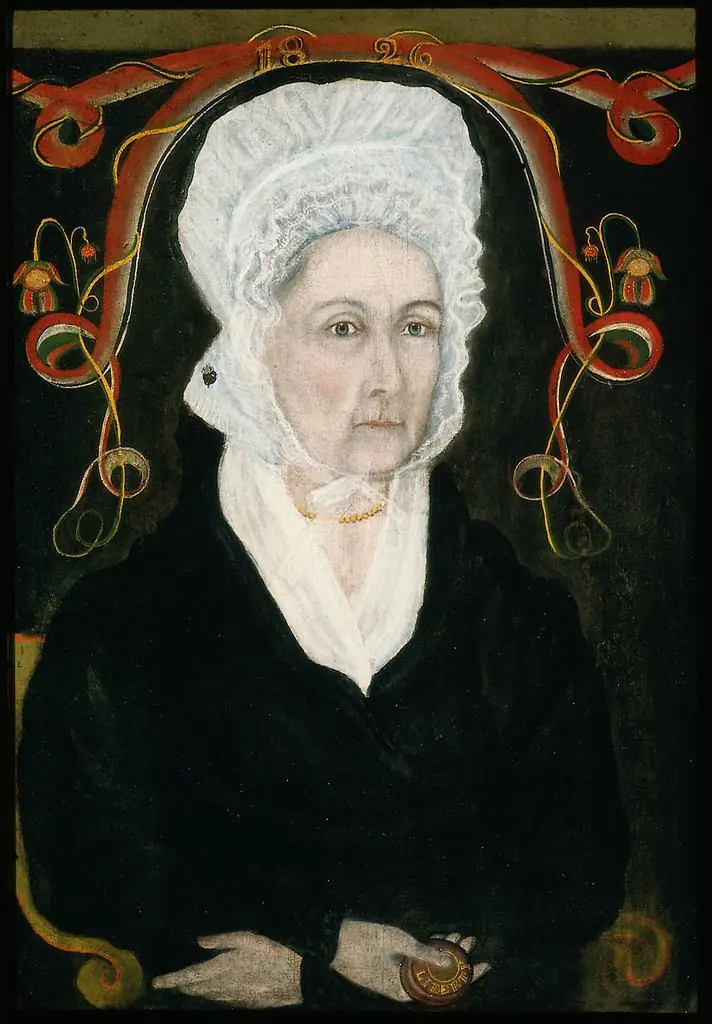 Mrs. Patrick Henry (Dorothea Dandridge)
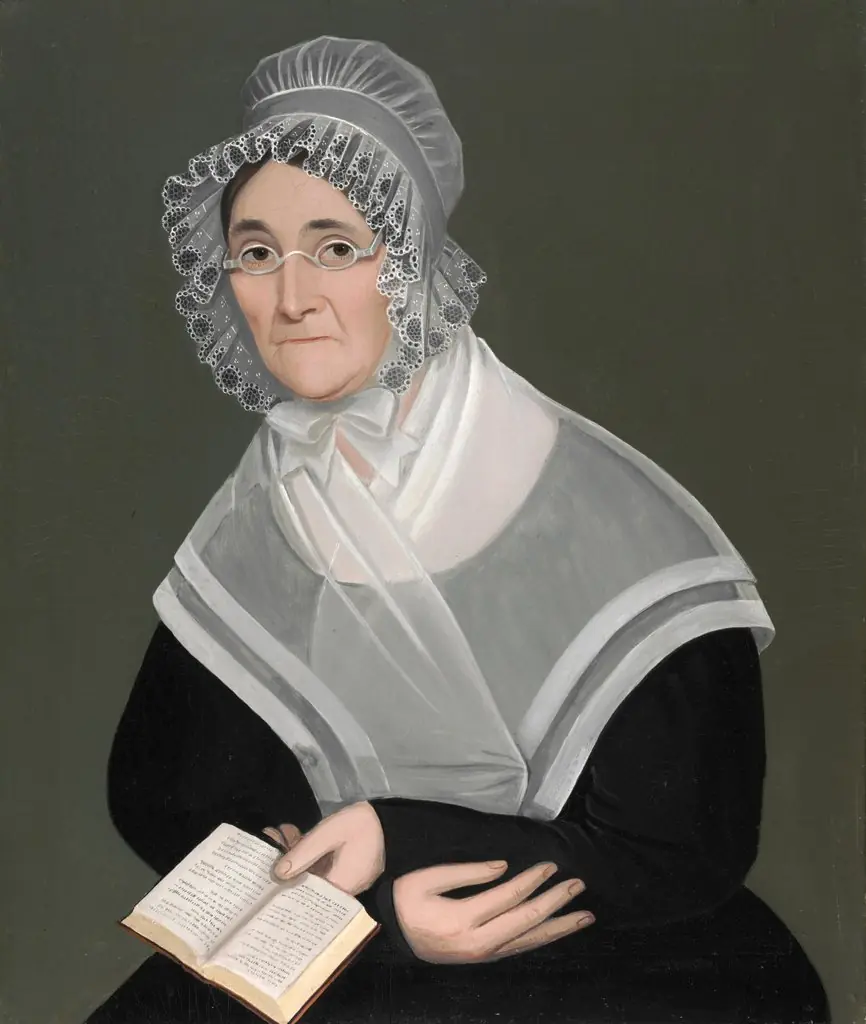 Portrait of Lois Belding Ketcham
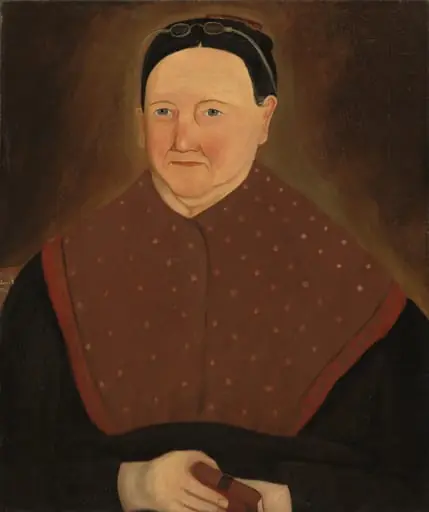 Portrait of an Old Lady
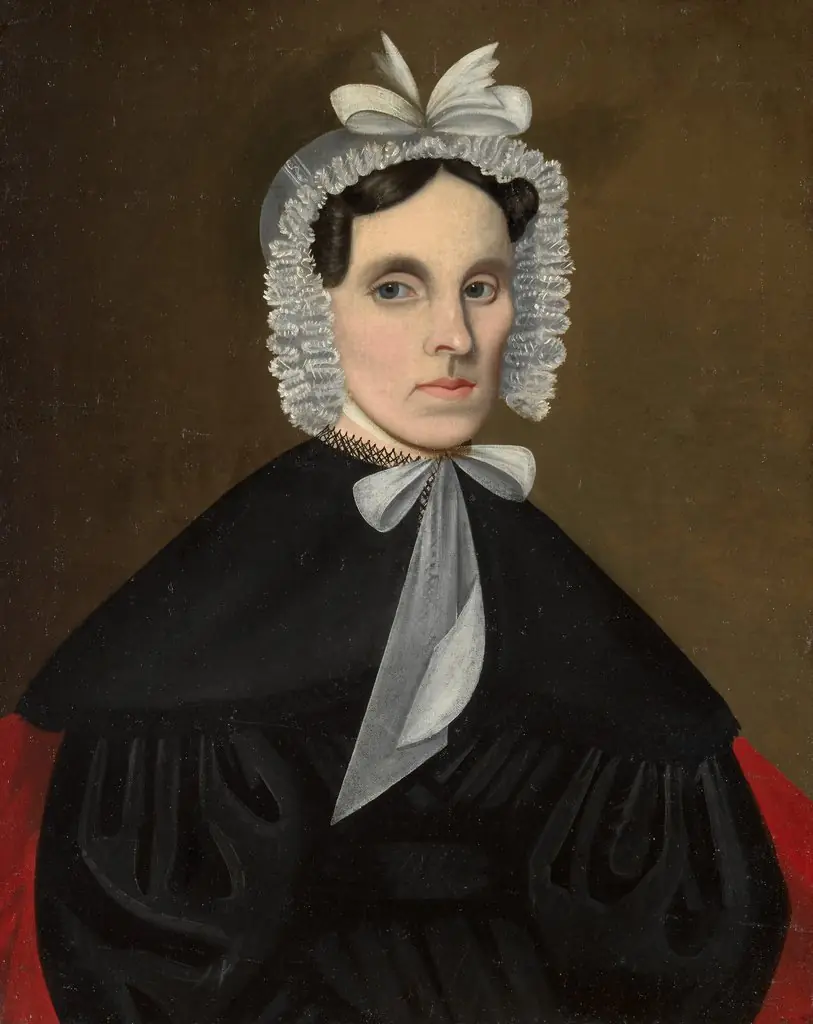 Sally Avery Olds; Nathaniel Olds
 Sally Avery Olds
 Sally Avery Olds
 Mrs. Reuben Allerton (Lois Atherton)
 Woman in Black