Artwork
Jane Storm Teller
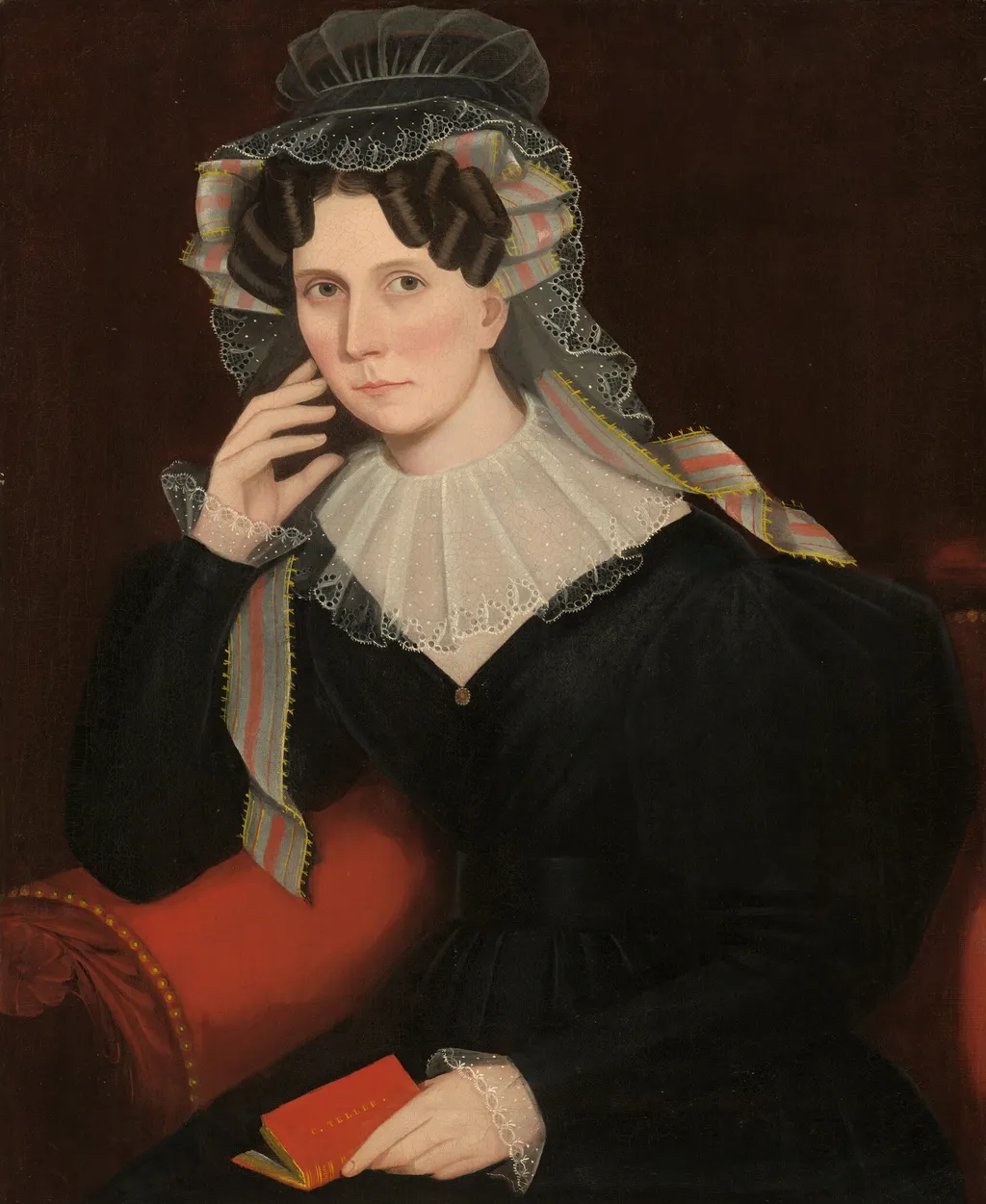
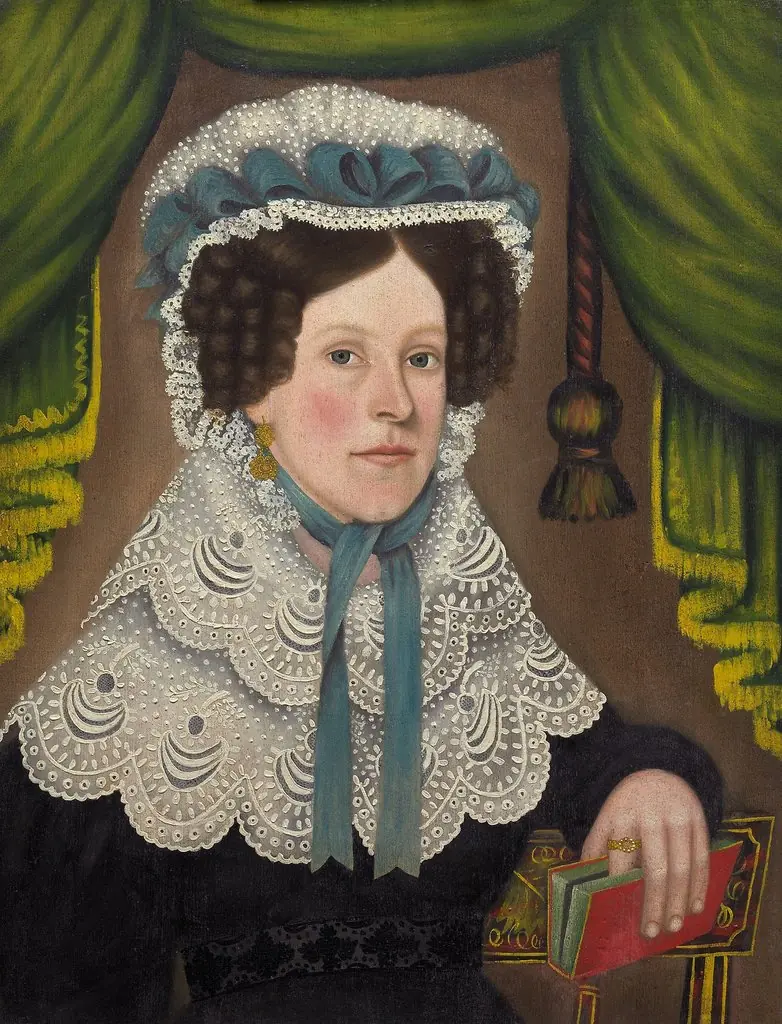
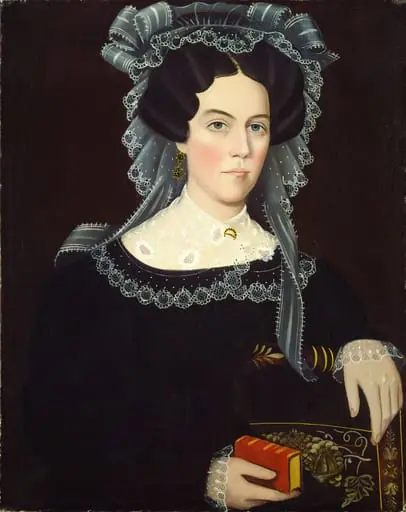
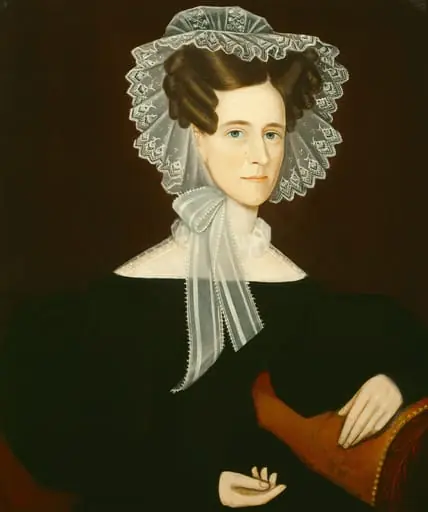
Jane Storm Teller is an oil painting by the American Folk Art artist Ammi Phillips. It dates from 1835 and is held in the collection of the National Gallery of Art.
- Inscription
- Inscribed:on book: C. TELLER
About this work
Subject & Meaning
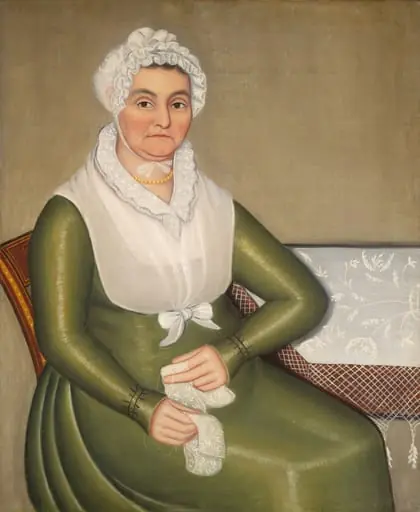
The painting presents a young woman identified as Jane Storm Teller, rendered in the conventional portrait genre of the 1830s.
The painting presents a young woman identified as Jane Storm Teller, rendered in the conventional portrait genre of the 1830s. Her depiction emphasizes a straightforward likeness, typical of Ammi Phillips's approach, without overt allegorical elements; the work's meaning derives from its function as a record of an individual's appearance and social standing within early American society. The sitter's attire and composition reflect contemporary expectations of femininity and domestic respectability, serving as a visual testament to family lineage and status, as documented in the provenance from Fishkill, New York, and its subsequent acquisition by the National Gallery of Art.
Technique & Style
Created in 1835, the portrait Jane Storm Teller is executed in oil paint on a canvas support. The work measures 83.7 centimeters in height and 68.5 centimeters in width. Classified as a portrait genre painting, the piece depicts a woman and is attributed to the artist Ammi Phillips.
The medium consists of oil applied to the canvas surface, a standard technique for portraiture of this period. The painting remains in the collection of the National Gallery of Art in Washington, D.C., where it has been held since its acquisition as a gift in 1953.
History & Provenance
Created in 1835 by Ammi Phillips, the oil-on-canvas portrait depicts a woman and originates from Fishkill, New York. The work's ownership history begins with a collateral member of the sitter's family, who sold it to collector Thurston Thacher of Hyde Park, New York. Thacher subsequently sold the painting in 1949 to Edgar William and Bernice Chrysler Garbisch, who donated it to the National Gallery of Art in Washington, D.C., in 1953, where it remains part of the collection. The painting measures 83.7 cm in height and 68.5 cm in width.
Context
Ammi Phillips's 1835 oil portrait entered the National Gallery of Art in Washington, D.C., through a gift from Edgar William and Bernice Chrysler Garbisch in 1953. The work, classified as a portrait and painted on canvas, reflects the stylistic traits of early American folk portraiture, particularly Phillips's characteristic use of flattened modeling and restrained palette. Its provenance traces from Fishkill, New York, to a private collector, then to the Garbischs, underscoring its passage from family ownership to public institution.
Scholarship on Phillips situates this painting within his broader effort to document middle-class subjects, positioning it as an example of 19th-century American portraiture's transition toward more individualized representation.
Overview
Ammi Phillips's oil on canvas painting, "Jane Storm Teller," dates to approximately 1835. This portrait presents a seated woman, likely the individual for whom the artwork is named, rendered with a directness characteristic of American folk art from the era. The composition emphasizes the sitter's presence through a focused depiction and a generally understated aesthetic, inviting viewers to engage with the subject's individual character.
Own this work as a print
Artist & collection
Artist
Ammi Phillips (April 24, 1788 – July 11, 1865) was a prolific American itinerant portrait painter active from the mid 1810s to the early 1860s in Connecticut, Massachusetts, and New York.

![Mrs. Pearson [possibly Sarah Thompson Pearson], by Pieter Christoffel Wonder](https://artifactworldgallery.com/img/pieter-christoffel-wonder--mrs-pearson-possibly-sarah-thompson-pearson--0006ffde77661f8c-w320.webp)