Artwork
Mr. Day
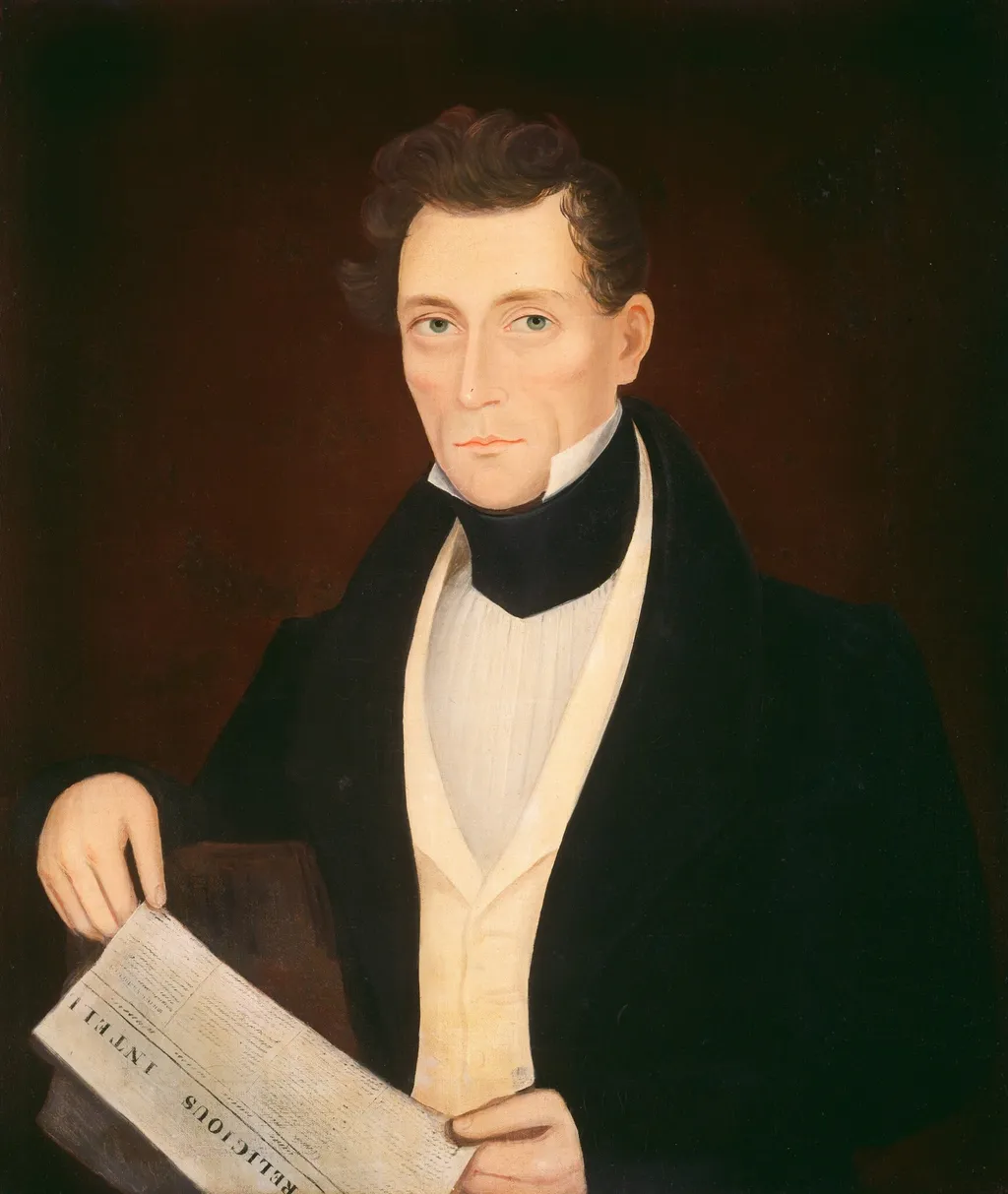
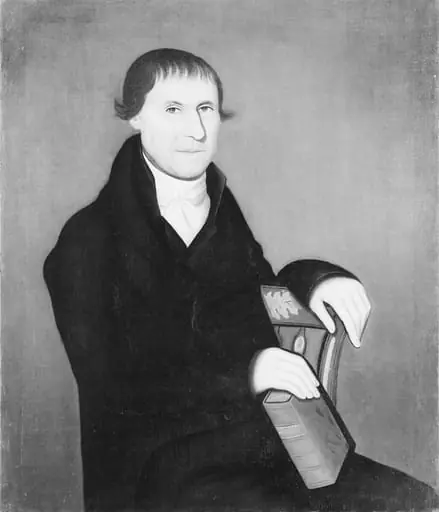
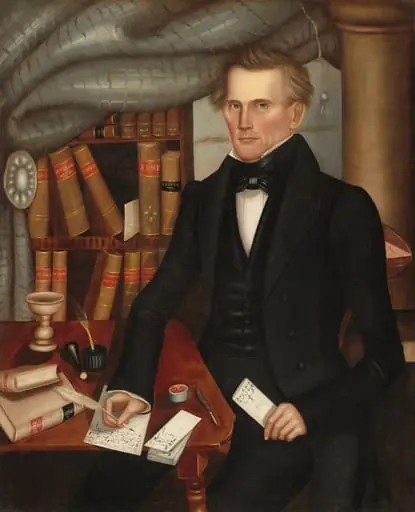
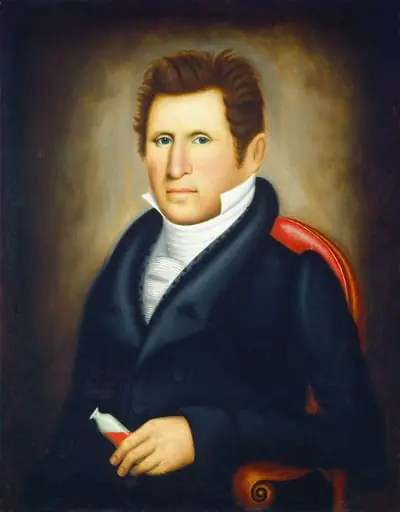
Mr. Day is an oil painting by the American Folk Art artist Ammi Phillips. It dates from 1835 and is held in the collection of the National Gallery of Art.
- Inscription
- Inscribed:on newspaper: RELIGIOUS INTELL[IGENCER]
About this work
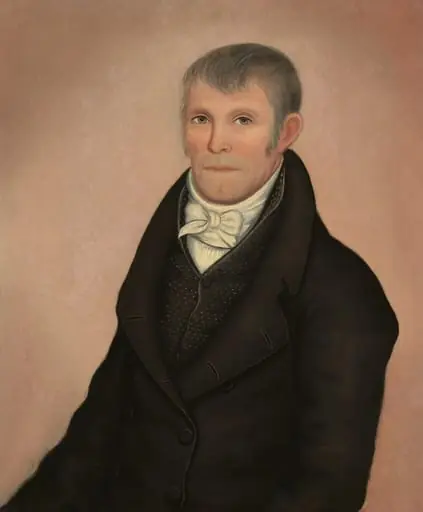
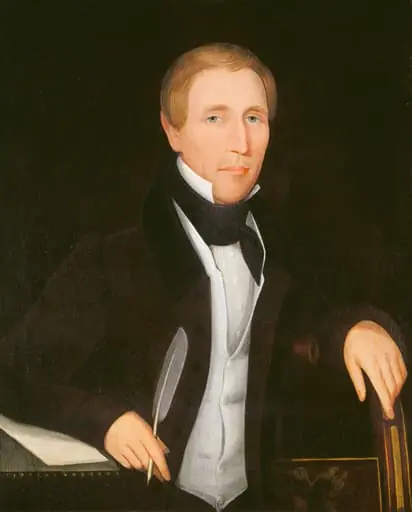
Mr. Day sits with a newspaper, dressed simply. Ammi Phillips paid attention to small things like the folds of his clothes, and the calm, ordinary pose offers a glimpse of everyday life in its time. Oil on canvas, 1835.
Subject & Meaning
Day is a portrait of a seated man holding a newspaper, a pairing of subject and attribute that defines the painting's iconographic program.
Mr. Day is a portrait of a seated man holding a newspaper, a pairing of subject and attribute that defines the painting's iconographic program. The newspaper functions as the central identifying attribute, signaling literacy, engagement with current events, and a degree of social or civic standing appropriate to a middle-class sitter of the 1830s. By naming the work "Mr. Day," Phillips anchors the figure in a specific social role rather than a particular individual, presenting the newspaper reader as a recognizable type of the period.
The restrained composition, focused on the man and his reading material, emphasizes quiet contemplation and self-possession, values associated with the educated citizen in antebellum American portraiture. Together, the man and his newspaper convey both a personal likeness and a broader statement about informed, respectable identity in early nineteenth-century America.
Technique & Style
The work is executed in oil on canvas, a common support for mid‑19th‑century American portraiture. Phillips applied thin layers of oil paint to achieve a smooth surface that renders the sitter’s features with modest chiaroscuro, while the brushwork remains relatively restrained, reflecting the academic realism of the period. The canvas is stretched over a wooden frame and has been lined, preserving its structural integrity.
The composition depicts a gentleman holding a newspaper, a motif that conveys contemporary status; the sitter is rendered in a three‑quarter view with a muted palette and careful attention to facial expression. The painting is housed at the National Gallery of Art, where it has been part of the collection since 1953.
History & Provenance
Ammi Phillips painted Mr. Day in 1835, an oil on canvas portrait depicting a man with a newspaper;. The work originated in the Hudson River Valley of New York and remained in that region until 1950, when it was sold to Edgar William and Bernice Chrysler Garbisch. The Garbischs subsequently gifted the painting to the National Gallery of Art in Washington, D.C., where it entered the museum’s collection later that year. The painting is documented in the National Gallery’s records as part of its permanent holdings.
The painting Mr. Day is held in the collection of the National Gallery of Art in Washington, D.C. Its provenance traces back to the Hudson River Valley, New York, where it was recorded as belonging to Thurston Thacher of Hyde Park. Thacher sold the work in 1950 to Edgar William and Bernice Chrysler Garbisch. The Garbisches subsequently gifted the painting to the National Gallery of Art in 1953.
While specific inventory or accession numbers are not detailed in the available records, the transfer of ownership from the Garbisch collection to the museum marks its current institutional home. The provided sources do not list specific past exhibitions for this work.
Overview
Painted in 1835 by Ammi Phillips, Mr. Day is a portrait executed in oil on canvas that exemplifies the artist's mature style within the American folk tradition. The work depicts a seated male figure, identified as Mr. Day, holding a newspaper. He is dressed in modest, dark clothing, with the artist rendering the fabric folds and the texture of the paper with characteristic precision.
Phillips, a prolific itinerant portraitist active in Connecticut and New York, is known for his distinct approach to depicting sitters with a blend of formal rigidity and individualized detail. In this composition, the subject's calm demeanor and direct gaze engage the viewer, while the inclusion of the newspaper suggests a connection to contemporary civic life and literacy. The painting reflects the mid-1830s period of Phillips' career, where his palette became slightly more refined and his handling of light more subtle compared to his earlier, more stylized works.
As a representative piece of 19th-century American portraiture, it documents the appearance and social standing of a middle-class individual from the era, preserving a specific moment of everyday life through the lens of a skilled regional artist.
Own this work as a print
Artist & collection
Artist
Ammi Phillips (April 24, 1788 – July 11, 1865) was a prolific American itinerant portrait painter active from the mid 1810s to the early 1860s in Connecticut, Massachusetts, and New York.