Artwork
VIZIUNE
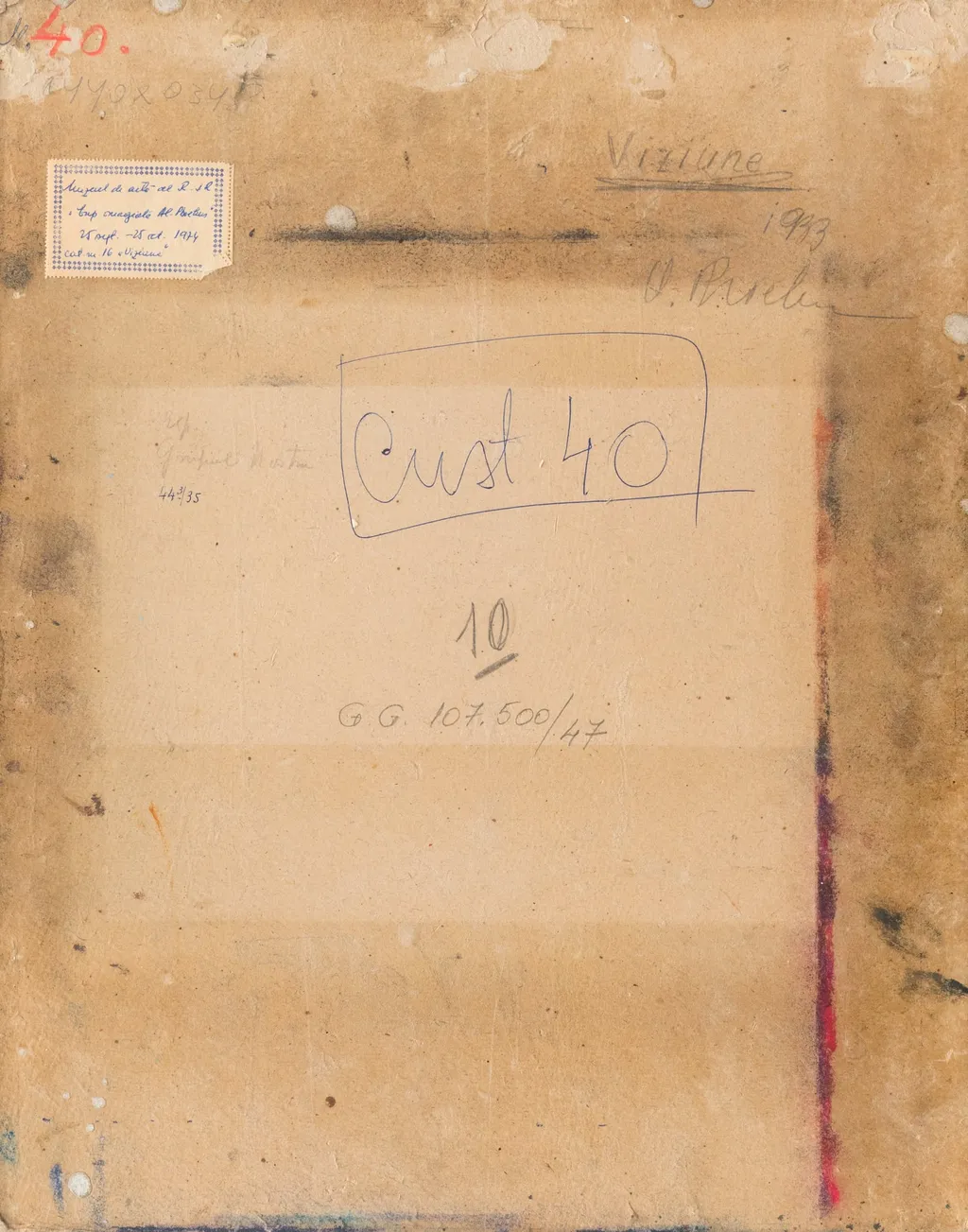
VIZIUNE is a print by Alexandru Phoebus. It dates from 1933 and is held in the collection of the National Museum of Art of Romania.
About this work
Overview
Its ambiguity invites contemplation rather than recognition, positioning it within early 20th-century explorations of perception and memory.
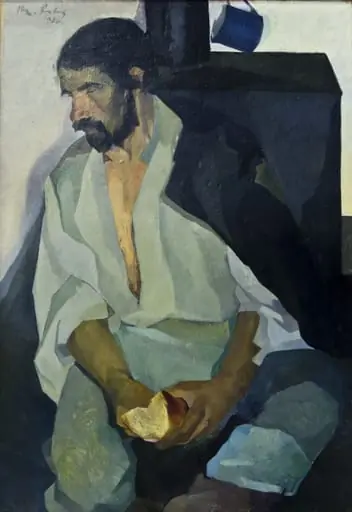
VIZIUNE, painted in 1933 by Alexandru Phoebus, is an abstracted visual composition that resists clear narrative or spatial definition. The work presents a hazy, atmospheric field of muted earth tones, browns, tans, and soft grays, without identifiable landmarks or figures. Its ambiguity invites contemplation rather than recognition, positioning it within early 20th-century explorations of perception and memory.
Subject & Meaning
The subject of VIZIUNE remains deliberately elusive, suggesting a landscape or urban ruin through suggestion rather than depiction. No concrete elements emerge from the blur, evoking a psychological state rather than a physical place. The title, meaning 'vision' in Romanian, implies an internal or dreamlike experience, aligning the work with introspective modernist tendencies of the interwar period.
Technique & Style
Phoebus employed loose, gestural brushwork to dissolve form and dissolve boundaries between elements. Paint is applied thinly and unevenly, allowing underlying layers to show through, enhancing the sense of atmospheric depth. The absence of sharp contours and the dominance of tonal gradations reflect an interest in emotional resonance over literal representation, aligning with broader European tendencies toward abstraction.
History & Provenance
VIZIUNE was created during Phoebus’s formative years as an artist in Romania, a time when local painters were engaging with international modernist movements. The work remained in private hands for much of the 20th century, with limited public exposure. Its current location and exhibition history are not widely documented, contributing to its status as a lesser-known but significant example of Romanian interwar abstraction.
Context
In the 1930s, Romanian artists increasingly moved away from academic realism toward expressive and abstract modes influenced by Expressionism and early Surrealism. Phoebus’s work, including VIZIUNE, reflects this shift, responding to broader European currents while maintaining a distinctly personal visual language. The painting’s ambiguity mirrors the cultural uncertainty of the interwar years in Eastern Europe.
Legacy
VIZIUNE stands as a quiet example of Romania’s under-recognized contributions to early modernist abstraction. Though Phoebus did not achieve widespread fame, his work contributes to a broader understanding of how regional artists adapted international styles to express internal, subjective experiences. The painting remains a reference point for scholars examining the evolution of non-representational art in Southeastern Europe.
Own this work as a print
Artist & collection