Artwork
The family of the Grand Dauphin, Louis of France (1661-1711)
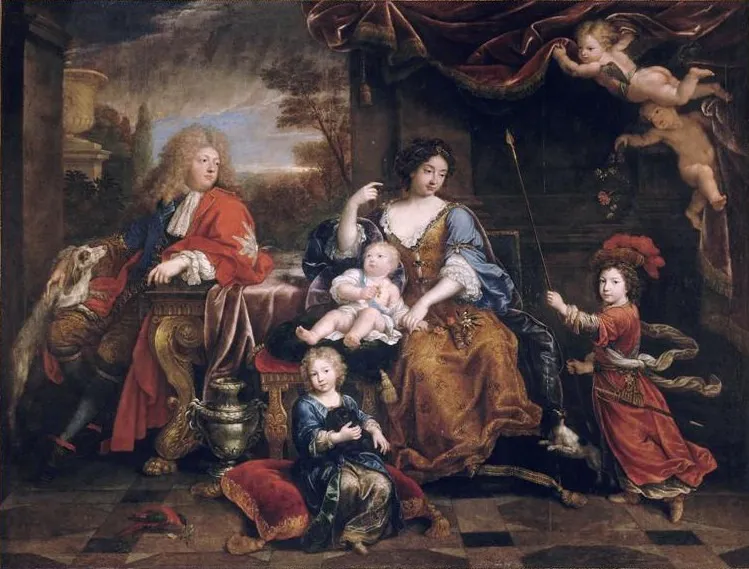
The family of the Grand Dauphin, Louis of France (1661-1711) is an oil painting by the French Classical Baroque artist Pierre Mignard I. It dates from 1694 and is held in the collection of the Palace of Versailles. Pierre Mignard’s 1694 oil painting presents a domestic tableau of the Grand Dauphin’s lineage.
About this work
Subject & Meaning
The composition arranges the figures hierarchically, underscoring the legitimacy of Louis XIV’s line and the political alliances secured through marriage.
The painting depicts Louis, the Grand Dauphin, surrounded by his immediate family, emphasizing dynastic continuity within the Bourbon line. The Grand Dauphin stands at the center, framed by his wife, Maria Anna Victoria of Bavaria, and their sons: Louis, Dauphin of France (later Duke of Burgundy), Philip V of Spain, and Charles, Duke of Berry. The composition arranges the figures hierarchically, underscoring the legitimacy of Louis XIV’s line and the political alliances secured through marriage.
The presence of the younger Louis, destined to become Dauphin, signals the anticipated succession, while Philip V’s inclusion reflects the diplomatic ties forged between France and Spain.
The work conveys Bourbon authority and the stability of the French monarchy in the late 17th century. The formal attire and courtly setting reinforce the grandeur of the royal household, while the arrangement of figures suggests both familial bonds and the structured order of the state.
Technique & Style
Created in 1687, this group portrait is executed in oil paint on canvas. The work measures 232 cm in height and 304 cm in width, reflecting the grand scale typical of court portraiture from the French school of the late seventeenth century. As a formal group portrait depicting the Grand Dauphin and his family, the composition adheres to the stylistic conventions of the era, emphasizing hierarchy and dynastic continuity through its arrangement of figures.
The painting remains part of the French State's collection, housed at the Palace of Versailles within the Museum of the History of France.
History & Provenance
The painting was commissioned in 1687 by Louis XIV to honor his son, the Grand Dauphin, and to document the extended royal family at Versailles.
It remained in the French royal collection and descended to Louis XVIII, who transferred it to the French State. By the nineteenth century it entered the holdings of the Palace of Versailles. Today it is conserved as MV 8135 in the Musée national des châteaux de Versailles et de Trianon under the inventory numbers MR 2152 and INV 6650.
The painting is held by the Palace of Versailles, where it is recorded under inventory numbers MV 8135, MR 2152, and INV 6650 in the collections of the Musée national des châteaux de Versailles et de Trianon.
It was included in the holdings of the French State by transfer from Louis XVIII and is today managed as part of the Museum of the History of France within the Palace of Versailles.
Context
The painting was created in 1687 during the reign of Louis XIV and reflects the cultural prominence of the French court in the late 17th century. It was commissioned by the French state and later entered the collection of the Palace of Versailles, where it remains part of the national heritage. Scholars have studied its composition and symbolic significance within the broader context of Baroque portraiture and the artistic output of Pierre Mignard I, who was active in Paris during this period.
The work is recognized as an important example of group portraiture from the era and has been featured in exhibitions at French national museums.
The family of the Grand Dauphin, Louis of France (1661-1711) is part of the Palace of Versailles collection, documented in the Joconde database under inventory numbers MV 8135, MR 2152, and INV 6650.
Pierre Mignard I, a prominent painter of the French Baroque era, was known for his religious and portrait works, and this painting exemplifies his role in shaping courtly imagery in late 17th-century France.
Legacy
The painting has been frequently reproduced in scholarly works on French Baroque art and serves as a key reference for understanding court portraiture during the reign of Louis XIV. Its composition influenced later depictions of royal family members in European royal collections, particularly through engravings that circulated in the 18th century. The work remains publicly accessible at the Palace of Versailles, where it is part of the national collection of French heritage.
Its attribution to Pierre Mignard I has been confirmed in multiple catalogues, including the Joconde database, reinforcing its established reputation in art historical scholarship.
Overview
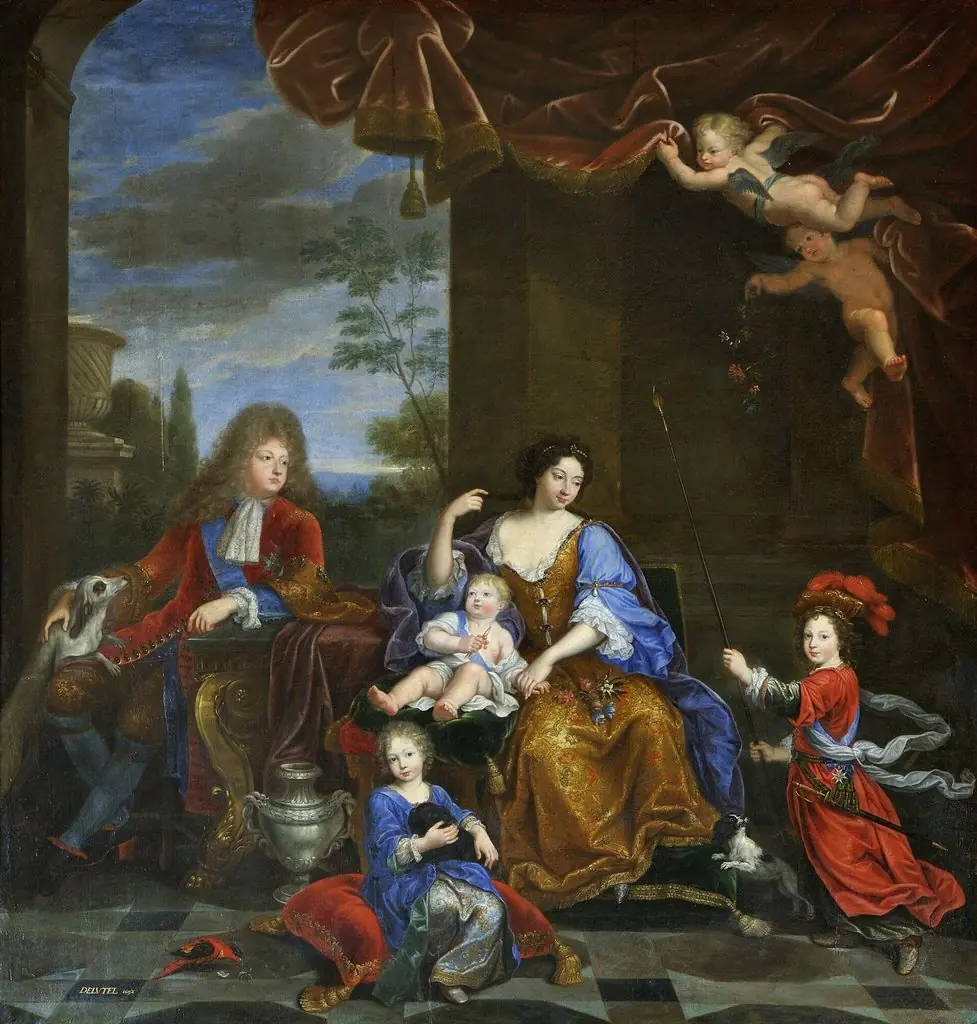
Pierre Mignard’s 1694 oil painting presents a domestic tableau of the Grand Dauphin’s lineage. Set within an interior framed by red drapery and a patterned floor, the composition gathers several generations of the royal family, emphasizing their cohesion and status through formal dress and poised arrangement.
Artist & collection
Artist
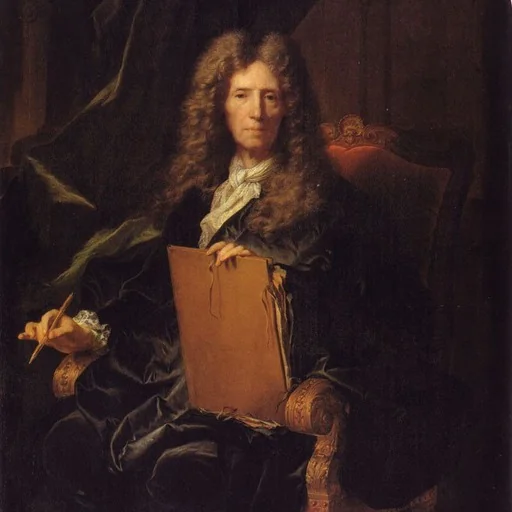
Pierre Mignard or Pierre Mignard I (French pronunciation:; 17 November 1612 – 30 May 1695), called "Mignard le Romain" to distinguish him from his brother Nicolas Mignard, was a French painter known for his religious and mythological…

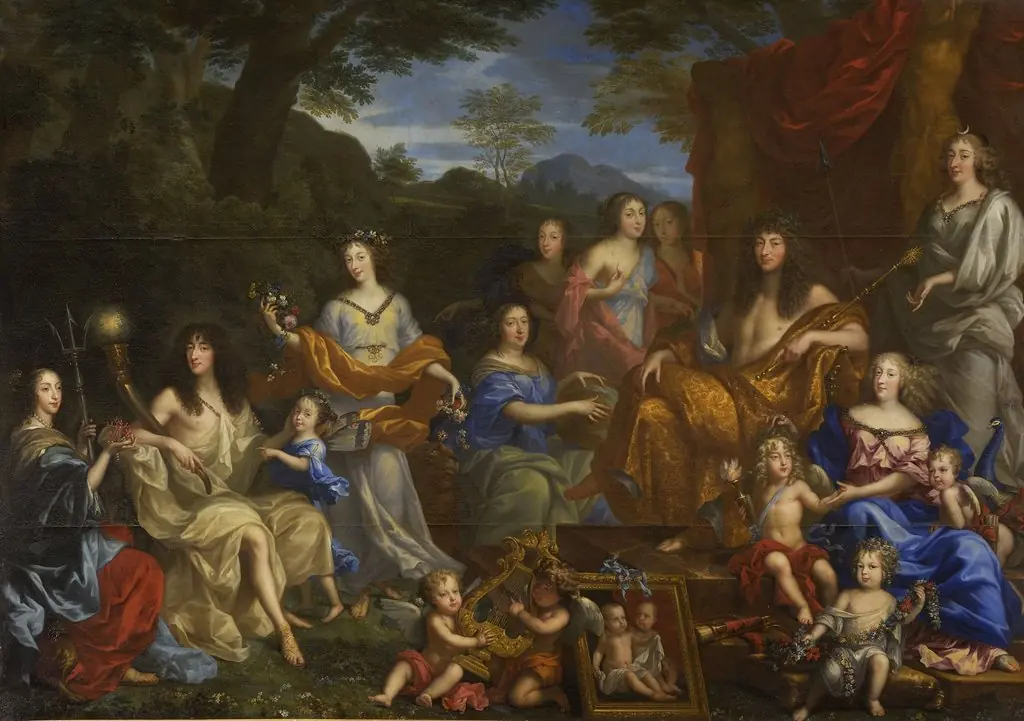 Mythological portrait of Louis XIV and the royal family
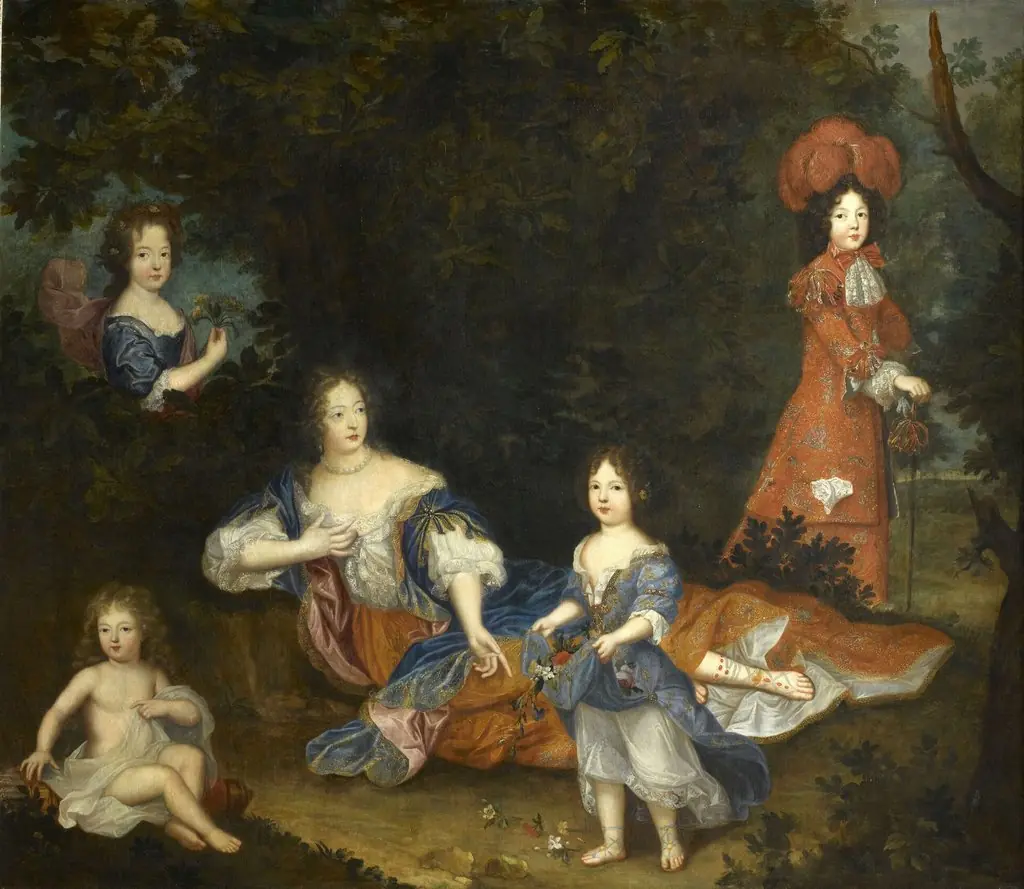 Françoise-Athénaïs de Rochechouart, Marquise de Montespan and her children
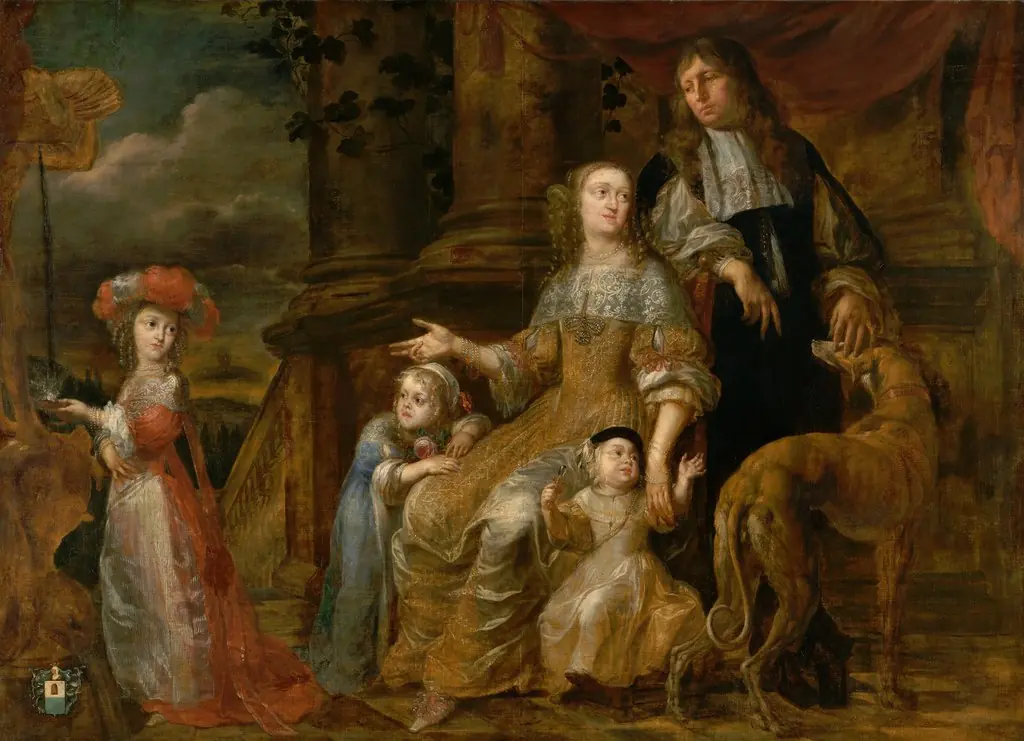 Portrait of the Family de Bie
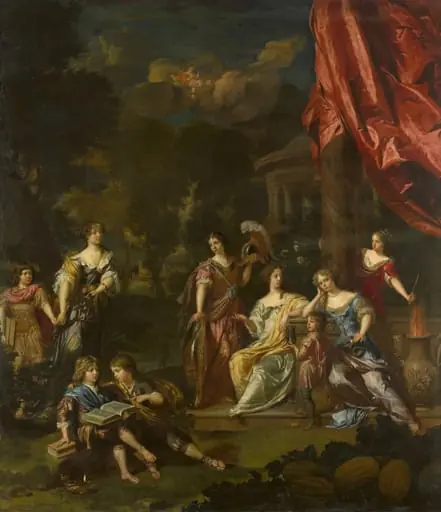 Allegorizing Group Portrait of the Children of Diederic Pietersz van Leyden van Leeuwen, Burgomaster of Leiden, and Alida Paets
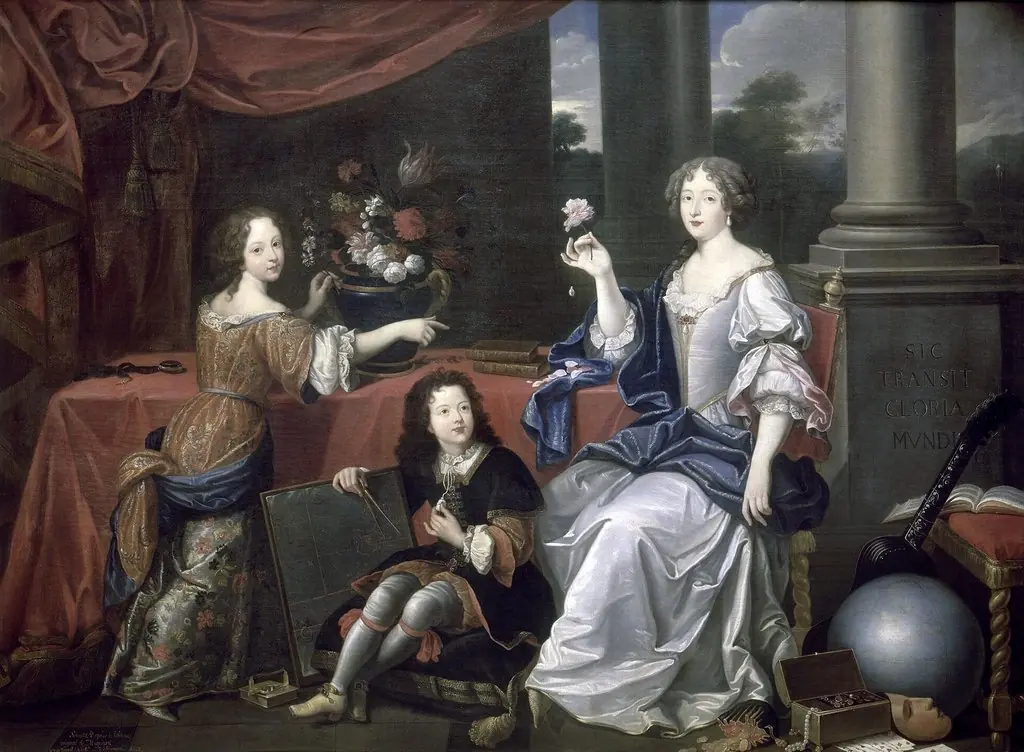 Portrait of Louise de La Vallière and her children
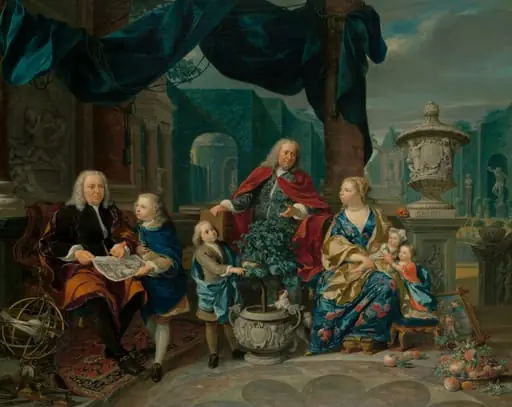 Portrait of David van Mollen and Son-in-Law Jacob Sydervelt with his Family
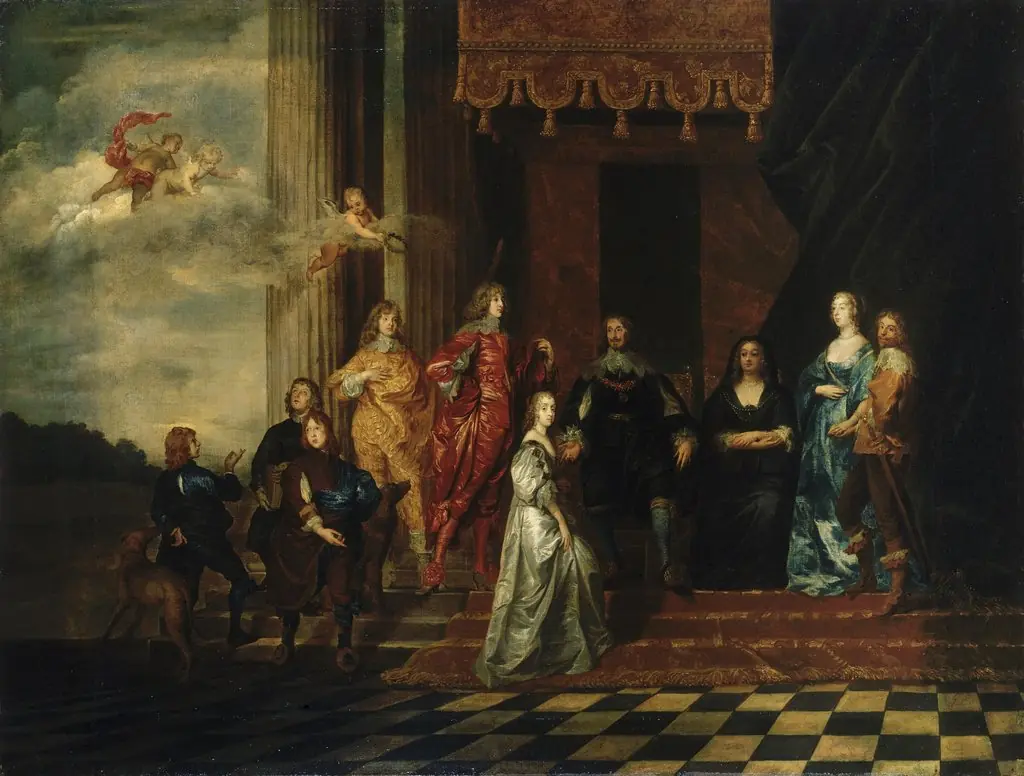 Portrait of the Earl of Pembroke with His Family (copy)
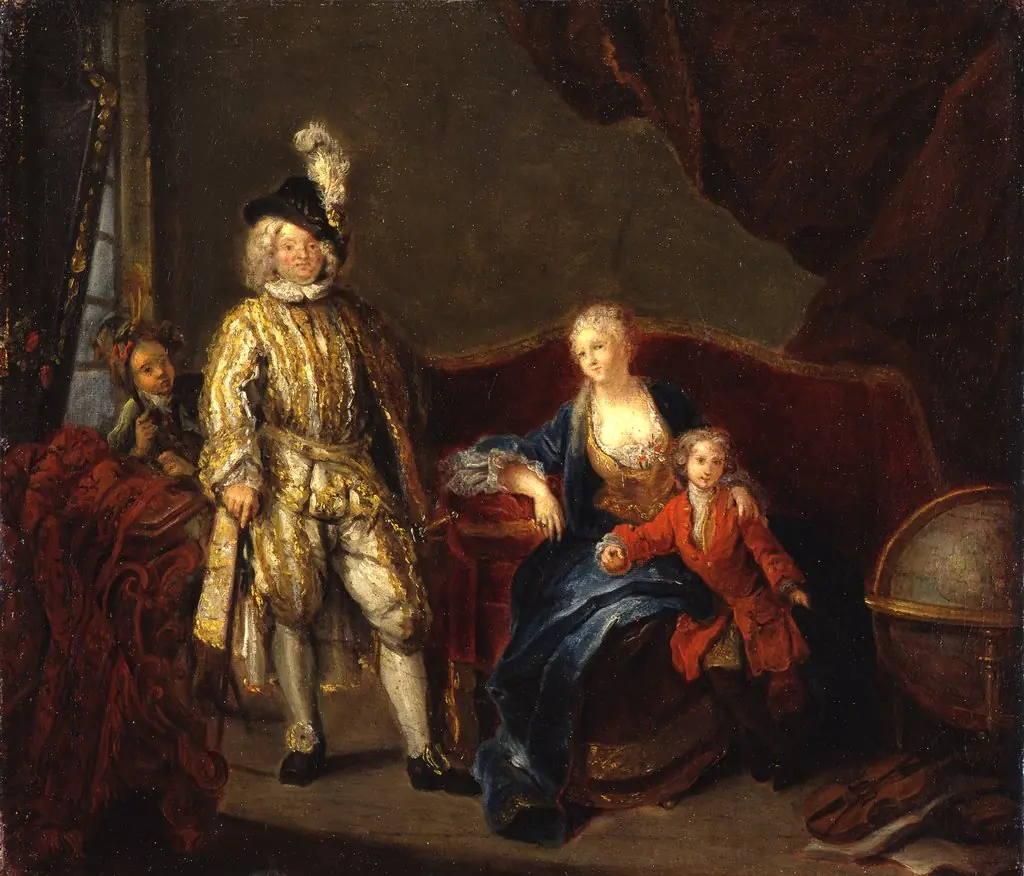 The Captain of the Swiss Guard von Erlach with his Family
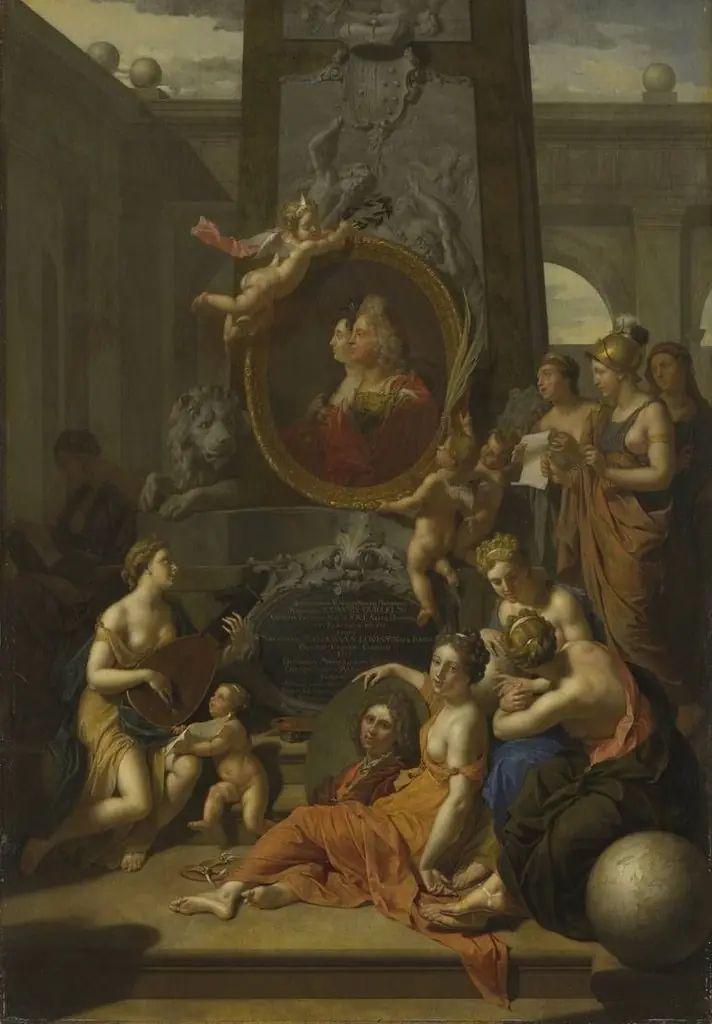 The Arts, represented by the royal couple Johann Wilhelm von der Pfalz and Maria Anna Louisa de' Medici