Artwork
Scene from La Fontaine's Fable 'The Mare of Peasant Pierre'
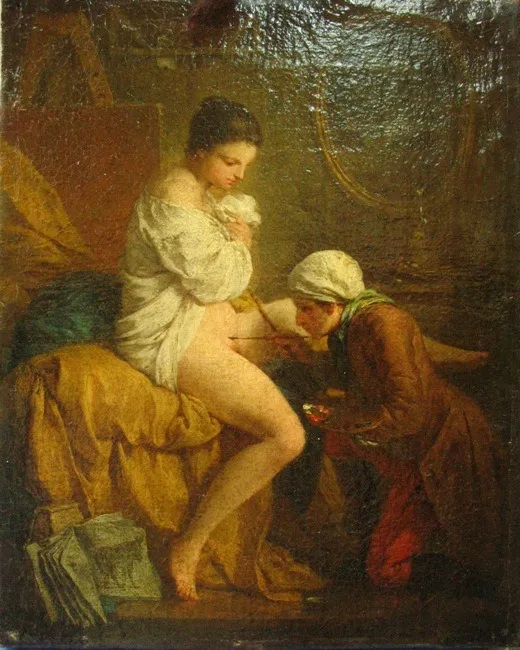
Scene from La Fontaine's Fable 'The Mare of Peasant Pierre' is an oil painting by the Rococo painting artist Pierre Subleyras. It dates from 1732 and is held in the collection of the Hermitage Museum.
About this work
Subject & Meaning
The composition emphasizes narrative clarity and the didactic function of the fable, aligning with Subleyras's reputation for historical and literary subjects.
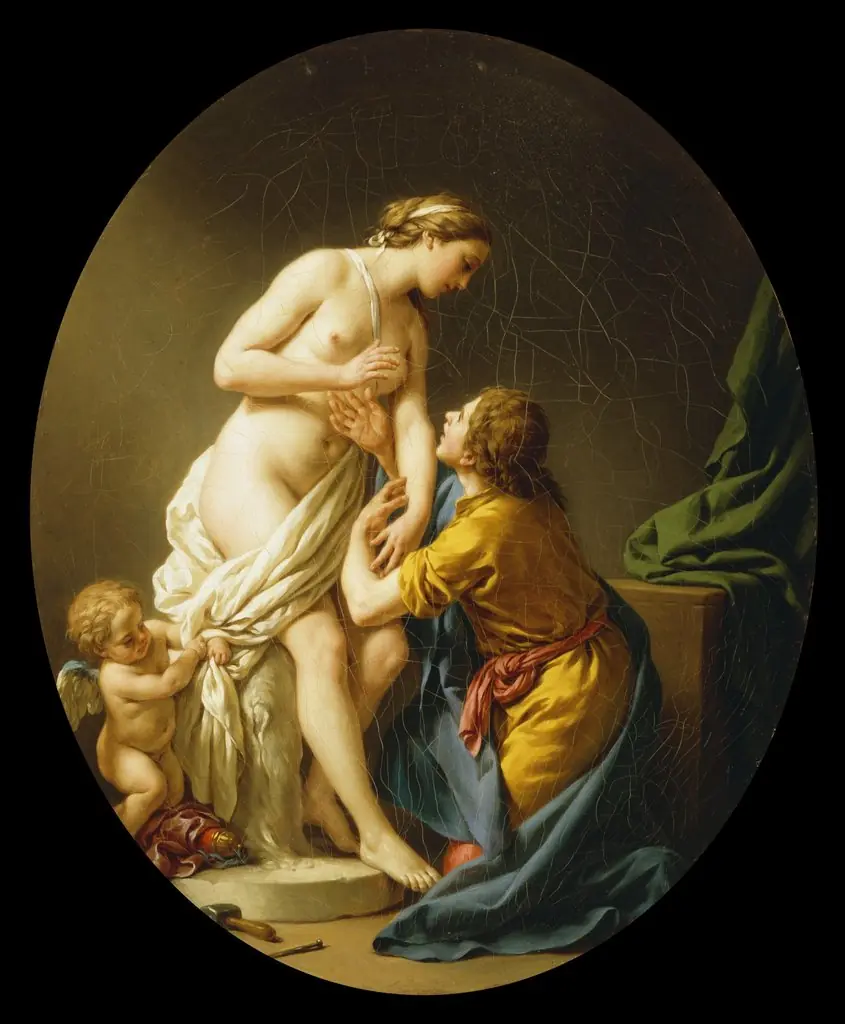
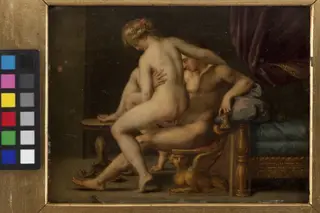
The painting illustrates a moment from Jean de La Fontaine's fable 'The Mare of Peasant Pierre,' depicting a naked peasant woman holding a palette and a man beside her, rendered in oil on canvas. Symbolically, the scene conveys themes of rural labor and innocence through its portrayal of a modestly dressed peasant woman engaged in artistic activity, reflecting Enlightenment-era interest in moralizing subjects drawn from fable literature. The composition emphasizes narrative clarity and the didactic function of the fable, aligning with Subleyras's reputation for historical and literary subjects.
Technique & Style
The painting is executed in oil on canvas, measuring 30.5 cm in height and 24.5 cm in width. Subleyras employs a fluid handling typical of French Rococo, with delicate glazes to render the luminous flesh and drapery. The composition is organized around a softly modeled central group, where the woman’s reclining pose and the man’s attentive stance are set against a warm, low-key background.
Light is diffused to emphasize tactile surfaces, silk sleeves, smooth skin, and the sheen of a metallic plate, while the palette remains restrained, punctuated by pale pinks and ivory tones.
No conservation issues are recorded in the available sources, and the work’s small scale suggests it may have been conceived as an intimate cabinet picture.
History & Provenance
The work was painted in 1732 by Pierre Subleyras and is dated to that year in the artist’s records. It depicts a scene from La Fontaine’s fable “The Mare of Peasant Pierre,” aligning the canvas’s subject with its documented title. The painting entered the Hermitage Museum’s holdings as part of the Yusupov Palace collection on the Moika in Saint Petersburg, where it remains housed.
The canvas measures 24.5 cm in width and 30.5 cm in height. The provenance is tied to Felix Yusupov, indicating that the work was in his possession before transfer to the museum.
Pierre Subleyras's oil painting, Scene from La Fontaine's Fable 'The Mare of Peasant Pierre', is held in the collection of the Hermitage Museum. The work is currently located within the Yusupov Palace on Moika, a specific site associated with the museum's holdings. Historical records indicate the piece was formerly owned by Felix Yusupov before entering the museum's inventory.
Created in 1732, the canvas measures 30.5 cm in height and 24.5 cm in width. The provided sources do not contain specific accession numbers or a detailed chronology of public exhibitions for this work.
Legacy
The painting's legacy is anchored in its inclusion in the Hermitage Museum's collection, specifically displayed in the Yusupov Palace, reflecting its enduring cultural significance. Its thematic focus on La Fontaine's fable has contributed to scholarly discussions of 18th-century French narrative painting, though specific later exhibitions or critical assessments beyond its museum provenance are not documented in the provided sources. The work's attribution to Pierre Subleyras and its depiction of narrative elements from the fable underscore its historical artistic value within the context of French academic art.
Overview
Created in 1732 by the French painter Pierre Subleyras, this oil on canvas illustrates a scene drawn from Jean de La Fontaine’s fable about the peasant Pierre’s mare. The composition shows a woman in a white dress seated on a yellow cloth while a man, dressed in a brown coat and white hat, leans forward to paint her leg. The setting is dimly lit, with vague forms receding into a dark background, lending the work a quiet, intimate atmosphere.
Context
Subleyras worked at a time when the ornate frivolity of the Rococo was giving way to the more restrained classicism that would dominate the later eighteenth century. This painting exemplifies that transitional moment, combining a light, decorative surface with a narrative drawn from a well‑known literary source, reflecting the period’s interest in moralizing stories rendered with elegant visual appeal.
Artist & collection
Artist
Pierre Subleyras (French:; November 25, 1699 – May 28, 1749) was a French painter, active during the late-Baroque and early-Neoclassic period, mainly in Italy.