Artwork
Composition No.10 (Pier and Ocean)
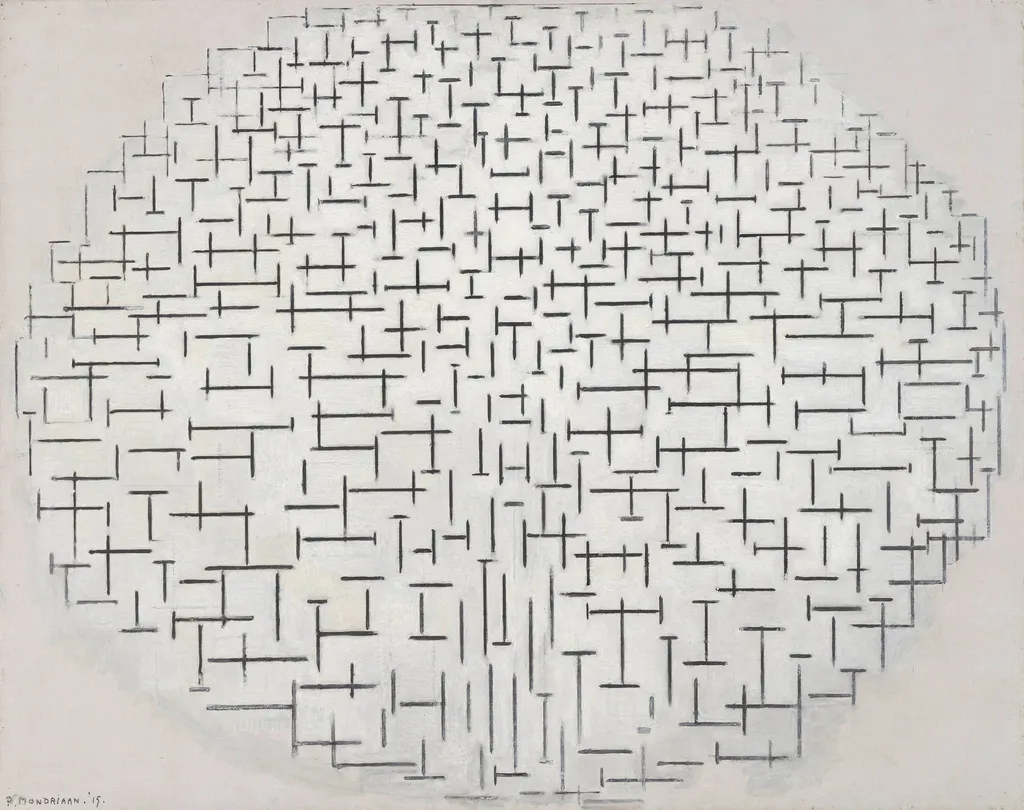
Composition No.10 (Pier and Ocean) is an oil painting by the De Stijl artist Piet Mondrian. It dates from 1915 and is held in the collection of the Kröller-Müller Museum. Painted in 1915, Composition No.
About this work
This style is similar to Cubist and De Stijl movements, even though they were not officially defined at that time.
Composition No.10 (Pier and Ocean) is a painting by Piet Mondrian. It was created in 1915.
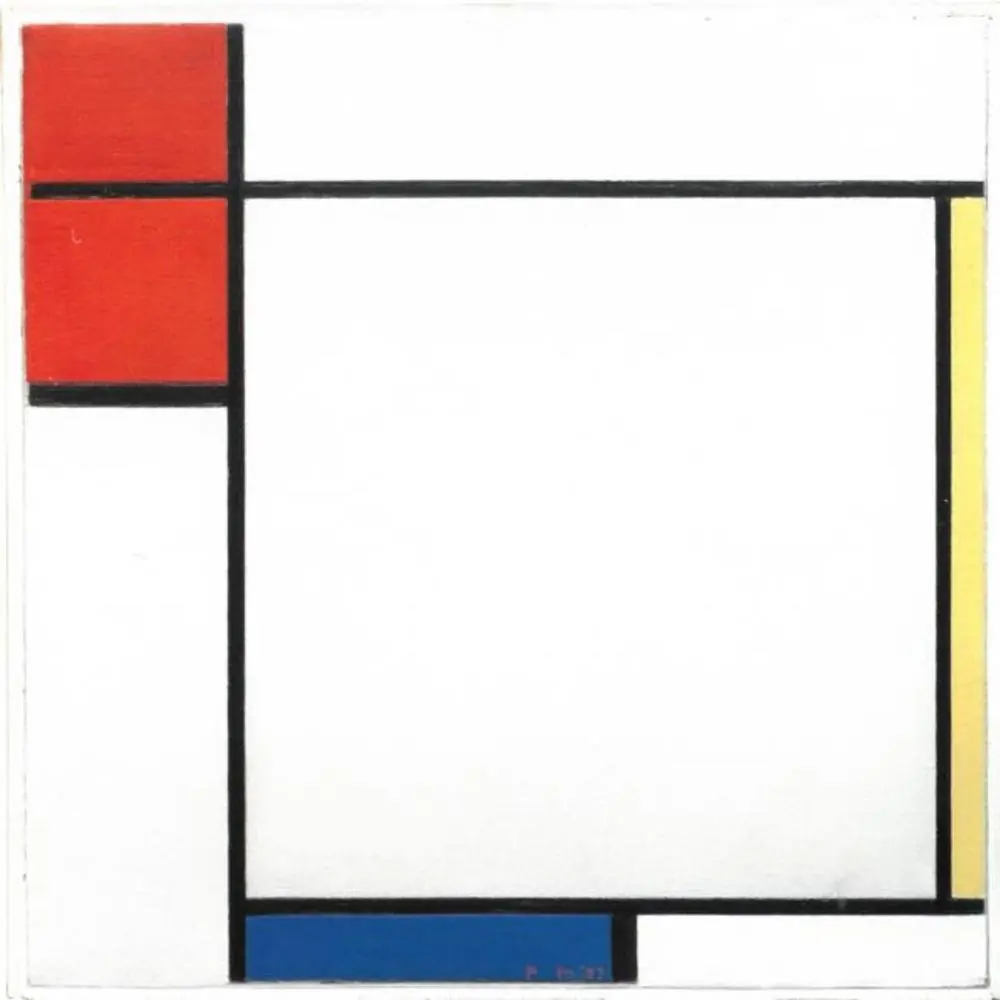
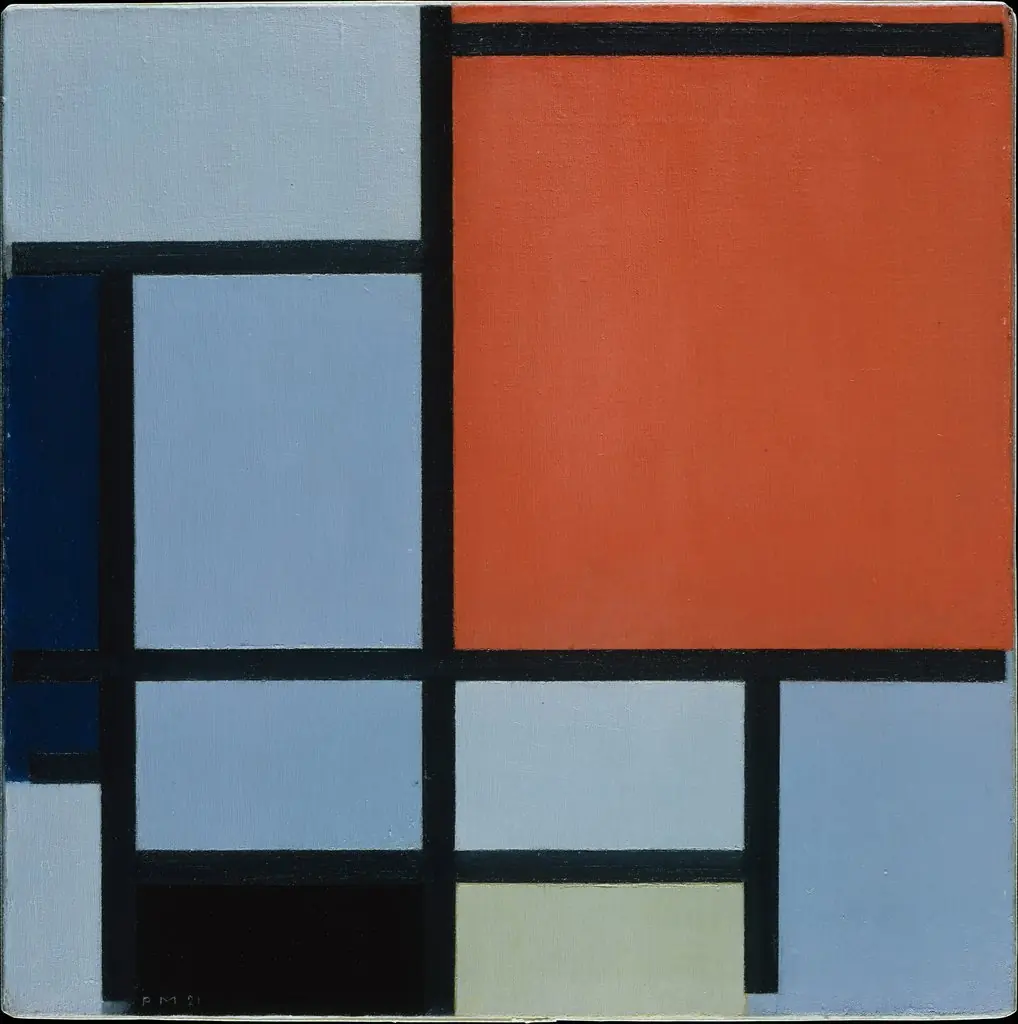
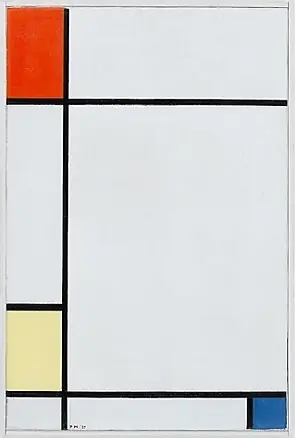
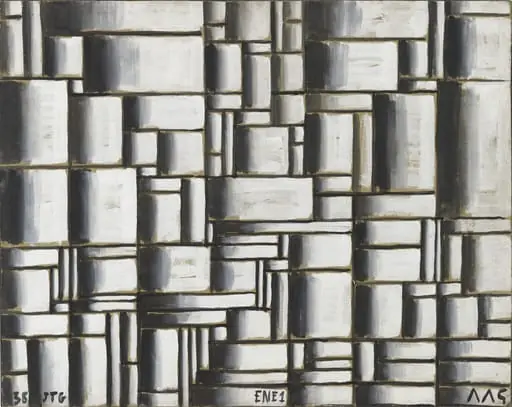
The painting is an abstract composition. It consists of horizontal and vertical black lines on white. This style is similar to Cubist and De Stijl movements, even though they were not officially defined at that time.
To learn more about the style and techniques used in this painting, look up the technique of glazing.
Overview
Painted in 1915, Composition No.10 (Pier and Ocean) is an abstract oil work by Dutch artist Piet Mondrian. It features a grid of black horizontal and vertical lines on a white ground, eliminating representational forms in favor of pure structure. Though created before the formal emergence of De Stijl, its geometric discipline anticipates the movement’s principles.
The painting is occasionally referred to by its descriptive subtitle, linking it to earlier works inspired by coastal landscapes.
Subject & Meaning
The painting does not depict a literal scene but evokes the rhythmic interplay of land and sea through abstraction. Vertical lines suggest piers extending into the water, while horizontal bands imply the horizon and ocean surface. Mondrian sought to express universal harmony through simplified forms, moving away from naturalism toward a visual language of balance and order rooted in spiritual ideals.
Technique & Style
Mondrian applied oil paint with precision, using flat, unmodulated surfaces and sharp-edged black lines to define the composition. The brushwork is restrained, avoiding texture or gesture. While the work shares affinities with Cubist fragmentation, it rejects three-dimensional illusion entirely.
Its emphasis on orthogonal structure and monochrome contrast aligns with emerging tendencies that would later crystallize into De Stijl aesthetics.
History & Provenance
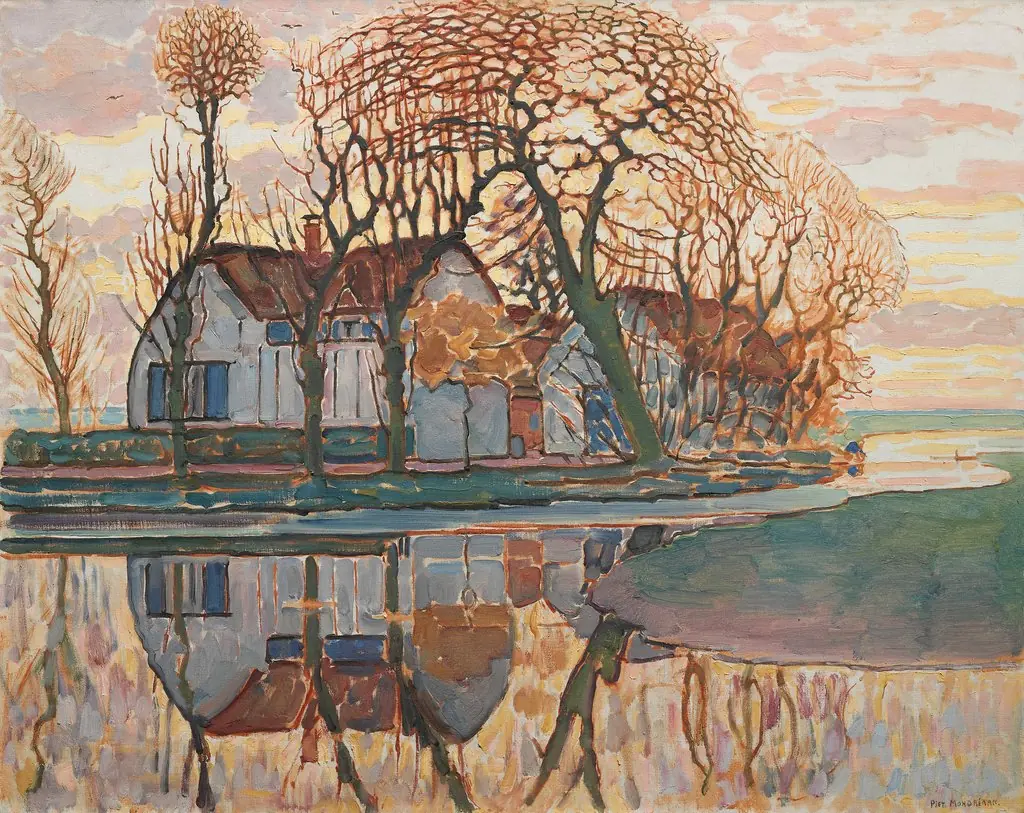
Created during Mondrian’s time in the Netherlands, the painting reflects his transition from figurative landscapes toward pure abstraction. It was produced before his move to Paris and the founding of De Stijl in 1917. The work remained in private collections for decades before entering a public museum, where it is now preserved as a key transitional piece in his artistic evolution.
Context
In 1915, Europe was engulfed in war, and many artists turned inward, seeking order through abstraction. Mondrian, influenced by Theosophy and contemporary philosophical ideas, believed art could reveal underlying cosmic structures. His reduction of form to lines and planes responded to broader cultural shifts away from representation, aligning with contemporaneous experiments in music, architecture, and design.
Legacy
Composition No.10 (Pier and Ocean) stands as a pivotal step in the development of geometric abstraction. It influenced later generations of minimalist and constructivist artists by demonstrating how limited visual elements could convey complex ideas. Its disciplined structure became a model for modern design, architecture, and graphic arts, embedding its principles into 20th-century visual culture.
Own this work as a print
Artist & collection

Artist
Pieter Cornelis Mondriaan (Dutch:; 7 March 1872 – 1 February 1944), known after 1911 as Piet Mondrian (, US also; Dutch: ), was a Dutch painter and art theoretician, who is regarded as one of the greatest artists of the 20th century.