Artwork
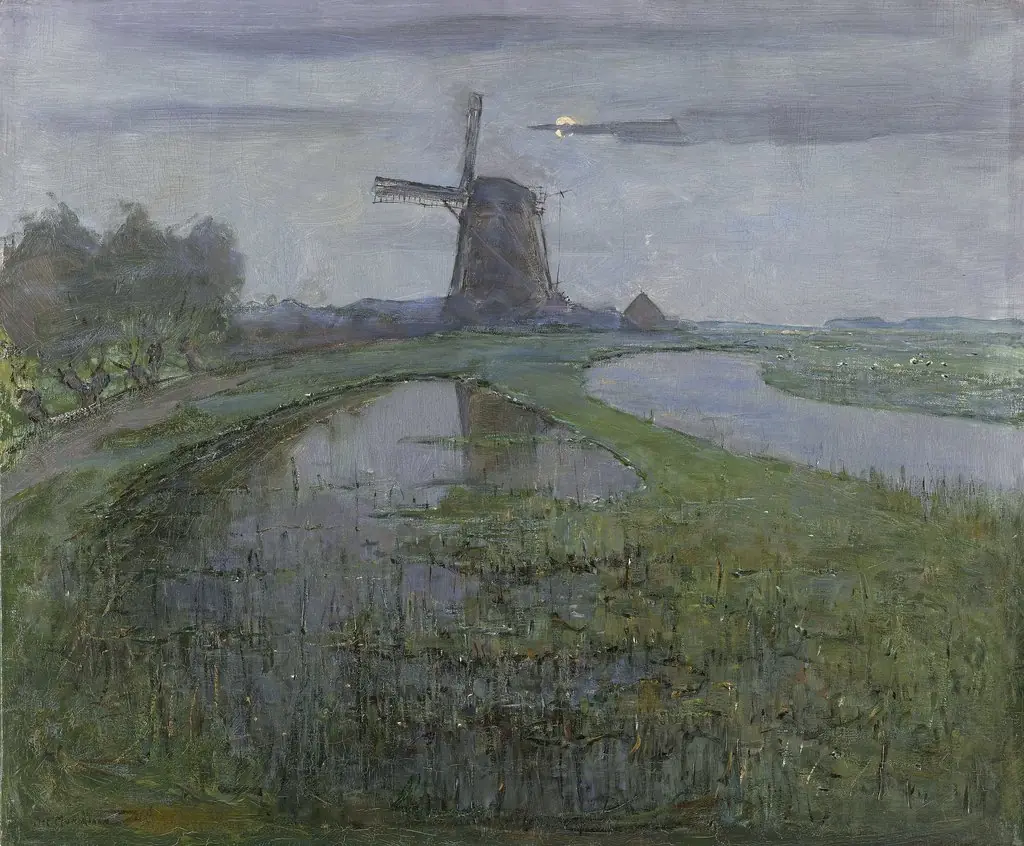
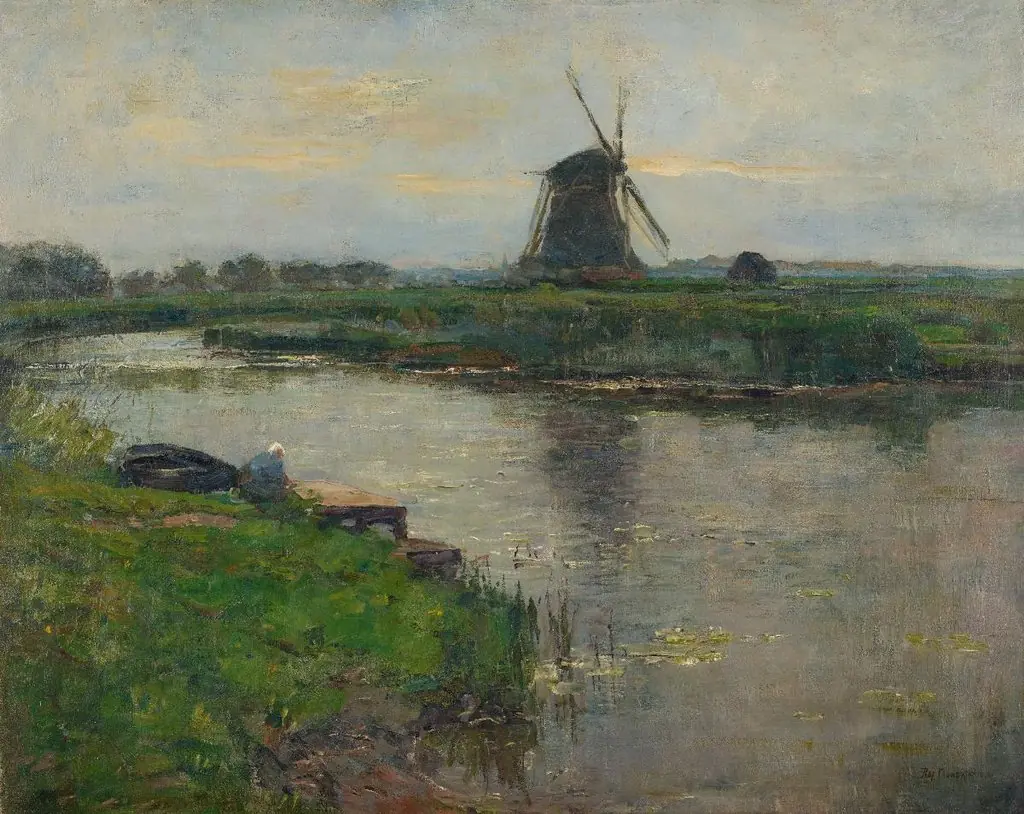
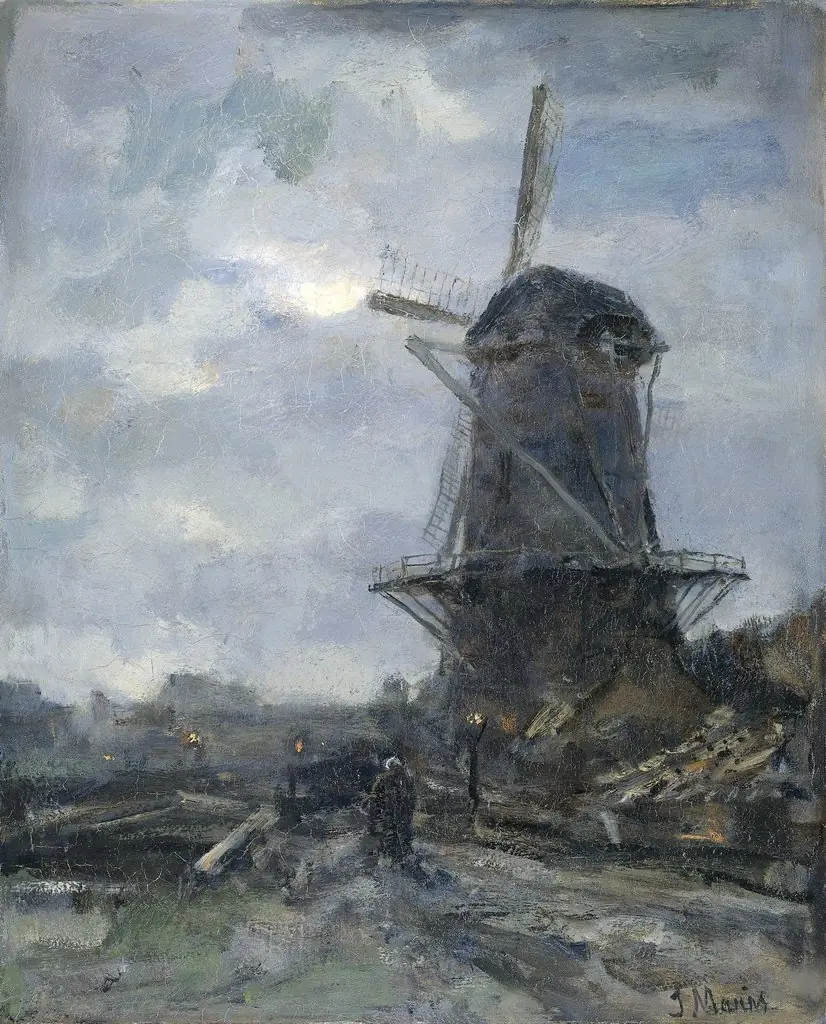
Oostzijdse Mill along the River Gein by Moonlight
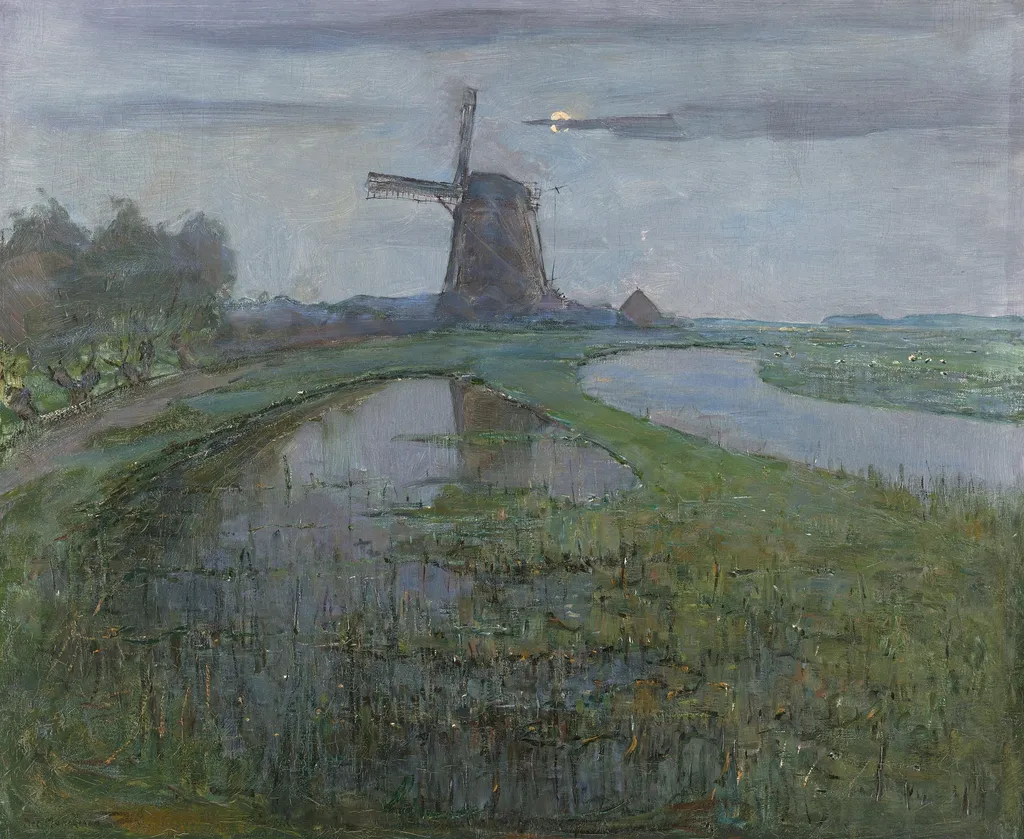
Oostzijdse Mill along the River Gein by Moonlight is an unspecified painting by the De Stijl artist Piet Mondrian. It dates from 1903 and is held in the collection of the Rijksmuseum.
About this work
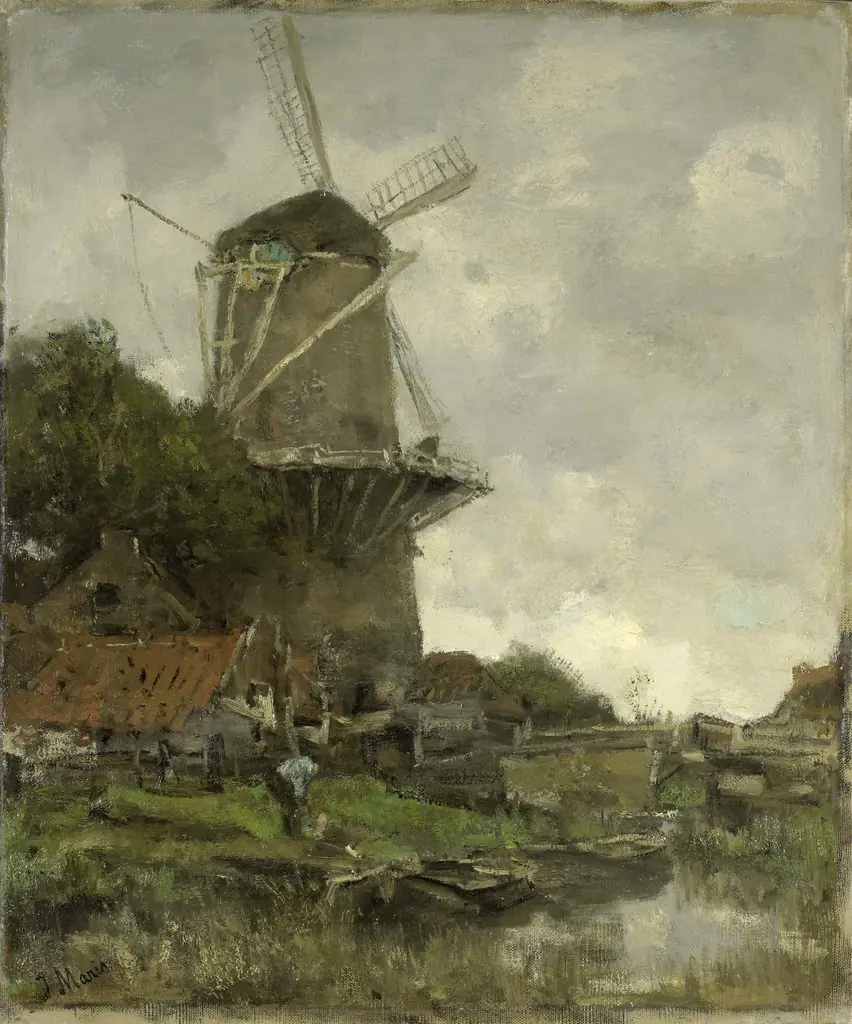
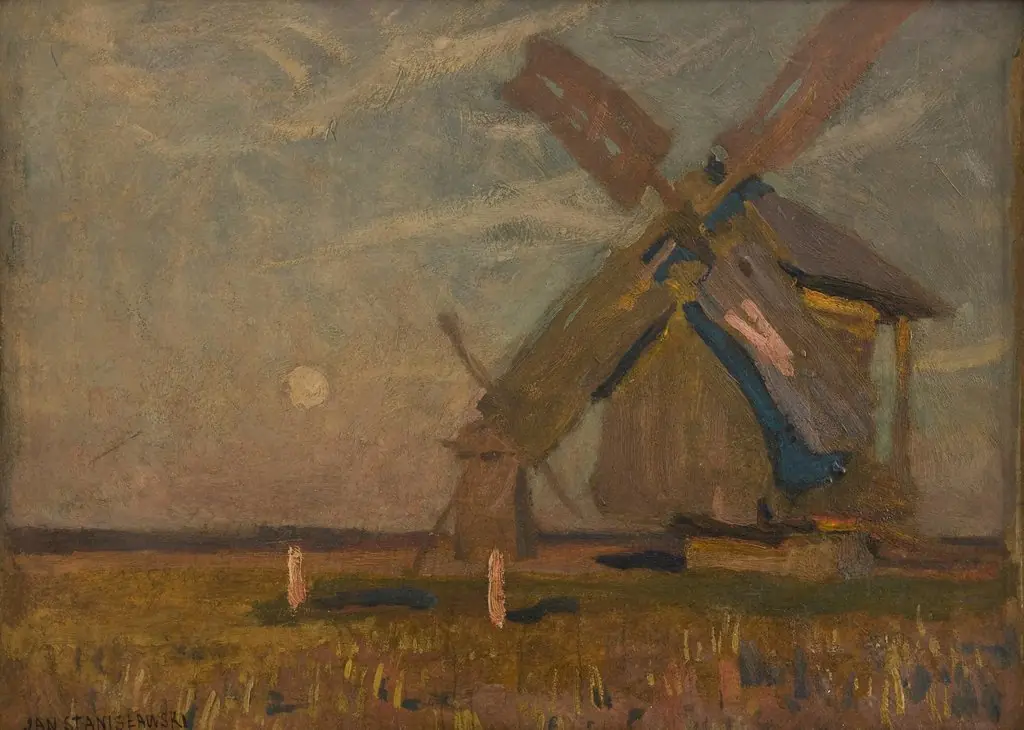
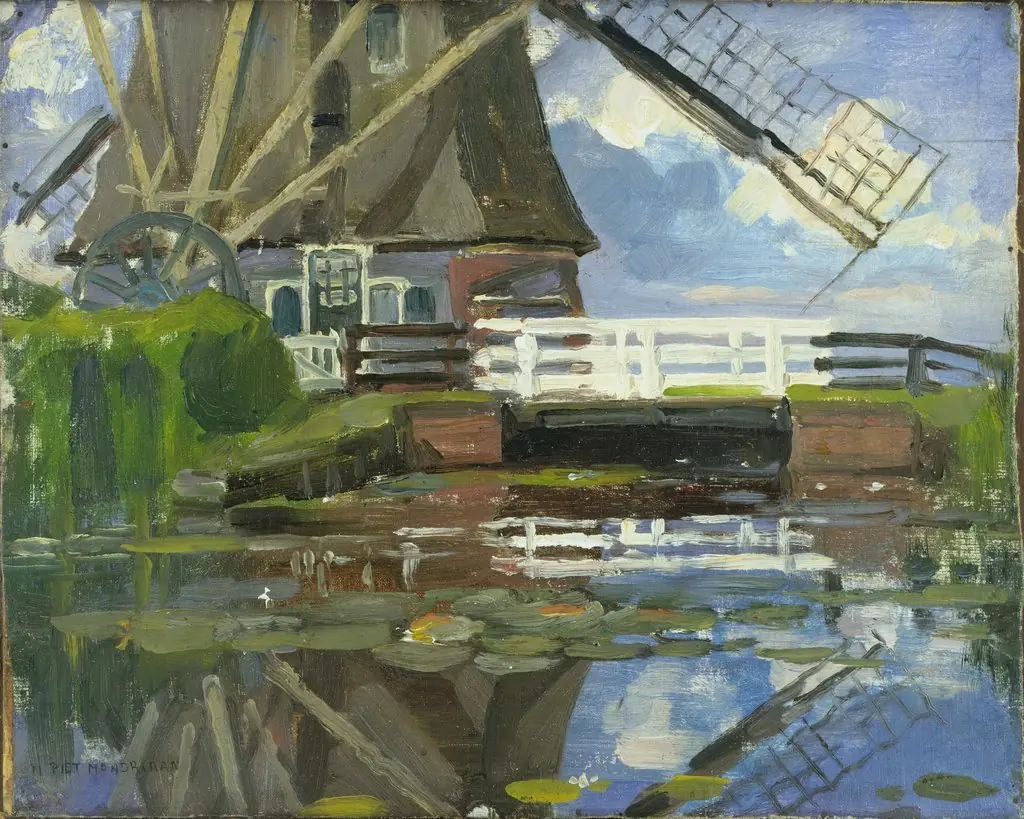
A windmill stands beside a dark river under a pale moon. The water glows faintly against a soft gray-blue sky, and the trees and grass fall into flat, simple shapes. Piet Mondriaan painted this early in 1903, reworking an earlier scene so the colors and lines feel less like a place than a pattern. Look up the Hague School to see where he started.
Subject & Meaning
The work depicts a windmill situated along the River Gein under moonlight, a recurring motif in Piet Mondrian's early naturalistic landscapes of the Netherlands. Painted around 1903, the subject reflects the artist's focus on pastoral scenes featuring windmills, fields, and rivers, executed in a style influenced by the Hague School and Post-Impressionism. While the scene is representational, it aligns with Mondrian's broader search for personal style during this period, where such rural imagery served as a foundation for his evolving aesthetic.
The moonlight setting and the specific Dutch landscape connect to his interest in capturing the essence of his native country before his later shift toward abstraction. These early works illustrate the influence of various movements, including pointillism and Fauvism, as the artist moved away from strict realism toward a more symbolic use of color and form, foreshadowing his future spiritual and theoretical pursuits.
Context
The work belongs to a series of naturalistic canvases that inherited the Hague School's tonalism while introducing a symbolic moonlit mood.
Dating to around 1903, the Oostzijdse Mill along the River Gein exemplifies Mondrian's early Dutch landscape period, when he rendered nocturnal scenes with atmospheric moonlight and subtle color modulation. The work belongs to a series of naturalistic canvases that inherited the Hague School's tonalism while introducing a symbolic moonlit mood. Scholars note that these paintings already abstract form and foreground color, foreshadowing his later shift toward pure abstraction.
Mondrian's engagement with Theosophy further imbues the scene with a spiritual quest for universal values. His subsequent involvement with De Stijl and theoretical articulation of Neoplasticism positioned this early piece at the genesis of his pioneering abstract oeuvre, a trajectory documented in both contemporary criticism and later scholarship.
Overview
This painting, titled Oostzijdse Mill along the River Gein by Moonlight, depicts a solitary windmill situated beside a tranquil river under a pale moon. The artist remains unknown, yet the work offers insight into a period when artists explored landscape with a developing sensibility. Its composition features simplified forms and a distinctive color palette, moving beyond strict realism to evoke a particular atmosphere.
The piece was likely created during the formative years of artists like Piet Mondrian, reflecting contemporary stylistic shifts.
Technique & Style
The artist employs a technique characterized by modified lines and a distinct color scheme, departing from purely representational depiction. Rather than striving for photographic accuracy, the painting exhibits a non-realistic, decorative quality. Forms are flattened and simplified, transforming natural elements into patterns.
This stylistic choice creates an impression that is less about a specific location and more about an aesthetic arrangement of shapes and tones, contributing to a sense of quietude.
Own this work as a print
Artist & collection

Artist
Pieter Cornelis Mondriaan (Dutch:; 7 March 1872 – 1 February 1944), known after 1911 as Piet Mondrian (, US also; Dutch: ), was a Dutch painter and art theoretician, who is regarded as one of the greatest artists of the 20th century.