Artwork
Untitled
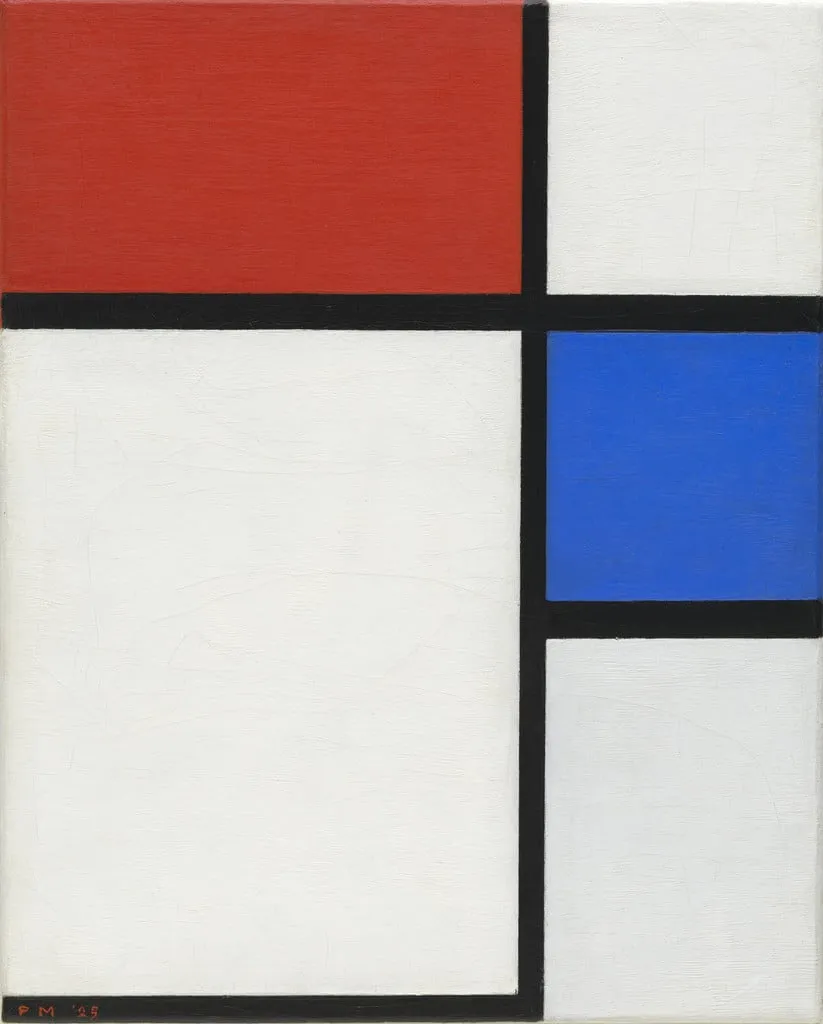
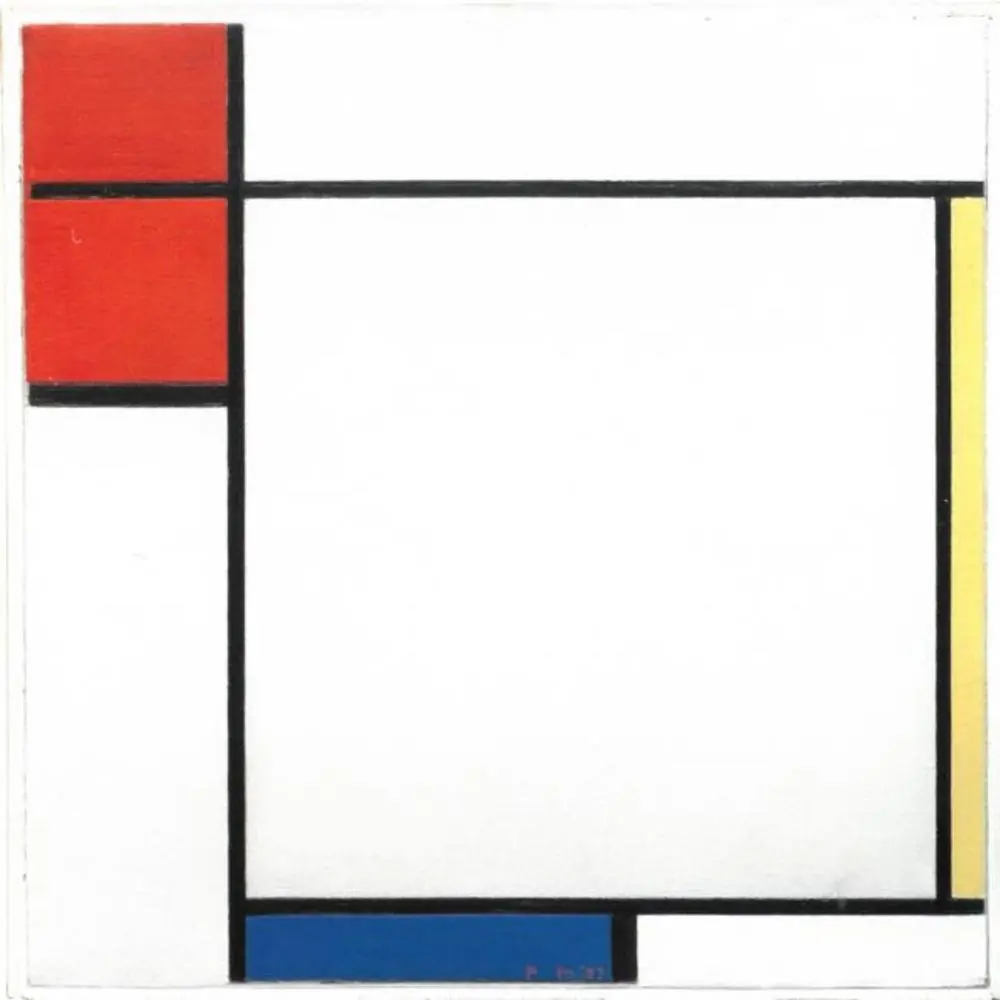
Untitled is an oil painting by the De Stijl artist Piet Mondrian. It dates from 1929 and is held in the collection of the Museum of Modern Art.
About this work
Overview
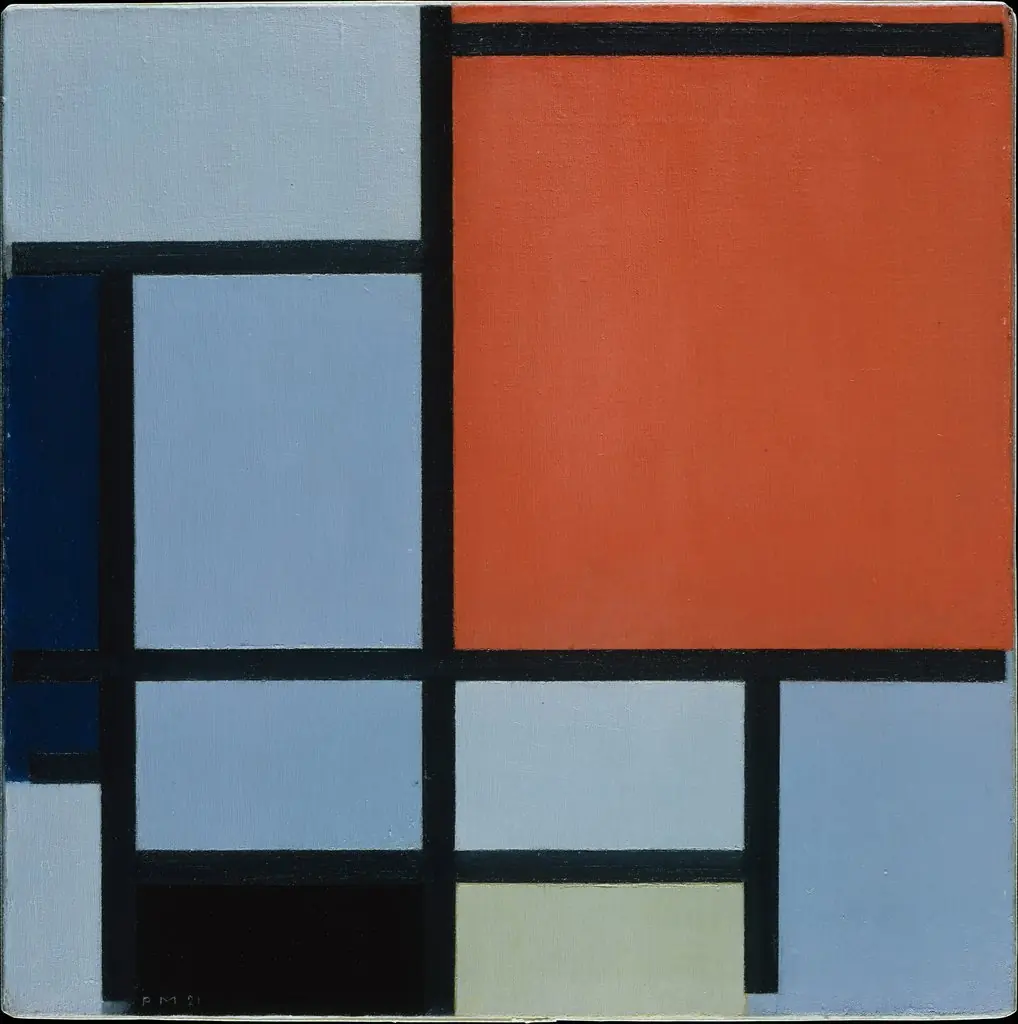
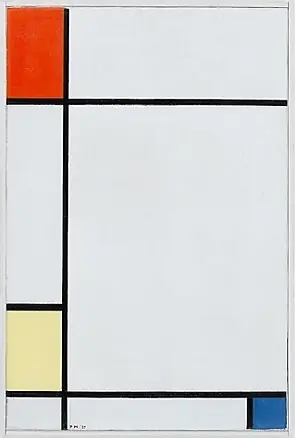
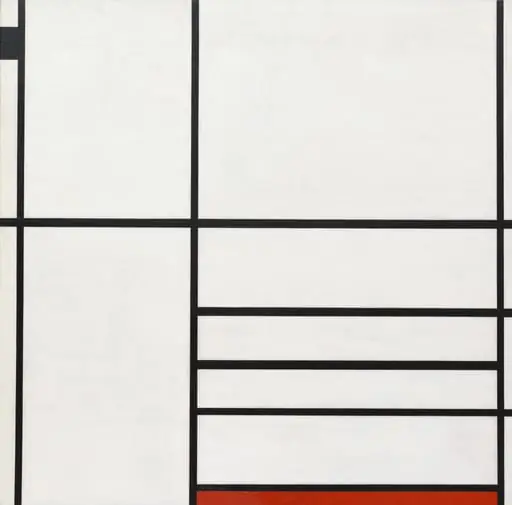
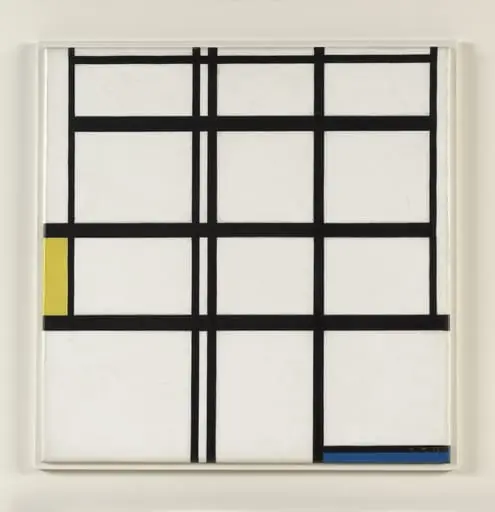
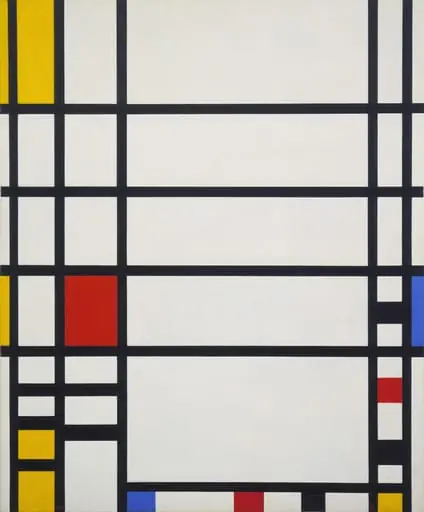
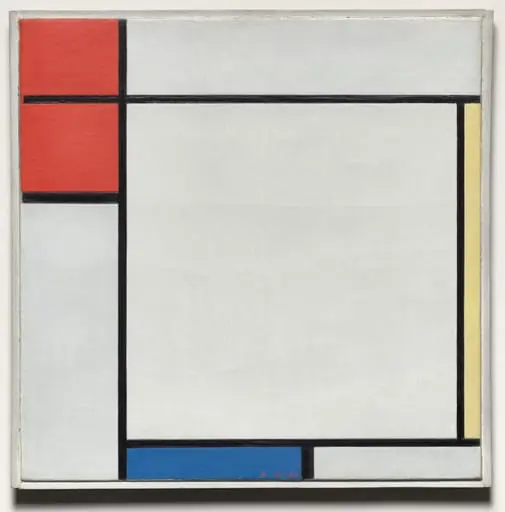
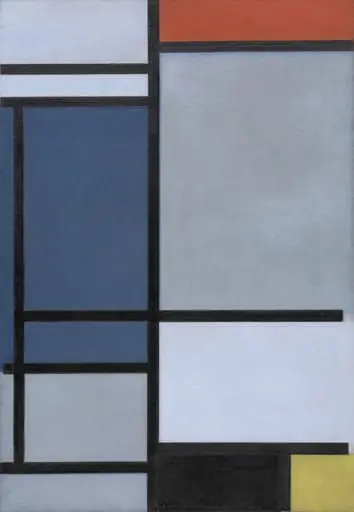
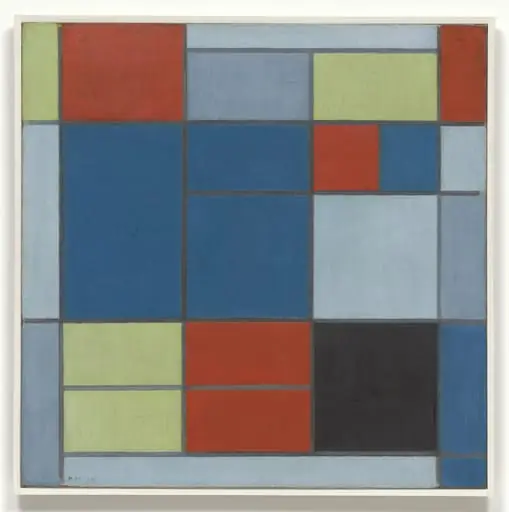
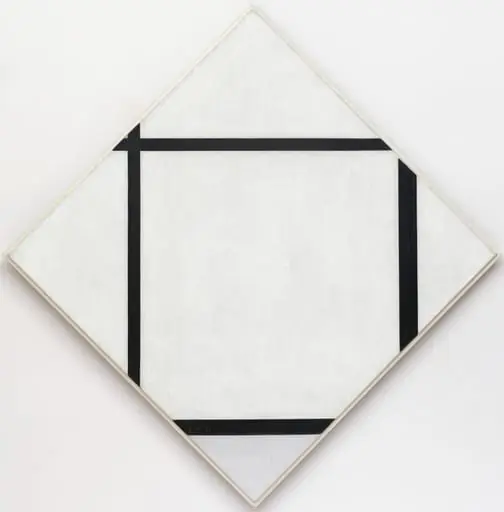
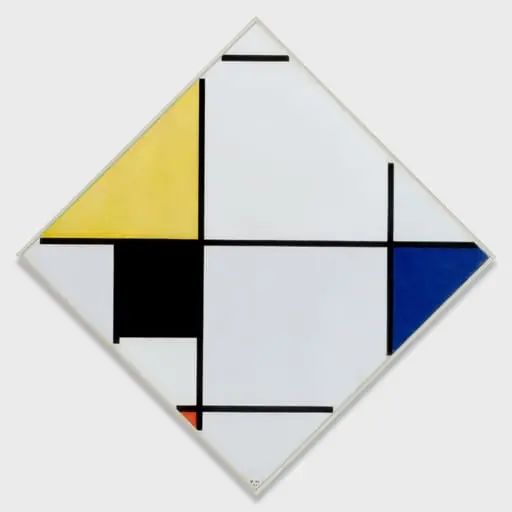
Created in 1929, this oil on canvas work by Dutch artist Piet Mondrian exemplifies his mature abstract language. The composition consists of four rectangular color fields, red, blue, and two white areas, separated by thick, black lines that form a grid of sharp, intersecting planes.
Subject & Meaning
The painting contains no representational imagery; instead it presents a pure arrangement of color and line. By limiting the palette to primary hues and stark black, Mondrian sought to express a universal visual order, reducing visual experience to its most essential elements.
Technique & Style
Executed with oil paint, the work displays flat, uniform color surfaces bounded by hand‑drawn black strips. Although the lines appear precise, slight irregularities reveal a hand‑made quality, preventing the grid from becoming entirely mechanical.
History & Provenance
The piece is part of the collection of the Museum of Modern Art, where it has been displayed as a representative example of the De Stijl movement, the early‑20th‑century Dutch group that advocated geometric abstraction and harmonious composition.
Context
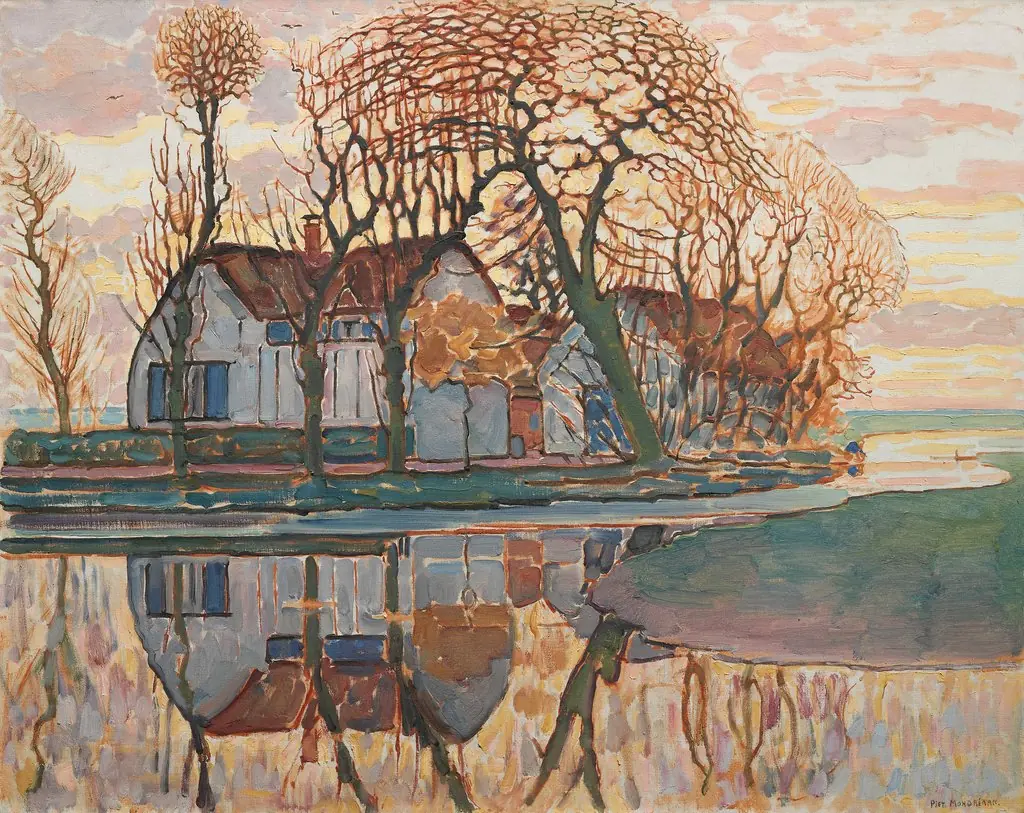
Mondrian’s trajectory moved from figurative painting toward an abstract visual language based on vertical and horizontal lines and primary colors. By the late 1920s, his work embodied the De Stijl ideals of balance, clarity, and the pursuit of a universal aesthetic.
Artist & collection

Artist
Pieter Cornelis Mondriaan (Dutch:; 7 March 1872 – 1 February 1944), known after 1911 as Piet Mondrian (, US also; Dutch: ), was a Dutch painter and art theoretician, who is regarded as one of the greatest artists of the 20th century.