Artwork
Lozenge Composition with Yellow, Black, Blue, Red, and Gray
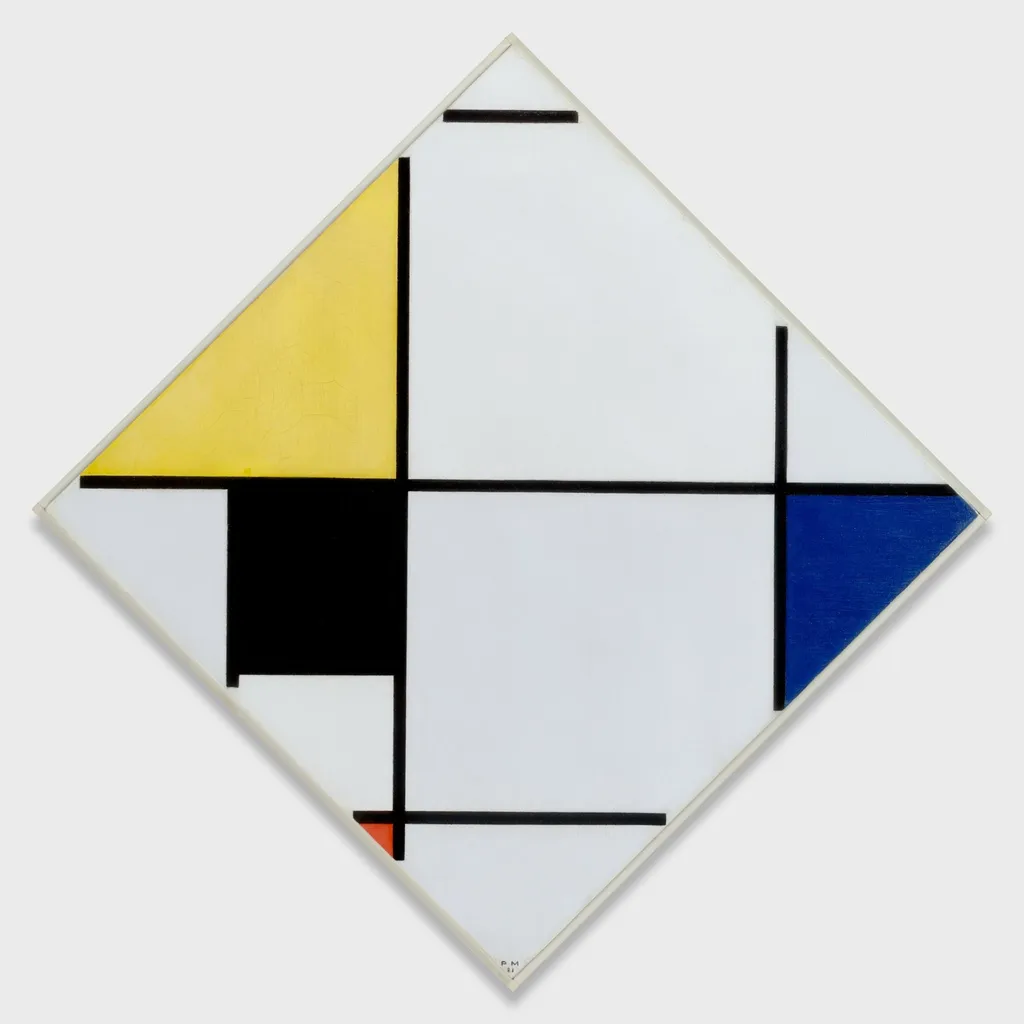
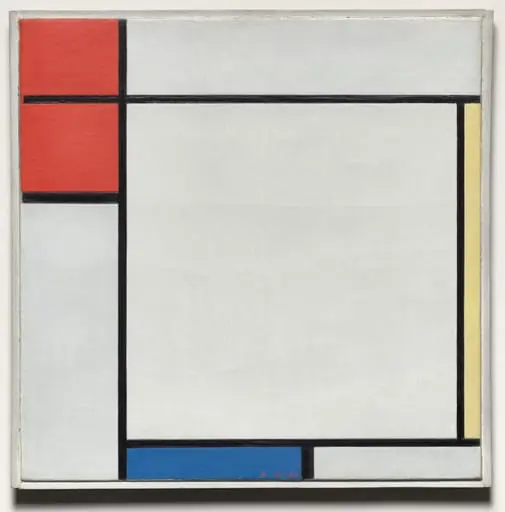
Lozenge Composition with Yellow, Black, Blue, Red, and Gray is an oil painting by the De Stijl artist Piet Mondrian. It dates from 1921 and is held in the collection of the Art Institute of Chicago.
- Accession no.
- 109819
- Credit line
- Gift of Edgar Kaufmann, Jr.
About this work
Overview
Piet Mondrian's Lozenge Composition presents a geometric abstraction on a diamond-shaped canvas, oriented at a 45-degree angle to the wall.
Piet Mondrian's Lozenge Composition presents a geometric abstraction on a diamond-shaped canvas, oriented at a 45-degree angle to the wall. Unlike his typically upright compositions, this orientation challenges conventional framing, prompting a reevaluation of how internal structure interacts with the painting’s boundary. The work belongs to the De Stijl movement, which sought universal harmony through pure form and primary colors.
Subject & Meaning
The painting’s arrangement of black lines and colored rectangles explores boundaries and containment. While the grid suggests enclosure, one line extends beyond the inner structure to meet the slanted edge, implying continuity beyond the canvas. This tension between limit and extension reflects Mondrian’s inquiry into the relationship between the painted surface and the space it inhabits, questioning whether art is self-contained or part of a larger environment.
Technique & Style
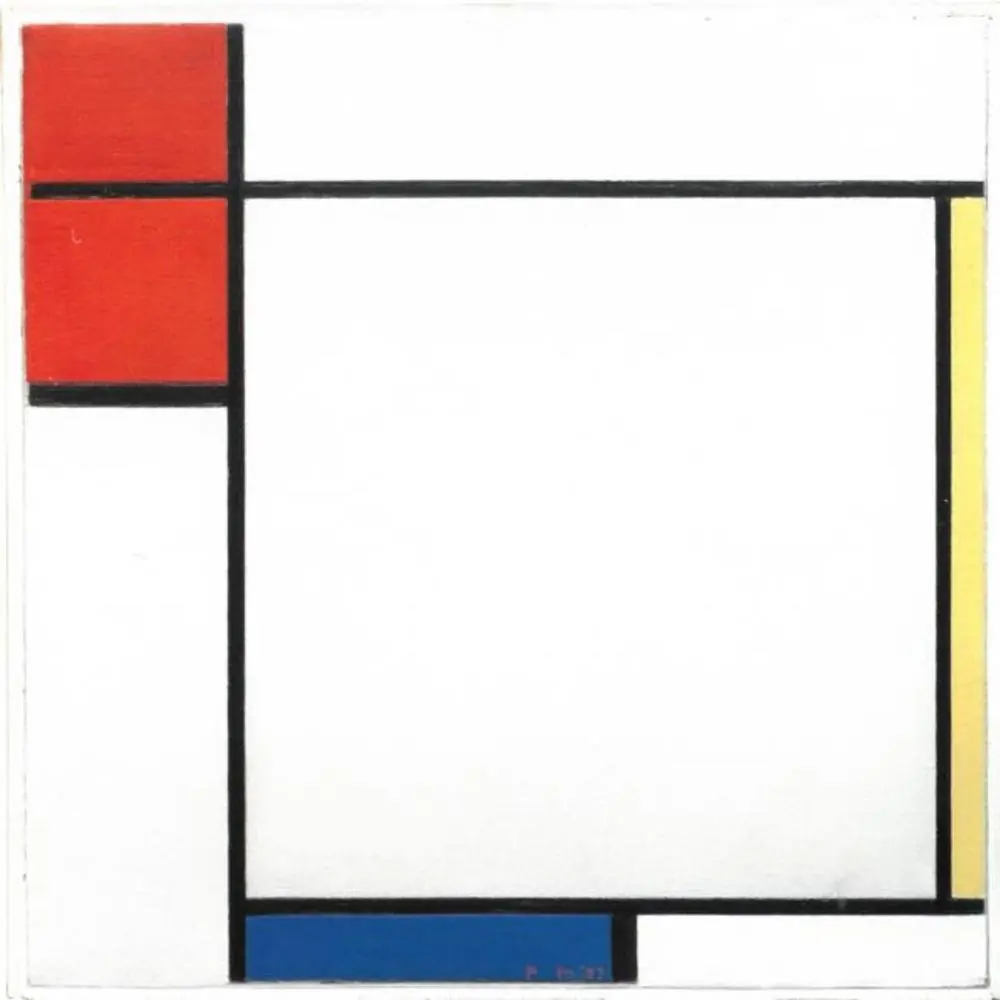
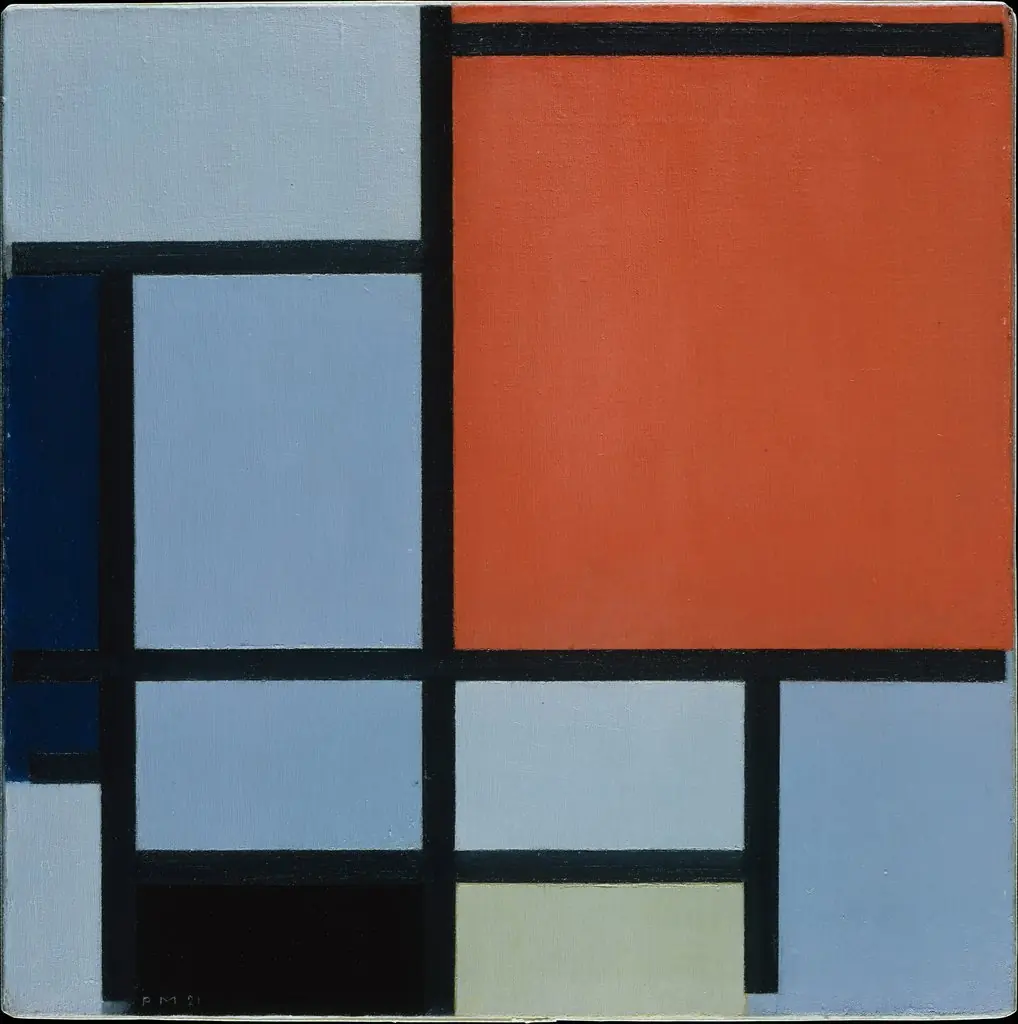
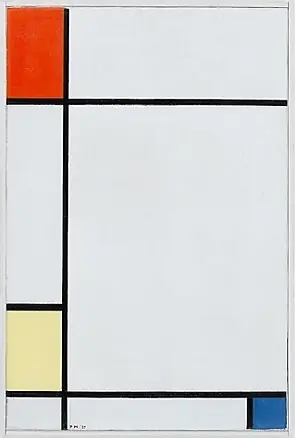
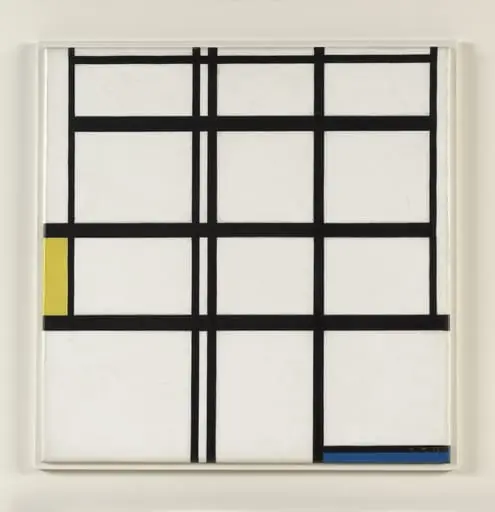
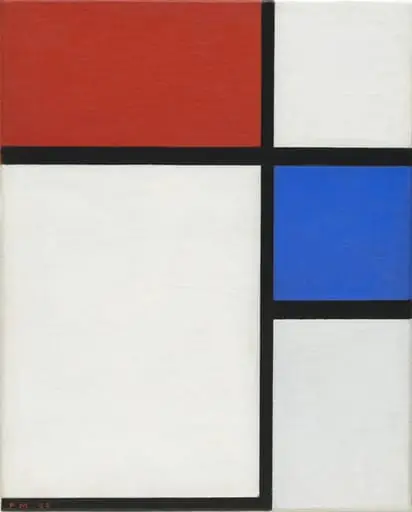
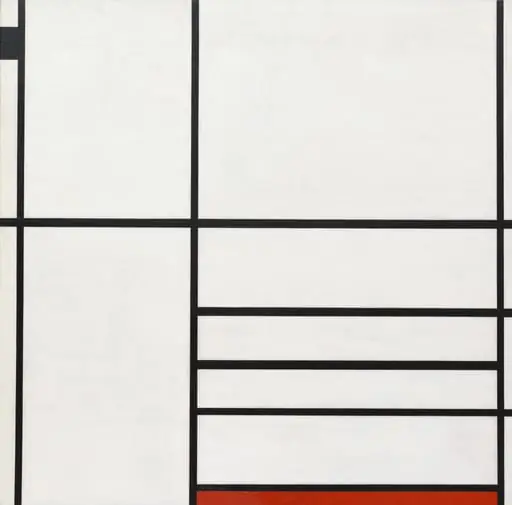
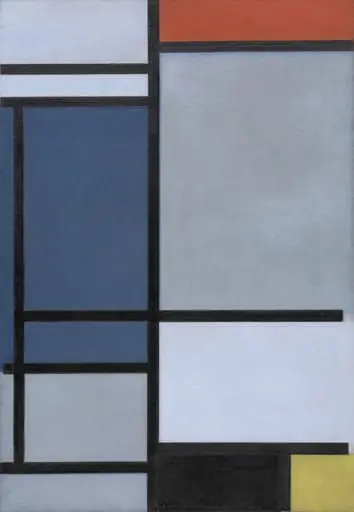
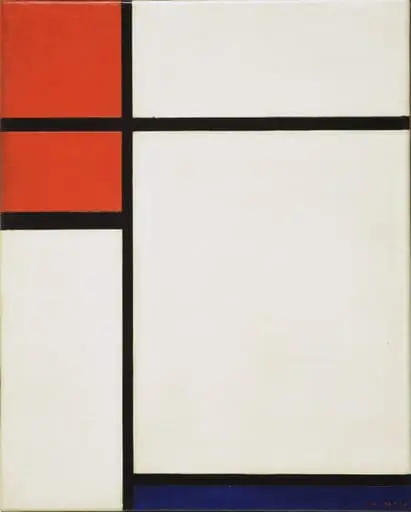
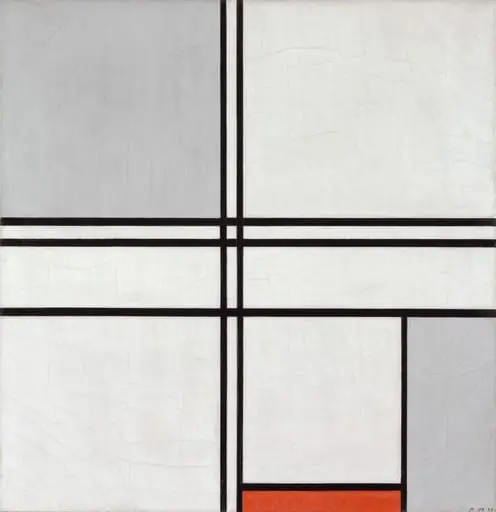
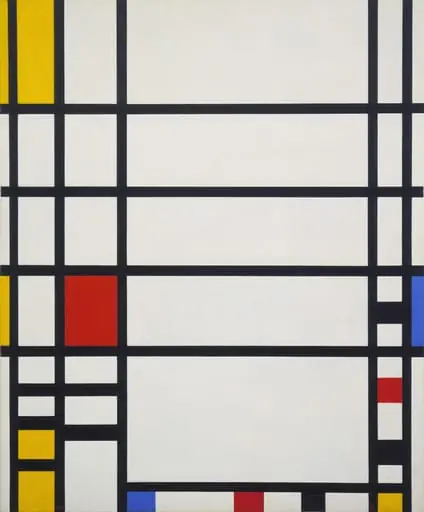
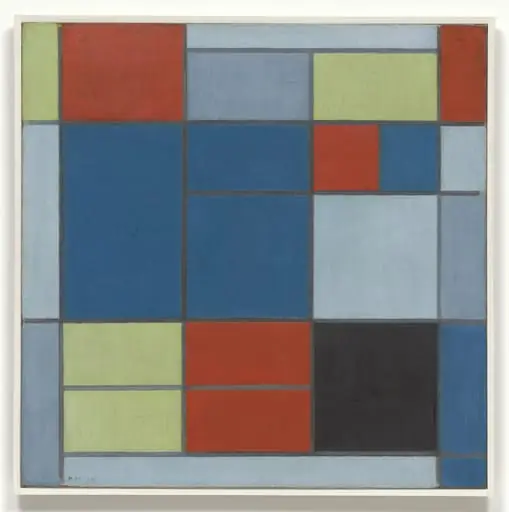
Oil paint is applied in flat, unmodulated planes of red, blue, yellow, gray, and white, separated by thick, precise black lines. The diamond format alters the viewer’s perception of balance and orientation, transforming the grid into a dynamic structure. Mondrian’s method remains systematic, no brushwork is visible, no texture interrupts the surface, emphasizing clarity and order over expression.
History & Provenance
Created in the early 1920s, this work emerged during Mondrian’s mature De Stijl period, when he refined his visual language toward abstraction. The diagonal hanging was a deliberate departure from tradition, documented in photographs of his studio. It reflects his evolving interest in how spatial orientation affects perception, a concept he later explored in larger architectural projects.
Context
Mondrian’s contemporaries in De Stijl, including Theo van Doesburg, experimented with dynamic compositions and tilted forms. While Mondrian typically favored verticality, this painting signals a temporary shift toward exploring spatial ambiguity. The diagonal orientation aligned with broader modernist interests in disrupting static viewing habits, though Mondrian maintained his commitment to structural purity.
Legacy
The Lozenge Composition influenced later minimalist and conceptual artists who questioned the frame as a fixed boundary. Its diagonal presentation became a reference point for discussions about how art relates to architectural space. Though not widely replicated, the work’s conceptual rigor contributed to ongoing debates about the autonomy of the artwork versus its environmental context.
Own this work as a print
Artist & collection

Artist
Pieter Cornelis Mondriaan (Dutch:; 7 March 1872 – 1 February 1944), known after 1911 as Piet Mondrian (, US also; Dutch: ), was a Dutch painter and art theoretician, who is regarded as one of the greatest artists of the 20th century.